SF02-530 SF02-530 |
Engineered Ceramics and Composite Materials: From Fundamentals to Applications |
| |
Neethu Bhaskar/ 9781032804583/ Price:GBP 145.99
|
| |
|
|
|
|
| |
|
| SF02-530 |
Introduction to Porous Materials |
| |
Leandro Oviedo/ 9781779569400/ Price:US$ 120.00
|
| |
|
|
Porous materials are vital in catalysis, gas storage, filtration, and energy applications due to their high surface area and tunable structure. Understanding their chemistry and design principles is key to developing next-generation functional materials. Introduction to Porous Materials presents the structural, physical, and chemical properties of porous solids, including zeolites, metal-organic frameworks (MOFs), and mesoporous silicas. The book discusses synthesis methods, characterization techniques, and industrial applications. It also highlights recent advances in nanostructured and hybrid materials. By bridging materials science and chemistry, it offers a clear and comprehensive guide to one of the most dynamic fields in modern materials research. |
| |
|
| SF02-530 |
Introduction to Biomaterials |
| |
Natassia Correa/ 9781779569462/ Price:US$ 120.00
|
| |
|

|
Biomaterials bridge biology and engineering by creating substances that interact safely and effectively with living systems. They are foundational in medical devices, tissue engineering, and drug delivery. Introduction to Biomaterials provides a comprehensive overview of the design, properties, and applications of materials used in biomedical contexts. The book discusses metals, polymers, ceramics, and composites for implants and prosthetics. It also covers biocompatibility, degradation, and regulatory considerations. With an interdisciplinary perspective, it helps students and researchers understand how materials science contributes to medical innovation and human health advancement. |
| |
|
| SF02-530 |
Fundamentals of Materials Science |
| |
Ronin Westwood/ 9781984622006/ Price:US$ 180.00
|
| |
|
|
Examines structure-property relationships in metals, polymers, ceramics, and composites.
Discusses crystallography, phase diagrams, and mechanical behavior.
Applies principles to material selection and failure analysis. |
| |
|
| SF02-529 |
Strength of Materials |
| |
Georgies Alene Asres/ 9781779569448/ Price:US$ 120.00
|
| |
|

|
The study of material strength helps engineers design structures that withstand applied forces without failure. It combines mechanics, material science, and engineering design principles. Strength of Materials explores how materials deform and fail under various loading conditions. The book discusses stress, strain, torsion, bending, and shear in beams and shafts. It also covers fatigue, creep, and fracture mechanics. With examples and diagrams, it provides practical tools for analyzing structural components, ensuring safety, and optimizing material performance in engineering applications. |
| |
|
| SF02-529 |
Statistical Modeling and Analysis of Fused Deposition Modeling Process Parameters for Green Composites Fabrication |
| |
Sathish Kumar Adapa/ 9781032796574/ Price:GBP 67.99
|
| |
|
|
|
|
| |
|
| SF02-529 |
Biomimetic and Bioinspired Materials: Design, Synthesis, and Emerging Applications |
| |
Anil Dhanola/ 9781041068259/ Price:GBP 187.99
|
| |
|
|
|
| |
|
| SF02-529 |
Multifunctional and Smart Materials: Advances in Sustainable Engineering Applications |
| |
Hitesh Vasudev/ 9781041061717/ Price:GBP 145.99
|
| |
|
|
|
|
| |
|
| SF02-529 |
Composites Recycling |
| |
Liu Yang/ 9783110754414/ Price:EUR 99.95
|
| |
|
|
|
|
| |
|
| SF02-528 |
Polymer Nanocomposites |
| |
A. O. Surendranathan/ 9789815129533/ Price:GBP 154.00
|
| |
|
|
|
| |
|
| SF02-528 |
The Mechanics of Biological Materials |
| |
Manuel Elices/ 9781032892771/ Price:GBP 103.99
|
| |
|

|
|
| |
|
| SF02-528 |
Smart Polymers: An Emerging Vista for Nanotheranostics |
| |
Dipankar Chattopadhyay/ 9781032528557/ Price:GBP 187.99
|
| |
|
|
|
| |
|
| |
Frontiers of Chemical and Materials Engineering ¡V ICoFCheM 2025 |
| |
Teh Pei Leng/ 9781644903964/ Price:US$ 95.00
|
| |
|
|
The conference focused on various topics in the fields of chemical and materials engineering:
Ferrous Metallurgy, Aluminium Alloys, Powder Metallurgy, Hydrogen Production, Biodegradable Magnesium, Magnesium Nanocomposites, Reinforced Carbon Nanomaterials. |
| |
|
| |
Advances in Corrosion Science and Surface Engineering: Principles, Mechanisms, and Emerging Technologies |
| |
Rajender Boddula/ 9781644903902/ Price:US$ 125.00
|
| |
|
|
The book aims to develop sustainable corrosion-control strategies. It covers such topics as metal degradation, protective coating, corrosion inhibitors and advances in mitigating corrosion. It also focuses on nano-engineered surfaces, bio-inspired inhibitors, and data-driven prediction models. |
| |
|
| |
Antigravity Droplet Surface Materials |
| |
David J. Fisher/ 9781644903889/ Price:US$ 95.00
|
| |
|
|
The book reviews recent progress in the area of droplet manipulation on surfaces as required in fields such as thermal management, water collection, microfluidics and biomedical devices. The book references 142 original resources with their direct web links for in-depth reading. |
| |
|
| |
Nanomaterials in Biological Systems: Interactions Between Nanoparticles and Macromolecules |
| |
Jorddy N. Cruz/ 9781644903841/ Price:US$ 95.00
|
| |
|

|
The book presents a collection of works that collectively illuminate the multifaceted nature of nanoparticle research and its profound implications for life sciences. |
| |
|
| |
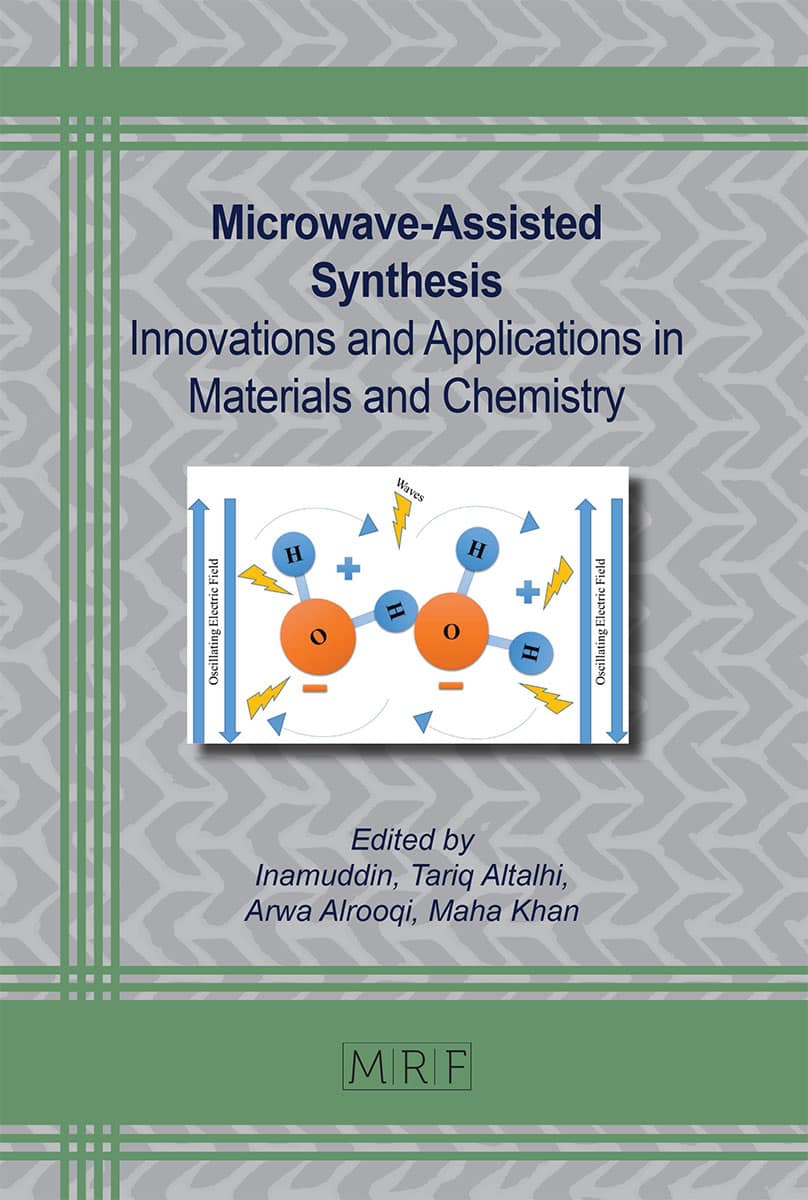
Microwave-Assisted Synthesis: Innovations and Applications in Materials and Chemistry |
| |
Inamuddin/ 9781644904022/ Price:US$ 125.00
|
| |
|
|
The book focuses on developments in the microwave-assisted preparation of organic and inorganic compounds, advanced composite materials, polymers, and nanostructures. |
| |
|
| |
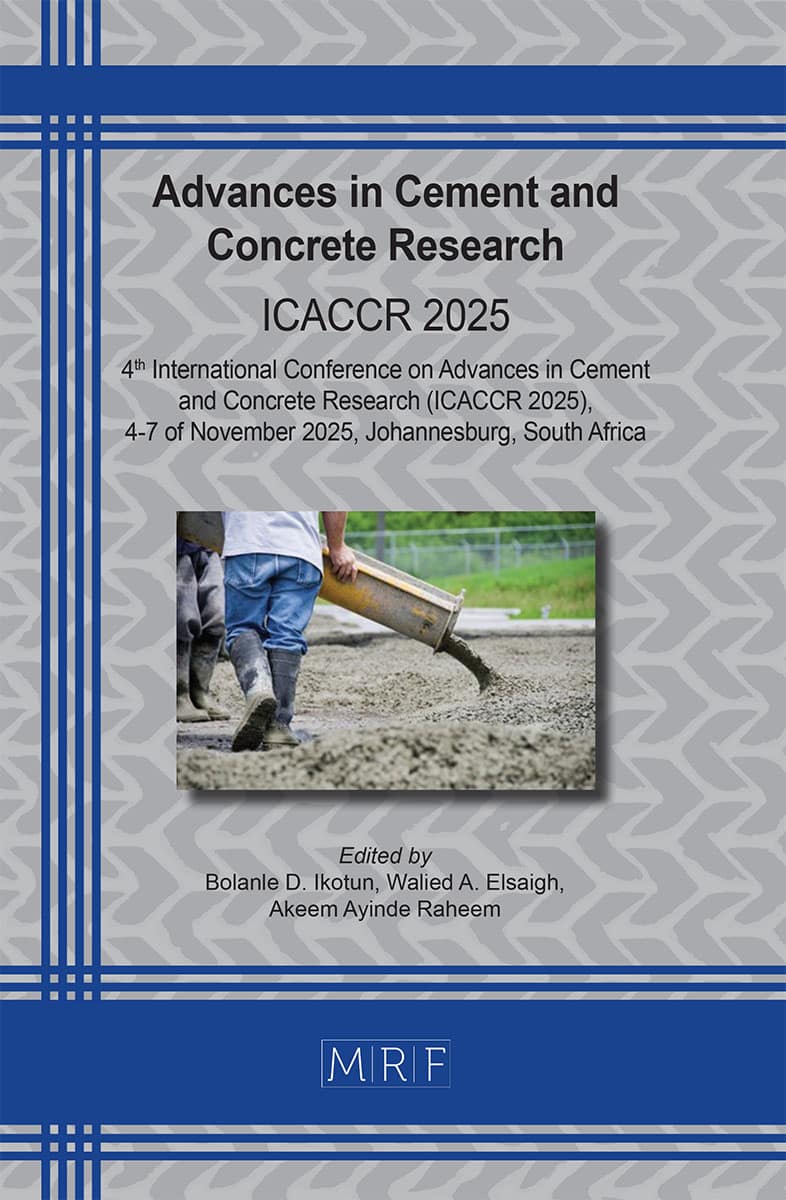
Advances in Cement and Concrete Research: ICACCR 2025 |
| |
Bolanle D. Ikotun/ 9781644904046/ Price:US$ 125.00
|
| |
|
|
The book focuses on the production, processing, analysis and testing of cement and concrete materials. The topics covered include cementitious materials, 4IR technology in concrete, nanotechnology in cement composites, concrete for resilient and durable buildings, water quality in concrete production and concrete materials for sustainable development. |
| |
|
| |
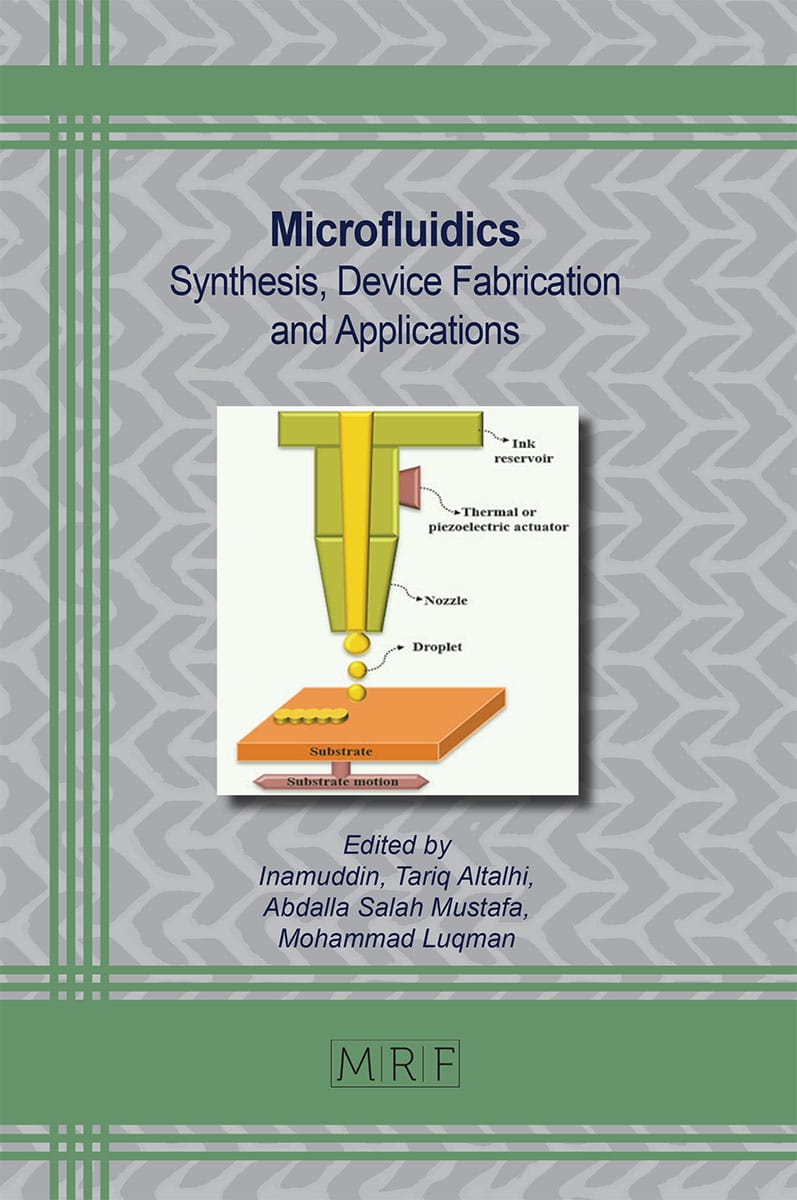
Microfluidics: Synthesis, Device Fabrication and Applications |
| |
Inamuddin/ 9781644904206/ Price:US$ 125.00
|
| |
|
|
The book provides a comprehensive overview of recent progress and emerging trends in microfluidic technology, including material synthesis strategies, device fabrication methods, and multidisciplinary applications. |
| |
|
| |
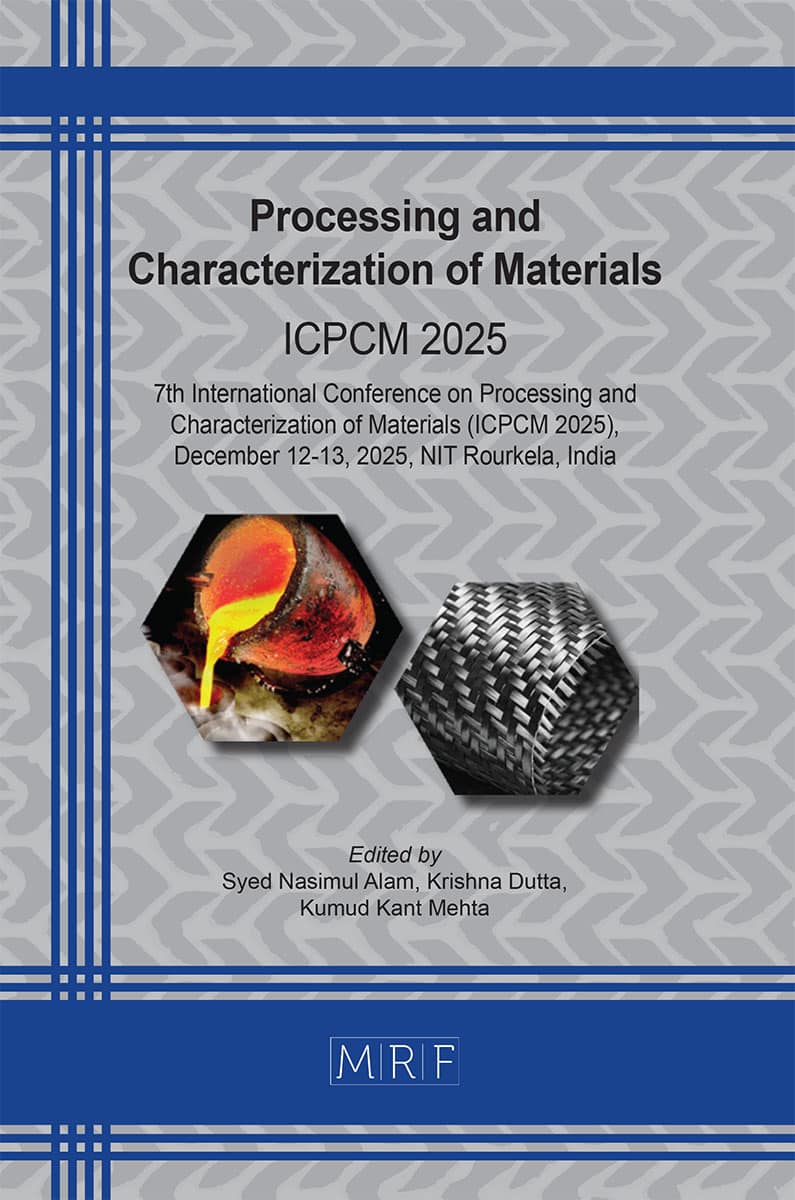
Processing and Characterization of Materials: ICPCM 2025 |
| |
Syed Nasimul Alam/ 9781644904121/ Price:US$ 125.00
|
| |
|
|
The book presents research in mineral beneficiation, non-ferrous metallurgy, advanced steels, composites, additive manufacturing, high-entropy alloys, smart materials, corrosion and surface engineering, materials for energy storage, and the use of AI/ML in materials engineering. |
| |
|
| |
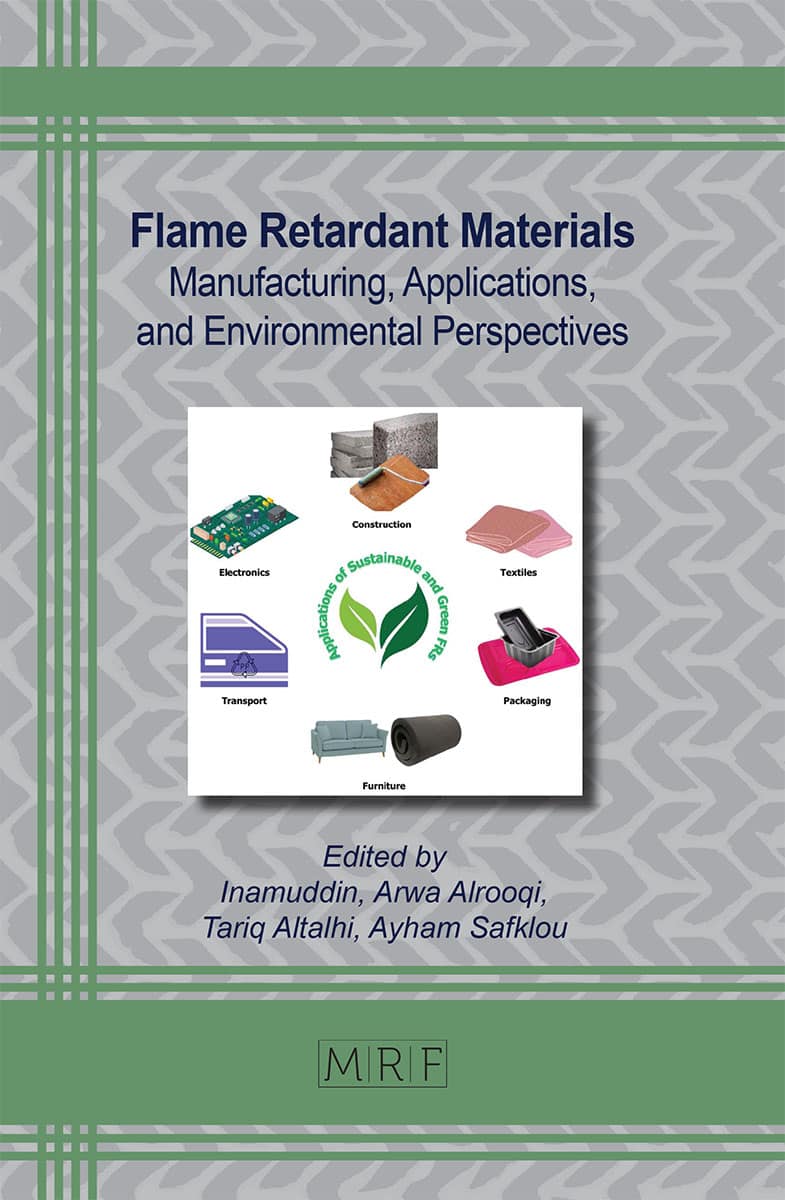
Flame Retardant Materials: Manufacturing, Applications, and Environmental Perspectives |
| |
Inamuddin/ 9781644904060/ Price:US$ 125.00
|
| |
|
|
The book focuses on flame-retardant materials and their industrial significance. It covers a broad spectrum of retardants, including biomass-derived, synthetic, mineral-based, and nanotechnology-enabled systems. |
| |
|
| |
Green Materials, Processing & Characterization: ICoGMPaC 2025 |
| |
Adarsh Kumar Pandey/ 9781644904220/ Price:US$ 125.00
|
| |
|
|
|
The conference proceedings present recent advances in the field of environmentally friendly green materials. The topics covered include advanced manufacturing and processing technologies, material characterization approaches, sustainable engineering practices, and emerging applications in materials science and engineering. |
| |
|
| VF02-123 |
Emerging Technologies and Industrial Applications of Corrosion Science (9798369363423) |
| |
Younes El Kacimi/ IGI97963423/ Price:US$ 320.00
|
| |
|
|
Emerging Technologies and Industrial Applications of Corrosion Science emerges as a solution to the pervasive problem of corrosion, offering a deep dive into the latest advancements in corrosion protection. By delving into innovative techniques and protective methods, this book equips professionals with the knowledge and tools needed to combat corrosion effectively. Through a blend of theoretical insights and practical applications, the book empowers engineers, industrial chemists, researchers, and students to implement cutting-edge corrosion mitigation strategies across diverse industrial sectors.
With its interdisciplinary approach and coverage of emerging technologies such as smart coatings, biomaterials, and artificial intelligence, this book suggests innovations in materials science. By providing actionable insights and practical solutions, the book facilitates the development and implementation of sustainable corrosion protection strategies, ensuring the longevity and reliability of critical infrastructure. Ultimately, this book serves as a catalyst for progress, driving advancements in corrosion science and industrial applications for a safer, more resilient future.
Coverage:
The many academic areas covered in this publication include, but are not limited to:
¡EArtificial Intelligence
¡EBiomaterials
¡ECoating Inhibitors
¡ECorrosion Engineering
¡ECorrosion Protection
¡EDeep Learning
¡EElectrochemistry
¡EMachine Learning
¡EMolecular Modeling
¡ESmart Coating |
| |
|
| VF02-122 |
Design, Fabrication, and Significance of Advanced Nanostructured Materials (9798369353219) |
| |
Laxman Singh/ IGI97953219/ Price:US$ 355.00
|
| |
|
|
Nanostructured materials are revolutionizing various industries with their unique properties. Yet, researchers and practitioners need help accessing comprehensive and up-to-date literature on their synthesis, characterization, and applications. Existing books often focus narrowly on synthesis methods, overlooking critical aspects such as design, spectroscopic characterization techniques, and diverse applications in electronics, optoelectronics, biomedical devices, and more. This gap in the literature leaves academics, researchers, and industrial scientists needing a comprehensive resource to address their pressing questions and needs in the field.
Design, Fabrication, and Significance of Advanced Nanostructured Materials bridges this gap by offering a holistic approach to understanding these materials. It provides in-depth coverage of the latest synthetic approaches, spectroscopic characterization techniques, and advanced applications in various fields. With ten chapters covering a wide range of topics, from the basics of nanostructured materials to advanced fabrication techniques, this book serves as a one-stop resource for anyone looking to delve into this exciting field. This book aims to empower researchers and industrialists with the knowledge to innovate and advance in their fields by providing clear explanations and solutions to critical questions surrounding nanostructured materials.
Coverage:
The many academic areas covered in this publication include, but are not limited to:
¡EAdvanced Synthesis Techniques
¡EAuto Combustion Synthesis
¡EBiogenic Synthesis
¡EBiomaterials
¡EChemical Vapor Deposition
¡EDrug Delivery
¡EEnergy Storage
¡EFast Fabrication
¡EGene Delivery
¡EMicrowave Synthesis
¡ENano-Composite Materials
¡ENanostructured Materials
¡EPhysical Vapor Deposition
¡ESpectroscopic Techniques
¡ESynthesis
|
| |
|
| VF02-121 |
Tools, Techniques, and Advancements in Engineering Materials Science (9798369355145) |
| |
Ajay Kumar/ IGI97955145/ Price:US$ 210.00
|
| |
|

|
Tools, Techniques, and Advancements in Engineering Materials Science addresses the critical issue of depleting non-renewable resources and the disruption of natural equilibrium due to industrial and consumer demands. It highlights the necessity for pollution-free environments, reduction of hazardous industrial waste, a shift towards green production, and a decrease in the use of fossil fuels to reduce atmospheric carbon levels. To meet these demands, the book explores the use of engineering materials such as polymers, metals, ceramics, composites, and biomaterials. These materials are heralded for their renewability, biodegradability, cost-effectiveness, chemical and mechanical resistance, and biocompatibility, making them suitable for various applications in medical, pharmaceutical, electronics, and other engineering fields. It details the development and design of environmentally responsible materials by scientists and engineers and provides a comprehensive overview of a wide array of engineering materials, including smart materials, functionally graded materials, carbon materials, nanomaterials, and energy storage materials. Furthermore, the book delves into the more intricate aspects of these materials, covering topics such as material characterization techniques, the role of artificial intelligence, Industry 4.0, nature-inspired algorithms, and various computational and simulation approaches. These crucial areas of study will help experts to maintain the sustainability of engineering materials and optimize their applications across various sectors, creating a positive outlook for a more sustainable and solution-based future. |
| |
|
| SF02-530 |
Thermo-Acoustics of Nanofluids and Transfer Processes |
| |
Shriram S. Sonawane/ 9781032977003/ Price:GBP 55.99
|
| |
|
|
|
|
| |
|
| SF02-530 |
Application of Finite Element Analysis for Fracture and Damage Mechanics |
| |
Zhaochun Yang/ 9781032967981/ Price:GBP 55.99
|
| |
|
|
|
|
| |
|
| SF02-530 |
Metallurgical Advances in Coatings and Corrosion |
| |
Ojo S.I. Fayomi/ 9781032912356/ Price:GBP 55.99
|
| |
|
|
|
|
| |
|
| SF02-530 |
Biocomposites for Lightweight Sandwich Structures: Engineering Properties and Applications |
| |
M.Y.M. Zuhri/ 9781032438191/ Price:GBP 55.99
|
| |
|
|
|
|
| |
|
| SF02-528 |
Advanced Topics in Polymer Chemistry and Materials Science |
| |
Tamara Tatrishvili/ 9781774919385/ Price:GBP 210.00
|
| |
|
|
|
| |
|
| SF02-521 |
Asbestos: Risk Assessment, Epidemiology, and Health Effects |
| |
Michele Carbone/ 9781032521060/ Price:GBP 187.99
|
| |
|

|
|
| |
|
| |
A Journey from Raw Materials to Ceramics |
| |
Fatih SEN/ 9781644903827/ Price:US$ 125.00
|
| |
|
|
The book discusses the comprehensive journey and technological processes involved in the production of ceramics, from raw materials to finished products. It reviews the processing technology, structure, properties, classification, and applications of the whole range of these materials. Ceramics are inorganic materials with a long history of use, characterized by their diverse applications and properties. Their production involves several stages, from raw material selection to thermal processing. Ceramics exhibit unique structural characteristics and properties that influence their applications and performance. Nanotechnology has revolutionized the ceramic industry by enhancing material properties and expanding applications. |
| |
|
| |
Electrocatalysts and Advanced Materials for Sustainable Energy Storage |
| |
Kalathiparambil Rajendra Pai Sunajadevi/ 9781644903780/ Price:US$ 125.00
|
| |
|

|
As the world moves steadily toward renewable energy, the need for efficient, reliable, and environmentally friendly energy storage has never been greater. This book, Electrocatalysts and Advanced Materials for Sustainable Energy Storage, brings together some of the most exciting developments in this fast-evolving field. It offers readers a broad yet detailed exploration of how different materials¡Xranging from metal-organic frameworks (MOFs) and MXenes to carbon nanotubes, graphene, biomass-derived catalysts, and transition metal oxides¡Xare being designed, synthesised, and optimised to power the energy systems of the future. The book serves both as an introduction for newcomers and a valuable reference for seasoned researchers and professionals. Each chapter focuses on a specific class of material or a key challenge in the field, from enhancing the performance of supercapacitors to improving the stability of energy storage devices. Along the way, we also highlight environmentally conscious approaches¡Xsuch as the use of renewable biomass-based catalysts¡Xthat are helping to make the entire process more sustainable. The goal was to provide not just technical insights but also to spark new ideas, collaborations, and innovations. |
| |
|
| |
Obtaining and Characterization of Phosphate Layers on the Surface of Steels for Reinforced Concrete |
| |
Petru LAZAR/ 9781644903803/ Price:US$ 95.00
|
| |
|
|
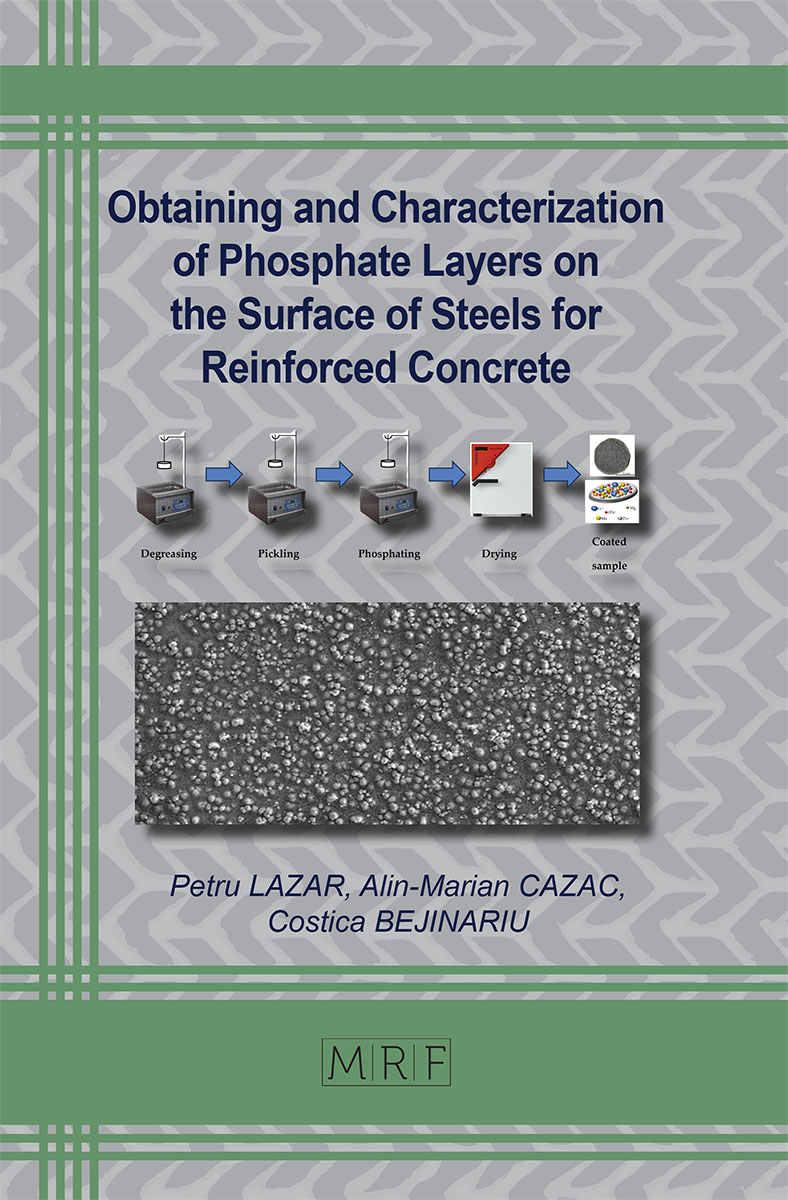
The book reviews recent research in the area of phosphate layers on surfaces of steel. Focus is placed on the morphology and structure of such layers and on their characterisation and corrosion behavior. |
| |
|
| |
Biogenic Nanomaterials: Synthesis, Characterization, Applications, and Future Remarks |
| |
Fatih SEN/ 9781644903742/ Price:US$ 125.00
|
| |
|

|
The book presents a comprehensive review of synthesis methods, characterization techniques, and cutting-edge applications for biogenic nanomaterials. |
| |
|
| |
Applications for Earth-Abundant Transition Metals |
| |
Inamuddin/ 9781644903704/ Price:US$ 125.00
|
| |
|

|
Earth-abundant transition metals ¡V such as iron, copper, manganese, cobalt, and nickel ¡V offer viable alternatives to expensive noble metals commonly used in the fields of catalysis, environmental science, materials chemistry, pharmaceuticals, and sustainable energy. The book presents a comprehensive compilation of recent studies that leverage the potential of these metals across various industries. |
| |
|
| |
Superalloys-Fundamentals and Applications |
| |
Amir Al-Ahmed/ 9781644903681/ Price:US$ 125.00
|
| |
|

|
The demand for sustainable technologies, renewable energy, and cost-effective industrial processes has drawn attention to the use of earth-abundant transition metals, such as iron, copper, manganese, cobalt, and nickel. This book aims to serve researchers working in the fields of catalysis, environmental science, materials chemistry, pharmaceuticals, and sustainable energy. |
| |
|
| |
Mechanical Properties of Xenes |
| |
David J. Fisher/ 9781644903643/ Price:US$ 95.00
|
| |
|

|
Xenes are two-dimensional monoelemental materials beyond graphene. Many of them are of interest because of their electronic properties. Their mechanical properties are surveyed in the present book, with the contents being limited to the pure element, apart from occasionally considering the involvement of hydrogen which turns the ¡¥ene into an ane¡¦. The book references 156 original resources with their direct web links for in-depth reading. |
| |
|
| |
Composite Materials ¡V SEAJCCM2024 |
| |
Norhayani Othman/ 9781644903629/ Price:US$ 125.00
|
| |
|
|
This conference focussed on advanced manufacturing, applications and recent developments in the field of composite science and technology. The topics covered include natural fibres, mineral filler/recycling polymer composites, advanced metal matrix composites, fabric/film/rubber/polymer, and advanced polymer composites. |
| |
|
| |
Materials Joining and Manufacturing Processes ¡V MJMP 2025 |
| |
Satyanarayan/ 9781644903605/ Price:US$ 125.00
|
| |
|
|
|
The book presents latest results in the areas of materials joining, additive manufacturing, interface materials, fastening technology, coating technology, welding, brazing and soldering, composite manufacturing, and simulation techniques. |
| |
|
| |
Calcium-Ion Batteries |
| |
David J. Fisher/ 9781644903483/ Price:US$ 125.00
|
| |
|
|
Due to the limited availability of lithium in the world, there is much research on the possibility of using calcium instead of lithium. Calcium is 2500 times more plentiful than lithium. The book reviews resent research on identifying suitable electrode and electrolyte materials based on calcium ions. It references 167 original resources with their direct web links for in-depth reading. |
| |
|
| |
Mesoporous Materials |
| |
Inamuddin/ 9781644903445/ Price:US$ 150.00
|
| |
|

|
The book covers applications of mesoporous materials in such areas as sorption, removal, degradation of dyes, volatile organic compounds, pollutants for effective environmental remediation, healthcare and medicine, tissue engineering, diagnostic applications, size exclusion chromatography, separation techniques, high-performance catalysis, and enzyme immobilization. |
| |
|
| VF02-120 |
Innovations in Nanomaterials-Based Corrosion Inhibitors (9798369349809) |
| |
Abhinay Thakur/ IGI97949809/ Price:US$ 375.00
|
| |
|

|
Within the pages of this book lies a wealth of knowledge meticulously curated to address the pressing need for advanced corrosion inhibition strategies. From understanding the fundamental principles of corrosion to exploring the innovative applications of nanomaterials, it equips readers with the tools to revolutionize their approach to metal protection. With a precise analysis of the synthesis, characterization, and practical implementation of diverse nanomaterials, encompassing nanoparticles, nanocomposites, and nanostructured coatings, and a primary focus on safeguarding metal surfaces against corrosion, this book creates the much-needed reference for shaping the future of corrosion inhibitors. Innovations in Nanomaterials-Based Corrosion Inhibitors offers a roadmap to overcoming corrosion challenges and heralding a new era of sustainability and cost-effectiveness. By embracing nanotechnology, industries can enhance the durability of their metal infrastructure while minimizing environmental impact and maximizing economic efficiency.
Coverage:
The many academic areas covered in this publication include, but are not limited to:
¡EAdvantages of Nanomaterials
¡EAerospace Industry
¡EAutomotive Industry
¡EChallenges
¡ECharacterization Methods
¡ECollaboration
¡EConstruction
¡ECorrosion Inhibition
¡EEconomic Impact
¡EEnvironmental Considerations
¡EFuture Trends
¡EHybrid Nanomaterials
¡EIndustry-Specific Applications
¡EMechanisms
¡ENanocomposites
¡ENanomaterial Characterization
¡ENanomaterial Practical Implementation
¡ENanomaterial Synthesis
¡ENanoparticles
¡ENanostructured Coatings
|
| |
|
| VF02-119 |
Sustainability, Safety, and Applications of Nanomaterials-Based Corrosion Inhibitors (9798369376416) |
| |
Abhinay Thakur/ IGI97976416/ Price:US$ 355.00
|
| |
|

|
In an era defined by the imperatives of sustainability and technological innovation, the quest for effective corrosion prevention solutions has assumed unprecedented significance. Against the backdrop of global challenges such as climate change, aging infrastructure, and resource depletion, nanomaterials-based corrosion inhibitors offer a promising pathway towards enhancing the durability, safety, and environmental sustainability of critical systems.
Sustainability, Safety, and Applications of Nanomaterials-Based Corrosion Inhibitors contextualizes the relevance of nanotechnology in addressing these pressing concerns, highlighting its role in advancing sustainable development goals and fostering resilience in the face of corrosion-related challenges. It discusses how nanotechnology can revolutionize corrosion inhibition strategies for the sustainable development of infrastructure in the 21st century. Covering topics such as coating techniques, space exploration, and aerospace engineering, this book is a useful resource for engineers, scientists, researchers, industry professionals, business owners, and academicians.
Coverage:
The many academic areas covered in this publication include, but are not limited to:
¡EAerospace Engineering
¡EAviation Engineering
¡EBoron Nitride
¡ECircular Economy
¡ECoating Techniques
¡ECorrosion Inhibition
¡EInfrastructure
¡ENanomaterials
¡ENanoparticles
¡EQuality Control and Standardization
¡ESpace Exploration
¡ESustainable Development |
| |
|
| VF02-116 |
Next Generation Materials for Sustainable Engineering (9798369313060) |
| |
Shrikaant Kulkarni/ IGI97913060/ Price:US$ 325.00
|
| |
|

|
From polymers to alloys, nanocomposites to biomaterials, this book traverses the expansive landscape of materials, deciphering their structures and properties with an eye toward sustainability. The relentless pursuit of innovation in synthesis protocols takes center stage, unveiling pathways to creating novel materials. Through meticulous characterization and insightful analyses, the book unravels the mysteries of these materials, offering a panoramic view of their applications.
The chapters dedicated to specific material applications, such as spintronics, nanowires, phase change materials, and nanocomposites, offer a detailed panorama of the latest advancements. This book bridges the gap between theoretical understanding and practical applications by exploring materials for renewable energy, electronic devices, artificial photosynthesis, lithium-sulfur batteries, supercapacitors, and biomedical applications.
Coverage:
The many academic areas covered in this publication include, but are not limited to:
¡EBiomaterials
¡EBiomedical Applications
¡EEnvironmental Sustainability
¡ELithium-Sulfur Batteries
¡EMaterial Science
¡ENanocomposites
¡ENanogenerators
¡ENext-Generation Engineering
¡EPhase Change Materials
¡ERenewable Energy
¡ESmart Materials
¡ESpintronics
¡ESupercapacitors
¡ESustainable Materials |
| |
|
| SF02-526 |
Electromagnetic Wave Absorbing Materials: Fundamentals and Applications |
| |
Hongjing Wu/ 9781119699347/ Price:US$ 173.95
|
| |
|
|
|
| |
|
| SF02-525 |
Thermal Properties Measurement of Materials |
| |
Yves Jannot/ 9781786308832/ Price:US$ 169.95
|
| |
|

|
|
| |
|
| SF02-521 |
Durability of Carbon Fiber Reinforced Plastics |
| |
Jun Koyanagi/ 9781032442334/ Price:GBP 67.99
|
| |
|
|
|
| |
|
| SF02-521 |
Functional Fluorescent Materials: Applications in Sensing, Bioimaging, and Optoelectronics |
| |
Vivek Mishra/ 9781032402970/ Price:GBP 171.99
|
| |
|
|
|
| |
|
| SF02-521 |
Mechanics of Auxetic Materials and Structures |
| |
Farzad Ebrahimi/ 9781032266596/ Price:GBP 145.99
|
| |
|
|
|
| |
|
| SF02-521 |
Mechanics of Laminated Composite Structures |
| |
Chyanbin Hwu/ 9781032746944/ Price:GBP 103.99
|
| |
|
|
|
| |
|
| SF02-521 |
Advances in Pre- and Post-Additive Manufacturing Processes: Innovations and Applications |
| |
Naveen Mani Tripathi/ 9781032549873/ Price:GBP 145.99
|
| |
|
|
|
| |
|
| SF02-521 |
Non-Metallic Technical Textiles: Materials and Technologies |
| |
Mukesh Kumar Sinha/ 9781032328614/ Price:GBP 145.99
|
| |
|
|
|
| |
|
| SF02-517 |
Engineering Materials |
| |
Jovan Pehcevski/ 9781774699171/ Price:US$ 200.00
|
| |
|
|
Materials science is an interdisciplinary branch of science that studies changes in the materials properties in both solid and liquid states, depending on some factors. This book edition covers different topics from engineering materials, including characteristics of engineering materials, spectroscopy techniques, semiconductor materials, and materials for batteries. |
| |
|
| SF02-517 |
Illustrated Handbook of Smart Materials and Intelligent Systems |
| |
Reginaldo Bastos/ 9781984690098/ Price:US$ 180.00
|
| |
|
|
Presents the fascinating world of cutting-edge technologies and their applications.
From shape memory alloys to adaptive structures, this comprehensive book covers a wide range of smart materials and their intelligent systems.
With its interdisciplinary approach, this handbook unlocks the potential of smart materials and intelligent systems for shaping a smarter future. |
| |
|
| SF02-517 |
Illustrated Handbook of Polymeric Materials |
| |
Remilekun Johnson/ 9781984690104/ Price:US$ 180.00
|
| |
|
|
A comprehensive guide that explores the vast world of polymers. Its rich illustrations bring to life the intricate structures and properties of these versatile materials.
From polymer synthesis to applications in various industries, this book offers a valuable resource for researchers, students, and professionals alike.
With its detailed explanations and visual aids, it serves as a go-to reference for anyone seeking a deeper understanding of polymeric materials. |
| |
|
| SF02-517 |
Innovative Materials and Manufacturing Techniques for Engineering Applications |
| |
Giordani Rangan/ 9781682519790/ Price:US$ 165.00
|
| |
|
|
The development of innovative materials and manufacturing techniques is driving advancements in various industries. From 3D printing and nanotechnology to biomaterials and composite materials, these innovations offer lightweight, durable, and environmentally friendly solutions with improved performance and functionality, revolutionizing sectors like aerospace, automotive, and electronics. This book explores new materials and manufacturing methods that push the boundaries of engineering applications and offer novel solutions. |
| |
|
| |
Thermoelectric Polymers: Properties and Applications |
| |
Inamuddin/ 9781644903001/ Price:US$ 95.00
|
| |
|
|
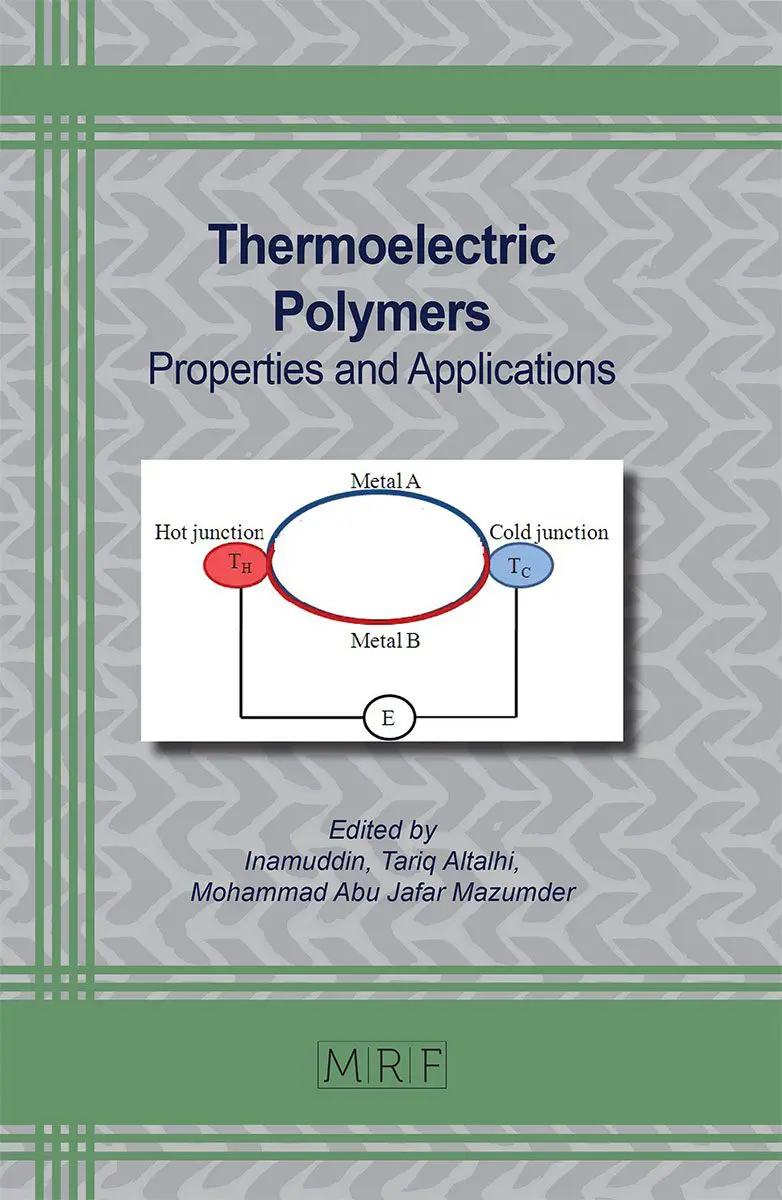
The book presents recent developments in the field of thermoelectric polymers and polymer composites. It focuses on the link between thermoelectric characteristics and material structure. Topics covered include chemical composition, microstructure, dopants, doping levels, methods of fabrication, thermoelectric effect, thermoelectric device conversion efficiency, and thermoelectric properties of conducting polymers. |
| |
|
| |
Recent Advances and Allied Applications of Mxenes |
| |
Inamuddin/ 9781644902868/ Price:US$ 85.00
|
| |
|

|
Since 2011, the MAX phase derivatives MXenes are constantly expanding in terms of crystallographic and composition variability. Several advancements have been made in the previous few years that have accelerated the production of novel MXenes with better chemical diversification and crystal structures. This book is intended to present the latest applicational advancements of MXenes in diversified sectors. |
| |
|
| |
Rare Earth: A tribute to the late Mr. Rare Earth, Professor Karl Gschneidner |
| |
Sooraj H. Nandyala/ 9781644903049/ Price:US$ 125.00
|
| |
|

|
This monograph represents a tribute to the late Prof. Karl Gschneidner, well known as ¡§Mr. Rare Earth¡¨, distinguished Professor of Materials Science and Engineering at the Iowa State University, a Senior Metallurgist at the Ames Laboratory, and the Chief Scientist of the Critical Materials Institute. Topics covered include Rare Earth Glass Spectroscopy, Treating Skin Diseases, Prospective Rare Earth Applications, Optical Information Storage, Diagnostic Imaging, Nanoparticles in Glasses, and ZnO Nanomaterials. |
| |
|
| |
Emerging Materials for Next Frontier Energy and Environment Applications |
| |
Alagarsamy Pandikumar/ 9781644903285/ Price:US$ 95.00
|
| |
|
|
This book focuses on (1) photocatalysis in environment remediation, i.e. the removal of pollution or contaminants from water, (2) electrode materials for electrocatalytic hydrogen production and supercapacitors, and (3) hydrogen generation and storage. The electrocatalytic hydrogen evolution reaction turns out to be a very effective method for converting sustainable energy into a clean energy carrier. |
| |
|
| |
Green Synthesis and Emerging Applications of Frontier Nanomaterials |
| |
Martin F. Desimone/ 9781644903261/ Price:US$ 125.00
|
| |
|
|
The book presents a comprehensive overview of the latest advancements in the eco-friendly synthesis, characterization and potential application of various advanced nanomaterials. |
| |
|
| |
The Strength-Ductility Paradox |
| |
David J. Fisher/ 9781644903223/ Price:US$ 95.00
|
| |
|
|
|
The strength-ductility paradox originally referred to the fact that the plasticity of titanium is improved when subjected to high-pressure torsion. This is also known as the SPD-paradox, where SPD is the initialism of severe plastic deformation. Today, we know that short-term annealing of the deformed material increases the strength and ductility simultaneously. The same phenomenon is also observed in other pure metals, in alloys and in metal-matrix composites. The book reviews the strength-ductility paradox in a wide range of materials, and the range of mechanisms involved. The book references 119 original resources with their direct web links for in-depth reading.
Keywords
Severe Plastic Deformation, Pure Metals, Non-Ferrous Alloys, Ferrous Alloys, High Entropy Alloys, Composites |
| |
|
| |
Metal Forming 2024 |
| |
Danuta Szeliga/ 9781644903247/ Price:US$ 150.00
|
| |
|
|
The book covers a great range of topics, including (1) Incremental forming and metal forming of 3D printed materials; (2) numerical modeling of processes and systems; (3) material characterization techniques for predicting microstructure evolution and mechanical properties during or after thermomechanical processing; (4) constitutive and numerical modeling, as well as process and system optimization. The materials covered include metal powders, lightweight systems, advanced high-strength steels, multiphase materials, and high-entropy alloys. |
| |
|
| |
Superhydrophobic Metal Surfaces |
| |
David J. Fisher/ 9781644903162/ Price:US$ 95.00
|
| |
|

|
The fact that water droplets are far from wetting the surface upon which they stand leads to many associated tendencies, such as impeding fogging, icing and corrosion. The book covers the ways in which superhydrophobicity has been imparted to metals. Metals themselves tend more naturally to be hydrophilic; and so imparting superhydrophobicity relies upon adding some sort of coating. The book references 156 original resources with their direct web links for in-depth reading.
Keywords
Superhydrophobicity, Aluminum, Cobalt, Copper, Iron, Magnesium, Titanium, Tungsten |
| |
|
| |
Artificial Intelligence and Alloy Design |
| |
David J. Fisher/ 9781644903148/ Price:US$ 95.00
|
| |
|
|
The development of novel materials can be greatly accelerated by Artificial Intelligence based on high-throughput automatic computation and data-mining of material databases. Artificial intelligence can be used to predict the properties of alloys, based simply upon their composition. The book references 343 original resources with their direct web links for in-depth reading.
Keywords
Machine Learning, Artificial Neural Network, Back-Tracking Algorithm, Bat Algorithm, Bayesian Regularization, Chimp Optimization Algorithm, Regression Tree, Firefly Algorithm, Genetic Algorithm, Gradient Boosting Decision Tree, Grey Wolf Algorithm, Half-Heusler Alloys, Hume-Rothery Rules, Jaya Algorithm, Johnson-Cook Model, Random Forests, Sparrow Model, Whale Optimization Algorithm, XGboost Algorithm |
| |
|
| VF02-115 |
Innovative Multifunctional Nanomaterial for Photocatalysis, Sensing, and Imaging |
| |
Azad Kumar/ 9781668487440/ Price:US$ 260.00
|
| |
|
|
Technology is significantly affected by a material¡¦s ability to adapt to its environment in a beneficial way. These smart systems, in which material qualities react to outside stimuli, are currently being developed. These materials have the potential to significantly improve the performance of new systems by lowering size, weight, cost, power consumption, and complexity while enhancing effectiveness, safety, and adaptability. Materials can be multifunctional on a variety of temporal and compositional levels and at dimensions ranging from nano to macro.
Innovative Multifunctional Nanomaterial for Photocatalysis, Sensing, and Imaging clarifies the type, chemical composition, and applications of multifunctional nanomaterials in photocatalysis, sensing, and imaging. This book discusses the most current advances in multifunctional materials for photocatalysis, sensing, and imaging in biological systems. Covering topics such as drug development, nanoparticles, and sensing, this premier reference source is an excellent resource for chemists, engineers, professionals, students and educators of higher education, researchers, and academicians.
Coverage:
The many academic areas covered in this publication include, but are not limited to:
¡EDrug Development
¡EImaging
¡EMachine Learning
¡EMobile Phones
¡ENanomaterials
¡ENanoparticles
¡EPhotocatalysis
¡EPython
¡EScikit
¡ESensing |
| |
|
| VF02-114 |
Innovations in Materials Chemistry, Physics, and Engineering Research |
| |
Eugene de Silva/ 9781668468319/ Price:US$ 260.00
|
| |
|

|
Innovations in Materials Chemistry, Physics, and Engineering Research is an all-encompassing book edited by Eugene de Silva, the Head of Multi-disciplinary Research in Applied Science (MRAS), and Pramudi Abeydeera, a prominent figure in polymer chemistry. The book explores the latest research and innovations in materials chemistry, physics, engineering, and other related areas. It seeks to inform researchers, policymakers, and the wider public about the most recent theoretical and experimental research in the field.
The book covers many topics, including the fundamental mechanisms of reactions, applications, synthesis, properties, and innovations in materials chemistry. It also contains critical reviews of past and current research, which provides the reader with a comprehensive understanding of the subject matter. By doing so, the book promotes collaborative research by facilitating the sharing of information and directing research toward new avenues in research and industrial development. It is an indispensable resource for universities, colleges, research centers, and industries. This book is particularly relevant for polymer scientists who find the latest research on materials chemistry, physics, engineering, and allied fields beneficial for their research endeavors.
Coverage:
The many academic areas covered in this publication include, but are not limited to:
¡EAlternative Energy Sources
¡EBatteries
¡ECarbon Dioxide Conversion
¡EDetergents
¡EFuel Cells
¡EPrinting Inks and Machines
¡ESensors
¡ESeparation Materials
¡ESupercapacitors
¡ESustainable Materials
¡EThermoelectrics
¡EWater treatment |
| |
|
| VF02-113 |
Modeling, Characterization, and Processing of Smart Materials |
| |
Ajay Kumar/ 9781668492253/ Price:US$ 260.00
|
| |
|
|
|
Modeling, Characterization, and Processing of Smart Materials proposes a comprehensive guide to addressing the challenges associated with smart materials, including the need for optimization and sustainability, and provides various nature-inspired algorithms, computational and simulation approaches, and artificial intelligence-based strategies for developing innovative smart materials. It also presents potential solutions for the limitations of smart materials and emphasizes the role of Industry 4.0 in maintaining their sustainability. Overall, this book offers a valuable problem-solution perspective on the development and applications of smart materials, making it an essential reference guide for academic researchers and industrial engineers in the fields of material science, chemical engineering, and environmental engineering.
Coverage:
The many academic areas covered in this publication include, but are not limited to:
¡EAerospace
¡EArtificial Intelligence-Based Strategies
¡EAutomotive
¡EBiomedical
¡EConstruction
¡EDurability
¡EFood Industry
¡EIndustry 4.0
¡EMultidisciplinary
¡ENature-Inspired Algorithms
¡EPharmaceutical
¡ERecyclability
¡EReinforcement
¡EReparability
¡ESmart Materials
¡ESustainability |
| |
|
| VF02-112 |
Modeling and Simulation of Functional Nanomaterials for Forensic Investigation |
| |
Allah Rakha/ 9781668483268/ Price:US$ 235.00
|
| |
|

|
Nanotechnology continues to contribute to the progress of innovations in the area of forensic science ranging from sensing, DNA monitoring, and counterfeiting to fingerprinting. In recent years, functional nanomaterials are widely applied in nanoscience and forensic investigation. They can be used in future interdisciplinary research by scientists, engineers, and biotechnologists.
Modeling and Simulation of Functional Nanomaterials for Forensic Investigation focuses on multiple applications related to forensics and provides information linked with nanoparticles. This book provides nanotechnology results in improving the sensitivity of established forensic techniques. It further focuses on different fabrication and characterization techniques of nanomaterials and relates their characteristics with forensic applications. Covering topics such as explosive detection, nano-forensic testing, and nano-trackers, this premier reference source is a comprehensive resource for material engineers, chemical engineers, nanotechnologists, biotechnologists, forensic scientists, students and educators of higher education, researchers, and academicians.
Coverage:
The many academic areas covered in this publication include, but are not limited to:
¡EBiomedical Engineering
¡EConventional Techniques
¡EExplosive Detection
¡EFluorescent Nanomaterials
¡EFunctional Nanomaterials
¡EIllicit Drugs
¡ENano-Forensic Testing
¡ENano-Level Modeling
¡ENano-Sensors
¡ENano-Trackers |
| |
|
| SF02-518 |
Corrosion Prevention Nanoscience: Nanoengineering Materials and Technologies |
| |
Berdimurodov Elyor Tukhlievich/ 9783111070094/ Price:EUR 104.95
|
| |
|
|
|
| |
|
| SF02-510 |
Applications of Polymer Nanofibers |
| |
Fabrizio Schiavone/ 9781682519240/ Price:US$ 165.00
|
| |
|
|
|
Polymer-based nanofibers as an important group of materials have attracted considerable attention in research and industrial areas. Polymer nanofibers with diameters in submicrometer (<1 £gm) possess unique properties including large specific surface area per unit mass, which facilitated adding functionalities to the surface for specific applications. This book intends to highlight the latest achievements in fabricating electrospun nanofibers and describe various ways to modify the surface and structure of scaffolds to promote their functionality. This book also summarizes the application of advanced polymeric nanofibrous scaffolds in the regeneration of human bone, cartilage, vascular tissues, and tendons/ligaments. |
| |
|
| SF02-510 |
Medical Applications of Nanomaterials |
| |
Esha Rami/ 9781774694015/ Price:US$ 180.00
|
| |
|

|
All other scientific disciplines, including chemistry, biology, physics, materials science, and engineering, can benefit from nanoscience and nanotechnology, which involve the study and utilization of incredibly small objects. This book presents the concept of Nano technology and its wide application in medicine. The chapters in this manual have been arranged in such a way as to provide a sequential understanding of the fundamental concepts in Nano technology and its medical application, Targeted Drug Delivery, Fundamentals of Nanobiosensors and Application of Nanomaterials in Nanopharmacology. Apart from these, this book also contains some advanced topics like Applications of Nanomaterials in Nanomedical Devices, Nanotechnology in Tissue Engineering and Gene therapy. Readers from a variety of backgrounds, such as researchers, professors, students, and biological scientists, will find this book to be equally helpful. Additionally, this book can help readers with backgrounds in other fields understand the basics of Nanotechnology and its various application. |
| |
|
| SF02-510 |
Advanced Elastomeric Materials |
| |
Saeed Farrokhpay/ 9781774690741/ Price:US$ 180.00
|
| |
|

|
Elastomers are being used widely in many engineering applications. They can be used in extreme conditions such as corrosive environments or at high temperatures, therefore, it is difficult to predict their expected service life. This book reviews the fundamentals of elastomeric materials and their manufacturing techniques with emphasis on their physical and chemical properties. It contains eight chapters focusing on various aspects of elastomers. An introduction of these materials is provided in Chapter 1. In Chapter 2, classification of elastomeric materials is discussed while morphology and compatibility of different elastomeric blends are discussed in Chapter 3. Furthermore, Chapter 4 contains the essentials of mechanical properties of different elastomeric materials and their response under mechanical conditions. In Chapter 5, properties and applications of conductive elastomers are explained. Chapter 6 discusses the mechanical and electrical properties of elastomeric materials and Chapter 7 deals with the applications of elastomers in aerospace and defense sectors. Finally, Chapter 8 discusses the biomedical applications of these materials. This book is greatly beneficial for students, researchers, engineers, teachers, and basically anybody who is interested in elastomers and rubbers or works with these materials. |
| |
|
| SF02-510 |
Applications of Conductive Polymers |
| |
Saeed Farrokhpay/ 9781774690765/ Price:US$ 180.00
|
| |
|

|
Conductive polymers are being used more and more as a substitute for metallic conductors and semiconductors. The moduli of conductive polymers are much lower than the metallic components, but they have better performance in special applications such as soft biological tissues and rubbers. Moreover, polymer constituents and manufacturing parameters can be varied to adjust the mechanical and electrical properties of these polymers. This book has eight chapters containing a broad range of application of conducting polymers. Chapter 1 is an introduction to conducting polymers and it explains the history, classification, synthesis routes and electrical properties of these polymers. Application of conductive polymers in drug delivery systems is discussed in Chapter 2 while Chapter 3 focuses on the applications of these polymers in textile industry. Chapter 4 discusses the applications of conductive polymers in development of supercapacitors and in Chapter 5, their applications in developing organic solar cells are explained. Chapter 6 summarizes applications of conductive polymers in membrane development and Chapter 7 discusses their applications in tissue engineering and medical area. Finally, a detailed description of different conductive polymers and their application in energy storage systems are discussed in Chapter 8. This book can be used as a textbook for students and researchers in materials science, chemical engineering, and polymer technology. In addition, it can be used by industrial experts and engineers who need detailed information about conductive polymers. |
| |
|
| |
An Introduction to Hard Ferrites: From Fundamentals to Practical Applications |
| |
Gagan Kumar Bhargava/ 9781644902301/ Price:US$ 125.00
|
| |
|
|
|
Due to their excellent magnetic characteristics, hard ferrites have many high-tech applications in such areas as permanent magnets, storage devices, HF Antenna and Spin Transmission. The present book reviews the present knowledge of these materials; their processing, characterization and potential applications. The book is also useful as an introductory text for students at the postgraduate research level. |
| |
|
| |
Emerging Applications of Nanomaterials |
| |
N.B. Singh/ 9781644902288/ Price:US$ 125.00
|
| |
|
|
|
This book reviews new advances in the field of nanomaterials; their synthesis, characterization, and applications. Specific topics include nanomaterials as catalysts, photodegradation of organic pollutants, multifunctional textiles, self-healing hydrogels, nanosensors for the detection of pathogens, machine learning based prosthesis, and various applications in the sports industry, the automobile sector, the area of defense and security, pharmaceuticals, energy storage and food packaging. |
| |
|
| |
Multiferroic Materials |
| |
R. Saravanan/ 9781644902264/ Price:US$ 95.00
|
| |
|
|
|
The magnetoelectric properties of multiferroic materials have a high potential for applications in the fields of data storage, spin valves, spintronics, memories, sensors and microelectronic devices. The book presents both a detailed literature review of the field, and the experimental results obtained from various characterization and analytical techniques performed on four series of lanthanum orthoferrite type multiferroics. These materials have been used in solid oxide fuel cells (SOFC), magneto-hydrodynamic power generation (MHD), capacitors and energy storage devices in microelectronics, non-volatile magnetic memory devices and ferroelectric random access memories (Fe-RAM). |
| |
|
| |
Transition Metal Doped Spintronics Materials |
| |
R. Saravanan/ 9781644902240/ Price:US$ 95.00
|
| |
|
|
|
The book presents new research on the synthesis and characterization of various oxide based dilute magnetic spintronics materials (ODMS). The characterization techniques included powder X-ray diffraction, scanning electron microscopy, vibrating sample magnetometry and UV visible spectrometry. The morphological, magnetic and optical properties are reported. Electron density distribution studies are presented in the form of three, two and one dimensional electron density maps. |
| |
|
| |
The Boron Arsenides |
| |
David J. Fisher/ 9781644902226/ Price:US$ 95.00
|
| |
|
|
|
Boron Arsenide offers very interesting electronic properties, as well as a high thermal conductivity; nearly 10 times higher than that of silicon. It has been hailed as ¡¥the best semiconductor material ever found¡¦. The present book presents a detailed review of this material and its potential applications. The materials covered include Icosahedral Boron Arsenide, Hexagonal Boron Arsenide, Amorphous Boron Arsenide and Cubic Boron Arsenide. The book references 166 original resources with their direct web links for in-depth reading. |
| |
|
| |
Emerging Nanomaterials and Their Impact on Society in the 21st Century |
| |
N.B. Singh/ 9781644902165/ Price:US$ 125.00
|
| |
|
|
|
The book covers the synthesis, classification, characterization, applications and historical background of nanomaterials in various sectors, such as nanosensors, healthcare, solar cells, energy storage, hydrogels, nanocatalysts, sport industry, automobile sector, construction industry, lubricant industry, defense and security, textiles, food sciences, agriculture and biomedical applications. |
| |
|
| |
New Materials for a Circular Economy |
| |
Alberto Garcia-Penas/ 9781644902622/ Price:US$ 95.00
|
| |
|

|
A circular and environment-friendly economy could displace the linear economy as it is in use around the world. This would involve enlarged life cycles for products, and an increase in the efficiency of electric and electronic devices. The generation of new materials will be essential, as well as materials recycling or conversion after use. This book discusses new ways of production, management, recycling and conversion of new and regular materials. |
| |
|
| |
Superplasticity in Advanced Materials ICSAM 2023 |
| |
Jose Maria Cabrera Marrero/ 9781644902608/ Price:US$ 125.00
|
| |
|
|
|
The book presents practical and theoretical works on superplasticity in metals and ceramics, on deformation mechanisms, on processes to obtain large ultrafine-grained structures, on advanced characterization techniques, and on hot deformation of advanced materials. Key papers focus on (1) processing of metallic alloys for achieving exceptional superplastic properties, (2) high-pressure sliding (HPS) processes, (3) in-situ neutron and synchrotron methods, and (4) ultra-severe plastic deformation. |
| |
|
| |
Applications of Emerging Nanomaterials and Nanotechnology |
| |
N.B. Singh/ 9781644902547/ Price:US$ 95.00
|
| |
|
|
|
The book reviews recent developments in the field of nanomaterials science and technology. Topics covered include methods of fabrication of nanomaterials and nanocomposites, and their applications in areas such as Optoelectronics, Cosmetics, Energy Conversion Cells, Soil and Water Treatment, Agricultural Engineering, Food Sciences, Leather Production, and Photocatalysis. |
| |
|
| |
Application of Artificial Intelligence in New Materials Discovery |
| |
Inamuddin/ 9781644902523/ Price:US$ 85.00
|
| |
|
|
|
The book is concerned with the use of Artificial Intelligence in the discovery, production and application of new engineering materials. Topics covered include nano-robots. data mining, solar energy systems, materials genomics, polymer manufacturing, and energy conversion issues. |
| |
|
| |
Sustainable Processes and Clean Energy Transition ICSuPCET2022 |
| |
Yeong Yin Fong/ 9781644902516/ Price:US$ 125.00
|
| |
|
|
|
These proceedings present papers on Additive Manufacturing, Composites Forming Processes, Extrusion and Drawing, Forging and Rolling, Formability of Metallic Materials, Friction and Wear in Metal Forming, Incremental and Sheet Metal Forming, Innovative Joining by Forming Technologies, Lionel Fourment MS on Optimization and Inverse Analysis in Forming, Machining and Cutting, Material Behavior Modelling, New and Advanced Numerical Strategies for Material Forming, Non-Conventional Processes, Polymer Processing and Thermomechanical Properties, Sustainability on Material Forming, and Property-Controlled Forming. |
| |
|
| |
Material Forming, part 1 ESAFORM 2023 |
| |
Lukasz Madej/ 9781644902462/ Price:US$ 125.00
|
| |
|
|
|
These proceedings present papers on Additive Manufacturing, Composites Forming Processes, Extrusion and Drawing, Forging and Rolling, Formability of Metallic Materials, Friction and Wear in Metal Forming, Incremental and Sheet Metal Forming, Innovative Joining by Forming Technologies, Lionel Fourment MS on Optimization and Inverse Analysis in Forming, Machining and Cutting, Material Behavior Modelling, New and Advanced Numerical Strategies for Material Forming, Non-Conventional Processes, Polymer Processing and Thermomechanical Properties, Sustainability on Material Forming, and Property-Controlled Forming. |
| |
|
| |
Material Forming, part 2 ESAFORM 2023 |
| |
Lukasz Madej/ 9781644902486/ Price:US$ 125.00
|
| |
|
|
|
These proceedings present papers on Additive Manufacturing, Composites Forming Processes, Extrusion and Drawing, Forging and Rolling, Formability of Metallic Materials, Friction and Wear in Metal Forming, Incremental and Sheet Metal Forming, Innovative Joining by Forming Technologies, Lionel Fourment MS on Optimization and Inverse Analysis in Forming, Machining and Cutting, Material Behavior Modelling, New and Advanced Numerical Strategies for Material Forming, Non-Conventional Processes, Polymer Processing and Thermomechanical Properties, Sustainability on Material Forming, and Property-Controlled Forming. |
| |
|
| |
Material Forming, part 3 ESAFORM 2023 |
| |
Lukasz Madej/ 9781644902493/ Price:US$ 125.00
|
| |
|
|
|
These proceedings present papers on Additive Manufacturing, Composites Forming Processes, Extrusion and Drawing, Forging and Rolling, Formability of Metallic Materials, Friction and Wear in Metal Forming, Incremental and Sheet Metal Forming, Innovative Joining by Forming Technologies, Lionel Fourment MS on Optimization and Inverse Analysis in Forming, Machining and Cutting, Material Behavior Modelling, New and Advanced Numerical Strategies for Material Forming, Non-Conventional Processes, Polymer Processing and Thermomechanical Properties, Sustainability on Material Forming, and Property-Controlled Forming. |
| |
|
| |
Handbook of Research on Corrosion Sciences and Engineering |
| |
Younes El Kacimi/ 9781668476895/ Price:US$ 360.00
|
| |
|
|
The climate change crisis presents a multi-dimensional challenge to the development of the built environment. With finite global resources and increasingly unpredictable climate patterns, the need to improve our understanding of sustainable practices and materials for construction has never been more pressing.
The Handbook of Research on Corrosion Sciences and Engineering aims to shed light on the recent developments in the usage of sustainable materials to protect metallic materials against corrosion and provides emerging research exploring the theoretical and practical aspects of corrosion engineering science and technology. Covering key topics such as machine learning, smart coating, sustainability, and artificial intelligence, this major reference work is ideal for construction workers, industry professionals, researchers, academicians, scholars, practitioners, instructors, and students.
Coverage:
The many academic areas covered in this publication include, but are not limited to:
¡EAdvanced Coating
¡EArtificial Intelligence
¡ECorrosion
¡ECorrosion Engineering
¡ECorrosion Protection
¡EMachine Learning
¡EMaterials
¡ESmart Coating
¡ESustainability
¡EWastewater Systems |
| |
|
| VF02-109-1 |
Advanced Manufacturing Techniques for Engineering and Engineered Materials |
| |
R. Thanigaivelan/ 9781799895749/ Price:US$ 270.00
|
| |
|
|
As technology advances, it is imperative to stay current in the newest developments made within the engineering industry and within material sciences. Trends in manufacturing such as 3D printing, casting, welding, surface modification, computer numerical control (CNC), non-traditional, Industry 4.0 ergonomics, and hybrid machining methods must be closely examined to utilize these important resources for the betterment of society.
Advanced Manufacturing Techniques for Engineering and Engineered Materials provides a unified and complete overview about the recent and emerging trends, developments, and associated technology with scope for the commercialization of techniques specific to manufacturing materials. This book also reviews the various machining methods for difficult-to-cut materials and novel materials including matrix composites. Covering topics such as agro-waste, conventional machining, and material performance, this book is an essential resource for researchers, engineers, technologists, students and professors of higher education, industry workers, entrepreneurs, researchers, and academicians.
Coverage:
The many academic areas covered in this publication include, but are not limited to:
¡EAdditive Manufacturing
¡EAdvanced Materials
¡EAgro-Waste
¡EBiomaterials
¡EComposite Materials
¡EConventional Machining
¡EElectrochemical Micromachining
¡EIndustrial Automation
¡EIndustrial Robotics
¡EMaterial Performance
¡ENontraditional Machining
¡EPerformance Optimization
¡ESurface Modification Techniques
¡EWelding Methods |
| |
|
| SF02-509 |
Advanced Coatings for the Corrosion Protection of Metals |
| |
Diana Petronela Burduhos-Nergis/ 9781644901663/ Price:US$ 95.00
|
| |
|
|
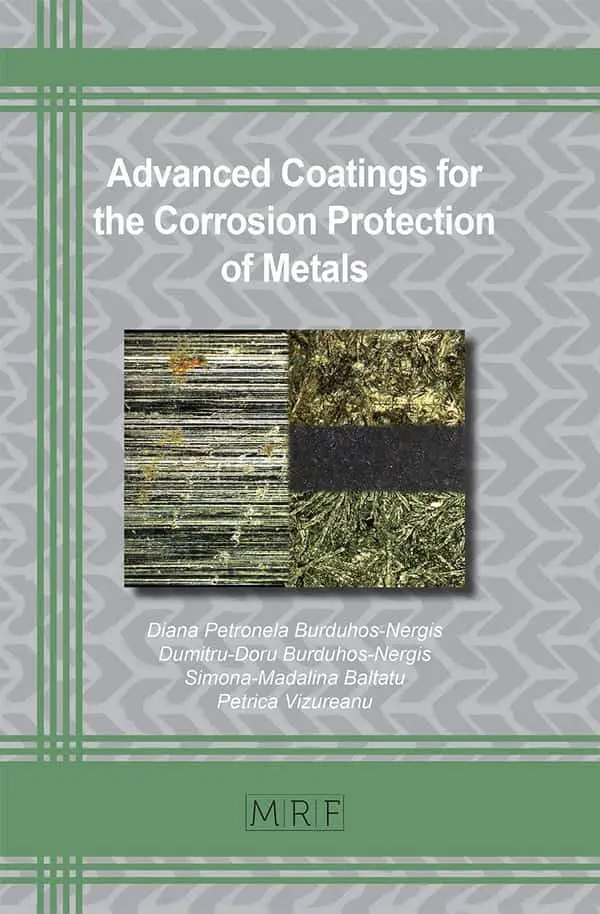
The corrosion protection of metallic materials is of great importance in many fields, especially also when it comes to environmental issues. The book focuses on organic and inorganic coatings, metallic coatings and new methods for the deposition of protective thin layers. Coating techniques and methods for testing and assessing corrosion behavior are presented. |
| |
|
| SF02-508 |
Ultrananocrystalline Diamond Coatings for Next Generation High-Tech and Medical Devices |
| |
Orlando Auciello/ 9781107088733/ Price:GBP 110.00
|
| |
|
|
|
| |
|
| SF02-503 |
Introduction to Nanomaterials |
| |
Nelson Bolivar/ 9781774690529/ Price:US$ 170.00
|
| |
|
|
This book is mainly intended for undergraduate students of materials engineering and electrical engineering. However, the book is also beneficial for graduate students from various multidisciplinary areas including chemistry, physics, materials engineering, electrical engineering, chemical engineering, mechanical engineering, biology and, and bioengineering. Researchers and scientists in the area of nanoscience and nanotechnology can also use the book for constructing the background essential to comprehend the fundamentals of nanomaterials. The world is rapidly moving towards technological evolution since the start of 21st century. Nanotechnology is revolutionizing the world due to its unique and extraordinary applications in almost every area of human activity. The advent of nanotechnology has resulted in the shrinkage of chips and electrical circuits from giant structures to the size of our finger nails. We can store data up to 1 tera-byte in a storage device. The smart watches are performing the tasks as a mini-computer. On the other hand, the development of smart-phone technology has completely revolutionized the world. The applications of nanotechnology in medicine and medical devices have resulted in efficient disease detection and higher cure rates. The use of nanomaterials in electronic sensors and solar cells is also getting great attention now-a-days. There are numerous other applications of nanomaterials in various sectors of materials development which are paving a way towards a nano-age. This introductory book on nanomaterials particularly addresses the necessities of engineers and scientists who require the basic knowledge about nanoscience and nanotechnology, without indulging into the minor scientific details. |
| |
|
| SF02-503 |
Materials Science of Polymers |
| |
Mirian Pateiro/ 9781682518229/ Price:US$ 160.00
|
| |
|
|
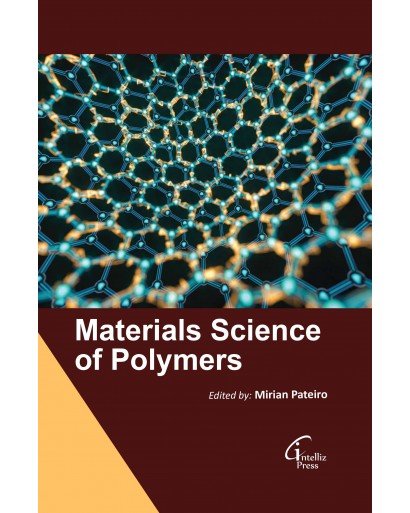
Polymers have been around us in the natural world from the very beginning (e.g., cellulose, starch, and natural rubber). Polymer materials are effective material that have rapidly increased in biological applications. Polymer materials possess an array of unique properties that make them useful in a wide range of biomaterial applications, such as orthopedics, dental, hard and soft tissue replacements, and cardiovascular systems. This book deals with the basic principles of polymer science, shows how polymer materials can be specifically designed to meet the needs of biomaterials, and provides examples of how this class of materials is currently used in medical applications. |
| |
|
| SF02-503 |
Applied Materials Science |
| |
Conan Chen/ 9781682518212/ Price:US$ 160.00
|
| |
|
|
Materials science is essential for engineering projects such as telecommunications, aerospace, electronics, information processing, and nuclear power and energy conversion. If the contribution of material science and engineering to other disciplines grows, it will become important for scientists of all backgrounds to understand it better. The aim of this insightful book is therefore to examine the developments made in engineering materials, their classification and the significance of engineering materials in today's world, their properties and the different areas of application. The book seeks to provide a relatively brief description of materials science and materials engineering and their relevance in today's world. |
| |
|
| |
Functional Materials and Applied Physics FMAP-2021 |
| |
Yogesh Sonvane/ 9781644901861/ Price:US$ 85.00
|
| |
|
|
The book presents advances in the field of functional materials. Topics covered include Nano-MgB2 Superconductors, Au and Ag Nanoribbons, Silver Nanostructure Formation, 2D Monolayer As2S3, Electronic and Optical Properties of Boron Selenide BSe(2H) monolayers, Mixed Halide Perovskite Solar Cells, Ionization Potentials of Nucleic Acid Intercalators, and Surface Cladding on AISI 1045 Steel. |
| |
|
| |
Bioinspired Nanomaterials for Energy and Environmental Applications |
| |
Alagarsamy Pandikumar/ 9781644901823/ Price:US$ 95.00
|
| |
|
|
The book presents recent advances in the synthesis of bioinspired nanomaterials and their applications in areas such as photocatalysis, electrocatalysis and photoelectrocatalysis, supercapacitors and solar cells. Specific topics include photocatalytic disinfection, degradation of toxic chemicals, energy conversion and energy storage. |
| |
|
| |
Advanced Functional Membranes: Materials and Applications |
| |
Inamuddin/ 9781644901809/ Price:US$ 125.00
|
| |
|
|
Functional membranes are used in food processing, sensor technology, medical and biomedical devices, desalination, waste water treatment, CO2 capture, energy production and energy storage, optoelectronics etc. The book reviews recent advances in the field and discusses challenges and perspectives. |
| |
|
| |
Recycling of Rare Earths |
| |
David J. Fisher/ 9781644901786/ Price:US$ 95.00
|
| |
|
|
The recycling of rare earth elements is one of the great challenges for establishing a green economy. Rare earths play an essential role in a great many high-tech products and processes: electronic display screens , computer monitors, cell phones, rechargeable batteries, high-strength magnets, catalytic converters, fluorescent lamps etc. Recycling these materials not only results in valuable materials for new products; it also helps in reducing mountains of discarded products. The recycling methods discussed include bioleaching, biosorption, siderophores, algae and seaweed. carbon-based nanomaterials, silica, pyrometallurgy, electrochemistry, hydrometallurgy, solvent extraction and the use of various absorbents. The book references 253 original resources with their direct web links for in-depth reading. |
| |
|
| |
Handbook of Research on Advancements in the Processing, Characterization, and Application of Lightweight Materials |
| |
Kaushik Kumar/ 9781799878643/ Price:US$ 315.00
|
| |
|

|
The Handbook of Research on Advancements in the Processing, Characterization, and Application of Lightweight Materials provides the recent advancements in the lightweight mat materials processing, manufacturing, and characterization. This book identifies the need for modern tools and techniques for designing lightweight materials and addresses multidisciplinary approaches for applying their use. Covering topics such as numerical optimization, fatigue characterization, and process evaluation, this text is an essential resource for materials engineers, manufacturers, practitioners, engineers, academicians, chief research officers, researchers, students, and vice presidents of research in government, industry, and academia.
Coverage:
The many academic areas covered in this publication include, but are not limited to:
¡EAdditive Manufacturing
¡EComputational Structural Analysis
¡EFatigue Characterization
¡EFEA Approach
¡EFractographic Analysis
¡EFriction Stir Welding
¡EImpulse Thermal Energy Method
¡ELightweight Applications
¡ELightweight Material Structures
¡ELightweight Materials
¡ELow Structural Performance
¡EMechanical Behavior
¡EMetallic Foams
¡ENumerical Optimization
¡EProcess Evaluation
¡EProduction Technique
¡ESelf-Assembly
¡EStructural Optimization
¡ETailor-Made Metallic Structures
¡EThermoplastic Parts |
| |
|
| |
Advanced Metallic Biomaterials |
| |
Madalina-Simona Baltatu/ 9781644901762/ Price:US$ 95.00
|
| |
|
|
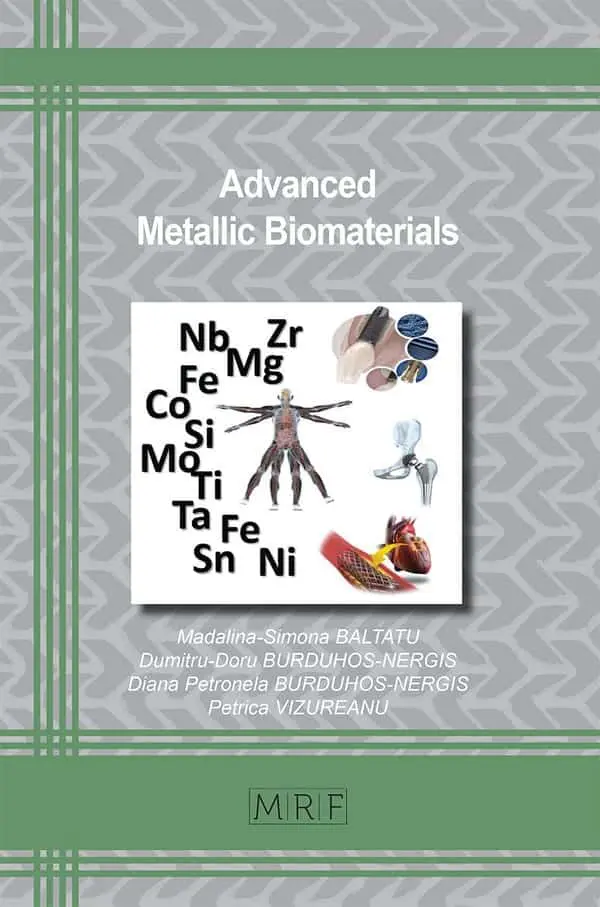
The book presents the characterization and classification of metallic biomaterials; with focus on titanium-based alloys, cobalt-based alloys, stainless steels and biodegradable alloys. Emphasis is placed on the synthesis, assessment of properties and medical applications such as multifunctional implants. The book references 423 original resources and includes their direct web link for in-depth reading. |
| |
|
| |
A Compendium of Deformation-Mechanism Maps for Metals |
| |
David J. Fisher/ 9781644901687/ Price:US$ 95.00
|
| |
|
|
Deformation-mechanism maps represent an invaluable guide to predicting the optimum processing conditions for a material. They are also useful in matching a material to a given engineering application. The present book summarizes recent research results in the field. The book references 106 original resources and includes their direct web link for in-depth reading. |
| |
|
| |
Handbook of Research on Green Synthesis and Applications of Nanomaterials |
| |
Rajni Garg/ 9781799889366/ Price:US$ 325.00
|
| |
|

|
Nanomaterials can be synthesized by physical, chemical, and biological methods; however, the latter technique is preferred as it is eco-friendly, non-toxic, and cost-effective. The green synthesized nanomaterials have been found to be more efficient with potential applications in diverse fields. It is crucial to explore green synthesized nanomaterials and the applications that can be made in order to support water remediation, pharmaceuticals, food processing, construction, and more.
The Handbook of Research on Green Synthesis and Applications of Nanomaterials provides a multidisciplinary approach to the awareness of using non-toxic, eco-friendly, and economical green techniques for the synthesis of various nanomaterials, as well as their applications across a variety of fields. Covering topics such as antimicrobial applications, environmental remediation, and green synthesis, this book acts as a thorough reference for engineers, nanotechnology professionals, academicians, students, scientists, and researchers pursuing research in the nanotechnology field.
Coverage:
The many academic areas covered in this publication include, but are not limited to:
¡EAntimicrobial Applications
¡EAntimicrobial Properties
¡EBiocompatible Approaches
¡EBiomedical Advancements
¡ECancer Therapy
¡EDrug Delivery
¡EEnvironmental Remediation
¡EGreen Synthesis
¡ENanomaterial Application
¡ENanomaterials
¡ENanoparticles
¡ENanotechnology
|
| |
|
| |
Handbook of Research on Tribology in Coatings and Surface Treatment |
| |
Amirhossein Pakseresht/ 9781799896838/ Price:US$ 315.00
|
| |
|

|
Advances are continuously being made in applying the coatings and surface treatments by different techniques to reduce the damages from tribology. Engineers need more detailed information to compare the capability of each coating process in wear resistant and lubrication applications. It is also important to focus on the concepts of tribology in various applications such as the manufacturing process, bio implants, machine elements, and corrosive environments. The need for a comprehensive resource addressing these findings in order to improve wear resistance is unavoidable.
The Handbook of Research on Tribology in Coatings and Surface Treatment evaluates the latest advances the fabrication of wear-resistant and lubricant coatings by different techniques and investigates wear-resistant coatings and surface treatments in various applications such as the automobile industry. Covering a wide range of topics such as lubricant coatings and wearable electronic devices, it is ideal for engineers, industry professionals, researchers, academicians, scholars, practitioners, instructors, and students.
Coverage:
The many academic areas covered in this publication include, but are not limited to:
¡EBiotribology
¡ECeramic Fiber
¡EFriction Stir Processing
¡ELubricant Coatings
¡EThin Film
¡ETribocorrosion
¡ETribological Properties
¡ETribotronics
¡EWear-Resistant Materials
¡EWearable Electronic Devices |
| |
|
| |
Advanced Applications of Micro and Nano Clay: Biopolymer-based Composites |
| |
Amir Al-Ahmed/ 9781644901908/ Price:US$ 125.00
|
| |
|

|
Due to their characteristic properties, biodegradable nature and non-toxicity, clay-biopolymer based composites have many applications in such advanced fields as drug release, antimicrobial activities, wound healing, tissue engineering, wastewater treatment, food packaging and flame retardant materials. The book reviews fabrication, properties and applications of a great variety of these materials. |
| |
|
| |
Sustainable Materials and Smart Practices |
| |
M. Vasudevan/ 9781644901946/ Price:US$ 150.00
|
| |
|
|
This book presents recent research on sustainable building materials and their various applications. Topics include such items as fiber reinforced concrete, the use of mineral admixtures. self-sensing cement composites, the use of nanomaterials for structural health monitoring and the production of geopolymer mortar. |
| |
|
| |
Sustainable Natural Fiber Composites |
| |
Anish Khan/ 9781644901847/ Price:US$ 95.00
|
| |
|
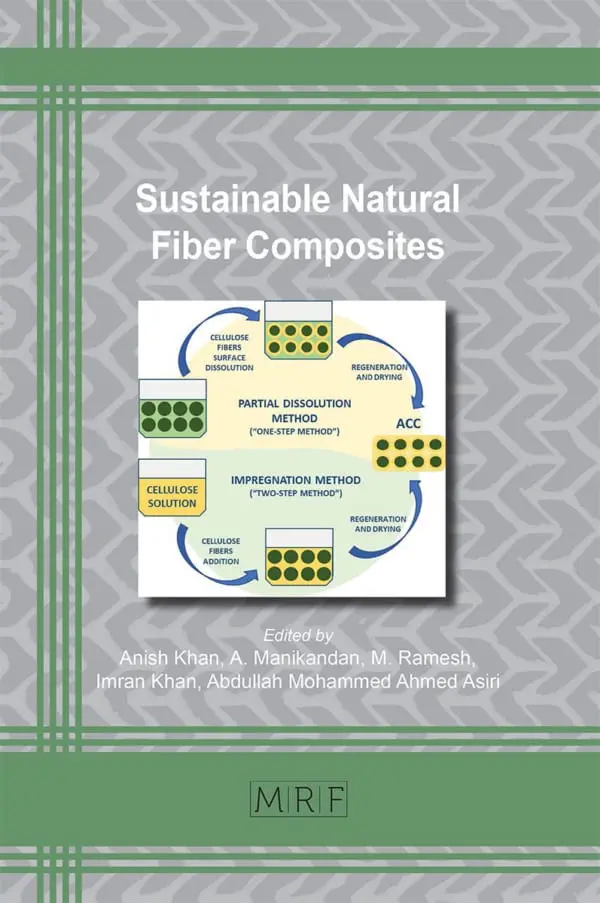
|
The book covers such diverse topics as cellulose fibers in cement paste and concrete, biodegradable materials for dental applications, coconut and pineapple fiber composites, biodegradable plastic composites, durability against fatigue and moisture, physical and mechanical characterization of fiber composites, improving the hydrophobic nature of fiber composites, and hybrid natural fiber composites. |
| |
|
| |
Superconductors: Materials and Applications |
| |
Eds. Inamuddin/ 9781644902103/ Price:US$ 125.00
|
| |
|
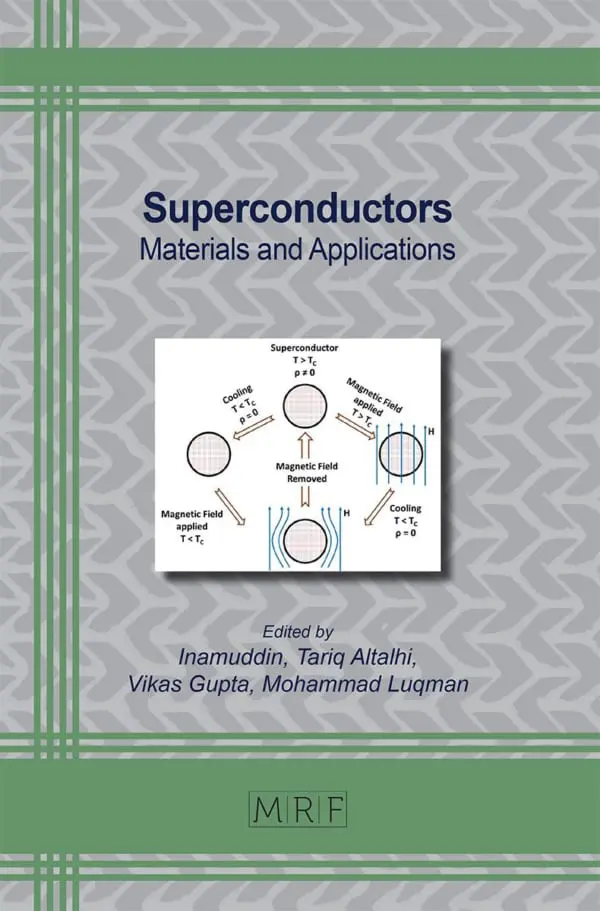
|
The book presents the current status of superconductor science and technology. It focuses on the design, properties and applications of superconductor materials. The superconductor categories covered include type-I, type-II, bulk, hard, soft, oxide, fermions, organic, iron, Lanthanide-based superconductors, high temperature superconductors and superconducting metamaterials. |
| |
|
| |
Advanced Functional Piezoelectric Materials and Applications |
| |
Eds. Inamuddin/ 9781644902080/ Price:US$ 125.00
|
| |
|
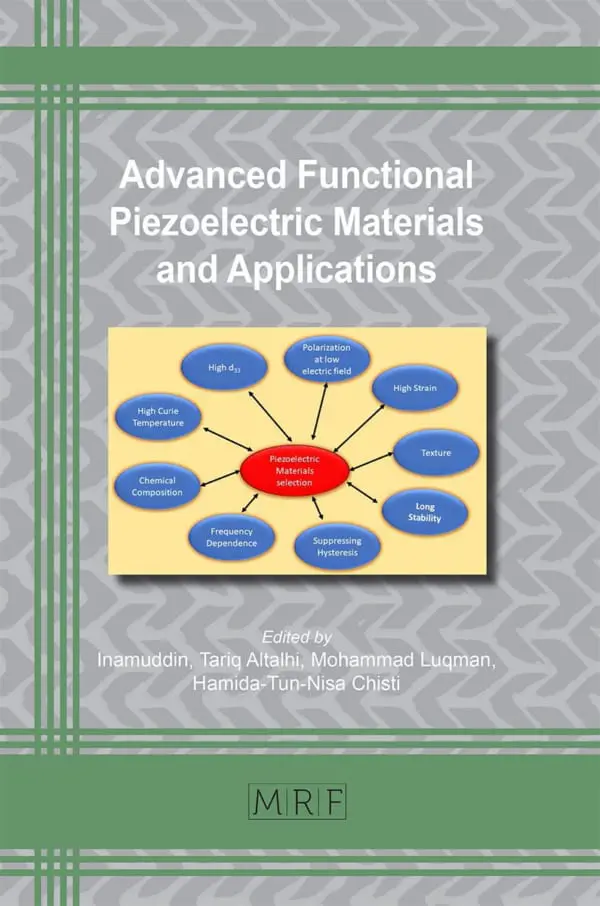
|
he book reviews our current knowledge of piezoelectric materials, including their history, developments, properties, process design, and technical applications in such areas as sensors, actuators, power sources, motors, environmental and biomedical domains. Piezoelectric materials will play a crucial role in the development of sustainable energy systems. |
| |
|
| |
"Advanced Applications of Micro and Nano Clay II: Synthetic Polymer Composites
" |
| |
Eds. Amir Al-Ahmed/ 9781644902028/ Price:US$ 125.00
|
| |
|
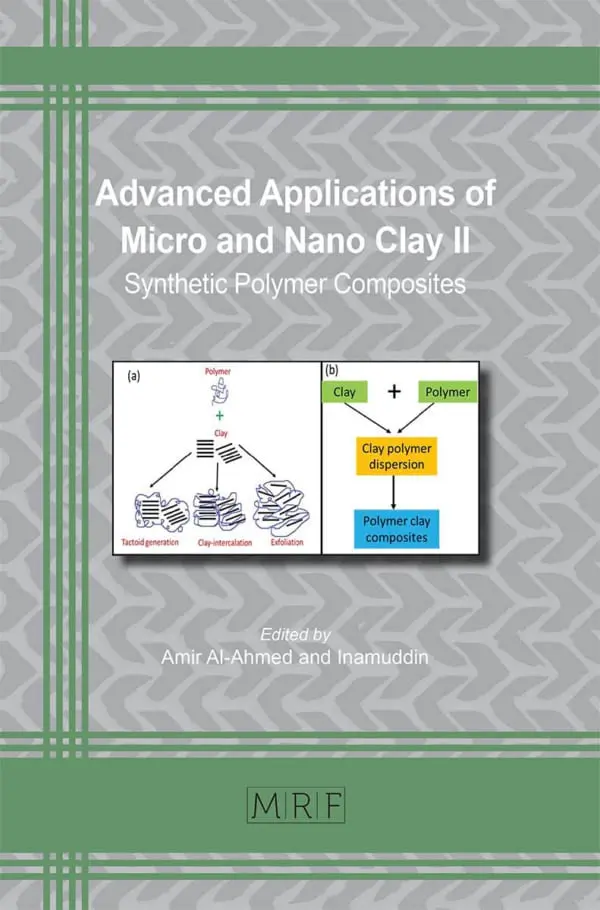
|
The book focuses on clay-based micro and nanocomposites with different synthetic polymers and presents their synthesis, characterization and testing. The fields of application of these materials include food packaging, rheological control agents, wastewater treatment, biomedical applications and drug delivery. |
| |
|
| VF02-108 |
Research Anthology on Synthesis, Characterization, and Applications of Nanomaterials, 4-Vols/Set. |
| |
Information Resources Management Association/ 9781799885917/ Price:US$ 1975.00
|
| |
|

|
The Research Anthology on Synthesis, Characterization, and Applications of Nanomaterials seeks to address not only how nanomaterials are created, used, or characterized, but also to apply this knowledge to the multidimensional industries, fields, and applications of nanomaterials and nanoscience. This includes topics such as both natural and manmade nanomaterials; the size, shape, reactivity, and other essential characteristics of nanomaterials; challenges and potential effects of using nanomaterials; and the advantages of nanomaterials with multidisciplinary uses. This book is ideally designed for researchers, engineers, practitioners, industrialists, educators, strategists, policymakers, scientists, and students working in fields that include materials engineering, engineering science, nanotechnology, biotechnology, microbiology, drug design and delivery, medicine, and more.
Topics Covered
The many academic areas covered in this publication include, but are not limited to:
¡EBiomedical Applications
¡EBioremediation
¡EChemical Properties
¡EComposite Structures
¡EDrug Delivery
¡EEnergy Storage
¡EGraphene
¡EIndustrial Science
¡EMaterials Synthesis
¡EMechanical Properties
¡EMedical Devices
¡ENanocomposites
¡ENanofibers
¡ENanomaterials
¡ENanoparticles
¡ENanotubes
¡EPolymer Nanocomposites
¡ESynthesis of Nanomaterials
¡EThermal Properties
¡EWater Treatment |
| |
|
| VF02-107 |
Emerging Applications and Implementations of Metal-Organic Frameworks |
| |
Shimaa Mohamed Elsaeed/ 9781799847601/ Price:US$ 250.00
|
| |
|

|
Metal-organic frameworks (MOFs) are some of the most discussed materials of the last decade. Their extraordinary porosity and functionality from metals and organic linkers make them one of the most promising materials for a vast array of applications. The easy tunability of their pore size and shape from the micro- to meso-scale by changing the connectivity of the inorganic moiety and the nature of the organic linkers makes these materials special. Moreover, by combining with other suitable materials, the properties of MOFs can be improved further for enhanced functionality/stability, ease of preparation, and selectivity of operation.
Emerging Applications and Implementations of Metal-Organic Frameworks combines the latest empirical research findings with relevant theoretical frameworks in this area in order to improve the reader¡¦s understanding of MOFs and their different applications in areas that include drug delivery, heavy metal removal from water, and gas storage. The design and synthesis of MOFs are also investigated along with the preparation of composites of MOFs. While covering applications that include water defluoridation, rechargeable batteries, and pharmaceutically adapted drug delivery systems, the book¡¦s target audience is comprised of professionals, researchers, academicians, and students working in the field of physical and polymer chemistry, physics, engineering science, and environmental science.
Topics Covered
The many academic areas covered in this publication include, but are not limited to:
¡EBuilding Materials
¡EComposites
¡EDrug Delivery System
¡EHeavy Metals
¡EQuartz Crystal Microbalance
¡ERechargeable Batteries
¡ESupercapacitors
¡EWater Defluoridation
|
| |
|
| VF02-106 |
Emerging Materials and Advanced Designs for Wearable Antennas |
| |
Vinod Kumar Singh/ 9781799876113/ Price:US$ 250.00
|
| |
|

|
Emerging Materials and Advanced Designs for Wearable Antennas explores how wearable antenna technology is being employed to enhance the quality of life in various industries. The technologies implemented and success of these antenna technologies is essential in the emerging field of wearable computing and is discussed in detail within the contents of this book. While covering essential topics such as the optimization of antenna material, improvement in flexible antenna performance, synthesis and design aspects of antennas, and transmission and receiving of the bendable antenna, this book is ideal for the military field, scientists, the medical field, practitioners, stakeholders, researchers, academicians, and students looking for the most advanced and updated research on the technology and implementation of wearable antennas spanning multiple industries.
Topics Covered
The many academic areas covered in this publication include, but are not limited to:
¡EAntenna Design
¡EAntenna Performance Optimization
¡EAntenna Textiles
¡EArtificial Neural Network
¡EBendable Transmitter and Receiver
¡EBody Area Network (BAN)
¡EFlexible Antenna
¡EMicrostrip Antenna
¡EMobile Communication
¡ERemote Sensing
¡ERF Electronics
¡ESignal Processing
¡EWearable Antennas
¡EWireless Energy Transmission |
| |
|
| VF02-105 |
Applications of Nanomaterials in Agriculture, Food Science, and Medicine |
| |
Mohd Amin Bhat/ 9781799855637/ Price:US$ 240.00
|
| |
|

|
The uses of nanotechnologies continue to rise exponentially. Due to their multifaceted nature, nanomaterials have a vast amount of potential uses in various scientific professions. Professionals in sectors including agriculture, nutrition, and healthcare are discovering the numerous benefits that nanomaterials carry when applied to traditional practices. In order to understand the dynamic properties of nanomaterials and how to utilize them in specific fields, significant research is required.
Applications of Nanomaterials in Agriculture, Food Science, and Medicine is an essential reference source that discusses the emerging development of nanotechnology in various sectors of the scientific community as well as the current benefits and future uses. Industries that the book covers include energy storage and renewable energy, environmental science and wastewater treatment, food and agriculture, and medicine and bioinformatics. This book is ideally designed for researchers, engineers, practitioners, industrialists, educators, strategists, policymakers, scientists, and students seeking coverage on the strategic role of nanomaterials in these imperative fields.
Topics Covered
The many academic areas covered in this publication include, but are not limited to:
¡EBioinformatics
¡EChemical Properties
¡EDairy Science
¡EEnergy Harvesting
¡EEnvironmental Remediation
¡EMicrobial Technologies
¡ENano-Biomedicine
¡ENano-Biotechnology
¡ENanophysics
¡EPharmaceutical Science |
| |
|
| VF02-104 |
Technology Development for Adsorptive Heat Energy Converters: Emerging Research and Opportunities |
| |
Kostyantyn M. Sukhyy/ 9781799844327/ Price:US$ 215.00
|
| |
|
|
Energy saving and emission reduction are two of the greatest challenges facing the world today. Heat energy storage can save fuel and effectively use renewable sources. Heat energy storage is decisive for many energy saving measures and promises a reliance on non-traditional renewable energy sources. However, most recent research focused on material selection is scattered, disembodied, and sometimes contradictory.
Technology Development for Adsorptive Heat Energy Converters: Emerging Research and Opportunities is an essential publication that offers a cohesive examination of methods of energy storage and conversion. Highlighting a broad range of topics including composite materials, operating principles, and structural characteristics, this book is ideally designed for developers, policymakers, researchers, academicians, students, and engineers in the fields of materials engineering, renewable energy, and environmental engineering.
Topics Covered
The many academic areas covered in this publication include, but are not limited to:
¡EAdsorbent Properties
¡EComposite Materials
¡EConstruction and Operating Parameters
¡EDesign Principles
¡EHeat and Moisture Regeneration
¡EHeat Storage
¡EMathematical Simulation
¡EOperating Principles
¡EPerformance Modeling
¡ESpecifications
¡EStructural Characteristics
¡ESubstantiation
¡EThermodynamics
¡EVentilation Systems |
| |
|
| VF02-103 |
Advanced Surface Coating Techniques for Modern Industrial Applications |
| |
Supriyo Roy/ 9781799848707/ Price:US$ 240.00
|
| |
|

|
Advanced Surface Coating Techniques for Modern Industrial Applications is a highly sought reference source that compiles the recent research trends in these new and emerging surface coating materials, deposition techniques, properties of coated materials, and their applications in various engineering and industrial fields. The book particularly focuses on 1) coating materials including anti-corrosive materials and nanomaterials, 2) coating methods including thermal spray and electroless disposition, and 3) applications such as surface engineering and thin film application. The book is ideal for engineers, scientists, researchers, academicians, and students working in fields like material science, mechanical engineering, tribology, chemical and corrosion science, bio-medical engineering, biomaterials, and aerospace engineering.
Topics Covered
The many academic areas covered in this publication include, but are not limited to:
¡EAlloying Elements
¡EAnti-Corrosive Materials
¡EConductive Coating
¡EConductivity Materials
¡EElectroless Deposition
¡EMetallurgy Steel
¡ENanomaterials
¡ESurface Engineering
¡ESurface Protection
¡EThermal Coatings
¡EThermal Spray
¡EThermal-Barrier Materials
¡EThin Film Application |
| |
|
| VF02-100 |
Inspiration and Design for Bio-Inspired Surfaces in Tribology: Emerging Research and Opportunities |
| |
Hisham Abdel-Aal/ 9781799816478/ Price:US$ 215.00
|
| |
|

|
Surface texturing has been recognized as a method for enhancing the tribological properties of surfaces for many years. Adding a controlled texture to one of two faces in relative motion can have many positive effects, such as reduction of friction and wear and increase in load capacity. To date, the true potential of texturing has not been realized due to the severe lack of detailed information about the mechanistic functional details of texturing in a tribological situation.
Inspiration and Design for Bio-Inspired Surfaces in Tribology: Emerging Research and Opportunities is a pivotal reference source that focuses on surface engineering techniques to mimic biological materials. Highlighting a broad range of topics including bio-mimetics, contact analysis, and thermodynamics, this book is ideally designed for engineers, environmentalists, academicians, researchers, and students.
Topics Covered
The many academic areas covered in this publication include, but are not limited to:
¡EAdhesion
¡EBio-Mimetics
¡EComplying Solids
¡EContact Analysis
¡EDesign Templates
¡EFriction Systems
¡ESurface Characterization
¡ESurface Engineering
¡ETexturing
¡EThermodynamics
¡ETribological Behavior |
| |
|
| SF02-497 |
Nanomaterials for Biosensors: Fundamentals and Applications |
| |
Robertson Curado/ 9781682517192/ Price:US$ 160.00
|
| |
|
|
|
As in many different technological sections, nanomaterials have demonstrated their appropriateness for biosensing applications. The biosensors using smart nanomaterials have applications for rapid, specific, sensitive, inexpensive, in-field, on-line and/ or real-time detection of pesticides, antibiotics, pathogens, toxins, proteins, microbes, plants, animals, foods, soil, air, and water. Thus, biosensors are excellent analytical tools for pollution monitoring, by which implementation of legislative provisions to safeguard our biosphere could be made effectively plausible. This book covers comprehensive coverage on recent progress in the development of biosensors by integrating functional biomolecules with different types of nanomaterials, including metallic nanoparticles, semiconductor nanoparticles, magnetic nanoparticles, inorganic/organic hybrid, dendrimers, and carbon nanotubes/graphene. |
| |
|
| SF02-497 |
Applications of Nanomaterials: Advances and Key Technologies |
| |
Mikhail Brykov/ 9781682517185/ Price:US$ 160.00
|
| |
|
|
|
Nanomaterials are of interest because at this scale unique optical, magnetic, electrical, and other properties emerge. These emergent properties have great potential applications in electronics, medicine, and other fields. The book contains state of the art developments on nanoparticles, nanocatalysts, nanoporous materials, nanocomposites, and nanofilm and nanoscale technologies. Both experimental and theoretical studies will be covered. The present book aims to reviews the previous work done and recent advancements in the field of nanotechnology. The book aims to help many budding research scientists all around the world by disseminating latest breakthrough and technological advancements in the fields. |
| |
|
| SF02-497 |
Atomistic Modeling Techniques to Materials Failure |
| |
Birgit S. Acebes/ 9781682517048/ Price:US$ 160.00
|
| |
|
|
|
Atomistic modeling has been at the cutting edge of the computational investigation of nanomaterials, where interfacial regions often play a critical role. Atomistic modeling techniques use modern computing power to explicitly include every atom in modeling of a material. As interacting atoms are the foundation of all materials science, atomistic modeling has helped enable a new field of computational materials studies. This book presents the complete fundamentals of materials modeling for graduate students and researchers in physics, materials. This book will provide readers with a basic understanding about the fundamentals, application areas, and potential of classical molecular dynamics for problems in mechanics of materials. |
| |
|
| |
Metallic Glasses and Their Composites, 2nd updated and extended edition |
| |
D.V. Louzguine/ 9781644901007/ Price:US$ 95.00
|
| |
|
|
|
Metallic glasses and their crystal/glass composites find ever more applications in such fields as mini transformers, microelectromechanical devices, pressure sensors, precision surgical instruments, biological implants and sportive goods (springs, diaphragms, membranes, knife blades, electromagnetic wave shields, optical mirrors, power inductors, Coriolis flow meters, etc.). The book reviews recent research and suggests future developments, e.g. in the area of dual-phase composite/hybrid materials. |
| |
|
| |
Theory and Applications of Green Corrosion Inhibitors |
| |
Mohd Imran Ahamed/ 9781644901045/ Price:US$ 95.00
|
| |
|
|
|
The book presents theoretical insights, characterization tools and mechanisms of green corrosion inhibitors and their industrial applications in areas such as reinforced concrete, coating, aircraft, oil and gas, acid pickling, water industry and the protection of metals and alloys used in electronic devices. |
| |
|
| |
Aerogels II: Preparation, Properties and Applications |
| |
Inamuddin, Rizwana Mobin/ 9781644901281/ Price:US$ 95.00
|
| |
|
|
|
The book focuses on aerogels for biomedical applications, thermal insulation, energy storage, fuel cells, batteries and environmental remediation.
|
| |
|
| |
Structural Health Monitoring: 8APWSHM |
| |
N. Rajic/ 9781644901304/ Price:US$ 150.00
|
| |
|
|
|
The book presents recent advances regarding the inspection and monitoring of engineering structures; including bridges, buildings, aircraft and space structures, nuclear reactors and defense platforms. Among the techniques covered are UAV photogrammetry, strain monitoring, infrared detection, acoustic emission testing, residual stress measurements, fiber optical sensing, thermographic inspection, vibration analysis, piezoelectric sensing and ultrasonic testing. |
| |
|
| |
Mechanical Properties of MAX Phases |
| |
D.J. Fisher/ 9781644901267/ Price:US$ 95.00
|
| |
|
|
|
MAX Phase Materials are uniquely structured carbide and nitride materials which combine the rigidity, oxidation-resistance and high-temperature strength of ceramic materials with such metallic properties as good machinability, thermal-shock resistance, damage-tolerance and good transport properties. Potential applications include microelectronic layers, coatings for electrical contacts, thermal shock-resistant refractories, high-temperature heating elements, neutron-irradiation resistant nuclear applications, thermal barriers, protective aerospace coatings, and bio-compatible materials. The book reviews theoretical and experimental research up to early 2021 and references 185 original resources with their direct web links for in-depth reading. |
| |
|
| |
Quantum Dots: Properties and Applications |
| |
Inamuddin, Tauseef Ahmad Rangreez/ 9781644901243/ Price:US$ 125.00
|
| |
|
|
|
The book provides a thorough survey of current research in quantum dots synthesis, properties, and applications. The unique properties of these new nanomaterials offer multifunctional applications in such fields as photovoltaics, light-emitting diodes, field-effect transistors, lasers, photodetectors, solar cells, biomedical diagnostics and quantum computing. |
| |
|
| |
Sulfur Dioxide Sensors |
| |
Loveleen Kaur Gulati/ 9781644901229/ Price:US$ 55.00
|
| |
|
|
|
Recent progress on the sensing and monitoring of sulfur dioxide in the environment is presented. The sensing materials covered include potentiometric gas sensors, amperometric sensors, optical sensors involving colorimetric and fluorescence changes, sensors based on ionic liquids, semiconducting metal-oxide sensors, photoacoustic detectors and biosensors. |
| |
|
| |
Carbon Monoxide Sensing Technologies |
| |
Gurleen Kaur Gulati/ 9781644901205/ Price:US$ 55.00
|
| |
|
|
|
The book covers the sensing and monitoring of poisonous carbon monoxide pollution in the environment. The sensors covered include semiconducting metal oxides, carbon nanotubes, conducting polymeric thin films, sensors based on colorimetric detection, non-dispersive infrared sensors, electrochemical sensors and photoacoustic detectors. |
| |
|
| |
Self-Propelled Janus Particles |
| |
David J. Fisher/ 9781644901182/ Price:US$ 95.00
|
| |
|
|
|
Design and operation of Janus particles have a great potential for applications in fields such as environmental remediation, electronic engineering, bio-imaging, bio-sensing, drug delivery and other biomedical tasks. Current research aims to imitate the molecular motors of biological systems by creating micro- and nano-scale particles which can exploit chemical energy so as to produce directional motion. The assembling of self-propelled particles and their movement can be controlled by using external fields, especially magnetic fields. The book references 332 original resources and includes their direct web link for in-depth reading. |
| |
|
| |
Toxic Gas Sensors and Biosensors |
| |
Inamuddin, Tauseef Ahmad Rangreez/ 9781644901168/ Price:US$ 95.00
|
| |
|
|
|
The book focuses on novel sensor materials and their environmental and healthcare applications, such as NO2 detection, toxic gas and biosensing, hydrazine determination, glucose sensing and the detection of toxins and pollutants on surfaces. Materials covered include catalytic nanomaterials, metal oxides, perovskites, zeolites, spinels, graphene-based gas sensors, CNT/Ni nanocomposites, glucose biosensors, single and multi-layered stacked MXenes, black phosphorus, transition metal dichalcogenides and P3OT thin films. |
| |
|
| |
Advances in Wastewater Treatment I |
| |
Kinjal Shah/ 9781644901144/ Price:US$ 95.00
|
| |
|
|
|
The book presents new materials and methods for waste water treatments; including advanced oxidation processes, membrane technologies, detection and removal of heavy metals and organic compounds, and the use of nanomaterials, low cost adsorbents and bio flocculants. |
| |
|
| |
Green Materials Obtained by Geopolymerization for a Sustainable Future |
| |
Petrica VIZUREANU/ 9781644901120/ Price:US$ 95.00
|
| |
|
|
|
Geopolymerization techniques allow the conversion of industrial waste materials into environmentally friendly materials. The vast list of applications includes thermal insulation, fire-resistant materials, construction materials, refractory linings, cements and concretes, encapsulation of radioactive and toxic waste etc. The book presents the technological processes involved, as well as the characterization and applications of the resulting ecomaterials. |
| |
|
| |
Phosphate Coatings Suitable for Personal Protective Equipment |
| |
Diana Petronela BURDUHOS-NERGIS/ 9781644901106/ Price:US$ 95.00
|
| |
|
|
|
Phosphate coatings can improve the corrosion resistance of carbon steel equipment such as carabiners. The specific porosity of the phosphate layer allows the deposition of an elastomer-based paint for absorbing mechanical shocks. The book is relevant for fundamental and applied research in the field of protective phosphate layers and their industrial applications. It also describes how to design and develop phosphating solutions that differ in the type and concentration of metal ions dissolved in phosphoric acid. |
| |
|
| |
Materials for Solar Cell Technologies I |
| |
Inamuddin, Tauseef Ahmad Rangreez/ 9781644901083/ Price:US$ 95.00
|
| |
|
|
|
The book reviews recent research and new trends in the area of solar cell materials. Topics include fabrication methods, solar cell design, energy efficiency and commercialization of next-generation materials. Special focus is placed on graphene and carbon nanomaterials, graphene in dye-sensitized solar cells, perovskite solar cells and organic photovoltaic cells, as well as on transparent conducting electrode (TCE) materials, hollow nanostructured photoelectrodes, monocrystalline silicon solar cells (MSSC) and BHJ organic solar cells. Also discussed is the use of graphene, sulfides, and metal nanoparticle-based absorber materials. |
| |
|
| |
Nanohybrids: Future Materials for Biomedical Applications |
| |
Gaurav Sharma/ 9781644901069/ Price:US$ 95.00
|
| |
|
|
|
The book covers preparation, designing and utilization of nanohybrid materials for biomedical applications. These materials can improve the effectiveness of drugs, promote high cell growth in new scaffolds, and lead to biodegradable surgical sutures. The use of hybrid magneto-plasmonic nanoparticles may lead to non-invasive therapies. The most promising materials are based on silica nanostructures, polymers, bioresorbable metals, liposomes, biopolymeric electrospun nanofibers, graphene, and gelatin. Much research focuses on the development of biomaterials for cell regeneration and wound healing applications. |
| |
|
| |
Polymeric Membranes for Water Purification and Gas Separation |
| |
Rasel Das/ 9781644901625/ Price:US$ 95.00
|
| |
|
|
Various organic and synthetic polymers are important materials for the removal of organic and inorganic pollutants from wastewater and the separation of gases. The book discusses various types of membranes for microfiltration, ultrafiltration, nanofiltration, reverse osmosis, forward osmosis etc. A number of nanomaterials are available for the modification of polymeric membranes. |
| |
|
| |
Nanostructures with Tunable Properties and Diverse Applications |
| |
Gaurav Sharma/ 9781644901588/ Price:US$ 125.00
|
| |
|
|
Ferrites are highly interesting high-tech materials. The book covers their classification, structure, synthesis, properties and applications. Emphasis is placed on biomedical applications, degradation of organic pollutants, high frequency applications, photocatalytic applications for wastewater remediation, solar cell applications, removal of organic dyes and drugs from aquatic systems, and the synthesis of hexagonal ferrites. |
| |
|
| |
Bioinspired Nanomaterials: Synthesis and Emerging Applications |
| |
Alagarsamy Pandikuma/ 9781644901564/ Price:US$ 125.00
|
| |
|
|
Biological synthesis employing microorganisms, fungi or plants is an alternative method to produce nanoparticles in low-cost and eco-friendly ways. The book covers the synthesis of metal nanoparticles, metal oxide nanostructures and nanocomposite materials, as well as the stability and characterization of bioinspired nanomaterials. Applications include optical and electrochemical sensors, packaging, SERS and drug delivery processes. |
| |
|
| |
Recent Advancements in Geotechnical Engineering: NCRAG' 21 |
| |
B. Soundara, M. Vasudevan/ 9781644901601/ Price:US$ 125.00
|
| |
|
|
Geotechnical engineering has become an important discipline of civil engineering due to its rapid advancements and environmental challenges. Special emphasis is placed on innovative materials in the fields of geotechnical engineering, pavement engineering, health monitoring of structures and sustainability. |
| |
|
| |
Sustainable Corrosion Inhibitors |
| |
Inamuddin/ 9781644901489/ Price:US$ 85.00
|
| |
|

|
The book presents the current status of corrosion inhibitor technology. A special focus is placed on various types of green corrosion inhibitors and their applications. |
| |
|
| |
Structure and Properties of Lengthy Rails after Extreme Long-Term Operation |
| |
A.A. Yuriev/ 9781644901465/ Price:US$ 85.00
|
| |
|

|
The long-term operation of rails has been studied with focus on (1) the formation and behavior of structural-phase states and nanoscale structures, (2) the modelling of the processes occurring in the surface layers of rails under severe plastic deformation and (3) the methods and techniques for assessing the structural and phase states of rails, internal stresses, and their evolution during the life cycle. The book references 264 original resources and includes their direct web link for in-depth reading. |
| |
|
| |
Automotive Brake Disc Materials |
| |
Costel Dorel FLOREA/ 9781644901441/ Price:US$ 65.00
|
| |
|

|
The book reviews the current status of vehicle brake disc materials and technology. Topics covered include friction materials for braking systems, material characterization, mechanical properties, corrosion processes and methods for disc break investigations. The book references 158 original resources with their direct web links for in-depth reading. |
| |
|
| |
Semiconductor Materials and Modelling for Solar Cells |
| |
Z. Pezeshki/ 9781644901427/ Price:US$ 65.00
|
| |
|
|
|
The book presents a comprehensive survey about advanced solar cell technologies. Focus is placed on semiconductor materials, solar cell efficiency, improvements in surface recombination velocity, charge density, high ultraviolet (UV) sensitivity, modeling of solar cells etc. The book references 281 original resources with their direct web links for in-depth reading. |
| |
|
| |
Materials for Solar Cell Technologies II |
| |
Tauseef Ahmad Rangreez/ 9781644901403/ Price:US$ 95.00
|
| |
|
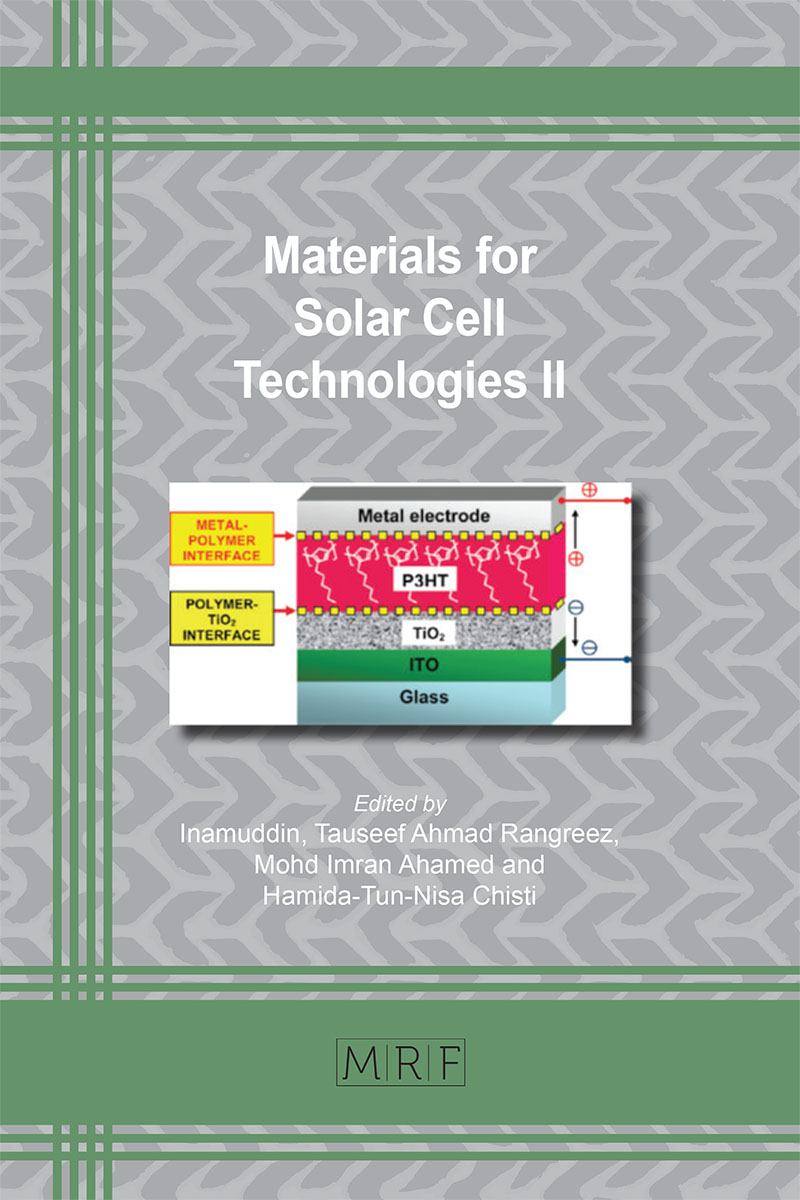
|
The book presents current R&D and new trends in the field of solar cell technologies. Topics covered include fabrication methods, various types of cell design, versatile applications of solar cells, PEDOT:PSS thermoelectric materials, transparent conducting electrodes, simulation models for solar photovoltaic materials, and hybrid materials for solar cells. |
| |
|
| |
Advances in Wastewater Treatment II |
| |
Kinjal J. Shah/ 9781644901380/ Price:US$ 95.00
|
| |
|

|
The book reviews advanced methods of wastewater treatments. Included are oxidation processes for the degradation of organic molecules; applications of nanomaterials and nanocomposites in membrane-based processes; design of adsorption columns; photocatalytic degradation processes; and the removal of dyes, pesticides and pharmaceutical compounds. |
| |
|
| |
Self-Healing Concrete |
| |
David J. Fisher/ 9781644901366/ Price:US$ 95.00
|
| |
|
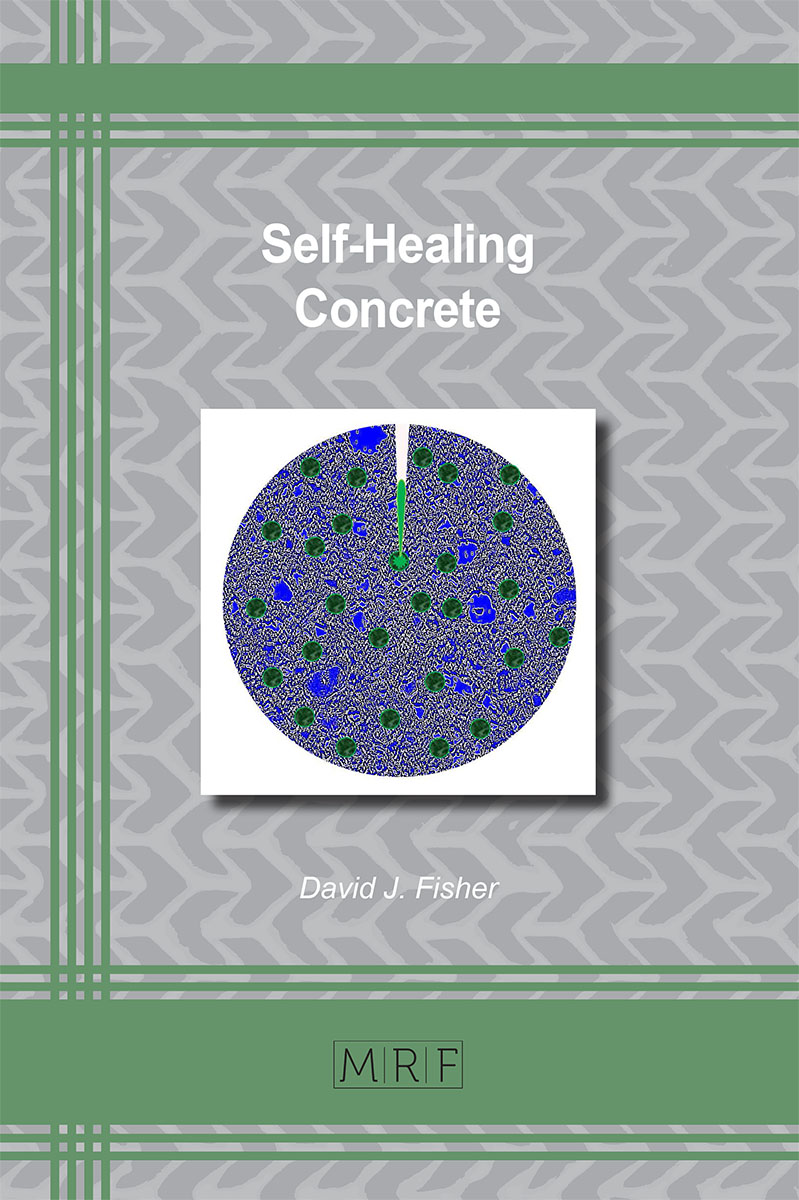
|
Self-healing techniques are most successful in preventing concrete from cracking or breaking. The book reviews the most promising methods, including the use of polymers, epoxy resins, fungi or cementitious composites; biomineralization, continuing hydration or carbonation or wet/dry cycling. Various micro-organisms are able to produce favorable effects, such as denitrification, calcium carbonate formation, sulfate reduction or the production of methane. The book references 289 original resources and includes their direct web link for in-depth reading. |
| |
|
| |
Photocatalysis: Advanced Materials and Reaction Engineering |
| |
Gaurav Sharma/ 9781644901342/ Price:US$ 125.00
|
| |
|

|
Photocatalysis is important in fighting environmental pollution, such as pharmaceutical effluents, dyes, pesticides and endocrine disruptors. It is also used for the production of clean energy, e.g. by way of hydrogen production from water splitting, or CO2 conversion into fuels. Further, photocatalytic N2 fixation is promising for achieving sustainable ammonia synthesis. The book discusses new materials and reaction engineering techniques, such as heterojunction formations, composites, ion exchangers, photocatalytic membranes, etc. |
| |
|
| VF02-99 |
Using Lasers as Safe Alternatives for Adhesive Bonding: Emerging Research and Opportunities |
| |
Barbara Ewa Ciecinska/ 9781799846345/ Price:US$ 195.00
|
| |
|

|
Technology has brought about the age of convenience, but at a hefty cost. As a result of a growing production demand on a global scale, adhesive bonding operations also generate a huge amount of hazardous waste. Adhesive bonding, an integral step in manufacturing across several sectors, is one of many culprits of the unprecedented overproduction and environmental burden of municipal, industrial, and hazardous waste. If a cleaner, greener bonding process is formulated, hazardous waste production can be reined in and the world can be safer.
Using Lasers as Safe Alternatives for Adhesive Bonding: Emerging Research and Opportunities is a pivotal reference source that analyzes the new conditions for laser processing in the context of adhesive bonding. The book includes the results of experimental research, giving grounds to believe that laser technology has a future in the preparation of products for bonding. From this research, the book presents conclusions for eliminating poisonous chemicals, a threat to humans and the environment, and the burden of liquid and solid waste. It further outlines limitations and requirements imposed on people, such as the need to use personal protective equipment, to establish specific work procedures to ensure the safety of working with lasers, with a view to the future implementation of laser technology in manufacturing facilities. Featuring coverage of a wide range of topics including static strength, surface preparation, and beam impact, this book is ideally designed for engineers, policymakers, researchers, academicians, and students.
Topics Covered
The many academic areas covered in this publication include, but are not limited to:
¡EAdhesive Mixtures
¡EApplication in Production
¡EBeam Impact
¡EConstruction Materials
¡EEnvironmental Effects
¡EFuture Applications
¡EHuman Aspects
¡EStatic Strength
¡ESurface Geometrical Structure
¡ESurface Preparation
¡ETechnological Methods |
| |
|
| VF02-98 |
Properties, Techniques, and Applications of Polyaniline (PANI) Thin Films: Emerging Research and Opportunities |
| |
Subhash Chander/ 9781522598961/ Price:US$ 185.00
|
| |
|
|
Polyaniline (PANI) is one of the most common and widely studied conducting polymers due to its excellent electro-chemical and electrical properties and its various applications in areas such as solar cell technologies, drug delivery, organic light emitting diodes (OLEDs), field-effect transistors (FETs), sensors, electro-chromic display, etc. PANI thin films play an important role in energy storage and conversion devices and show great potential in the supercapacitors owing to their high specific capacitance, high flexibility, and low cost. However, no in-depth information about this emerging PANI thin film technology is available.
Properties, Techniques, and Applications of Polyaniline (PANI) Thin Films: Emerging Research and Opportunities is an essential publication that focuses on high-throughput synthesis of PANI thin films and their characterization techniques. The book also covers promising applications of PANI thin films and applications including solar cells. Featuring research on topics such as solar cells, post-synthesis treatments, and physiochemistry, this book is ideally designed for scientists, industry practitioners, engineers, managers, academicians, researchers, and students seeking coverage in the areas of polymeric applications.
Topics Covered
The many academic areas covered in this publication include, but are not limited to:
¡EApplications
¡ECharacterization Techniques
¡EDeposition Techniques
¡EFuture Possibilities
¡EPhysiochemistry
¡EPolymers
¡EPost-Synthesis Treatments
¡ESolar Cells
¡ESynthesis Techniques
¡ETheory |
| |
|
| VF02-97 |
Diverse Applications of Organic-Inorganic Nanocomposites: Emerging Research and Opportunities |
| |
Gabriele Clarizia/ 9781799815303/ Price:US$ 215.00
|
| |
|
|
Nanocomposite materials are multiphase materials where the interactions between the different components are enhanced by their intimate contact. Indeed, this emerging class of innovative materials guarantees excellent macroscopic properties by taking advantage of the peculiar characteristics that nanometer-sized fillers give to a suitable matrix compared to those obtainable with the same fillers at micrometric dimensions. These innovative materials improve and extend the range of desirable properties.
Diverse Applications of Organic-Inorganic Nanocomposites: Emerging Research and Opportunities s a pivotal reference source that provides vital research on the application of organic-inorganic nanocomposite materials within various professional disciplines and in different human activities. While highlighting topics such as photocatalysis, atomistic modeling, and membrane separation, this publication explores the strengths and weaknesses of nanocomposites as well as future concepts and devices. This book is ideally designed for chemists, biologists, engineers, researchers, government professionals, academicians, and postgraduate students.
Topics Covered
The many academic areas covered in this publication include, but are not limited to:
¡EAerospace Applications
¡EAutomotive Applications
¡ECarbon Nanotubes
¡EFood Packaging
¡EGraphene-Based Nanocomposites
¡EModeling of Physical Properties
¡EPhotocatalysis
¡EWastewater Treatments |
| |
|
| VF02-102 |
New Challenges and Industrial Applications for Corrosion Prevention and Control |
| |
Younes El Kacimi/ 9781799827757/ Price:US$ 260.00
|
| |
|

|
Metals are used at an extremely high rate in the industrial and manufacturing fields. Exemplary properties including strength and ductility have made this material highly dynamic; however, the risk of corrosion remains a vital issue. The study of corrosion prevention has attracted interest from researchers and professionals as new technologies are emerging that can assist in the prevention of material destruction. However, research is lacking on the application of these protective technologies within specific fields.
New Challenges and Industrial Applications for Corrosion Prevention and Control provides emerging research exploring the theoretical and practical aspects of protective methods against corrosion and the implementation of these techniques within a wide span of professional disciplines. Featuring coverage on a broad range of topics such as molecular modeling, surface treatments, and biomaterials, this book is ideally designed for engineers, industrial chemists, material scientists, researchers, engineers, academicians, practitioners, and students seeking current research on the technological advancements in corrosion protection in various professional scopes.
Topics Covered
The many academic areas covered in this publication include, but are not limited to:
¡EBiomaterials
¡ECoating Inhibitors
¡ECorroding Interfaces
¡ECorrosion Mechanisms
¡EElectrochemistry
¡EMedical Devices
¡EMolecular Modeling
¡EMonitoring Techniques
¡ESurface Treatments
¡ETribocorrosion |
| |
|
| VF02-101 |
Additive Manufacturing Applications for Metals and Composites |
| |
K.R. Balasubramanian/ 9781799840541/ Price:US$ 230.00
|
| |
|

|
Additive manufacturing (AM) of metals and composites using laser energy, direct energy deposition, electron beam methods, and wire arc melting have recently gained importance due to their advantages in fabricating the complex structure. Today, it has become possible to reliably manufacture dense parts with certain AM processes for many materials, including steels, aluminum and titanium alloys, superalloys, metal-based composites, and ceramic matrix composites. In the near future, the AM material variety will most likely grow further, with high-performance materials such as intermetallic compounds and high entropy alloys already under investigation.
Additive Manufacturing Applications for Metals and Composites is a pivotal reference source that provides vital research on advancing methods and technological developments within additive manufacturing practices. Special attention is paid to the material design of additive manufacturing of parts, the choice of feedstock materials, the metallurgical behavior and synthesis principle during the manufacturing process, and the resulted microstructures and properties, as well as the relationship between these factors. While highlighting topics such as numerical modeling, intermetallic compounds, and statistical techniques, this publication is ideally designed for students, engineers, researchers, manufacturers, technologists, academicians, practitioners, scholars, and educators.
Topics Covered
The many academic areas covered in this publication include, but are not limited to:
¡EArtificial Intelligence
¡ECeramics
¡EDigital Manufacturing
¡EIntermetallic Compounds
¡EMetal Matrix Composites
¡EMulti-Material Compounds
¡ENumerical Modeling
¡EOptimization
¡EStatistical Techniques
¡ESuperalloys |
| |
|
| SF02-490 |
Surface Technology of Nanomaterials |
| |
R. A. Wilhelm/ 9781682516706/ Price:US$ 160.00
|
| |
|
|
It is increasingly recognized that nanomaterials present a range of characterization challenges that have the potential to inhibit or delay the scientific and technological impact of nanoscience and nanotechnology. Concerns related to adequate characterization of nanomaterials are not new, and a variety of issues have been highlighted by many research groups, multi-organizational teams of researchers, and the scientific press. This book examines characterization challenges inherently associated with understanding nanomaterials and the roles surface and interface characterization methods can play in meeting some of the challenges. |
| |
|
| SF02-490 |
3GE Collection on Engineering: Engineering Ceramics |
| |
3G Editorial Board/ 9781984635754/ Price:US$ 160.00
|
| |
|
|
Now a multibillion-dollar a year industry, ceramic engineering and research has established itself as an important field of science.
Applications continue to expand as researchers develop new kinds of ceramics to serve different purposes.
Zirconium dioxide ceramics are used in the manufacture of knives.
Provides an overview of the properties, manufacturing and design of ceramics, nanostructured ceramics, films and coatings.
Deals with issues in both traditional ceramics-glass, whitewares, refractories, and porcelain enamel-and advanced ceramics. |
| |
|
| SF02-487 |
High Thermal Conductivity Materials |
| |
L.M. Munye/ 9781682516140/ Price:US$ 160.00
|
| |
|
|
Thermal conductivity is the intrinsic property of a material that expresses its ability to conduct heat. This book discusses recent advances in materials engineering to control thermal conductivity. It presents theories of heat conduction for general material classes, focusing on common approximations and trends. It also discusses characterization techniques for measuring thermal conductivity and the underlying transport properties. |
| |
|
| SF02-487 |
Engineering of Composite Materials |
| |
Y. Wang/ 9781682516874/ Price:US$ 160.00
|
| |
|
|
Composites are light in weight, compared to most woods and metals. Their lightness is important in automobiles and aircraft, where less weight means better fuel efficiency. Composite materials can be designed to be both strong and light. In particular it combines high strength and low weight, while at the same time it is non-corrosive and has thermal and electrical insulation properties. Using composites rather than conventional materials such as steel usually provides major weight savings. Focusing on the relationship between structure and properties, this book covers a well-balanced treatment of the mechanics and the materials science of composites. |
| |
|
| SF02-487 |
Biofabrication |
| |
Shiv Sanjeevi/ 9781774073438/ Price:US$ 170.00
|
| |
|

|
Biofabrication discusses about the basic concept of regenerating tissues, the approaches to the concept of Biofabrication. This book provides information about the construction of tissues and includes more examples as well as case studies in the fabricating tissues. The introduction of the three-dimensional bioprinting has been mentioned in this book which includes possibilities, challenges and future aspects of bioprinting. This book discusses functional skin grafts and the biodegradable scaffold for bone tissue engineering including the design, materials and mechanobiology. There is a strategy for tissue engineering and medical devices which refers to the fabrication of the polymeric biomaterials which have been mentioned in the book. This book provides readers with the insights on bioprinting of vascularized tissue scaffolds and the complex particulate biomaterials which are immunostimulant-delivery platforms. |
| |
|
| |
Photoelectrochemical Water Splitting: Materials and Applications |
| |
Rajender Boddula/ 9781644900727/ Price:US$ 125.00
|
| |
|
|
|
Photoelectrochemical (PEC) water splitting is a highly promising process for converting solar energy into hydrogen energy. The book presents new cutting-edge research findings in this field. Subjects covered include fabrication and characteristics of various electrode materials, cell design and strategies for enhancing the properties of PEC electrode materials. |
| |
|
| |
Photonics and Photoactive Materials |
| |
Paolo Prosposito/ 9781644900703/ Price:US$ 55.00
|
| |
|
|
|
The book focuses on innovative photonic and photoactive materials and such topics as photonic structures, silicon photonics, nanomaterials, plasmonics, graphene quantum dots, optically active defects, fluorescent materials and optical sensors. The generation of light, absorption, emission, transmission, optical sensing and probing, signal processing and data transmission are some of the properties related to this growing field. |
| |
|
| |
A Comprehensive Method for Concrete Mix Design |
| |
Kambiz Janamian/ 9781644900581/ Price:US$ 125.00
|
| |
|
|
|
A novel method of concrete mix design is presented. Tests with various constituent materials are reported in great detail. Both laboratory tests and applications in industry show the method to be very successful for all kinds of normal constituent materials, including silica fume, ground granulated blast furnace slag, fly ash, natural pozzolans, blended cement, fine and coarse aggregates, water, air entraining admixtures, plasticizers and super-plasticizers. |
| |
|
| |
Graphene as Energy Storage Material for Supercapacitors |
| |
Rajender Boddula/ 9781644900543/ Price:US$ 125.00
|
| |
|
|
|
The book presents a comprehensive review of graphene-based supercapacitor technology. It focuses on synthesis, characterization, fundamental properties and promising applications of graphene materials and various types of graphene-based composites. The wide range of applications include electric power systems of portable electronics, hybrid-electric vehicles, mobile phones etc. |
| |
|
| |
Aerogels I: Preparation, Properties and Applications |
| |
Tauseef Ahmad Rangreez/ 9781644900987/ Price:US$ 125.00
|
| |
|
|
|
This book focuses on aerogels and their applications in such areas as energy storage, thermal storage, catalysis, water splitting and environmental remediation. The materials covered include nanocellulose-, porous-, silica-, hybrid silica-, carbon-, graphene- and magnetic aerogels. Ways of modulating the pore structure of aerogels are presented, as well as surface modifications and the application of coatings. Future perspectives focus on functional foods, thickeners, stabilizers, and scaffolding in tissue repair. |
| |
|
| |
Terotechnology XI |
| |
Agnieszka Szczotok/ 9781644901021/ Price:US$ 95.00
|
| |
|
|
|
The book focuses on the technology of installation, maintenance, replacement and removal of manufacturing machinery and transportation equipment. Areas covered include industrial management, reliability, technical diagnostics, materials science, design of experiments, tribology and technical safety. |
| |
|
| |
Magnetic Oxides and Composites II |
| |
Rajshree B. Jotania/ 9781644900963/ Price:US$ 125.00
|
| |
|
|
|
Magnetic oxides have highly interesting applications in the fields of permanent magnets, microwave devices, magnetic refrigeration, sensors, catalysis, and the health sector. This book focuses on the synthesis, characterization, and applications of various perovskites, garnets, manganites, carbon-based metal oxide nanocomposites, nanoferrites, and graphene-metal oxide nanocomposites. |
| |
|
| |
Graphene-Based Electrochemical Sensors for Toxic Chemicals |
| |
Alagarsamy Pandikumar/ 9781644900949/ Price:US$ 125.00
|
| |
|
|
|
Graphene-based nanocomposites are very useful in detecting toxic chemicals such as heavy metals, inorganic anions, phenolic compounds, pesticides, and chemical warfare agents. The book presents recent progress on relevant topics: Toxicity of chemicals, importance of electrochemical sensors, different types of graphene-based nanomaterials, Neurotoxins and electroanalytical detection of toxic chemicals. |
| |
|
| |
Magnetocaloric Effect in Perovskite Manganites |
| |
Rajshree B. Jotania/ 9781644900925/ Price:US$ 65.00
|
| |
|
|
|
For environmental concerns, it is highly desirable to replace gas-based refrigeration by magnetic refrigeration. Magnetic refrigeration has significant advantages such as small volume, chemical stability, low cost, non-toxicity and not causing sound pollution. Among the pertinent magnetocaloric materials, perovskite manganites are of special interest because they exhibit extremely large magnetic entropy and adiabatic temperature variations, a small thermal or magnetic hysteresis, high chemical stability. Further, the Curie temperature and saturation magnetization can be tailored by changing doping element and doping concentrations. The book references 289 original resources and includes their direct web link for in-depth reading. |
| |
|
| |
Lithium-ion Batteries: Materials and Applications |
| |
Eds. Inamuddin/ 9781644900901/ Price:US$ 95.00
|
| |
|
|
|
There is a great need to develop lithium-ion batteries with high power density. Much research is, therefore, devoted to designing high-performance electrode materials and electrolytes. The book reviews the fundamental concepts and recent advances in the areas of anodes, cathodes, electrolytes, separators, binders, fabrication of device assemblies and electrochemical performance. |
| |
|
| |
Non-Electrolytic Water Splitting |
| |
David J. Fisher/ 9781644900888/ Price:US$ 95.00
|
| |
|
|
|
The book focuses on the direct production of hydrogen, using solar energy. Photocatalytic water-splitting by exposing semiconductors to sunlight is one of the most promising routes. The range of materials and other non-electrolytic methods are also reviewed The book references 205 original resources and includes their direct web link for in-depth reading. |
| |
|
| |
Biomass Based Energy Storage Materials |
| |
Eds. Inamuddin/ 9781644900864/ Price:US$ 95.00
|
| |
|
|
|
The book presents an in-depth review of biomass-derived materials for energy storage technologies. Biomass is the most renewable and abundant carbon resource and has great potential for sustainable energy production. Topics covered include: Bone Char as a Support Material to Build a Microbial Biocapacitor; Biomass Derived Composites; Lignin- and Bamboo Derived Materials, Cellulose-Derived Electrodes; Water Splitting, Fuel cells, and Supercapacitor Technologies. 465 References. |
| |
|
| |
Carbon-Capture by Metal-Organic Framework Materials |
| |
David J. Fisher/ 9781644900840/ Price:US$ 125.00
|
| |
|
|
|
Metal-Organic Framework Materials (MOFs) are well suited for absorbing carbon dioxide. MOFs can form highly-porous structures with great adsorption capacities. They also offer good catalytic properties and much research refers to the relationship between catalytic performance and framework structure. In addition to simple CO2 absorption, there are other interesting applications, such as the direct electrochemical reduction into useful chemicals and fuels, the conversion of CO2 into methanol, the electrochemical reduction of CO2, or electrocatalytic hydrogen evolution (thus boosting the ¡¥hydrogen economy¡¦). The book references 295 original resources and includes their direct web link for in-depth reading. |
| |
|
| |
Sodium-Ion Batteries: Materials and Applications |
| |
Eds. Inamuddin/ 9781644900826/ Price:US$ 125.00
|
| |
|
|
|
Sodium-ion batteries are likely to be the next-generation power sources. They offer higher safety than lithium-ion batteries and, most important, sodium is available in unlimited abundance. The book covers the fundamental principles and applications of these batteries and reports experimental work on the use of electrolytes and different electrode materials, such as silicon, carbon, conducting polymers, and Mn- and Sn-based materials. Also discussed are state-of-the-art, future prospects and challenges in sodium-ion battery technology. |
| |
|
| |
Lead Halide Perovskite Solar Cells |
| |
David J. Fisher/ 9781644900802/ Price:US$ 125.00
|
| |
|
|
|
Lead halide perovskite materials have a huge potential in solar cell technology. They offer the combined advantages of low-cost preparation and high power-conversion efficiency. The present review focuses on the following topics: Power Conversion Efficiency; Electron Transport, Hole Transport and Interface Layers; Material Preparation; Cesium-Doped Lead-Halide Perovskites; Formamidinium-Doped Lead-Halide Perovskites; Methylammonium Lead-Halide Perovskites; Hysteresis, Stability and Toxicity Problems. The book references 334 original resources and includes their direct web link for in-depth reading. |
| |
|
| |
Titanium-Based Alloys for Biomedical Applications |
| |
Petrica Vizureanu/ 9781644900789/ Price:US$ 125.00
|
| |
|
|
|
The book presents the state-of-the-art of biomaterials used in the human body and reports new research on various Ti-based alloys with non-toxic elements (Mo, Zr, Ta, Si, Nb, etc.) aimed at improved mechanical properties, corrosion resistance and biocompatibility. Specific laboratory tests are reported for structural characterization, mechanical properties and corrosion resistance testing, and cytotoxicity assessment. |
| |
|
| |
Advanced Applications of Polysaccharides and their Composites |
| |
Amir Al-Ahmed/ 9781644900765/ Price:US$ 125.00
|
| |
|
|
|
Polysaccharides and their composites are highly promising materials for food, pharmaceutical and biomedical applications; including drug delivery, tissue engineering and packaging. Fiber- and nano-reinforced composites are good alternatives to non-biodegradable petroleum?based polymers. The great advantage of these materials is that they are both environment friendly and nontoxic. |
| |
|
| |
Detectors and Sources for THz and IR |
| |
Fedir F. Sizov/ 9781644900741/ Price:US$ 125.00
|
| |
|
|
|
IR and THz technologies are widely used in security screening and surveillance, astronomy, spectroscopy, biomedicine, food and package inspection, detection of concealed weapons, vision through camouflage, etc. There are increasing demands for the fast transmission of large amounts of data. THz radiation penetrates dielectric materials like plastics, ceramics or cardboard allowing contact-free testing. Medical imaging technologies can provide guidance for surgeons in delimiting the margins of tumors, help clinicians to visualize diseased areas, etc. |
| |
|
| VF02-96 |
Polymer Nanocomposites for Advanced Engineering and Military Applications |
| |
Noureddine Ramdani/ 9781522578383/ Price:US$ 225.00
|
| |
|

|
The field of polymer nanocomposites has become essential for engineering and military industries over the last few decades as it applies to computing, sensors, biomedical microelectronics, hard coating, and many other domains. Due to their outstanding mechanical and thermal features, polymer nanocomposite materials have recently been developed and now have a wide range of applications.
Polymer Nanocomposites for Advanced Engineering and Military Applications provides emerging research on recent advances in the fabrication methods, properties, and applications of various nano-fillers including surface-modification methods and chemical functionalization. Featuring coverage on a broad range of topics such as barrier properties, biomedical microelectronics, and matrix processing, this book is ideally designed for engineers, industrialists, chemists, government officials, military professionals, practitioners, academicians, researchers, and students.
Topics Covered
The many academic areas covered in this publication include, but are not limited to:
¡EAnti-Corrosion Coating
¡EBarrier Properties
¡EBiomedical Microelectronics
¡EChemical Functionalization
¡EElectromagnetic Shielding
¡EFabrication Methods
¡EHard Coating
¡EInjection Molding
¡EMatrix Processing
¡EThermal Applications
¡EWater Treatment Membranes
|
| |
|
| VF02-95 |
Applications of Nanofluid Transportation and Heat Transfer Simulation |
| |
Mohsen Sheikholeslami/ 9781522575955/ Price:US$ 245.00
|
| |
|

|
Different numerical and analytical methods have been employed to find the solution of governing equations for nanofluid flow and heat transfer.
Applications of Nanofluid Transportation and Heat Transfer Simulation provides emerging research exploring the theoretical and practical aspects and applications of heat and nanofluid transfer. With practical examples and proposed methodology, it features coverage on a broad range of topics such as nanoparticles, electric fields, and hydrothermal behavior, making it an ideal reference source for engineers, researchers, graduate students, professionals, and academics.
Topics Covered
The many academic areas covered in this publication include, but are not limited to:
¡EConvection Heat Transfer
¡EElectric Fields
¡EHeat Transfer Augmentation
¡EHydrothermal Behavior
¡EMagnetic Field
¡ENanofluid Behavior
¡ENanofluid Treatment
¡ENanoparticles
¡ENanotechnology
¡EViscosity
|
| |
|
| VF02-94 |
Strategic Applications of Measurement Technologies and Instrumentation |
| |
Soubantika Palchoudhury/ 9781522554066/ Price:US$ 195.00
|
| |
|

|
Measurement techniques form the basis of scientific, engineering, and industrial innovations. The methods and instruments of measurement for different fields are constantly improving, and it¡¦s necessary to address not only their significance but also the challenges and issues associated with them.
Strategic Applications of Measurement Technologies and Instrumentation is a collection of innovative research on the methods and applications of measurement techniques in medical and scientific discoveries, as well as modern industrial applications. The book is divided into two sections with the first focusing on the significance of measurement strategies in physics and biomedical applications and the second examining measurement strategies in industrial applications. Highlighting a range of topics including material assessment, measurement strategies, and nanoscale materials, this book is ideally designed for engineers, academicians, researchers, scientists, software developers, graduate students, and industry professionals.
Topics Covered
The many academic areas covered in this publication include, but are not limited to:
¡EHealthcare
¡EIndustrial Materials
¡ELaboratory Development
¡EMaterial Assessment
¡EMeasurement Strategies
¡EMesoscale Materials
¡EMetrology
¡ENanoscale Materials
¡EPhysics
¡EStandardization |
| |
|
| VF02-93 |
The Geometry of Higher-Dimensional Polytopes |
| |
Gennadiy Vladimirovich Zhizhin/ 9781522569688/ Price:US$ 195.00
|
| |
|
|
The majority of the chemical elements form chemical compounds with molecules of higher dimension (i.e., substantially exceeding three). This fact is very important for the analysis of molecular interactions in various areas: nanomedicine, nanotoxicology, and quantum biology.
The Geometry of Higher-Dimensional Polytopes contains innovative research on the methods and applications of the structures of binary compounds. It explores the study of geometry polytopes from a higher-dimensional perspective, taking into account the features of polytopes that are models of chemical compounds. While highlighting topics including chemical compounds, symmetry transformation, and DNA structures, this book is ideally designed for researchers, academicians, and students seeking current research on dimensions present in binary compounds.
Topics Covered
The many academic areas covered in this publication include, but are not limited to:
¡EBinary Compounds
¡EBoundary Complex
¡EChemical Compounds
¡EDNA Structures
¡EFluctuating Scaling
¡EN-Cross Polytope
¡EPolytopic Prismahedron
¡ESymmetry Transformation |
| |
|
| SF02-480 |
Illustrated Handbook of Carbon Nanomaterials |
| |
/ 9781680944891/ Price:US$ 180.00
|
| |
|
|
Provides information on synthesis, properties, and applications of carbon nanomaterials.
Covers the theory and application of nanomaterials including carbon nanotubes, composites, metallic nanomaterials and much more.
Covers modern techniques to characterize chemically functionalized carbon nanomaterials as well as characterization of surface functional groups. |
| |
|
| SF02-480 |
Illustrated Handbook of Materials Chemistry and Physics |
| |
/ 9781680944938/ Price:US$ 180.00
|
| |
|
|
Focuses on important aspects of materials chemistry by providing an overview of the theoretical aspects of materials chemistry, by describing the characterization and analysis methods for materials.
Describes the principles and concepts of biomineralization and their application in the new field of biomimetic materials chemistry. |
| |
|
| SF02-480 |
Illustrated Handbook of Superconductors |
| |
/ 9781680943504/ Price:US$ 180.00
|
| |
|

|
Unusual and unconventional features of a large variety of novel superconductors are presented and their technological potential as practical superconductors assessed.
Providing a comprehensive coverage of superconductivity and magnet design - incorporating background information for beginners as well as for specialists. |
| |
|
| SF02-480 |
Current Status of Nano Materials for Multi functional Applications, 2-Vols/Set. |
| |
Aneeya Kumar Samantara/ 9781773615387/ Price:US$ 250.00
|
| |
|
|
Focusing on real applications of nanocomposites and nanotechnologies for sustainable development, this encyclopedia shows how nanocomposites can help to solve energy and biomedical problems, including a broad overview of energy-related nanomaterials. The multifaceted application of these nano-materials covering a wide range of critical domains, e.g. health, food and pharmaceuticals have been included in this encyclopedia through dedicated chapters in a highly organized manner to capture the attention of readers from diverse sections. |
| |
|
| SF02-480 |
Nanotechnology in Smart Textiles |
| |
Dharani Sabba/ 9781773615493/ Price:US$ 170.00
|
| |
|
|
Nanotechnology in Smart Textiles considers various aspects of nanotechnology including an extensive overview of nanotechnology and related issues. It includes a historical review of the development of electronic textiles, smart textiles and nano-technology, wearable e-textile technologies: a review on sensors, actuators and control elements, textile-based flexible coils for wireless inductive power transmission. Provides the reader with insights into the development of its history, so as to understand the new textile sensors for in situ structural health monitoring of textile reinforced thermoplastic composites based on the conductive poly(3,4-ethylenedioxythiophene)-poly(styrenesulfonate) polymer complex and recent advances in soft e-textiles. |
| |
|
| SF02-480 |
Next Generation Coating Materials |
| |
Dharani Sabba/ 9781773615486/ Price:US$ 170.00
|
| |
|

|
Next Generation Coating Materials takes into account various aspects of next-gen materials required for coating purposes with different applications like paper application which is considered to be a bio-based coating. It includes antibacterial Functionalization of PVD Coatings on Ceramics, laser-based process for polymeric tribological coatings and Electrical discharge coating of nanostructured. Provide the reader with the insights into the development of various practices used in the field of coating, so as to understand the advancement of the field that has adopted innovative ways to deal with various materials that requires coating. |
| |
|
| SF02-480 |
Semiconductor Material Technologies |
| |
Stefano Spezia/ 9781773615172/ Price:US$ 170.00
|
| |
|
|
Semiconductor Material Technologies examines various technologies related to semiconductor material that have been developed in the recent times. It includes five different sections corresponding to such technologies, where section 1 and 2 talks about semiconductor modeling and its manufacturing, section 3 and 4 highlights advanced plasma techniques for electronic applications and gallium nitride crystals and their application to the electronic devices. Section 5 describes about semiconductor structures for optoelectronic applications. Provide the reader with the insights into the development of these technologies helping the technicians adopt various techniques to build various products like integrated photovoltaic etc. |
| |
|
| SF02-480 |
Sol-Gel Synthesis of Nanomaterials and their applications |
| |
Dharani Sabba/ 9781773615516/ Price:US$ 170.00
|
| |
|
|
Sol-Gel Synthesis of Nanomaterials and their applications explains various aspects of nanomaterials along with its sol-gel synthesis. The processing of sol-gel synthesis has been provided in detail which also includes, synthesis and characterization of Perovskite-Type and sol¡Vgel-derived glass-ceramic photorefractive films for photonic structures. Provide the reader with the insights into the development of various applications used for synthesizing nanomaterials, so as to understand the effect of Cerium Ions on the Structure, Porosity and Electrochemical Properties of Si/Zr-Based Hybrid Sol-Gel Coatings Deposited on Aluminum. |
| |
|
| SF02-480 |
Current Status of Nano Materials for Multi Functional Applications, Volume 1: Nano structures for energy storage and conversion and their application as catalysts for photochemistry and se |
| |
Aneeya Kumar Samantara/ 9781773615394/ Price:US$ 175.00
|
| |
|
|
Nano structures for energy storage and conversion and their application as catalysts for photochemistry and sensing examines various aspects of those nanostructures that are used as catalysts for photochemistry and sensing. It includes a description about nanoparticles, photoelectrochemical and photochemical solar hydrogen generation. Provide the reader with the insights into the development of energy storage and conversion of nano particles and structures, so as to understand the importance of nanoparticles as the best transducer for Electrochemical Biosensor. |
| |
|
| SF02-480 |
Current Status of Nano Materials for Multi Functional Applications, Volume 2: Nano Structures Toward Biomedical Application |
| |
Aneeya Kumar Samantara/ 9781773615400/ Price:US$ 175.00
|
| |
|
|
Nano structures toward Biomedical Application is the continuation of Nano structures for energy storage and conversion and their application as catalysts for photochemistry and sensing and it evaluates the application of nanostructures in biomedical application. It includes functionalized Carbon Quantum Dots for biomedical application and a brief about multi-utility of gold nanoparticles in cancer. Provide the reader with the insights into the development of wastewater treatment and its sustainability, so as to understand the application of various nanoparticles on different kinds of cancerous cell. |
| |
|
| SF02-479 |
Synthesis of Nanoparticles in Microheterogeneous Systems |
| |
John Linderfelt/ 9781682515624/ Price:US$ 150.00
|
| |
|
|
Materials scientists and engineers have made significant developments in the improvement of methods of synthesis of nanomaterial solids. This book focuses on classification, methods of preparation, characterization, application, advantages of nanoparticles in a wide variety of substances. Providing a wealth of new ideas in design, synthesis and study of sophisticated nanocomposite structures, this book is intended to the industrial and academic researcher regardless of his arbitrarily defined subfield, be it organic, inorganic, biological, colloid, etc. |
| |
|
| SF02-479 |
Polyurethane Polymers: Composites and Nanocomposites |
| |
Kholmirzo Dushanov/ 9781682515358/ Price:US$ 155.00
|
| |
|
|
Recently, polyurethanes (PUs) have attracted attention as promising biodegradable polymer candidates for various applications. Blending has been widely and effectively used to modify or control the properties of polymer by appropriately compounding miscible polymers. The book provides an elaborate coverage of the chemistry of polyurethane, its synthesis, and properties. Discussing current research and future research needs in the area, this book will be of valuable to students and researchers. |
| |
|
| SF02-479 |
Self-Healing Polymers and Polymer Composites: Recent Advances |
| |
L N Parker/ 9781682515419/ Price:US$ 155.00
|
| |
|
|
This book presents state of the art reviews on various self-healing approaches that have been developed and it clearly demonstrated the technical aspects involved in bio mimicking the self-healing behavior in polymer composite materials. The development of self-healing materials is now being considered for real engineering applications. Focusing on smart self-healing polymers and composites as one of the most popular, challenging, and promising areas of research, this book will serve as a comprehensive guide for students, researchers and specialists. |
| |
|
| SF02-479 |
Graphene: Miracle Material |
| |
Dharani Sabba/ 9781773615509/ Price:US$ 170.00
|
| |
|
|
The book begins with a brief review of the history of graphene and a discussion of its important properties. This book provides practical information to all those who are involved in this field. This book presents a unique collection of up-to-date applications of graphene for water science. This handbook is unique in its focus on synthesis and the application of graphene and other carbon materials with an emphasis on chemistry aspects. |
| |
|
| SF02-479 |
Luminescent Materials and Applications |
| |
J K Robert/ 9781682515389/ Price:US$ 155.00
|
| |
|
|
The varied aspects of luminescence and the complex processes involved in the origin of light emission, offer interesting challenges for researchers in this field. This book highlights some new advances in the field of luminescent materials, from fundamentals aspects through to application and future directions for the field. Applications of fluorescence in a variety of fields, and description of phosphors have also been discussed in detail in this compendium; a comprehensive reference tool of information to students, practitioners and researchers. |
| |
|
| SF02-479 |
Materials and Surface Engineering: Research and Development |
| |
Marcelo Kleperis/ 9781682515341/ Price:US$ 155.00
|
| |
|
|
This book deals with the principles and techniques of materials surface treatment and protection bringing together theory and innovative research trends in the field. The various surface treatments generally used in engineering practice and presented in this book. Protection of materials under different conditions in various environments remains the important issue for science and technology. A valuable reference tool for researchers, engineers, scientists & managers working in the field of surface engineering, materials science and engineering, chemical engineering, mechanical engineering and other related fields. |
| |
|
| SF02-479 |
Advanced Photovoltaic Materials |
| |
Dharani Sabba/ 9781773615479/ Price:US$ 170.00
|
| |
|
|
Advanced Photovoltaic Materials discusses the development of photovoltaic materials from very beginning to till date. The book discusses topics like nanoparticles, perovskite photovoltaic cells, Spectroscopic Ellipsometry Analysis, Electrodeposition, and developments made in these fields over the past years. The latest developments and innovations are discussed in detail to keep readers up to date. Developments in the field of graphene: its current status and future impact, embedded nanoparticle surface and its effect on plasmonic organic photovoltaic devices. Further advanced light management techniques for solar cells are described in detail |
| |
|
| |
Topological Semimetals |
| |
David. J. Fisher/ 9781644900147/ Price:US$ 125.00
|
| |
|
|
Topological semimetals are quantum materials that are not only extremely interesting from a theoretical point of view but also have a great potential for technological applications in which superconducting, semiconducting and other semimetal behaviors are involved. Specific applications include quantum computing, fabricating superconducting microstructures, environmental ¡¥harvesting¡¦ of energies which would otherwise go to waste immediately as heat, and fabricating topological quantum devices on industrial-scales. The book references 307 original resources and includes their direct web link for in-depth reading. |
| |
|
| |
Biosensors: Materials and Applications |
| |
Tauseef Ahmad Rangreez/ 9781644900123/ Price:US$ 125.00
|
| |
|
|
This book presents recent developments in the field of biosensors and their applications in healthcare. Topics include aptasensors for the detection of environmental contaminants, disease-causing pathogens, molecularly imprinted polymers for the detection of genetic materials, infectious diseases, in vivo monitoring of key molecules, functional nanoparticles targeted to specific tumor cells for detection as well as imaging. |
| |
|
| |
Microbial Fuel Cells: Materials and Applications |
| |
Mohammad Faraz Ahmer/ 9781644900109/ Price:US$ 125.00
|
| |
|

|
Microbial fuel cells are very promising as renewable energy sources. They are based on the direct conversion of organic or inorganic materials to electricity by utilizing microorganisms as catalysts. These cells are well suited for applications that require only low power, e.g. ultracapacitors, toys, electronic gadgets, meteorological buoys, remote sensors, digital wristwatches, smartphones and hardware in space and robots. In addition to electricity generation, microbial fuel cells can be used for wastewater treatment, desalination and biofuel production. The book addresses characterization techniques and operating conditions of microbial fuel cells, as well as the usefulness of various types of anode and cathode materials. |
| |
|
| |
Bonding by Self-Propagating Reaction |
| |
David. J. Fisher/ 9781644900086/ Price:US$ 125.00
|
| |
|
|
Bonding by Self-Propagating Reaction represents a highly promising approach for the joining of dissimilar materials in such fields as microelectronics, infrared sensors, micro-electro-mechanical systems (MEMS), aerospace and nuclear industries, and surface engineering for chemical, mechanical and microsystems applications. The technique leads to high bonding strengths and low rates of damage on substrates. Another advantage is that it does not require high processing temperatures. The book is based on 251 original resources and includes their direct web link for in-depth reading. |
| |
|
| |
Enzymatic Fuel Cells: Materials and Applications |
| |
Mohammad Faraz Ahmer/ 9781644900062/ Price:US$ 125.00
|
| |
|

|
Enzymatic fuel cells, in contrast to conventional energy systems, use enzymes as catalysts for the conversion of chemical energy into electrical energy. These enzymes can also catalyze fuels such as sucrose, fructose and glucose. In addition to their use as catalysts, they are biocompatible in nature. Due to this fact, enzymatic biofuel cells have many interesting applications, such as implantable gadgets (biosensors, pacemakers, catheters, defibrillators, insulin pumps, self-controlled artificial muscles etc.).
The book presents various aspects of biofuel cells including fuel cell electrochemistry, use of enzyme and enzyme immobilization techniques, use of materials such as mesoporous materials, graphene composites, conducting polymer composites and applications of biofuel cells. |
| |
|
| |
Transient Liquid Phase Bonding |
| |
David. J. Fisher/ 9781644900048/ Price:US$ 125.00
|
| |
|
|
The book presents a complete overview on the topic of Transient Liquid Phase Bonding (TLPB) which has many high-tech applications, ranging from the production and repair of turbine engines in the aerospace industry, to nuclear power plants and the connection of circuit lines in the microelectronics industry. The TLPB process and its specific applications are presented in great detail: Self-Bonding of Pure Materials; Bonding Different Pure Materials; Self-Bonding of Composites; Self-Bonding of Simple Alloys; Self-Bonding of Complex Alloys; Bonding Same-Base Alloys; Bonding Different-Base Alloys; Bonding Ceramics to Ceramics; Bonding Ceramics to Metals. The book references 483 original resources and includes their direct web link for in-depth reading. |
| |
|
| |
Computer Modelling of Structural Transformations of Nanopores in Fcc Metals |
| |
M.D. Starostenkov/ 9781644900505/ Price:US$ 125.00
|
| |
|
|
|
The book focuses on the effects of shock waves on vacancies and their clusters in fcc crystals. It is shown that high-speed cooperative atomic displacements represent a powerful tool for the purposeful modification of defect structures in crystalline bodies. The results are important for radiation material science, nano-engineering, the study of shock wave effects and the ultrasonic treatment of materials. |
| |
|
| |
Supercapacitor Technology: Materials, Processes and Architectures |
| |
Inamuddin/ 9781644900482/ Price:US$ 125.00
|
| |
|
|
|
Supercapacitors are most interesting in the area of rechargeable battery based energy storage because they offer an unbeatable power density, quick charge/discharge rates and prolonged lifetimes in comparison to batteries. The book covers inorganic, organic and gel-polymer electrolytes, electrodes and separators used in different types of supercapacitors; with emphasis on material synthesis, characterization, fundamental electrochemical properties and most promising applications. |
| |
|
| |
Heterostructural Interface Modelling |
| |
David. J. Fisher/ 9781644900468/ Price:US$ 125.00
|
| |
|
|
The interface structure of joined materials is a key factor in the development of high-tech components. The book reviews recent experimental and theoretical research in the area of modelling new types of joints and predicting the expected properties. Fields covered include lattice theory, semiconductor electronics, solid-state lithium-ion conductor, solid-state devices, filamentary growth of graphite, curved basal sheets of graphite, thermodynamic factors and lattice-matching criteria, minimisation of interface stresses due to misfit, epitaxial deposition, composite design, coincidence site lattice theory, ionic conductivity improvement by interfacial lattice strain, epitaxial thin-film systems, methods and software for identifying compatible material combinations. The book references 302 original resources and includes their direct web link for in-depth reading. |
| |
|
| |
Electrochemical Water Splitting: Materials and Applications |
| |
Rajender Boddula/ 9781644900444/ Price:US$ 125.00
|
| |
|
|
|
Aiming at the generation of hydrogen from water, electrochemical water splitting represents a promising clean technology for generating a renewable energy resource. The book reviews the fundamental aspects and describes recent research advances. Properties and characterization methods for various types of electrocatalysts are discussed, including noble metals, earth-abundant metals, metal-organic frameworks, carbon nanomaterials and polymers. |
| |
|
| |
Metal-Organic Framework Composites, Volume II |
| |
Anish Khan/ 9781644900420/ Price:US$ 125.00
|
| |
|

|
Because of their nanoporous structures and ultra-high surface areas Metal-Organic Framework Composites (MOFs) are very interesting materials. The book focusses on the following applications: gas capture and storage, especially molecular hydrogen storage; performance enhancement of Li-ion batteries; gas separation, nano-filtration, ionic sieving, water treatment, and catalysis; sustainable renewable energy resources, electrochemical capacitors, including supercapacitors, asymmetric supercapacitors and hybrid supercapacitors; biomedical disciplines including drug delivery, theranostics; biological detection and imaging; nanoparticle photosensitizers for photodynamic therapy (PDT) and photothermal therapy (PTT). |
| |
|
| |
Cork Science and its Applications II |
| |
Patricia Jove Martin/ 9781644900406/ Price:US$ 55.00
|
| |
|

|
Natural cork materials have many interesting applications. The present book places emphasis on such topics as cork quality, crashworthiness of agglomerated cork, architectural applications, cork stoppers, production of hollow cork pieces, 3D print technology filaments based on cork waste, effects of extremely low and high temperatures, and the adaptation of cork oak forests to climate change. |
| |
|
| |
Engineering Magnetic, Dielectric and Microwave Properties of Ceramics and Alloys |
| |
Charanjeet Singh/ 9781644900383/ Price:US$ 125.00
|
| |
|
|
New research on the magnetic, dielectric and microwave properties of promising materials for domestic, industrial, military and medical applications are presented, with focus on biomaterials, ferrites, Ni-Fe alloys, capacitors, multiferroics, microwave absorbers and perovskite materials. Special emphasis is placed on bioceramics for orthopedic applications; classification of biomaterials; bioactive glass systems; preparation, properties and applications of PbFe12O19 hexaferrites; Ni-Fe alloys for shielding electronic devices from external magnetostatic fields; the role of multiferroics in spintronics field; design of microwave absorbers and absorption characteristics of ceramics. |
| |
|
| |
The Inverse Hall-Petch Problem |
| |
David. J. Fisher/ 9781644900345/ Price:US$ 125.00
|
| |
|

|
The book reviews the Hall-Petch law, one of the most useful equations of materials science, and the reverse or inverse Hall-Petch relation, which is particular important for controlling the strength of nanocrystalline materials. Theoretical models, experimental data and practical aspects are discussed, making reference to a total of 396 original resources with their direct web link for in-depth reading. |
| |
|
| |
Industrial Applications of Green Solvents, Volume II |
| |
Rizwana Mobin/ 9781644900307/ Price:US$ 125.00
|
| |
|

|
The book explores industrial applications of green solvents in industrially important areas such as oil extraction, sensors and biosensors, CO2 capture, lignocellulosic biomass utilization, bio-based chemicals and their application in catalysis, electrochemical devices, purification of pharmaceuticals, organic synthesis and transformations, bio-lubricant additives, aluminum and aluminum-alloy production. The solvents covered include water, ionic liquids, supercritical carbon dioxide and glycerol. |
| |
|
| |
Explosion Shock Waves and High Strain Rate Phenomena |
| |
K. Hokamoto/ 9781644900321/ Price:US$ 125.00
|
| |
|
|
The book presents the papers presented at the 6th international conference on Explosion, Shock Wave and High Strain-Rate Phenomena (ESHP). Topics covered include: Advanced Manufacturing under Impact/Shock Loading, Detonation of High Pressure Flammable Gas in Closed Spaces, High Strain-Rate Behaviour of Auxetic Cellular Structures, Underwater Shock Waves Generation, Magnetic Pressure Welding of Aluminum Sheets, Shock Synthesis of Zirconium Oxides, Impact Joining of Dissimilar Metals, High-Speed Oblique Collision of Metals, Dynamic Behavior of Dislocation Wall Structures, Tensile Strength of Rock at High Strain Rates, Fiber Reinforced Mortar, Impact Analysis of Carbon Fiber Reinforced Polymer, Explosive Welding , Underwater Explosive Welding , Making Ultrafine Explosives, Aluminum-Steel Explosive Cladding, Explosively Cladded Aluminum Hybrid Composites, Explosive Clads with Interlayers. |
| |
|
| |
Metal-Organic Framework Composites, Volume I |
| |
Anish Khan/ 9781644900284/ Price:US$ 125.00
|
| |
|
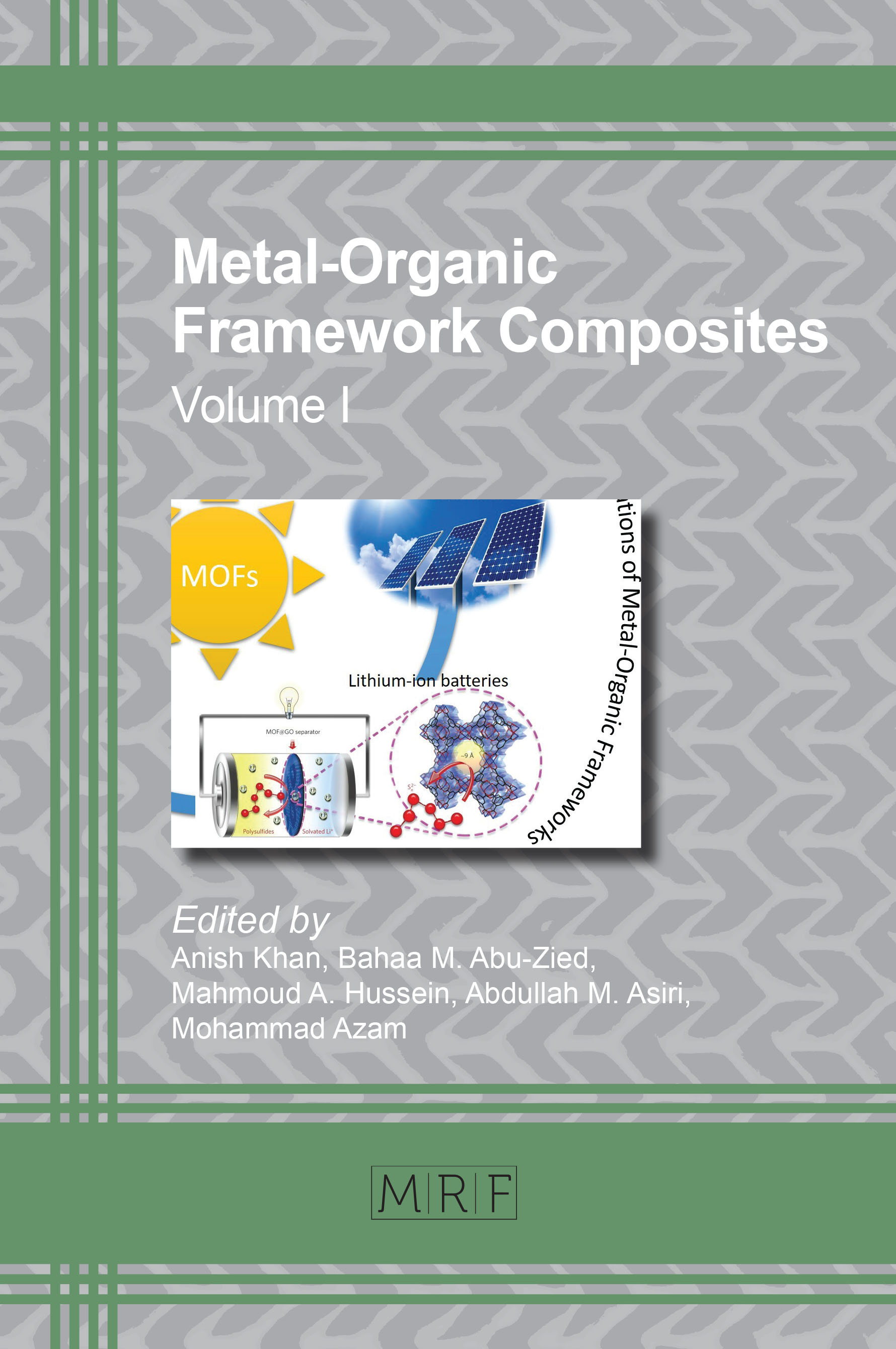
|
Composites based on Metal-organic frameworks (MOFs) have exceptional physical and chemical properties and offer a great number of advanced applications in such fields as energy storage, energy conversion by catalysis, sensors for environmental applications, environment safety and industrial wastewater treatments. They also have interesting medical applications, such as encapsulation of enzymes. The present book covers design, synthesis and preparation of various MOFs, as well as the resulting product characteristics: homogenous morphology, small size dispersion, high thermal stability and desired surface area. |
| |
|
| |
Mechanochromism |
| |
David. J. Fisher/ 9781644900260/ Price:US$ 125.00
|
| |
|
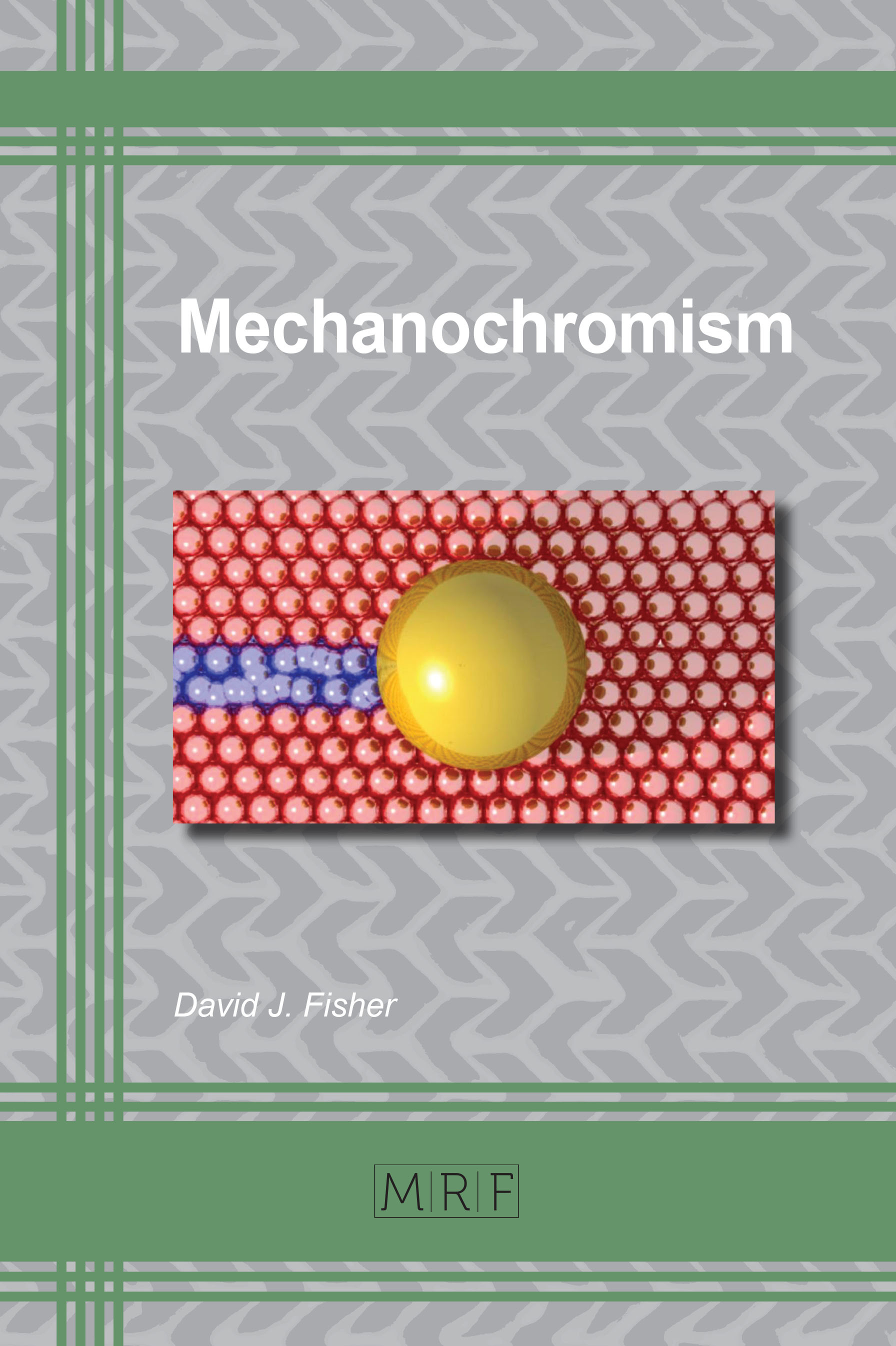
|
Mechanochromism (or piezochromism) refers to the emission of radiation as a result of the stressing, deforming or breaking of solids. The great current interest in these processes is due to the immense potential for monitoring and recording stresses, wear and fracture. There is, for instance, the possibility of turning such materials into optical pressuresensors and structural damage sensors. Mechanochromic polymers, for example, could visually signal sub-micron damage and failure long before macroscopic cracks became detectable. The range of such high-tech applications is almost unlimited. The book references 325 original resources and includes their direct web link for in-depth reading. |
| |
|
| |
MXenes: Fundamentals and Applications |
| |
Rajender Boddula/ 9781644900246/ Price:US$ 125.00
|
| |
|
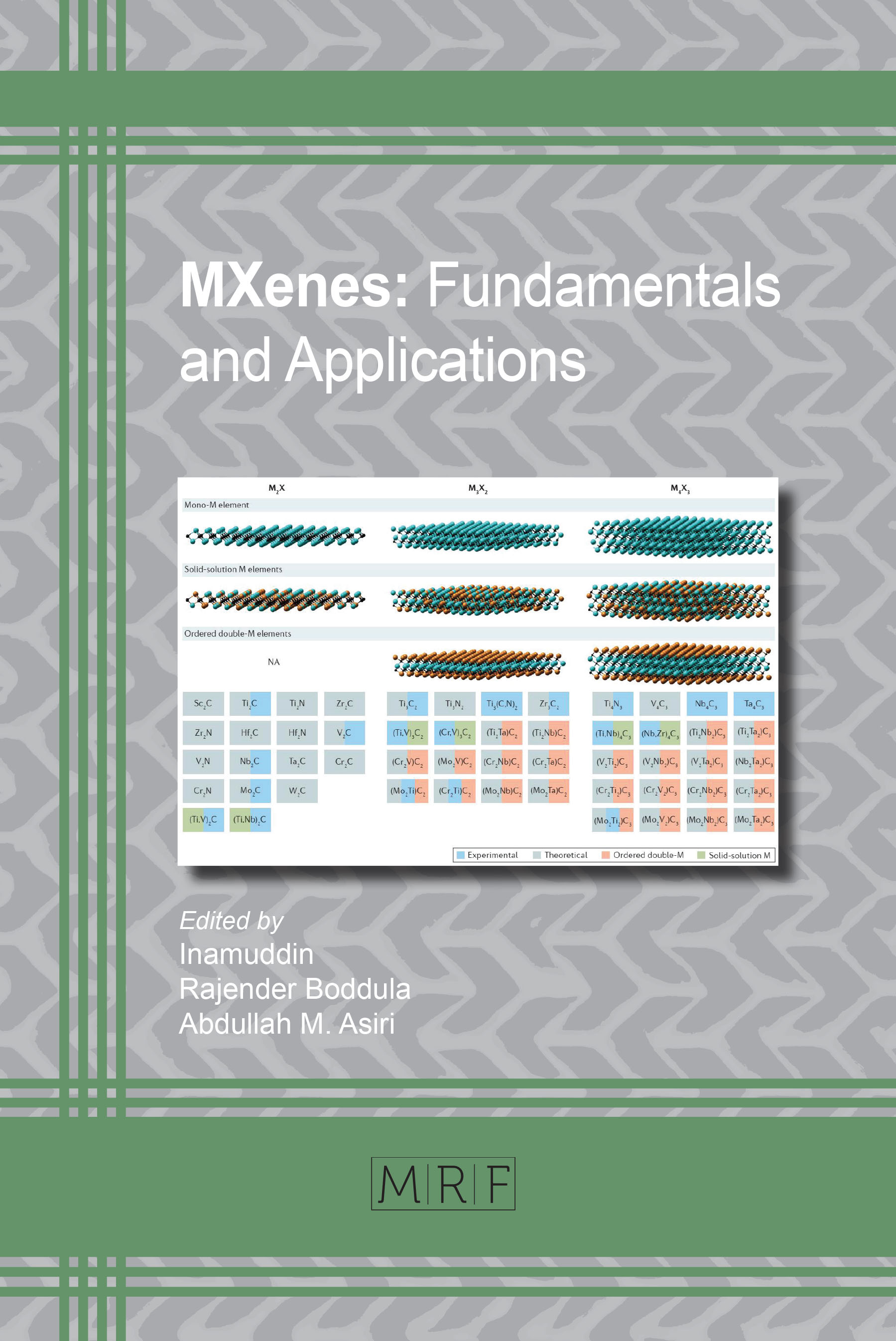
|
This is the very first book on the highly promising topic of MXenes; focusing on their fundamental characteristics and properties, fabrication techniques and applications. MXenes are two-dimensional materials consisting of few atoms thick layers of transition metal carbides or nitrides. These are characterized by high electrical conductivity, good hydrophilicity, chemical stability, and ultrathin 2D sheet-like morphology. Applications in the energy, environmental, biomedical and electronic industries include catalysis, membrane separation, supercapacitors, hybrid-ion capacitors, batteries, flexible electronics, hydrogen storage, nanoelectronics, and sensors. |
| |
|
| |
Industrial Applications of Green Solvents, Volume I |
| |
Mohd Imran Ahamed/ 9781644900222/ Price:US$ 125.00
|
| |
|

|
Green chemistry aims at reducing pollution and avoiding hazardous waste in the environment, as well as in a number of industrial applications, including chemical, pharmaceutical, paint and leather industries. The book focuses on new applications of green solvents (water, ionic liquids, supercritical carbon dioxide, terpenes) in such areas as chemical synthesis (including lipase-catalyzed reactions, organic synthesis, esterification reactions), gas separation membranes, environment-friendly products, low energy requirement processes and alternatives to hazardous substances. |
| |
|
| |
Nanomaterials for Alcohol Fuel Cells |
| |
Tauseef Ahmad Rangreez/ 9781644900185/ Price:US$ 125.00
|
| |
|
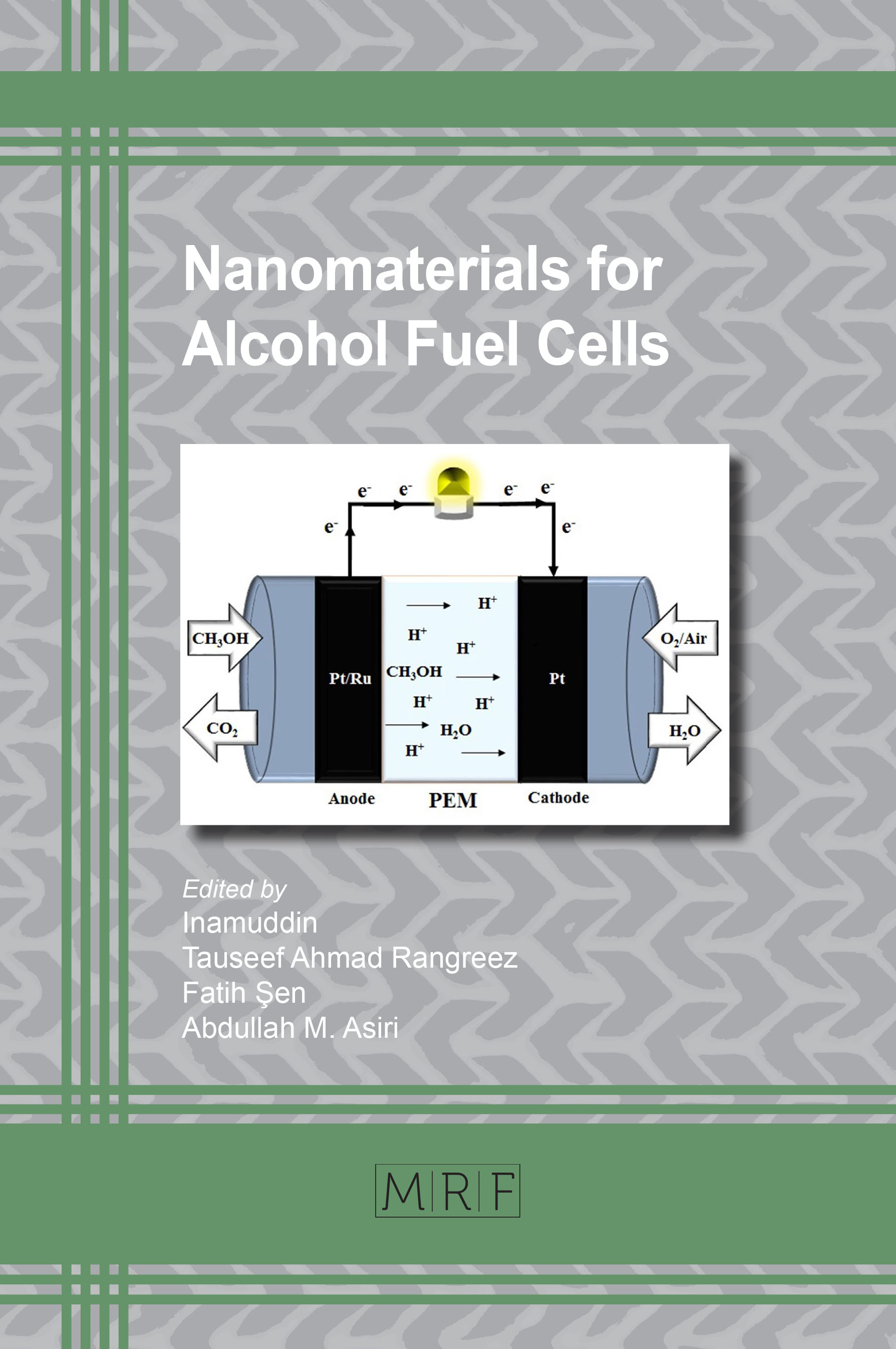
|
Alcohol fuel cells are very attractive as power sources for mobile and portable applications. As they convert the chemical energy of fuels into electricity, much recent research is directed at developing suitable and efficient catalysts for the process. The present book focuses on pertinent types of nanomaterial-based catalysts, membranes and supports. |
| |
|
| VF02-92 |
Composites and Advanced Materials for Industrial Applications |
| |
K. Kumar/ 9781522552161/ Price:US$ 225.00
|
| |
|
|
The design and study of materials is a pivotal component to new discoveries in the various fields of science and technology. By better understanding the components and structures of materials, researchers can increase their applications across different industries.
Composites and Advanced Materials for Industrial Applications is a critical scholarly resource that examines recent advances in the field of application of composite materials. Featuring coverage on a broad range of topics such as nanocomposites, hybrid composites, and fabrication techniques, this book is a vital reference source for engineers, academics, researchers, students, professionals, and practitioners seeking current research on improvements in manufacturing processes and developments of new analytical and testing methods.
Topics Covered
The many academic areas covered in this publication include, but are not limited to:
¡EAlkali Modification
¡EFabrication Techniques
¡EHybrid Composites
¡EIndustrial Construction
¡EMechanical Properties
¡ENanocomposites
¡ENatural Fibers
¡ENatural Fillers |
| |
|
| VF02-91 |
Modeling and Simulations for Metamaterials: Emerging Research and Opportunities |
| |
Armghan, Ammar/ 9781522541806/ Price:US$ 155.00
|
| |
|
|
The design and study of materials is a pivotal component to new discoveries in the various fields of science and technology. By understanding the components and structures of materials, researchers can increase its applications across different industries.
Modeling and Simulations for Metamaterials: Emerging Research and Opportunities is a critical scholarly resource that examines the physics of metamaterials with an emphasis on negative-index metamaterials and their applications at terahertz frequencies. Featuring coverage on a broad range of topics, such as electromagnetic waves, harmonic oscillator model, and scattering analysis, this book is geared towards academicians, researchers, engineers, industrialists, and graduate students researching in the field.
Topics Covered
The many academic areas covered in this publication include, but are not limited to:
¡EDiffraction Limit
¡EElectromagnetic Waves
¡EHarmonic Oscillator Model
¡EHomogenization
¡EParameter Retrieval
¡EPlasmonics
¡EScattering Analysis
¡ETerahertz Frequencies |
| |
|
| VF02-90 |
Mechanical Properties of Natural Fiber Reinforced Polymers: Emerging Research and Opportunities |
| |
Gebai, Sarah S./ 9781522548379/ Price:US$ 165.00
|
| |
|
|
The huge consumption of earth¡¦s natural resources and the reliance on industrial manufactured products have produced significant impacts on the environment. As such, new strategies must be adopted in order to support the protection and continued development of numerous natural resources.
Mechanical Properties of Natural Fiber Reinforced Polymers: Emerging Research and Opportunities is a critical scholarly resource that examines green energy sources and material enhancements that will help to solve ecological problems. Featuring coverage on a broad range of topics, such as harvesting techniques, origins of natural fibers, and modeling for textile composites, this book is geared towards engineers, researchers, scholars, and graduate students in the fields of materials science and engineering.
Topics Covered
The many academic areas covered in this publication include, but are not limited to:
¡EAnalytical Modeling
¡EChemical Properties
¡EComposite Materials Types and Applications
¡EGreen Composites
¡EHarvesting Techniques
¡EModeling for Textile Composites
¡EOrigins of Natural Fibers |
| |
|
| VF02-89 |
Production, Properties, and Applications of High Temperature Coatings |
| |
Pakseresht, Amir Hossein/ 9781522541943/ Price:US$ 235.00
|
| |
|
|
Heat resistant layers are meant to withstand high temperatures while also protecting against all types of corrosion and oxidation. Therefore, the micro-structure and behavior of such layers is essential in understanding the functionality of these materials in order to make improvements.
Production, Properties, and Applications of High Temperature Coatings is a critical academic publication which examines the methods of creation, characteristics, and behavior of materials used in heat resistant layers. Featuring coverage on a wide range of topics such as, thermal spray methods, sol-gel coatings, and surface nanoengineering, this book is geared toward students, academicians, engineers, and researchers seeking relevant research on the methodology and materials for producing effective heat resistant layers.
Topics Covered
The many academic areas covered in this publication include, but are not limited to:
¡ELaser Assisted Coatings
¡EMetallography of the Coatings
¡ESmart Surfaces and Coatings
¡ESol-Gel Coatings
¡ESputtering
¡ESurface Nanoengineering
¡EThermal Spray Methods |
| |
|
| VF02-88 |
Energetic Materials Research, Applications, and New Technologies |
| |
Goncalves, Rene Francisco Boschi/ 9781522529033/ Price:US$ 225.00
|
| |
|
|
In the last decade, there has been an influx in the development of new technologies for deep space exploration. Countries all around the world are investing in resources to create advanced energetic materials and propulsion systems for their aerospace initiatives.
Energetic Materials Research, Applications, and New Technologies is an essential reference source of the latest research in aerospace engineering and its application in space exploration. Featuring comprehensive coverage across a range of related topics, such as molecular dynamics, rocket engine models, propellants and explosives, and quantum chemistry calculations, this book is an ideal reference source for academicians, researchers, advanced-level students, and technology developers seeking innovative research in aerospace engineering.
Topics Covered
The many academic areas covered in this publication include, but are not limited to:
¡ECatalysts for Combustion
¡EHybrid Propulsion
¡EInjectors and Atomization
¡EMolecular Dynamics
¡EPropellants and Explosives
¡EQuantum Chemistry Calculations
¡ERocket Engine Models |
| |
|
| VF02-87 |
Emergent Research on Polymeric and Composite Materials |
| |
Somashekar, R./ 9781522530237/ Price:US$ 235.00
|
| |
|
|
Innovative textile materials are used for numerous applications. Understanding the properties of such materials is imperative to ensure proper utilization.
Emergent Research on Polymeric and Composite Materials is an essential reference work featuring the latest scholarly research on the synthesis, characterizations, and physico-chemical properties of textile materials. Including coverage on a range of topics such as nanomaterials, ceramics, and clays, this book is ideally designed for researchers, academicians, industries, and students seeking current research on emerging developments and applications of polymeric and composite materials.
Topics Covered
¡ECeramics
¡EClays
¡ENanocomposites
¡ENanomaterials
¡ENanotechnology
¡EPolymer Composites
¡EPolymers
¡EScaffolds |
| |
|
| SF02-488 |
X-ray Absorption Spectroscopy for the Chemical and Materials Sciences |
| |
John Evans/ 9781119990918/ Price:US$ 166.50
|
| |
|
|
|
|
| |
|
| SF02-479 |
Smart Polymers and Composites |
| |
Abu Nasar/ 9781945291463/ Price:US$ 125.00
|
| |
|
|
The present book reviews new research in the fields of composite green polymers for environmental applications, polyaniline based composites for wastewater treatment, smart polymeric coating materials, polymer decorated bimetallic nanosorbents for dye removal, fuel cell materials, polymeric membranes, green bio-nanocomposites and polymer based catalysts. |
| |
|
| SF02-475 |
Polymer Composites |
| |
M.C. Gupta/ 9781781831212/ Price:GBP 45.00
|
| |
|
|
The composites are well known to mankind since pre-historic period and were practiced as well. But with the development of polymers and polymer science, the concept and technology have undergone sea change in the understanding of the basics like the role of matrix and reinforcement, bonding mechanism, morphological features and environmental effects, etc.
Polymer composites due to their lightweight, chemical and corrosion resistance as well as heterogeneous composition provide unlimited possibilities of deriving any characteristic material behaviour. This unique flexibility in design tailoring and other characteristics, such as ease of manufacturing, high specific strength, stiffness, shape molding, corrosion resistance, durability, adaptability and cost effectiveness, have attracted the attention of engineers and material scientists and technologists. They have become materials of 21st century to meet the requirement of space, missile, marine and medical aid technologies.
This book deals in detail polymer composites and is intended as introduction to the field of polymer composites, covering various aspects of structure, design, behaviour, use and quality assurance. Though designed primarily for polymer technologists and scientists, the book may prove to be useful for undergraduate and postgraduate students of material science and engineering, polymer science and chemical technology disciplines. The book may also prove useful for students of polymer chemistry. |
| |
|
| SF02-470 |
Applied Technology of Crystals and Crystallization Processes. |
| |
K. Muhammet/ 9781682513248/ Price:US$ 150.00
|
| |
|
|
In nearly all process industries, crystallization is used at some stage as a method of production, purification or recovery of solid materials. This book is intended to refresh your theoretical and practical knowledge on crystallization and to demonstrate the problems and challenges commonly occurred in crystallization, covering the basic sciences, engineering aspects and applied technology of crystals and crystallization processes, both the experimental and theoretical aspects including physical, chemical, and biological phenomena and processes related to the design, growth, and application of crystalline materials. |
| |
|
| SF02-470 |
Chemically Functionalized Carbon Nanomaterials. |
| |
Daniel Smith/ 9781682513323/ Price:US$ 150.00
|
| |
|
|
Carbon nanomaterials have been receiving much attention for their interesting properties over the past three decades. This work serves as a comprehensive examination of carbon nanomaterials, with their deviations and how they can be chemically functionalized. It covers important current research on chemical functionalization of carbon-based nanomaterials and discusses the chemistry of different surface functionalization techniques. |
| |
|
| SF02-470 |
Latest Studies on Materials Science. |
| |
Wilma Lemis/ 9781682513804/ Price:US$ 155.00
|
| |
|
|
Materials are crucial to the performance and reliability of virtually every technology and the vitality and health of any living organism. This book aims to bring together significant findings of leading experts, in developing and improving the technology that supports advanced materials and process development. The contributors of the chapters in this book have various areas of expertise. Therefore this book is interdisciplinary and is designed for readers with backgrounds in physical science. It is envisaged that it will promote knowledge transfer across the materials society including university students, engineers and scientists to build further understanding of the subject. |
| |
|
| SF02-470 |
Research and Development in Hydrogen Materials and Metal Hydrides. |
| |
Winnie Perez/ 9781682513811/ Price:US$ 155.00
|
| |
|
|
A large challenging of world economic development is to meet the demand of energy consumption while reducing emissions of greenhouse gases and pollutants. Hydrogen, as an energy carrier, is widely regarded as a potential cost effective, renewable, and clean energy alternative to petroleum, especially in the transportation sector. Hydrogen is an ideal energy carrier which is considered for future transport, such as automotive applications. The present book reports recent developments of metal hydrides on properties including hydrogen-storage capacity, kinetics, cyclic behavior, toxicity, pressure and thermal response. |
| |
|
| SF02-470 |
Smart Nanoparticles Technology. |
| |
Rese Miller/ 9781682512982/ Price:US$ 155.00
|
| |
|

|
In the last few years, Nanoparticles and their applications dramatically diverted science in the direction of brand new philosophy. The properties of many conventional materials changed when formed from nanoparticles. Nanoparticles have a greater surface area per weight than larger particles which causes them to be more reactive and effective than other molecules. This book explores the intrinsic properties of nanoparticles and their solicitations in different fields. It contains a number of well researched studies which will assist students and experts interested in the field of nanotechnology. |
| |
|
| SF02-470 |
Electrospinning Technique and its Application for Solar Cells, Batteries and Biotechnology. |
| |
Dharani Sabba/ 9781773610511/ Price:US$ 160.00
|
| |
|
|
This landmark collection integrates reviewed articles as well as the latest developments in the field of energy storage and biotechnology, using nanostructures which are synthesized by a versatile route-electrospinning. This book enables the reader to comprehend the synthesis techniques and tailoring of the properties of these nanomaterials to integrate them into advanced technologies. It appeals to a wide range of audiences from those studying chemistry, material science, and engineering to those studying biotechnology. |
| |
|
| SF02-470 |
Metamaterials and their Applications. |
| |
Dharani Sabba/ 9781773610535/ Price:US$ 155.00
|
| |
|
|
This book draws on international research and practice ranging from topics like synthesis to numerical modeling of metamaterials. It will appeal to audience with strong inclination towards physics, computer simulations, material science and electronics. In addition, because these metamaterials are important in many defense applications, the reader will find this book compelling to learn about how they are applied and used in these contexts and how to adopt these materials into advanced technologies for the safety and progress of one¡¦s nation. |
| |
|
| SF02-470 |
Applications of Composite Materials. |
| |
Mulmudi Hemant Kumar/ 9781773610948/ Price:US$ 160.00
|
| |
|
|
This book contains comprehensive collection of information on all brands of fibers, matrices and composite structures employed to develop a wide range of materials from polymers, metals, ceramics, plastics and natural fibers. Therefore, it is believed that this book can serve as a greatly valuable reference for a varied range of readers, including scientists, engineers, policy makers and professors. This book is also useful for teachers and students from different backgrounds including textile engineering, materials science, fiber science and technology, mechanical engineering, nanotechnology, chemical engineering, medical sciences and environmental science. |
| |
|
| SF02-470 |
Nanoparticle Technologies and Application. |
| |
Harinirina Randrianarisoa/ 9781773612164/ Price:US$ 165.00
|
| |
|

|
Nowadays, the use of nanomaterials for development of nanomedicine and biosensors has gained significant importance due to their ability to revolutionize diagnosis and treatment of fatal diseases such as cancer, tumors, etc. This book provides an overview of how these imaging particles can be designed to fulfill specific requirements for applications across different imaging modalities. |
| |
|
| SF02-470 |
Latest Developments in Energetic Materials. |
| |
Asad Rahman/ 9781773610368/ Price:US$ 165.00
|
| |
|
|
This book informs students and practitioners as well as researchers about recent advances in the field of energetic materials and also explains methods for casting energetic materials into desired shapes and methods to calculate usage requirements. Different synthesis methods and crystal structure of energetic materials are presented as well. Finally, computational studies of energetic materials, and reports on health hazards related to them are discussed to give readers a thorough understanding of the subject. |
| |
|
| SF02-470 |
Chitosan Nanoparticles. |
| |
Abhishek Gupta/ 9781773612096/ Price:US$ 160.00
|
| |
|
|
Chitosan nanoparticles have recently been developed for peptides, proteins, and nucleic acid delivery. This book introduces chitosan nanoparticles in the broadest scale possible by showing their optical/chemical characterization with their applicability illustrating different method of preparation and applications. Their potential for the delivery of drugs at the ocular level was investigated. This is not a straight textbook but a guided tour of the different form of chitosan nanoparticles which we hope will arouse the reader¡¦s curiosity so that they will engage more profoundly with the subject. |
| |
|
| SF02-470 |
Nanoparticle Surface and Curvature. |
| |
Abhishek Gupta/ 9781773612102/ Price:US$ 160.00
|
| |
|
|
Taking novel theoretical and practical approaches this book aims to emphasize that surface composition and chemistry are key parameters in nanoparticle properties and applications even though their characterization is seldom adequately performed. The importance of the nanoparticle characterization in the control of their properties is summarized and the role of the nanoparticle surface chemistry in various applications as well. A brief summary of the usual techniques for surface studies is presented along with the challenging performance required from the analytical instruments. |
| |
|
| SF02-470 |
Coloration Technology. |
| |
Y.M. Bruce/ 9781682504680/ Price:US$ 150.00
|
| |
|
|
|
| |
|
| SF02-470 |
Cotton Fiber Quality. |
| |
Hazem Fouda/ 9781773611976/ Price:US$ 165.00
|
| |
|

|
In today's highly competitive and global textile market, product quality has become of paramount importance in order to produce high-quality cotton yarns which will in turn produce high quality woven and knitted fabrics and end products, emphasis must be placed on the quality and processing of cotton fibers. This comprehensive guide is a vital tool for anyone interested in increasing the yield and quality of cotton, the world's most popular fiber. |
| |
|
| SF02-470 |
Illustrated Handbook of Nanochemistry. |
| |
3G Editorial Board/ 9781680945683/ Price:US$ 180.00
|
| |
|
|
This book is dedicated to nanochemistry: a branch of the actively developing interdisciplinary field of nanoscience.
Illustrates on the present status and future possibilities in this rapidly advancing discipline.
Presents an integrated introduction to the multidisciplinary world of fullerene Nanoscience based on a single paradigm of concepts, terminology, and ideas. |
| |
|
| SF02-470 |
Illustrated Handbook of Nanophysics. |
| |
3G Editorial Board/ 9781680945720/ Price:US$ 180.00
|
| |
|

|
A comprehensive tool to consider both fundamental and applied aspects of nanophysics.
Given the rapid advances in the field, this book offers an up-to-date introduction to nanomaterials and nanotechnology.
The fundamental issues on the electronic, magnetic, and chemical properties of condensed polycyclic hyodrocarbon molecules, nanographene and graphene are comprehensively discussed. |
| |
|
| |
Inkjet Based 3D Additive Manufacturing of Metals |
| |
Salehi Mojtaba/ 9781945291449/ Price:US$ 95.00
|
| |
|
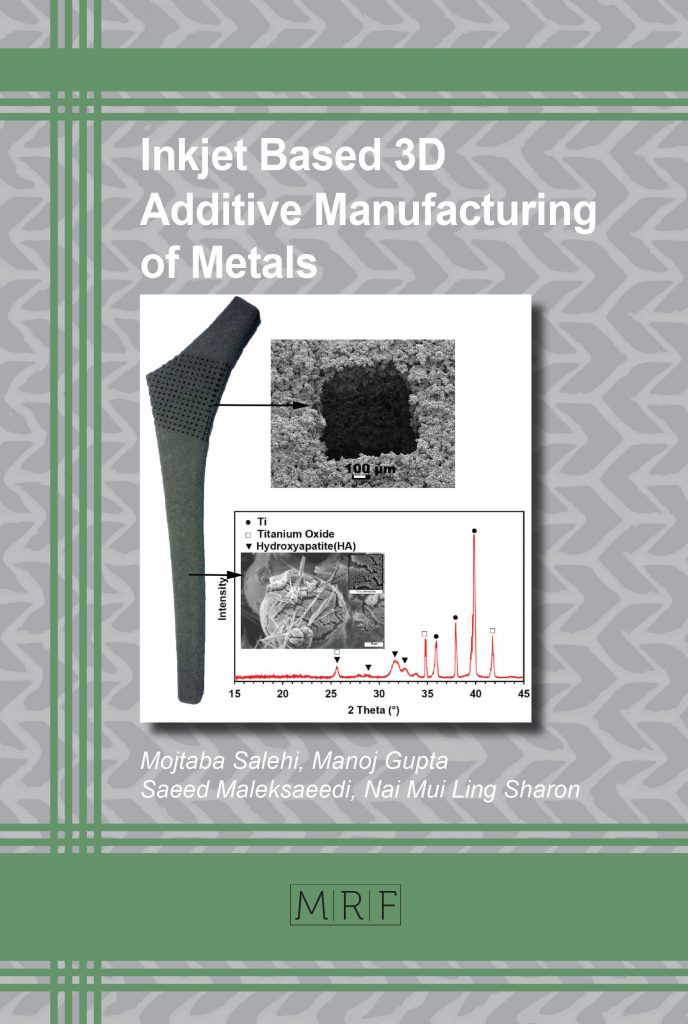
|
Particular emphasis is placed on 3D inkjet printing of metals, which is reviewed here in great depth and for the first time. This is an ambient temperature technology which offers some unique advantages for printing metals and alloys, as well as composite and functionally graded materials. |
| |
|
| |
Metallic Glasses and Their Composites |
| |
D.V. Louzguine/ 9781945291425/ Price:US$ 125.00
|
| |
|
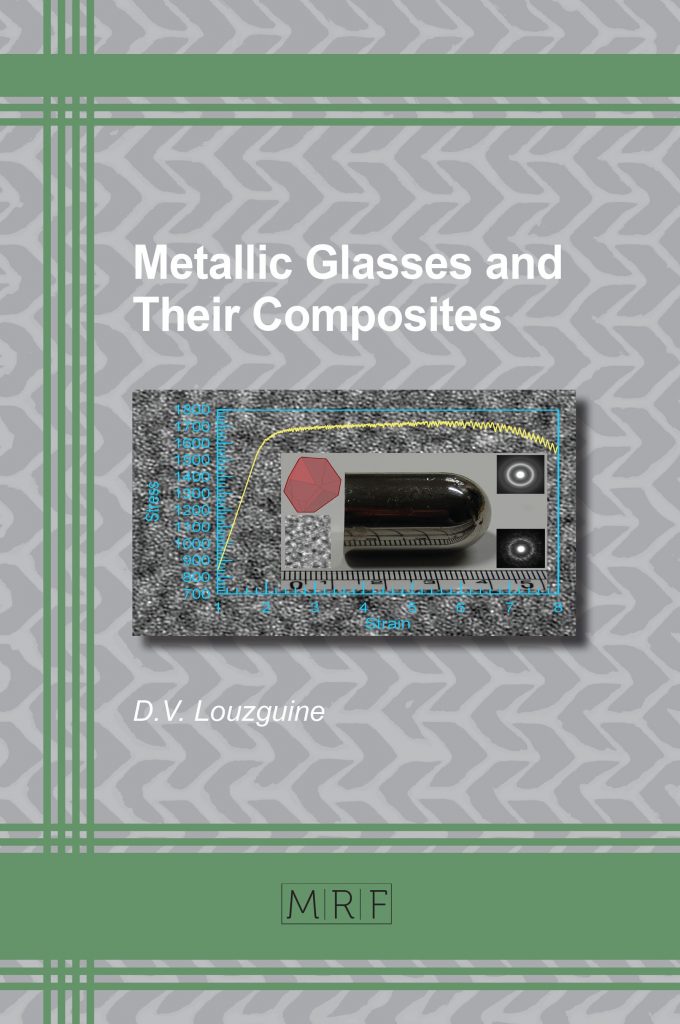
|
The formation of metallic glasses and dual-phase composite/hybrid materials is reviewed, as well as the glass transition process and the resulting structural phenomena. These materials exhibit high strength, extreme hardness, good wear resistance and large elastic deformation. |
| |
|
| |
Chitosan-Based Adsorbents for Wastewater Treatment |
| |
Abu Nasar/ 9781945291746/ Price:US$ 125.00
|
| |
|

|
Chitosan is a natural amino polymer. It is eco-friendly, biocompatible, biodegradable, cost-effective, easily available and has high potential to be utilized as an adsorbent. Because of their excellent chelating power, chitosan-based adsorbents have a very high ability to bind pollutants present in contaminated water and wastewater. |
| |
|
| |
Nanomaterials in Bio-medical Applications: A Novel approach |
| |
Bichitra Nandi Ganguly/ 9781945291722/ Price:US$ 125.00
|
| |
|

|
The book presents new results in the areas of nanomaterials, nanoparticles, ultra-small nanoparticles, plasmonic nanoparticles and coated nanoparticles for bio-medical applications. Emphasis is placed on (1) synthetic routes (quantum dots, thermal decomposition methods), (2) characterization methods (photo-physical techniques, X-ray diffraction, electron microscopy, light scattering, positron annihilation spectroscopy) and (3) bio-medical applications (nanomaterials and nanoparticles in physiology, medicine and bio-medicine). |
| |
|
| |
Magnetic Oxides and Composites |
| |
Rajshree B. Jotania/ 9781945291685/ Price:US$ 125.00
|
| |
|
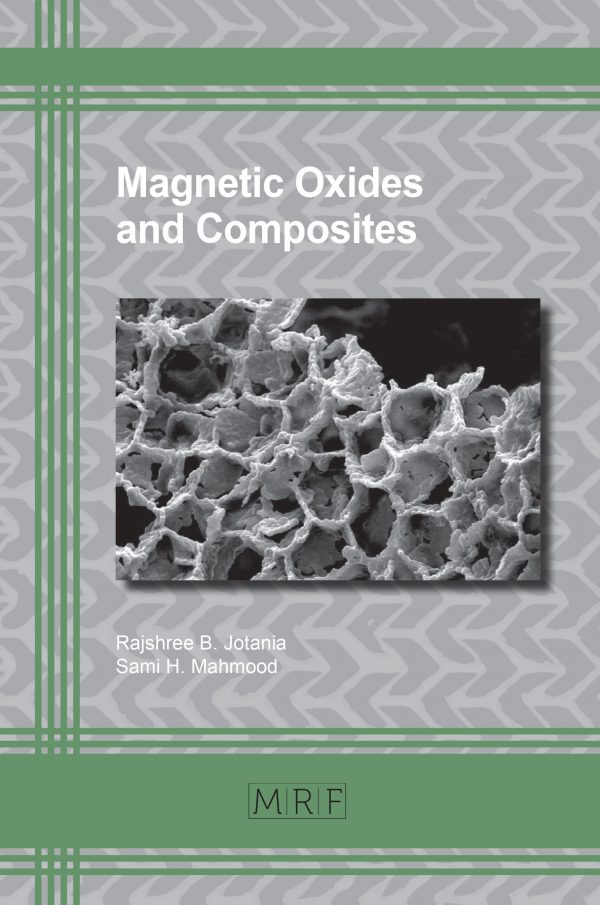
|
The book focuses on the relevant basic concepts of Magnetic oxides, as well as on synthesis routes and important applications of spinel ferrites, hexaferrites and magnetic oxide nanomaterials. |
| |
|
| |
Photocatalytic Nanomaterials for Environmental Applications |
| |
Rajesh J. Tayade/ 9781945291586/ Price:US$ 140.00
|
| |
|
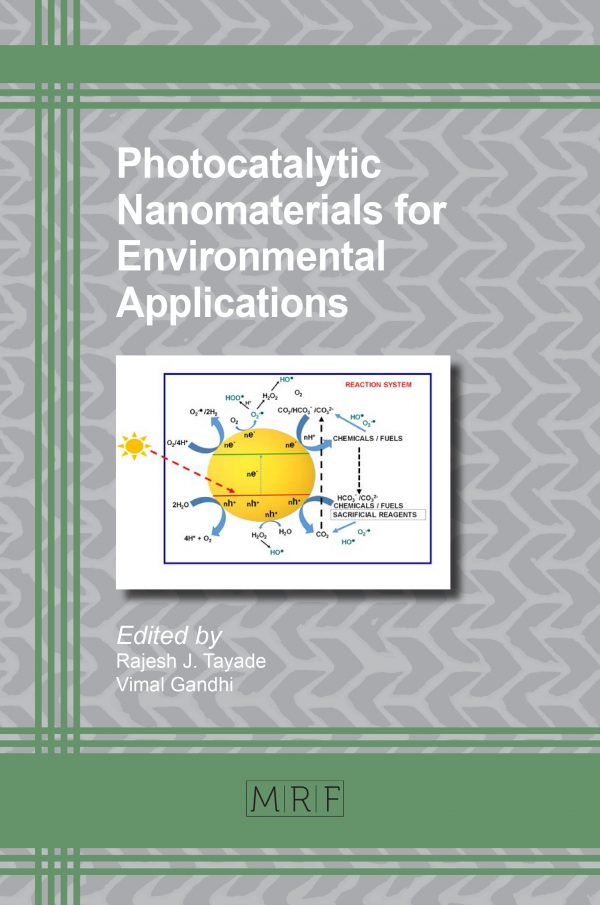
|
Photocatalytic nanomaterials have a great potential in such applications as reduction of carbon dioxide and degradation of various pollutants. They are equally important in the production and storage of energy, e.g. in the conversion of solar energy to electricity, and the production of hydrogen in photoelectrochemical cells.
Research on synthesis, characterization and specific applications is reported for titanium oxide and a number of other promising catalysts, such as silver phosphate, cerium oxide, zinc oxide and zinc sulfide. |
| |
|
| |
Non-Linear Optical Materials |
| |
R. Saravanan/ 9781945291609/ Price:US$ 125.00
|
| |
|
|
Non-linear optical materials have widespread and promising applications, but the efforts to understand the local structure, electron density distribution and bonding is still lacking. The present work explores the structural details, the electron density distribution and the local bond length distribution of some non-linear optical materials. It also gives estimation of the optical band gap, the particle size, crystallite size, and the elemental composition from UV-Visible analysis, SEM, XRD and EDS of some non-linear optical materials respectively. |
| |
|
| |
Electrochemical Capacitors: Theory, Materials and Applications |
| |
Inamuddin/ 9781945291562/ Price:US$ 130.00
|
| |
|
|
Electrochemical capacitors are most important for the development of future energy storage systems and sustainable power sources. New superior hybrid supercapacitors are based on binary and ternary thin film nanocomposites involving carbon, metal oxides and polymeric materials. The synthesis of materials and fabrication of electrodes for supercapacitor applications is discussed in detail. The book also presents the fundamental theory and a thorough literature review of supercapacitors. |
| |
|
| |
Titanate Based Ceramic Dielectric Materials |
| |
Saravanan R./ 9781945291548/ Price:US$ 125.00
|
| |
|
|
The book presents research results concerning the electron density distribution in a number of doped barium titanate ceramic materials using experimental X-ray diffraction data, UV-visible spectrophotometry (UV-vis), scanning electron microscopy (SEM) and energy dispersive X-ray spectroscopy (EDS). The analysis of interatomic bonding and electron density distribution is important for predicting the properties of potentially important materials and has previously been lacking for the materials studied. |
| |
|
| |
Solid Oxide Fuel Cell (SOFC) Materials |
| |
R. Saravanan/ 9781945291500/ Price:US$ 110.00
|
| |
|
|
Developing materials for SOFC applications is one of the key topics in energy research. The book focuses on manganite structured materials, such as doped lanthanum chromites and lanthanum manganites, which have interesting properties: thermal and chemical stability, mixed ionic and electrical conductivity, electrocatalytic activity, magnetocaloric property and colossal magnetoresistance (CMR). |
| |
|
| |
Negative Thermal Expansion Materials |
| |
David Fisher/ 9781945291487/ Price:US$ 125.00
|
| |
|
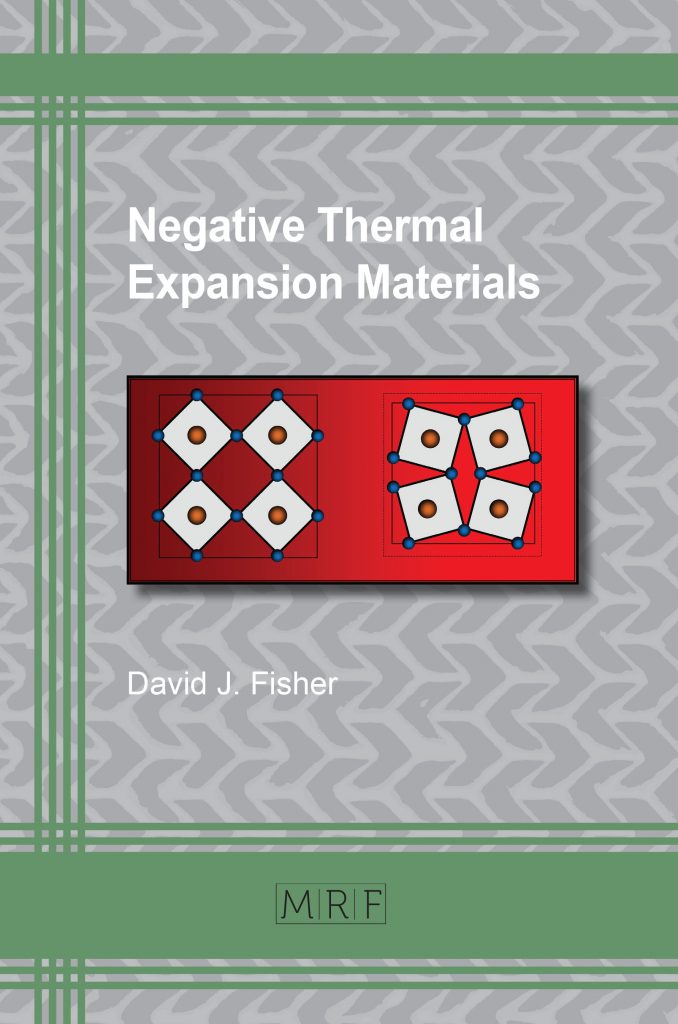
|
The development of these negative thermal expansion materials has advanced rapidly during the past fifteen years, and a wide variety of materials of differing types has now been identified, as well as a number of intriguing mechanisms which help to avoid the apparent inviolable tendency of size to increase with temperature. The present work is the most up-to-date summary of the current range of negative thermal expansion materials and of the associated mechanisms. |
| |
|
| |
Carbonaceous Composite Materials |
| |
Gaurav Sharma/ 9781945291968/ Price:US$ 125.00
|
| |
|
|
All you need to know on current progress in the development, design and utilization of carbonaceous materials in such diverse areas as electronics, medical implants, drug delivery, clean energy, biofuel and pollution control. Emphasis is placed on ¡§engineered carbons¡¨ which include fullerenes, graphene, carbon foam, nanotubes, graphene oxide, carbon aerogels, carbon matrix composites, reinforced polymers and many others.
For example, ceramic composites and polymer composites with a carbon matrix represent advanced building materials and are important for moisture resistant walls and paints. Carbon nanotubes, conducting polymers and graphene based materials play a great role in energy storage in form of electrodes for batteries and supercapacitors. Carbon based materials are both used as sources as well as catalysts for bio-fuel production. Biochar can be utilized for soil enrichment and greenhouse gas sequestration and climate control applications. Graphene is extensively used in electronics and bio-medical applications. Graphene oxide, reduced graphene oxide and graphitic carbon nitride are used as photocatalysts for hydrogen production and contaminants degradation. |
| |
|
| |
Powder Metallurgy and Advanced Materials RoPM&AM 2017 |
| |
Traian Florin Marinca/ 9781945291982/ Price:US$ 125.00
|
| |
|
|
The book presents recent advances in the following fields: Theoretical aspects, characterization and applications of powder and PM products. New developments in powder production and processing. Functional Materials. Nanomaterials and Nanotechnologies. Health, Safety and Environmental Aspects of Particulates. All papers have been peer-reviewed. |
| |
|
| |
Lead-free Piezo-Ceramic Solid Solutions |
| |
R. Saravanan/ 9781945291944/ Price:US$ 125.00
|
| |
|
|
Discover in this book the results of a systematic investigation of the dielectric, ferroelectric and piezoelectric properties of promising lead-free solid solution ceramics. Lead-based perovskite ceramics are most important for piezoelectric and ferroelectric devices, but the toxicity of lead has raised serious environmental issues. This is why much research presently is concerned with the development of efficient lead-free systems.
Lead-free ceramics with the most promising piezoelectric properties are based on barium titanate, modified sodium potassium niobate, sodium bismuth titanate, etc. The present book presents the results of a systematic investigation of the dielectric, ferroelectric and piezoelectric properties of this type of lead-free solid solution ceramics as obtained by way of powder X-ray diffraction, scanning electron microscopy, energy dispersive X-ray spectroscopy, UV-visible spectroscopy, dielectric, ferroelectric and piezoelectric measurements. Also determined was the electron density distribution of five series of lead-free barium titanate piezoelectric ceramics using experimental X-ray diffraction data. |
| |
|
| |
Non-Conventional Materials and Technologies |
| |
Khosrow Ghavami/ 9781945291821/ Price:US$ 170.00
|
| |
|
|
The book presents new research in the area of biobased ¡§green composites¡¨. Biobased materials involve renewable agricultural and forestry feedstocks, including wood, agricultural waste, grasses and natural plant fibers. These lignocellulosic materials are composed mainly of carbohydrates such as sugar and lignin, cellulose, vegetable oils and proteins. Much research is concerned with renewable materials such as bamboo, vegetable ?bers, soil composites and recycled materials such as rice husk ash and sugar cane ash. The general aim here is to use renewable and non-polluting materials in ways that offer a high degree of sustainability and preserve the remaining natural resources for future generations. |
| |
|
| |
Rhenium Disulfide |
| |
D.J. Fisher/ 9781945291920/ Price:US$ 125.00
|
| |
|
|
All you want to know about Rhenium disulfide in an easy to read condensed format. Rhenium disulfide especially in low-dimensional form, is a subject of lively research into its electronic and optical properties. The field of 2D materials such as graphene and its analogues has been growing very rapidly. This class of materials also includes rhenium disulfide and rhenium diselenide, which belong to the transition-metal dichalcogenide family. Due to their reduced crystal symmetry, they exhibit distinct electrical and optical characteristics along certain in-plane crystal directions.
The group-VI members such as molybdenum and tungsten are the most typical ones, but group-VII rhenium disulfide has been attracting most attention of late because of its unusual structural, electro-optical and chemical properties; especially an indirect-to-direct band-gap transition which occurs when thinned down from bulk to monolayer. The group-VI transition-metal dichalcogenides have a 1H, 2H, 3R or 1T structure, whereas ReS2 has a distorted 1T structure which imparts an in-plane anisotropy to its physical properties. Few other materials (black phosphorus, ReSe2, TiS3, ZrS3) exhibit such an in-plane structural anisotropy. This makes ReS2 unique among the transition-metal chalcogenides. Atomically thin rhenium disulphide is characterized by weak interlayer coupling and a distorted 1T structure, which leads to the anisotropy in optical and electrical properties. It also possesses structural and vibrational anisotropy, layer-independent electrical and optical properties and metal-free magnetism. In these respects, it differs from group-VI transition-metal dichalcogenides such as MoS2, MoSe2, WS2 and WSe2. It is already being used in solid-state electronics, catalysis, energy storage and energy-harvesting applications. |
| |
|
| |
Modern Technologies of Thin Films Deposition |
| |
Chemical Phosphatation/ 9781945291906/ Price:US$ 125.00
|
| |
|
|
|
Thin phosphate coatings are very attractive technologically; in terms of reliability, manufacturing cost and environmental impact. For one thing, the book presents research aimed at obtaining thin phosphate layers that offer good corrosion protection of finished parts. The other aim was to develop techniques that result in coatings with good lubricating properties, as they are required in plastic deformation processing.
Presented are alternatives to obtain and characterize phosphate layers by means of the co-precipitation of cations and surfactants in acidic aqueous solutions; resulting in the production of dendritic structures with optimal chemical, physical-structural and mechanical properties. Decisive here are the processes of nucleation and the formation of compact layers that are uniform and well adherent to the substrate.
Another general aim was the development of phosphating technologies with high reliability, minimal use of materials and energy and with minimal impact on the environment and operator. |
| |
|
| |
Advancing Silicon Carbide Electronics Technology I: Metal Contacts to Silicon Carbide: Physics, Technology, Applications |
| |
Zekentes, Konstantinos/ 9781945291845/ Price:US$ 125.00
|
| |
|
|
The rapidly advancing Silicon Carbide technology has a great potential in high temperature and high frequency electronics. High thermal stability and outstanding chemical inertness make SiC an excellent material for high-power, low-loss semiconductor devices. The present volume presents the state of the art of SiC device fabrication and characterization. Topics covered include: SiC surface cleaning and etching techniques; electrical characterization methods and processing of ohmic contacts to silicon carbide; analysis of contact resistivity dependence on material properties; limitations and accuracy of contact resistivity measurements; ohmic contact fabrication and test structure design; overview of different metallization schemes and processing technologies; thermal stability of ohmic contacts to SiC, their protection and compatibility with device processing; Schottky contacts to SiC; Schottky barrier formation; Schottky barrier inhomogeneity in SiC materials; technology and design of 4H-SiC Schottky and Junction Barrier Schottky diodes; Si/SiC heterojunction diodes; applications of SiC Schottky diodes in power electronics and temperature/light sensors; high power SiC unipolar and bipolar switching devices; different types of SiC devices including material and technology constraints on device performance; applications in the area of metal contacts to silicon carbide; status and prospects of SiC power devices. |
| |
|
| |
Innovations in Army Energy and Power Materials Technologies |
| |
Edward C. Shaffer/ 9781945291784/ Price:US$ 150.00
|
| |
|
|
This compendium reports fundamental science and engineering advances of the US Army Research Labratory (ARL) within the area of Energy and Power technologies. Although, in general, ARL¡¦s Materials Research encompasses a broad range of materials technologies (e.g.: Photonics, Electronics, Biological and Bio-inspired Materials, Structural Materials, High Strain and Ballistic Materials, and Manufacturing Science), this publication specifically addresses selected energy and power material related work at ARL. While this work includes electrochemical energy storage (batteries and capacitors) and electrochemical energy conversion (fuel cells, photoelectrochemistry, and photochemistry), special emphasis is given on electrochemical energy storage:
¡E Micro Electro-Mechanical Systems (MEMS): Power density, efficiency, and robustness of motors, generators, and actuators while also reducing their life cycle costs.
¡E Energy Storage: Electrical and electrochemical energy storage devices to decrease device size, weight, and cost as well as increase their capabilities in extreme temperatures and operating conditions.
¡E Power Control and Distribution: Tactical, deployable power systems using conventional fuels, alternative fuels, and energy harvested from renewable/ambient sources.
¡E Power Generation/Energy Conversion: Smart energy networks for platforms, forward operating bases, and facilities using modeling and simulation tools as well as new, greater capability and efficiency components.
¡E Thermal Transport and Control: Heat and higher power density systems, advanced components, system modeling, and adaptive or hybrid-cycle technologies. |
| |
|
| |
Dilute Magnetic Semiconducting (DMS) Materials |
| |
R. Saravanan/ 9781945291760/ Price:US$ 125.00
|
| |
|
|
Diluted Magnetic Semiconductors (DMS) play a vital role in modern electronics industry. It is important to understand the fundamental properties of these materials in order to apply them to their full potential.
This book presents an analysis of the charge density distribution and other properties of some silicon and germanium based diluted magnetic semiconductors. A quantitative analysis of the charge density distribution has been done in order to obtain measurements of the charges involved in the bonding, which are decisive for the physical and chemical properties of the DMS materials. Also, the local structures of the materials have been analyzed by studying their powder X-ray diffraction intensities. Analysis of the magnetic properties of the DMS materials is mandatory and has been accomplished by magnetic measurements carried out using a vibrating sample magnetometer. The morphology of the DMS materials has been studied using scanning electron micrographs. |
| |
|
| VF02-86 |
3D Printing and Its Impact on the Production of Fully Functional Components: Emerging Research and Opportunities |
| |
Kocovic, Petar/ 9781522522898/ Price:US$ 150.00
|
| |
|
|
Manufacturing processes have undergone significant developments in recent years. With the application of new technology, the productivity of companies has increased tremendously.
3D Printing and Its Impact on the Production of Fully Functional Components: Emerging Research and Opportunities is an innovative source of scholarly research on the advancements of 3D printing technology in modern manufacturing processes. Highlighting critical perspectives on topics such as industrial applications, 3D modeling, and bioprinting, this publication is ideally designed for professionals, academics, engineers, students, and practitioners interested in the latest trends in additive manufacturing.
Topics Covered
The many academic areas covered in this publication include, but are not limited to:
¡E3D Modeling
¡EBioprinting
¡EDigital Light Processing (DLP)
¡EElectron Beam Melting
¡EHype Cycle
¡EIndustrial applications
¡EOutsourcing
¡ESupply chain management |
| |
|
| VF02-85 |
Materials Science and Engineering: Concepts, Methodologies, Tools, and Applications, 3-Vols/Set. |
| |
Information Resources Management Association/ 9781522517986/ Price:US$ 945.00
|
| |
|
|
The design and study of materials is a pivotal component to new discoveries in the various fields of science and technology. By better understanding the components and structures of materials, researchers can increase its applications across different industries.
Materials Science and Engineering: Concepts, Methodologies, Tools, and Applications is a compendium of the latest academic material on investigations, technologies, and techniques pertaining to analyzing the synthesis and design of new materials. Through its broad and extensive coverage on a variety of crucial topics, such as nanomaterials, biomaterials, and relevant computational methods, this multi-volume work is an essential reference source for engineers, academics, researchers, students, professionals, and practitioners seeking innovative perspectives in the field of materials science and engineering.
Topics Covered
The many academic areas covered in this publication include, but are not limited to:
¡EBioinspired Materials
¡EComposites
¡EComputational Methods
¡EFailure Analysis and Prevention
¡EMetal Alloys
¡ENanomaterials
¡EPolymers
¡ESemiconductors
¡ESurface Engineering |
| |
|
| SF02-490 |
Textile Finishing: Recent Developments and Future Trends. |
| |
K. L. Mittal/ 9781119426769/ Price:US$ 257.95
|
| |
|
|
|
|
| |
|
| SF02-463 |
Nanoengineering: Science and Technology. |
| |
Gallo, Jurex C./ 9781680959109/ Price:US$ 145.00
|
| |
|
|
|
| |
|
| SF02-463 |
Nanotechnology: A Comprehensive Introduction. |
| |
Gallo, Jurex C./ 9781680959116/ Price:US$ 145.00
|
| |
|
|
|
| |
|
| SF02-463 |
Illustrated Handbook of Nanotechnology. |
| |
/ 9781680946758/ Price:US$ 180.00
|
| |
|
|
After more than 20 years of basic nanoscience research and more than fifteen years of focused R&D under the nanotechnology interventions, applications of nanotechnology are delivering in both expected and unexpected ways on nanotechnology?s promise to benefit society. Nanotechnology is helping to considerably improve, even revolutionize, many technology and industry sectors: information technology, homeland security, medicine, transportation, energy, food safety, and environmental science, and among many others. This illustrated text binds together the principles, theory, and practice of nanotechnology, presenting a comprehensive, yet convincing, introduction to the possibilities and limitations of this exciting and rapidly developing field. |
| |
|
| SF02-462 |
Composite Materials. (With DVD) |
| |
/ 9781680954852/ Price:US$ 79.95
|
| |
|
|
A composite material is a material made from two or more constituent materials with signi cantly di erent physical or chemical properties that, when combined, produce a material with characteristics di erent from the individual components. Composite materials, often shortened to composites, are engineered or naturally occurring materials made from two or more constituent materials with signi cantly di erent physical or chemical properties which remain separate and distinct at the macroscopic or microscopic scale within the nished structure. Composites have unique advantages over monolithic materials including high strength, high sti ness, long fatigue life, low density, and adaptability to the intended function of the structure. Because of these properties, composite materials lend themselves to a wide range of applications across numerous industries. |
| |
|
| SF02-460 |
Semiconductor Physics. |
| |
Husan, Eqbal/ 9781682504130/ Price:US$ 150.00
|
| |
|

|
Semiconductor is a substance, usually a solid chemical element or compound that can conduct electricity under some conditions but not others, making it a good medium for the control of electrical current. Its conductance varies depending on the current or voltage applied to a control electrode, or on the intensity of irradiation by infrared, visible light, ultraviolet, or X rays. This book provides a basis for understanding the characteristics, operation, and limitations of semiconductor devices. |
| |
|
| SF02-460 |
Ferroelectric Materials. |
| |
Kumar, Mulmudi H./ 9781680943610/ Price:US$ 170.00
|
| |
|
|
A ferroelectric material is a material that exhibits, over some range of temperature, a spontaneous electric polarization that can be reversed or reoriented by application of an electric field. This book presents selected topics on processing and properties of ferroelectric materials that are currently the focus of attention in scientific and technical research. This book offers the basic physical properties, structure, fabrication methods and applications of ferroelectric materials. |
| |
|
| SF02-460 |
Composite Materials: Science and Engineering. |
| |
Randrianarisoa, Harinirina/ 9781680944037/ Price:US$ 165.00
|
| |
|
|
Composite material is a combination of a matrix and a reinforcement, which when combined
gives properties superior to the properties of the individual components. It provides a forum for discussion of all aspects related to the structure and performance under simulated and actual service conditions of composites.The book focuses on the triad of processing,structure, and properties, while providing a well-balanced treatment of the materials science and mechanics of composites. |
| |
|
| SF02-460 |
Hydrogen Materials Science and Chemistry of Metal Hydrides. |
| |
Kumar, Mulmudi H./ 9781680944273/ Price:US$ 170.00
|
| |
|
|
This book considers the various advanced hydrogen materials and technologies of their synthesis. It presents the consideration of the physics, chemistry, thermodynamics and kinetics of processes of energy conversion, which occur at hydrogen production, storage, transportation and with its use. |
| |
|
| |
Optical Furnaces for Crystal Growth |
| |
Gerhard Kloos/ 9781945291203/ Price:US$ 85
|
| |
|
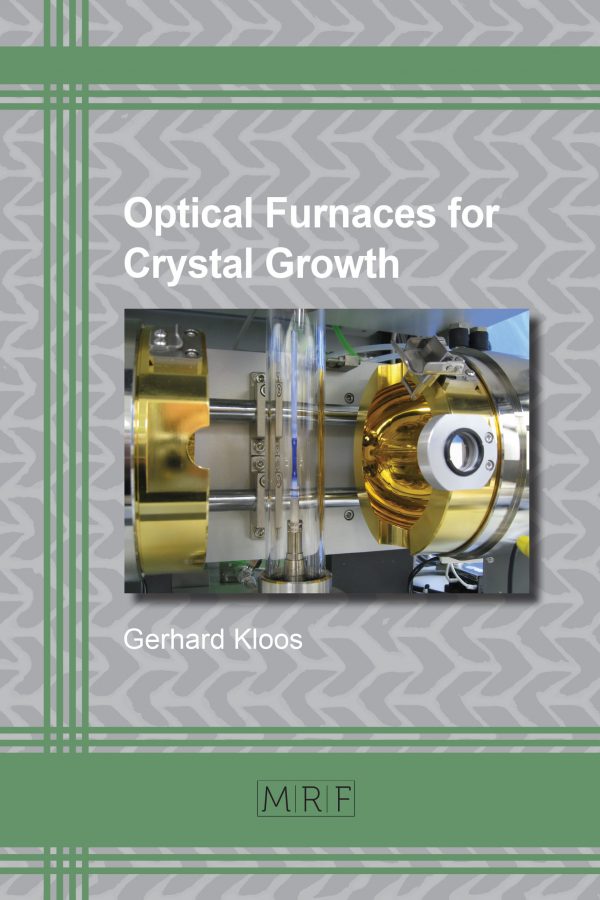
|
Well-defined single crystals of high quality are of importance in some branches of industry as well as in fundamental investigations of materials research. This monograph is devoted to the growth of crystals using optical furnaces. Optical furnaces can be understood and designed making recurrence to concepts that stem from analytical geometry. Therefore, these ideas are presented taking both ¡§faces¡¨ of analytical geometry into account.
For the operation and maintenance of optical furnaces it is advantageous to gain an understanding of their principle of operation and alignment sensitivities. The method of analysis presented in this book strongly relies on pictorial representations and ray tracing is used as a means to visualize the working principles of these furnaces. |
| |
|
| |
Point defects in group IV semiconductors |
| |
S. Pizzini/ 9781945291227/ Price:US$ 95.00
|
| |
|
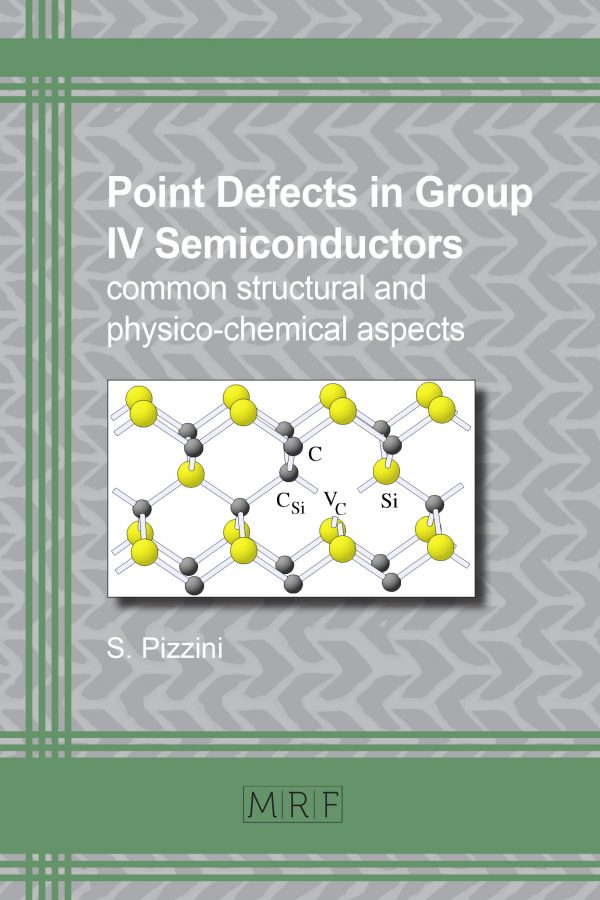
|
A self-consistent, microscopic model of individual- and -reacted point defects requires a reliable connection with the experimentally deduced structural, spectroscopic and thermodynamic properties of the defect centres, to allow their unambiguous identification.
Aim of this book is to focus on the properties of defects in semiconductors of the fourth group under a physico-chemical approach, capable to demonstrate whether the full acknowledgement of their chemical nature could account for several problems encountered in practice or would suggest further experimental or theoretical accomplishments.
It will be shown how difficult the fulfilment of self-consistency conditions can be, even today, after more than four decades of dedicated research work, especially in the case of compound semiconductors (SiC in this book), but also in the apparently simplest cases of silicon and germanium also because microscopic models do not account, jet, for defect interactions in real solids. |
| |
|
| |
Radiation Effects in Silicon Carbide |
| |
A A Lebedev/ 9781945291104/ Price:US$ 100.00
|
| |
|
|
|
The book reviews the most interesting, in the author¡¦s opinion, publications concerned with radiation defects formed in 6H-, 4H-, and 3C-SiC under irradiation with electrons, neutrons, and some kinds of ions. At the beginning, the SiC electrical parameters making this material promising for application in modern electronics are discussed. Specific features of the crystal structure of SiC are also considered. It is shown that, when wide-bandgap semiconductors are studied, it is necessary to take into account the temperature dependence of the carrier removal rate (£be), which is a standard parameter for determining the radiation hardness of semiconductors. The £be values obtained by irradiation of various SiC polytypes with n- and p-type of conductivity are analyzed in relation to the type and energy of irradiating particles. The possible physical mechanisms of compensation of the given material are considered. The influence exerted by the energy of charged particles on how radiation defects are formed and conductivity is compensated in semiconductors under irradiation is analyzed.
Further, the possibility to produce controlled transformation of silicon carbide polytype is considered. The involvement of radiation defects in radiative and nonradiative recombination processes in SiC is analyzed.
Data are also presented regarding the degradation of particular SiC electronic devices under the influence of radiation and a conclusion is made regarding the radiation resistance of SiC. Lastly, the radiation hardness of devices based on silicon and silicon carbide are compared. |
| |
|
| |
Residual Stresses 2016: Icrs-10 |
| |
Thomas M Holden/ 9781945291166/ Price:US$ 160.00
|
| |
|

|
his book presents the proceedings of the Tenth International Conference on Residual Stresses which was devoted to the prediction/modelling, evaluation, control, and application of residual stresses over a wide range of applications. New developments on stress-measurement techniques, on the modelling and prediction of residual stresses and on progress made in the fundamental understanding of the nature of residual stresses are highlighted. The proceedings offer an overview of the current understanding of how residual stresses affect the properties of materials, components and structures. |
| |
|
| |
Contemporary Dielectric Materials |
| |
R Saravanan/ 9781945291128/ Price:US$ 100.00
|
| |
|

|
This book deals with experimental results of the physical characterization of several important, dielectric materials of great current interest. The experimental tools used for the analysis of these materials include X-ray diffraction, dielectric measurements, magnetic measurements using a vibrating sample magnetometer, optical measurements using a UV-Visible spectrometer etc. |
| |
|
| |
Current Trends on Lanthanide Glasses and Materials |
| |
Sooraj Hussain Nandyala/ 9781945291142/ Price:US$ 125.00
|
| |
|
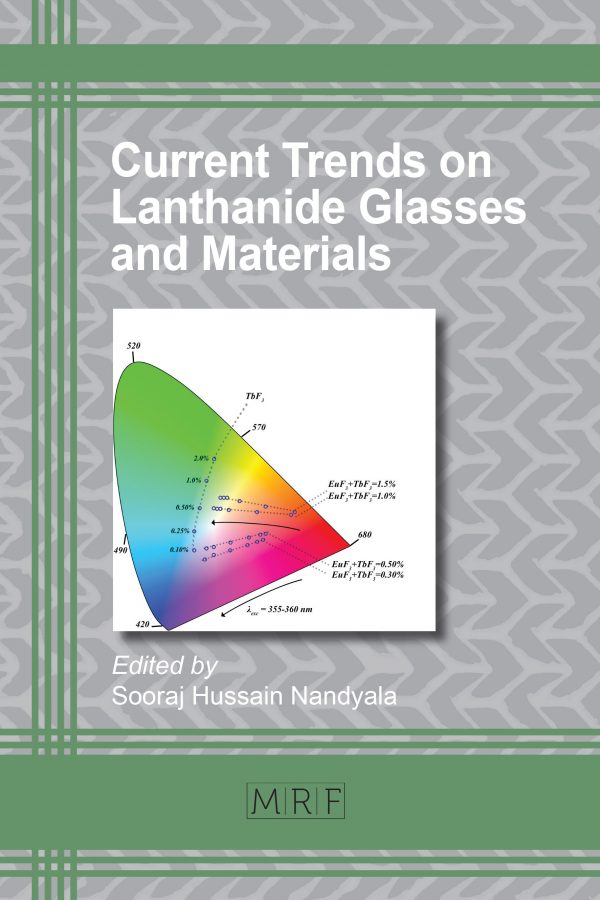
|
This book entitled ¡¥Current Trends on Lanthanide Glasses and Materials¡¦ is an innovative monograph covering the latest developments in lanthanide doped glasses and phosphor materials. The book aims to explain the basic functioning mechanisms of phosphor materials, and the luminescence behavior of glasses doped with certain lanthanide ions. It also describes how to plot colors in a CIE chromaticity diagram.
The book will be of use for senior researchers, materials scientists, chemists, physicists, engineers, as well as research students to gain knowledge on current developments of these materials. |
| |
|
| |
Cork Science and its Applications |
| |
Ricardo Sousa/ 9781945291401/ Price:US$ 85.00
|
| |
|

|
Cork and cork agglomerates are natural cellular materials that are receiving much interest in a number of technological applications, e.g. as Feedstock for the Additive 3D Printing Technology; Solar, Wind and Bioenergy applications; Sorbent for Pesticides and Heavy Metals; and Water Treatment |
| |
|
| |
Ferrite Materials for Memory Applications |
| |
R. Saravanan/ 9781945291388/ Price:US$ 125.00
|
| |
|
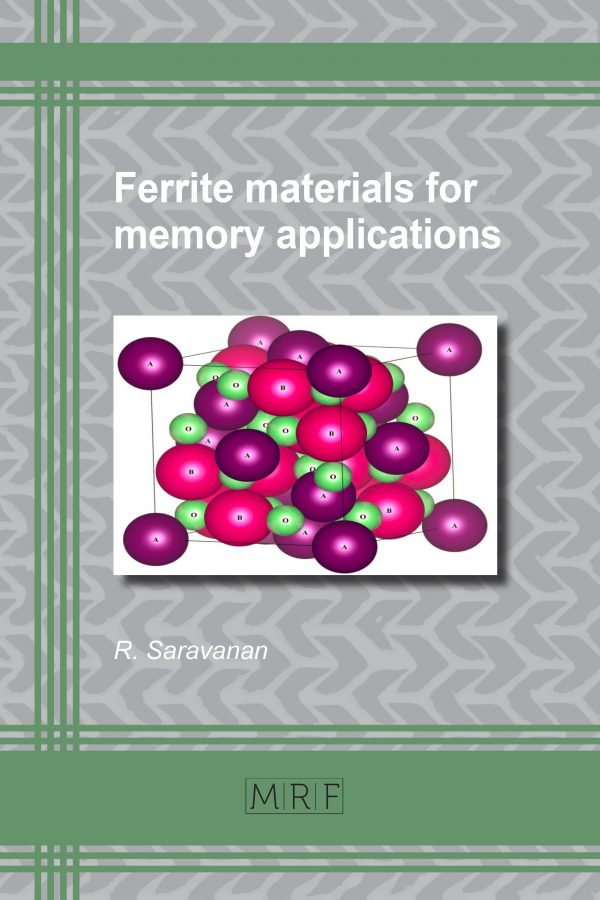
|
The book discusses the synthesis and characterization of various ferrite materials used for memory applications. The distinct feature of the book is the construction of charge density of ferrites by deploying the maximum entropy method (MEM). This charge density gives the distribution of charges in the ferrite unit cell, which is analyzed for charge related properties. |
| |
|
| |
Inorganic Pollutants in Wastewater: Methods of Analysis, Removal and Treatment |
| |
Inamuddin/ 9781945291340/ Price:US$ 135.00
|
| |
|
|
|
The book extensively investigates the most recent improvements in the area of inorganic pollutants analysis, removal and treatment of wastewater by utiliz-ing different materials such as natural polymers, husks, graphene and carbon nanotube composites, fruit cortex etc. It covers photocatalysis, adsorption, desalination and electrochemical tech-nologies used for the analysis and treatment of inorganic pollutants. |
| |
|
| |
Applications of Adsorption and Ion Exchange Chromatography in Waste Water Treatment |
| |
Inamuddin/ 9781945291326/ Price:US$ 125.00
|
| |
|

|
Waste water treatment is of great world-wide interest. Much research focuses on nanotechnology and the development of new smart materials. The book presents contributions of well-known authors in the field. |
| |
|
| |
Elemental Graphene Analogues |
| |
David J. Fisher/ 9781945291302/ Price:US$ 150.00
|
| |
|
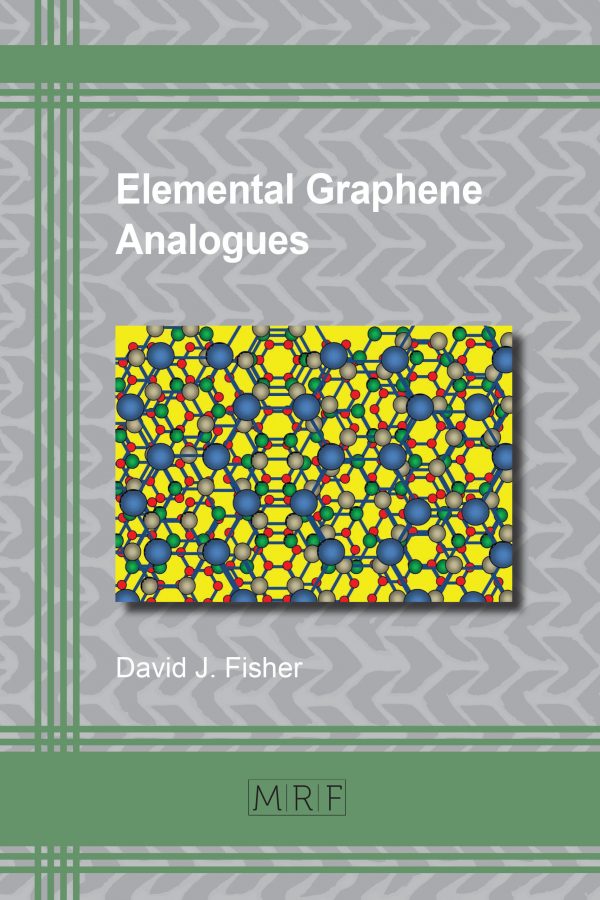
|
The present monograph summarizes all of the work carried out on such monolayer materials up to the beginning of 2017 including Antimonene, Arsenene, Bismuthene, Borophene, Germanene, Indiene, Phosphorene, Silicene, Stanene, Tinene. Most of the work done so far on these ¡¥elemental graphene analogues¡¦ has been theoretical, but the existing experimental data suggest that they may well become as useful as graphene. |
| |
|
| |
Innovation in Smart Materials and Structural Health Monitoring for Composite Applications |
| |
Mustapha Faizal/ 9781945291289/ Price:US$ 125.00
|
| |
|
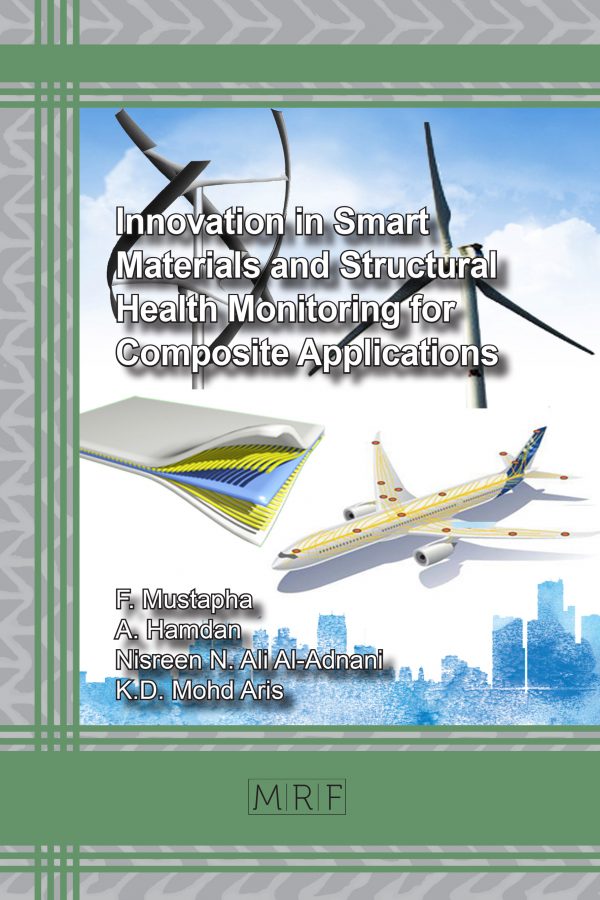
|
Structural health monitoring (SHM) is an automated approach to determine any changes in the integrity of mechanical systems. The SHM system gives information in real time and online. It is thus very useful in damage detection, damage localization, damage assessment and life prediction. |
| |
|
| |
Recent Advances in Energy Storage Materials and Devices |
| |
Li Lu/ 9781945291265/ Price:US$ 125.00
|
| |
|
|
This book presents nine comprehensive contributions on topics ranging from the principles of Li-ion batteries to future energy storage systems such as solid electrolytes for all-solid-state batteries and high capacity redox flow batteries. |
| |
|
| |
Study of biocompatible and biological materials: Can they be influenced by external factors? |
| |
Pecheva Emilia/ 9781945291241/ Price:US$ 125.00
|
| |
|

|
The book gives an overview on biomineralization, biological, biocompatible and biomimetic materials. It reveals the use of biomaterials alone or in composites, how their performance can be improved by tailoring their surface properties by external factors and how standard surface modification techniques can be applied in the area of biomaterials to beneficially influence their growth on surfaces. |
| |
|
| VF02-84 |
Comprehensive Materials Finishing, 3-Vols/Set. |
| |
Hashmi, Saleem/ 9780128032497/ Price:US$ 1050.00
|
| |
|
|
Finish Manufacturing Processes are those final stage processing techniques which are deployed to bring a product to readiness for marketing and putting in service. Over recent decades a number of finish manufacturing processes have been newly developed by researchers and technologists. Many of these developments have been reported and illustrated in existing literature in a piecemeal manner or in relation only to specific applications.
For the first time, Comprehensive Materials Finishing integrates a wide body of this knowledge and understanding into a single, comprehensive work. Containing a mixture of review articles, case studies and research findings resulting from R & D activities in industrial and academic domains, this reference work focuses on how some finish manufacturing processes are advantageous for a broad range of technologies. These include applicability, energy and technological costs as well as practicability of implementation. The work covers a wide range of materials such as ferrous, non-ferrous and polymeric materials.
There are three main distinct types of finishing processes: Surface Treatment by which the properties of the material are modified without generally changing the physical dimensions of the surface; Finish Machining Processes by which a small layer of material is removed from the surface by various machining processes to render improved surface characteristics; and Surface Coating Processes by which the surface properties are improved by adding fine layer(s) of materials with superior surface characteristics. Each of these primary finishing processes is presented in its own volume for ease of use, making Comprehensive Materials Finishing an essential reference source for researchers and professionals at all career stages in academia and industry. |
| |
|
| VF02-83 |
Medical Coatings and Deposition Technologies |
| |
Glocker, David/ 9781118031940/ Price:US$ 279.95
|
| |
|
|
Medical Coatings and Deposition Technologies is an important new addition to the libraries of medical device designers and manufacturers. Coatings enable the properties of the surface of a device to be controlled independently from the underlying bulk properties; they are often critical to the performance of the device and their use is rapidly growing. This book provides an introduction to many of the most important types of coatings used on modern medical devices as well as descriptions of the techniques by which they are applied and methods for testing their efficacy. Developers of new medical devices and those responsible for producing them will find it an important reference when deciding if a particular functionality can be provided by a coating and what limitations may apply in a given application. Written as a practical guide and containing many specific coating examples and a large number of references for further reading, the book will also be useful to students in materials science & engineering with an interest in medical devices.
Chapters on antimicrobial coatings as well as coatings for biocompatibility, drug delivery, radiopacity and hardness are supported by chapters describing key liquid coating processes, plasma-based processes and chemical vapor deposition. Many types of coatings can be applied by more than one technique and the reader will learn the tradeoffs given the relevant design, manufacturing and economic constraints. The chapter on regulatory considerations provides important perspectives regarding the marketing of these coatings and medical devices. |
| |
|
| VF02-82 |
Green Approaches to Biocomposite Materials Science and Engineering |
| |
Verma, Deepak/ 9781522504245/ Price:US$ 165.00
|
| |
|
|
Industrial ecology, eco-efficiency, and green chemistry are guiding the development of the next generation of materials, products, and processes. Considerable growth has been seen in the use of biocomposites in the domestic sector, building materials, aerospace industry, circuit boards, and automotive applications over the past decade, but application in other sectors until now has been limited.
Green Approaches to Biocomposite Materials Science and Engineering explores timely research on the various available types of natural fibers and the use of these fibers as a sustainable alternative to synthetic fibers and polymers. Emphasizing research-based solutions for sustainability across various industries, this publication is an essential reference source for engineers, researchers, environmental scientists, and graduate-level students.
Topics Covered
¡EBiomaterials
¡EComposite Properties
¡EGreen Composites
¡ELife Cycle Assessment (LCA)
¡ENatural Fiber Composites
¡EPineapple Leaf Fibers (PALF)
¡EPolymer Composites |
| |
|
| VF02-81 |
Computational Approaches to Materials Design: Theoretical and Practical Aspects |
| |
Datta, Shubhabrata/ 9781522502906/ Price:US$ 215.00
|
| |
|
|
The development of new and superior materials is beneficial within industrial settings, as well as a topic of academic interest. By using computational modeling techniques, the probable application and performance of these materials can be easily evaluated.
Computational Approaches to Materials Design: Theoretical and Practical Aspects brings together empirical research, theoretical concepts, and the various approaches in the design and discovery of new materials. Highlighting optimization tools and soft computing methods, this publication is a comprehensive collection for researchers, both in academia and in industrial settings, and practitioners who are interested in the application of computational techniques in the field of materials engineering.
Topics Covered
¡EAb Initio Methods
¡EComputational Materials Engineering
¡EIndustrial Applications
¡EMaterials Modeling
¡EMicrostructure Simulation
¡ENeural Networks
¡EOptimization Tools
¡EPhase Field Techniques |
| |
|
| VF02-80 |
Advanced Manufacturing Techniques Using Laser Material Processing |
| |
Akinlabi, Esther Titilayo/ 9781522503293/ Price:US$ 175.00
|
| |
|

|
The use of lasers in material processing has become a useful method for transforming industrial materials into finished products. The benefits of laser material processing are vast, including increased precision, high processing speed, and dustless cutting and drilling.
Advanced Manufacturing Techniques Using Laser Material Processing explores the latest methodologies for using lasers in materials manufacturing and production, the benefits of using lasers in industrial settings, as well as future outlooks for this technology. This innovative publication is an essential reference source for professionals, researchers, and graduate-level students studying manufacturing technologies and industrial engineering.
Topics Covered
¡EComputer-Aided Design (CAD)
¡ELaser Additive Manufacturing
¡ELaser Machining
¡ELaser Metal Deposition
¡ELaser Surface Alloying
¡ELaser Surface Modification
¡ELaser-Material Interaction
¡EProcess Optimization |
| |
|
| VF02-79 |
Research Perspectives on Functional Micro- and Nanoscale Coatings |
| |
Zuzuarregui, Ana/ 9781522500667/ Price:US$ 215.00
|
| |
|
|
Just as chemistry is a part of our daily lives, functional coatings can be found in almost every object, gadget or device you can see or touch. However, in the last 20 years the advances made in the preparation of different functional coatings with diverse compositions have allowed the development of nanoscale coatings that are more cost-effective and environmentally conscious than traditional coatings.
Research Perspectives on Functional Micro- and Nanoscale Coatings highlights critical research on preparation methods, modification, organization, and utilization of functional coatings in micro, nano, and biotechnology. Emphasizing emerging developments and global research perspectives, this publication is a pivotal resource for engineers, researchers, and graduate-level students interested in learning about emerging developments in functional coatings and nanotechnology.
Topics Covered
¡EBiocompatable Coatings
¡EBiomedical Applications
¡EMultilayer Coatings
¡ENanoparticles
¡EOptical Functionalities
¡ESmart Coatings
¡ESuperhydrophobic Coatings
¡EThermal Barrier Coatings
|
| |
|
| VF02-78 |
Emerging Research on Bioinspired Materials Engineering. |
| |
Bououdina, Mohamed/ 9781466698116/ Price:US$ 215.00
|
| |
|
|
Bioinspired materials can be defined as the organic or inorganic materials that mimic naturally occurring substances. With applications in a number of fields such as biomedical, chemical, mechanical, and civil engineering, research on the development of biologically-inspired materials is essential to further advancement.
Emerging Research on Bioinspired Materials Engineering provides insight on fabrication strategies for bioinspired materials as well as a collective review of their current and prospective applications. Highlighting essential research on bioinspired processes and the nano-structural, physical, chemical, thermal, and mechanical aspects of biologically-inspired materials, this timely publication is an ideal reference source for engineers, researchers, scholars, and graduate students in the fields of materials science and engineering, nanotechnology, biotechnology, and biomedical materials science.
Topics Covered
¡EBiocompatibility
¡EMaterials Science
¡ENanobiotechnology
¡ENanomaterials
¡ENanoparticles
¡ESynthetic Biology
¡ETissue Engineering
|
| |
|
| SF02-456 |
Advances in Nanofibers. |
| |
Miller, Alberto/ 9781682500057/ Price:US$ 180.00
|
| |
|
|
|
Nanofibers are defined as fibers with diameters less than 100 nanometers. In the textile industry, this definition is often extended to include fibers as large as 1000 nm diameter. They can be produced by melt processing, interfacial polymerization, electrospinning, antisolvent-induced polymer precipitation and electrostatic spinning. Nanofibers have applications in medicine, including artificial organ components, tissue engineering, implant material, drug delivery, wound dressing, and medical textile materials. Book Advances in Nanofibers covers topics on developments within the Nanofibers field of study. This book summarizes the currently available techniques for nanofiber synthesis and discusses the use of nanofibers in tissue engineering and drug delivery applications. |
| |
|
| SF02-456 |
Synthesis and Applications of Carbon Nanotubes and Their Composites. |
| |
Davis, Alex/ 9781682500064/ Price:US$ 180.00
|
| |
|
|
A carbon nanotube is a tube-shaped material, made of carbon, having a diameter measuring on the nanometer scale. A nanometer is one-billionth of a meter, or about one ten-thousandth of the thickness of a human hair. The graphite layer appears somewhat like a rolled-up chicken wire with a continuous unbroken hexagonal mesh and carbon molecules at the apexes of the hexagons. Carbon Nanotubes have many structures, differing in length, thickness, and in the type of helicity and number of layers. Although they are formed from essentially the same graphite sheet, their electrical characteristics differ depending on these variations, acting either as metals or as semiconductors. Innovative industrial applications of carbon nanotubes is increasing. This book covers recent research topics regarding syntheses techniques of carbon nanotubes and nanotube-based composites, and their applications. |
| |
|
| SF02-456 |
Carbon Nanotubes: Physical and Chemical Properties. |
| |
Garcia-Betancourt, Maria L./ 9781682500071/ Price:US$ 180.00
|
| |
|

|
Carbon nanotubes are polymers of pure carbon, and thus possess all of carbon¡¦s versatility, including the ability to form countless combinations and derivatives. In addition, carbon nanotubes are direct beneficiaries of the rich history and vast body of knowledge associated with carbon chemistry. Consequently, carbon nanotubes can be functionalized in countless ways using a variety of well-understood chemical reactions. In addition, the geometry of a nanotube allows for the formation of novel synthetic structures not possible with other carbon structures. Carbon nanotube, especially that aiming at industrial applications, is becoming more important. This book deals with recent topics regarding the physical, structural, chemical and electric properties on carbon nanotubes. |
| |
|
| SF02-456 |
Nanowires: Recent Advances. |
| |
Rodriguez, Alfred/ 9781682500088/ Price:US$ 180.00
|
| |
|
|
A nanowire is a wire of dimensions of the order of a nanometer. Alternatively, nanowires can be defined as structures that have a lateral size constrained to tens of nanometers or less and an unconstrained longitudinal size. At these scales, quantum mechanical effects are important ¡X hence such wires are also known as ¡§quantum wires¡¨. Many different types of nanowires exist, including metallic, semiconducting, and insulating. Molecular nanowires are composed of repeating molecular units either organic or inorganic. |
| |
|
| SF02-456 |
Nanofabrication Techniques and Applications: Recent Advances. |
| |
Wilson, Alfredo/ 9781682500095/ Price:US$ 180.00
|
| |
|

|
Nanofibers are defined as fibers with diameters less than 100 nanometers. In the textile industry, this definition is often extended to include fibers as large as 1000 nm diameter. They can be produced by melt processing, interfacial polymerization, electrospinning, antisolvent-induced polymer precipitation and electrostatic spinning. Nanofibers have applications in medicine, including artificial organ components, tissue engineering, implant material, drug delivery, wound dressing, and medical textile materials. Book Advances in Nanofibers covers topics on developments within the Nanofibers field of study. This book summarizes the currently available techniques for nanofiber synthesis and discusses the use of nanofibers in tissue engineering and drug delivery applications. |
| |
|
| SF02-456 |
Nanocomposites and Polymers with Analytical Methods. |
| |
Martinez, Allan/ 9781682500101/ Price:US$ 180.00
|
| |
|
|
Nanocomposites are composites in which at least one of the phases shows dimensions in the nanometer range. These are high performance materials that exhibit unusual property combinations and unique design possibilities and are thought of as the materials of the 21st century. With an estimated annual growth rate of about 25% and huge demand for engineering polymers, their potential is so promising that they are useful in several applications ranging from packaging to bio-medical. Almost all types of polymers, such as thermoplastics, thermosets and elastomers have been used to make polymer nanocomposites. A range of nanoreinforcements with different shapes have been used in making polymer nanocomposites. This book focuses on materials and analytic methods of polymer nanocomposites, as well as applications of polymers and nanocomposites in different fields. |
| |
|
| SF02-456 |
Nanocomposite Technology: Advances. |
| |
Anderson, Allen/ 9781682500118/ Price:US$ 180.00
|
| |
|
|
Nanocomposite is a multiphase solid material where one of the phases has one, two or three dimensions of less than 100 nanometers (nm), or structures having nano-scale repeat distances between the different phases that make up the material. In the broadest sense this definition can include porous media, colloids, gels and copolymers, but is more usually taken to mean the solid combination of a bulk matrix and nano-dimensional phase(s) differing in properties due to dissimilarities in structure and chemistry. This book gives a broad overview of existing developments in nanocomposite technology research and a tremendous introduction to nanoelectronics, nanomaterial applications and bionanocomposites. |
| |
|
| SF02-456 |
Physics of Nanomaterials. |
| |
Mukherjee, Biswajit/ 9781682510353/ Price:US$ 170.00
|
| |
|
|
Nanomaterials are defined as materials with at least one external dimension in the size range from approximately 1-100 nanometers. Nanoparticles are objects with all three external dimensions at the nanoscale. Nanoparticles that are naturally occurring or are the incidental byproducts of combustion processes are usually physically and chemically heterogeneous and often termed ultrafine particles. Engineered nanoparticles are intentionally produced and designed with very specific properties related to shape, size, surface properties and chemistry. Materials with structure at the nanoscale often have unique optical, electronic, or mechanical properties. This book covers nanomaterial¡¦s properties and their application in devices and also bio and life sciences with emphasis on synthesis, processing, characterization, and applications of materials containing true nanosize dimensions or nanostructures that enable novel/enhanced properties or functions. |
| |
|
| SF02-456 |
Rubber Processing: Intermediate (Book With DVD) (Workbook Included) |
| |
/ 9789351159179/ Price:US$ 99.95
|
| |
|
|
ubber Processing: Intermediate combines many different practical and visual skills with knowledge of specialized materials and techniques. Rubber Technology is the subject dealing with the transformation of rubbers or elastomers into useful products, such as automobile tires and rubber mats. The materials includes latex, natural rubber, synthetic rubber and other polymeric materials, such as thermoplastic elastomers. Rubber processed through such methods are components of a wide range of items This book will introduce the knowledge and skills for those studying and/or working in rubber industry.About the BookThe information in this book consists of competencies that a person must achieve to receive latex and lumps, produce blanketed rubber sheet and perform rubber drying operation. |
| |
|
| SF02-456 |
Rubber Production: Intermediate (Book With DVD) (Workbook Included) |
| |
/ 9789351159186/ Price:US$ 99.95
|
| |
|

|
Rubber Production: Intermediate combines many different practical and visual skills with knowledge of specialized materials and techniques. Natural rubber, as initially produced, consists of polymers of the organic compound isoprene, with minor impurities of other organic compounds plus water. Natural rubber is used by many manufacturing companies for the production of rubber products. Currently, rubber is harvested mainly in the form of the latex from certain trees. The latex is a sticky, milky colloid drawn off by making incisions into the bark and collecting the fluid in vessels in a process called ¡§tapping¡¨. Natural rubber is used extensively in many applications and products, either alone or in combination with other materials. This book will introduce the knowledge and skills for those studying and/or working in rubber industry. |
| |
|
| SF02-456 |
Chemistry of Materials. |
| |
Sakkas, Konstantinos/ 9781682501832/ Price:US$ 170.00
|
| |
|
|
A material is defined as a substance, most often a solid that is intended to be used for certain applications. There are a myriad of materials. Materials can generally be divided into two classes: crystalline and non-crystalline. This book focuses on chemical bonding, crystal structure, mechanical properties, phase transformations, and materials processing of materials. |
| |
|
| SF02-456 |
Polymer Nanocomposites. |
| |
He, Lihua/ 9781682502716/ Price:US$ 170.00
|
| |
|
|
Polymer nanocomposites (PNC) consist of a polymer or copolymer having nanoparticles or nanofillers dispersed in the polymer matrix. These may be of different shape, but at least one dimension must be in the range of 1¡V50 nm. These PNC¡¦s belong to the category of multi-phase systems that consume nearly 95% of plastics production. These systems require controlled mixing/compounding, stabilization of the achieved dispersion, orientation of the dispersed phase, and the compounding strategies for all MPS, including PNC, are similar. In the large field of nanotechnology, polymer matrix based nanocomposites have become a prominent area of current research and development. This book concentrates on the recently studied polymer nanocomposites and highlights their synthesis, properties and applications. |
| |
|
| |
Charge Density and Structural Characterization of Thermoelectric Materials |
| |
R. Saravanan/ 9781945291005/ Price:US$ 125.00
|
| |
|
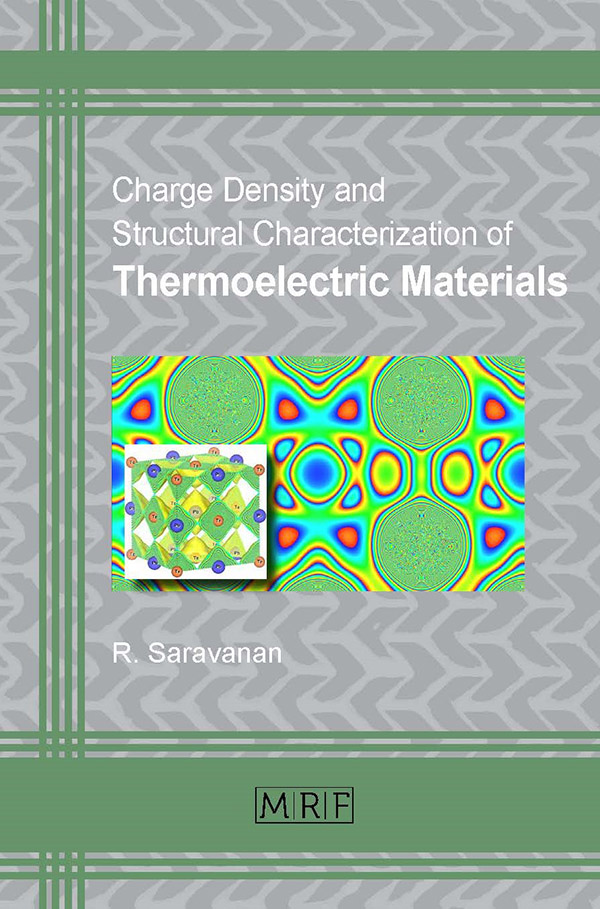
|
Thermoelectric materials permit the direct conversion of temperature differences into electric energy, and vice versa. They are therefore of highest technological interest in applications such as solid state coolers, waste heat recovery, sensors and detectors, and power generators including remote power generation.
Thermoelectric materials are often called ¡§environmentally green¡¨, and for good reasons. Not only can they help generate electrical energy from waste gases as they are generated in such processes as home heating, industrial fabrication and automotive motion. In cooling applications they eliminate the use of chemical refrigerant gases. Moreover, as thermoelectric conversion devices have no moving parts, they operate silently and have a very long life expectancy. The only current drawback of these devices is their poor efficiency.
Scientists all over the world are therefore studying the structural, thermoelectric, charge-density and magnetic properties of the most promising types of these materials at the atomic and electronic level. In addition to providing an introduction to the field, the main objective of this book is to present the results of the growth and structural characterization of thermoelectric materials that are of high current interest; including Mg2Si, PbTe, Bi1-xSbx, Bi2Te3, Sb2Te3, Sn1-xGexTe, Te and InSb. |
| |
|
| |
Novel Ceramic Materials |
| |
R. Saravanan/ 9781945291029/ Price:US$ 125.00
|
| |
|

|
The book presents a number of novel ceramic materials that have great potential for advanced technological applications, such as microwave devices, communication instruments and memory devices.
The materials covered include piezoelectric ceramics, zirconia ceramics, doped NiO ceramic nanostructures, BST ceramics (Barium-Strontium-Titanates), manganite ceramics, Ce-doped LaMnO3 and Sb-doped NKN (Sodium-Potassium-Niobates), as well as materials with ferrite structures, and with multi-ferroic structures
The materials were characterized experimentally by means of XRD (X-ray diffraction), SEM (Scanning electron microscopy), EDX (Energy Dispersive X-ray analysis), UV-Visible Spectroscopy, and VSM (Vibrating sample magnetometer). The results are discussed in terms of the structural characteristics of the various crystal structures, their special surface morphology, and their optical and magnetic properties.
Of particular interest is the determination of the electron density distribution (on the basis of XRD data and computerized evaluations). These data elucidate the atomic/electronic structure of the materials and make us understand the specific characteristics of these novel ceramics. |
| |
|
| |
Nano Semiconducting Materials |
| |
R. Saravanan/ 9781945291043/ Price:US$ 125.00
|
| |
|
|
ue to their unique optical, thermal, catalytic, magnetic and electronic properties, nano semiconducting materials have a huge potential in a great number of technological applications, ranging from photovoltaics and photocatalysis to biosensors and medicine. In the last couple of decades, the synthesis and characterization of these materials has been of key interest not only to materials scientists but also to researchers working in the field of physics, chemistry, molecular biology and medicine.
The main focus of the present book is the characterization of a number of nano semiconducting materials, using such techniques as powder X-ray diffraction, UV-visible spectrophotometry, Raman spectrometry, scanning electron microscopy, transmission electron microscopy and vibrating sample magnetometry. The materials studied include ZnS, TiO2, NiO, Ga doped ZnO, Mn doped SnO2, Mn doped CeO2 and Mn doped ZrO2.
Of special interest has been the analysis of the electron density distribution within the nano samples. The results give deep insights into the atomic structures on which these crystals are based and on the binding characteristics between the atoms and the ways in which these characteristics can be changed. As the decisive properties of these materials depend upon the electron density distributions and their variations due to sample preparation specifics, temperature and the presence of doping elements, these results give important hints on the direction in which further research should be directed. |
| |
|
| |
Dielectric Materials and Applications |
| |
M E Achour/ 9781945291180/ Price:US$ 125.00
|
| |
|
|
The First International Symposium on Dielectric Materials and Applications (ISyDMA¡¦2016) was held in Kenitra (4 May, 2016) and in Rabat (May 5-6, 2016), Morocco. ISyDMA¡¦2016 provided an international forum for reporting the most recent developments in Advanced Dielectric Materials and Applications.
The goal of this collection of peer reviewed papers is to provide researchers and scientists from all over the world with recent developments in dielectric materials and their innovative applications. The book will be useful for materials scientists, physicists, chemists, biologists, and electrical engineers engaged in fundamental and applied research or technical investigations of such materials. |
| |
|
| |
Hexaferrite Permanent Magnetic Materials |
| |
Sami H Mahmood/ 9781945291067/ Price:US$ 125.00
|
| |
|

|
The relatively high metallicity of magnetic materials for practical applications imposes limitations for their efficient use due to their unfavorable characteristics. Accordingly, magnetic oxides with ferromagnetic properties emerged as the most widely used magnetic materials for practical applications, owing to their characteristic high resistivity and low eddy current losses, chemical stability, simplicity of production in mass quantities, and other favorable characteristics. An important class of these oxides is the class of hexagonal ferrites developed in the early 1950¡¦s, which dominated the world market of permanent magnet applications since the end of the 1980¡¦s. Among these ferrites, the magnetoplumbite (M-type) hexaferrite, is produced nowadays in large quantities at very competitive low prices, thus providing the permanent magnet market with probably the most cost-effective magnetic material. |
| |
|
| |
New Polymeric Composite Materials: Environmental, Biomedical, Actuator and Fuel Cell Applications |
| |
Inamuddin/ 9781945291081/ Price:US$ 125.00
|
| |
|
|
Polymeric and composite materials are in high demand and their continuing development is making our life style more comfortable.
This book, ¡¥New Polymeric Composite Materials ¡V Environmental, Biomedical, Actuator and Fuel Cell Applications¡¦ brings together and broadly explores the latest developments and applications of polymeric and composite materials in the areas such as shape memory polymers, green composites for artificial organs, geomembranes for the safe disposal of waste, removal of heavy metals and dyes, adhesives, sensors and actuators, fuel cells, membrane and environmental sustainability, etc. |
| |
|
| VF02-77 |
Handbook of Research on Recent Developments in Materials Science and Corrosion Engineering Education. |
| |
Lim, Hwee Ling/ 9781466681835/ Price:US$ 325.00
|
| |
|
|
The latest research innovations and enhanced technologies have altered the discipline of materials science and engineering. As a direct result of these developments, new trends in Materials Science and Engineering (MSE) pedagogy have emerged that require attention.
The Handbook of Research on Recent Developments in Materials Science and Corrosion Engineering Education brings together innovative and current advances in the curriculum design and course content of MSE education programs. Focusing on the application of instructional strategies, pedagogical frameworks, and career preparation techniques, this book is an essential reference source for academicians, engineering practitioners, researchers, and industry professionals interested in emerging and future trends in MSE training and education.
Topics Covered
¡EArtificial Intelligence Methods
¡EAutomotive Industry Applications
¡EDigital Libraries
¡EInfrastructure Degradation Curriculum
¡EInterdisciplinary Course Development
¡EProject-Based Approaches
¡EVirtual Environments
|
| |
|
| VF02-76 |
Processing Techniques and Tribological Behavior of Composite Materials. |
| |
Tyagi, Rajnesh/ 9781466675308/ Price:US$ 225.00
|
| |
|
|
An understanding of friction and wear behavior of materials is crucial in order to improve their performance and durability. New research is providing the opportunity to solve common problems relating to the development of materials, surface modification, coatings, and processing methods across industries.
Processing Techniques and Tribological Behavior of Composite Materials provides relevant theoretical frameworks and the latest empirical research findings on the strategic role of composite tribology in a variety of settings. This book is intended for students, researchers, academicians, and professionals working in industries where wear reduction and performance enhancement of machines and machine elements is essential to success.
Topics Covered
¡EAdvanced Machining of Polymer Composites
¡EBiocompatibility of Biomaterials
¡EComposites as Tribo-Materials
¡ENickel-Based Composites and Coatings
¡EProcessing Routes of Light Metal Matrix Nano-Composites
¡ESelf-Lubricating Cu-Based Composites
¡ESurface Modification
¡ETexturing of Deterministic Tribological Surfaces
¡ETribo-Corrosion of MMCs |
| |
|
| SF02-451 |
Biopolymers: Applications and Trends. |
| |
Niaounakis, Michael/ 9780323353991/ Price:US$ 200.00
|
| |
|
|
|
|
| |
|
| SF02-451 |
Laminar Composites. |
| |
Staab, George H./ 9780128024003/ Price:US$ 120.00
|
| |
|
|
|
|
| |
|
| VF02-73 |
X-Ray Line Profile Analysis in Materials Science. |
| |
Jeno Gubicza/ 9781466658523/ Price:US$ 215.00
|
| |
|
|
X-ray line profile analysis is an effective and non-destructive method for the characterization of the microstructure in crystalline materials. Supporting research in the area of x-ray line profile analysis is necessary in promoting further developments in this field.
X-Ray Line Profile Analysis in Materials Science aims to synthesize the existing knowledge of the theory, methodology, and applications of x-ray line profile analysis in real-world settings. This publication presents both the theoretical background and practical implementation of x-ray line profile analysis and serves as a reference source for engineers in various disciplines as well as scholars and upper-level students.
Topics Covered
¡EApplications of X-Ray Line Profile Analysis
¡ECrystallite Size Broadening of Diffraction Line Profiles
¡EEvaluation Methods of Line Profiles
¡EInfluence of Chemical Heterogeneities
¡EKinematical X-Ray Scattering Theory
¡ELine Profiles Caused by Planar Faults
¡EPeak Profile Evaluation for Thin Films
¡EStrain Broadening of X-Ray Diffractional Peaks
¡EX-Ray Line Profile Analysis for Single Crystals |
| |
|
| SF02-432 |
Nanocomposites: In Situ Synthesis of Polymer-Embedded Nanostructures. |
| |
Nicolais, Luigi/ 9780470109526/ Price:US$ 123.95
|
| |
|
|
|
|
| |
|
| |
Martensitic Transformations. |
| |
Lobodyuk, V. A./ 9781907343995/ Price:GBP 90.00
|
| |
|

|
he book describes the current state of knowledge of the martensitic transformations. The following problems are investigated: the classification of martensitic transformations, the kinetic and structural special features of thermoelastic and non-thermoelastic transformations, crystallography of these transformations, the structure mobility of interphase boundaries during martensitic transformation, thermodynamics and kinetics of martensitic transformation, the effect of external factors on the development of the transformation |
| |
|
| VF02-72 |
Research Developments in Wood Engineering and Technology. |
| |
Aguilera, Alfredo/ 9781466645547/ Price:US$ 165.00
|
| |
|
|
Wood material has acquired great importance due to its short supply and increasing environmental awareness amongst users and manufacturers. However, its use as an engineering material requires consistent research developments in order to provide accurate responses to industrial processing problems.
Research Developments in Wood Engineering and Technology examines the latest research advances and technological developments for wood material as an engineering product and the innovation it provides for environmentally-friendly materials. This reference source is essential for academics, engineers, students, and professionals involved in the multidisciplinary fields of wood science, mechanical, industrial, and manufacturing engineering.
Topics Covered
¡EFiber Panels Technology
¡ENon Destructive Techniques
¡EOptimization Methods
¡EProcess Control
¡EWood Processing Monitoring
¡EWood-Based Composites
|
| |
|
| VF02-71 |
MAX Phases and Ultra-High Temperature Ceramics for Extreme Environments. |
| |
Low, I. M./ 9781466640665/ Price:US$ 165.00
|
| |
|
|
Ceramics are a versatile material, more so than is widely known. They are thermal resistant, poor electrical conductors, insulators against nuclear radiation, and not easily damaged, making ceramics a key component in many industrial processes.
MAX Phases and Ultra-High Temperature Ceramics for Extreme Environments investigates a new class of ultra-durable ceramic materials, which exhibit characteristics of both ceramics and metals. Readers will explore recent advances in the manufacturing of ceramic materials that improve their durability and other physical properties, enhancing their overall usability and cost-effectiveness. This book will be of primary use to researchers, academics, and practitioners in chemical, mechanical, and electrical engineering. This book is part of the Research Essentials collection.
Topics Covered
¡EDamage Tolerance
¡EHot Engine Turbines
¡EIrradiation Resistance
¡EManufacturing Methods
¡EMAX Phase Ceramics
¡EMicrostructure Properties
¡EOxidation Resistance
¡EStructural Stability
¡EThermal Shock Resistance
¡EThermochemical Stability
|
| |
|
| VF02-70 |
Applications of Nanomaterials. |
| |
Chaughle, Ramesh S./ 9781588831811/ Price:US$ 399.00
|
| |
|
|
This book presents the aspects of nanomaterials including synthesis techniques, in vivo and biological applications along with the technologies involving day-to-day engineering aspects, clinical trials, theranostics, etc. for researchers, scientists, and students pursuing research in the field of nanotechnology. This book is a continuation of the previous book ¡§Nanoparticles: Synthesis, Characterization and Applications.¡¨ Distinguished authors from across the world have contributed their state-of-the-art review chapters on different aspects of nanoscience and nanotechnology of materials. The book is organized according to testing methods, preparation techniques of nanostructures, followed by nanomaterials for biomedicine, drug release, ophthalmology, dentistry, theranostics, homeopathy, and battery and solar cells.
Table of Contents
¡EQuantitative Mechanical and Electrical Interrogation of Nanomaterials Using Scanning Probe Microscopy
¡ENanoparticle-Based Memories: Concept and Operation Principles
¡ESecond Order Nonlinear Optical Responses and Plasmonic Enhancement of Ionic Self-Assembled Multilayers.
¡ESintered Nanoscale Powders
¡ELow Temperature Soft Chemical Synthesis of Nanostructured TiO2 with Enhanced Photocatalytic Activity
¡EBiosensors Based on Nanomaterials and Their Applications
¡ENanodiamond: A Promising Nanomaterials for Biomedical Applications
¡ECarbon Nanotubes for Theranostic Applications
¡EMagnetic Nanoparticles for Biomedical Applications
¡EPolymer-Based Nanoparticles for Systemics Delivery of Poorly Water Soluble Anticancer Agents
¡ETherapeutic Applications of Silver Nanoparticles
¡EOphthalmic Drug Delivery with Polymeric Nanoparticles
¡EPreparation and Properties of Dental Nanocomposites
¡EUse of Nanoparticles of Teminalia Arjuna Bark: A Useful Drug in Homeopathy
¡EProspects of Nanomaterials in Li-Ion Battery Applications
¡ENanomaterials for Dye-Sensitized Solar Cells |
| |
|
| VF02-69 |
Handbook of Measurement in Science and Engineering, 2-Vols/Set. |
| |
Kutz , Myer/ 9781118384633/ Price:US$ 746.95
|
| |
|
|
The most comprehensive, up-to-date reference set on engineering measurements covering all major engineering disciplines, Handbook of Engineering Measurements, Set provides a multidisciplinary resource of engineering measurement theory, necessary tools, techniques of measurement and analysis, and applications. Encyclopedic in scope, beyond anything currently available on the market, Volume 1 covers civil and environmental engineering, mechanical and biomedical engineering, and industrial engineering; Volume II covers and spans materials properties and testing, instrumentation, and measurement standards.
|
| |
|
| VF02-68 |
Comprehensive Nuclear Materials, 5-Vols/Set. |
| |
Konings, Rudy/ 9780080560274/ Price:GBP 1670.00
|
| |
|
|
Comprehensive Nuclear Materials discusses the major classes of materials suitable for usage in nuclear fission, fusion reactors and high power accelerators, and for diverse functions in fuels, cladding, moderator and control materials, structural, functional, and waste materials.
With contributions from the world¡¦s leading scientists and engineers, it addresses the full panorama of contemporary international research in nuclear materials, from actinides to zirconium alloy. It is integrated with a proprietary database containing useful cross-referenced properties on compounds and systems.
Key features
¡ECritically reviews the major classes and functions of materials, supporting the selection, assessment, validation and engineering of materials in extreme nuclear environment
¡EFully integrated with F-elements.net, a proprietary database containing useful cross-referenced property data on the lanthanides and actinides
¡EDetails contemporary developments in numerical simulation, modelling, experimentation, and computational analysis, for effective implementation in labs and plants
|
| |
|
| VF02-67 |
Wiley Encyclopedia of Composites, 5-Vols/Set. |
| |
Nicolais, Luigi/ 9780470128282/ Price:US$ 2203.95
|
| |
|
|
Written by prominent international experts from industry and academia, the Wiley Encyclopedia of Composites, Second Edition presents over 260 new and revised articles addressing the new technological advances in properties, processing, formulation, design, analysis, evaluation, manufacture, testing, and reliability of composites. The entire range of industrial applications of composites is covered. The Encyclopedia is an invaluable resource for researchers in both library and professional settings and provides information about composite materials and related processing technologies. |
| |
|
| VF02-11-2 |
Characterization of Materials, 3-Vols/Set. |
| |
Kaufmann, Elton N./ 9781118110744/ Price:US$ 1072.95
|
| |
|
|
A thoroughly updated and expanded new edition, this work features a logical, detailed, and self-contained coverage of the latest materials characterization techniques. Reflecting the enormous progress in the field since the last edition, this book details a variety of new powerful and accessible tools, improvements in methods arising from new instrumentation and approaches to sample preparation, and characterization techniques for new types of materials, such as nanomaterials. Researchers in materials science and related fields will be able to identify and apply the most appropriate method in their work. |
| |
|
| |
Manganese in Powder Metallurgy Steels. |
| |
Salak, Andrej/ 9781907343742/ Price:GBP 95.00
|
| |
|
|
|
The monograph introduces the data about the mechanical properties of sintered manganese steels published since 1948 up to the present time. The effect of all possible material, alloying and sintering factors on the properties of manganese steels which are in most cases on the level of those alloyed with nickel is discussed. The sintering of the steels was successfully carried out under laboratory and industrial conditions not fulfilling the thermodynamic requirements for the Mn-O system. The reduction - (self cleaning) effect of manganese vapour for the sintering atmosphere formed by sublimation due to manganese high vapour pressure is presented as the only possible mechanisms under which the sintering of manganese-containing steels takes place. It is stated conclusively that sintering under this mechanisms occurs without demanganisation and decarburization of the compacts in the atmosphere with the low dew point contrary to that with a high dew point adversely affecting the sintering and alloying process. |
| |
|
| VF02-64 |
Functional Supramolecular Architectures: for Organic Electronics and Nanotechnology, 2-Vols/Set. |
| |
Samori, Paolo/ 9783527326112/ Price:US$ 405.00
|
| |
|
|
A comprehensive overview of functional nanosystems based on organic and polymeric materials and their impact on current and future research and technology in the highly interdisciplinary field of materials science. As such, this handbook covers synthesis and fabrication methods, as well as properties and characterization of supramolecular architectures. Much of the contents are devoted to existing and emerging applications, such as organic solar cells, transistors, diodes, nanowires and molecular switches.
The result is an indispensable resource for materials scientists, organic chemists, molecular physicists and electrochemists looking for a reliable reference on this hot topic.
Part One Modeling and Theory.
Part Two Supramolecular Synthetic Chemistry.
Part Three Nanopatterning and Processing.
Part Four Scanning Probe Microscopies.
Part Five Electronic and Optical Properties.
Part Six Field-Effect Transistors.
Part Seven Solar Cells.
Part Eight LEDs/LECs.
|
| |
|
| VF02-62 |
Inorganic Materials, 5-Vols/Set. |
| |
Bruce, Duncan W./ 9780470689011/ Price:US$ 603.25
|
| |
|
|
The Inorganic Materials series contains five volumes, based on the physical properties of each material: Functional Oxides, Molecular Materials, Low-Dimensional Solids, Porous Materials, and Energy Materials. Each themed volume is a self-contained reference, containing four to five topical review chapters. The chapters cover recent research areas within the contributors' field of knowledge, and provide a clear and useable introduction to that field. Authored by leading international researchers, each volume reflects the diversity of the subject areas, and together they provide an invaluable survey of the field of inorganic materials. |
| |
|
| VF02-63-5 |
Nanostructured Thin Films and Surfaces. |
| |
Kumar, Challa S. S. R./ 9783527321551/ Price:US$ 245.00
|
| |
|
|
The Volume gives an insight into thin films and their application to the life sciences. The topics covered range from dip pen lithography to applications of stimuli responsive films. The materials presented range from polymeric to ceramic thin films.
Table of Contents
Polymer thin films for biomedical applications
Bio-functionalization of Polymeric Thin Films and Surfaces
Stimuli Responsive Polymer Nanocoatings
Ceramic Nano Coatings and their Applications in Life Sciences
Gold Nano Films -
Synthesis, Characterization, and Potential Biomedical Applications
Thin films on titania and their applications in life sciences
Preparation, Characterization, and Potential Biomedical Applications of Nanostructured Zirconia Coatings and Films
Free-Standing Nanostructured Thin Films
Dip-Pen Nanolithography of Nanostructured Thin Films for Life Science
Understanding and Controlling Wetting Phenomena at the Micro and Naoscales
Imaging of Thin Films and its Application in Life Sciences
Structural Characterization Techniques of Molecular Aggregates, Polymer and Nanoparticle Films
|
| |
|
| VF02-60 |
Fatigue of Materials and Structures. |
| |
Bathias, Claude/ 9781848210516/ Price:US$ 334.95
|
| |
|
|
|
The design of mechanical structures with predictable and improved durability cannot be achieved without a deep understanding of fatigue damage and more specifically the relationships between the microstructure of materials and their fatigue properties. Written by leading researchers in the field, this book along with Fatigue of Materials and Structures: Application to Damage and Design (edited by Claude Bathias and Andr? Pineau), provides an authoritative, comprehensive and unified treatment of the mechanics and micromechanisms of fatigue in metals, polymers and composites. Each chapter is devoted to one of the major classes of materials and/or to different types of fatigue damage.
This book deals with crack initiation, crack growth, low-cycle fatigue, gigacycle fatigue, shorts cracks, fatigue micromechanisms and the local approach to fatigue damage, corrosion fatigue, environmental effects and variable amplitude loadings; and is an important reference for students, practicing engineers and researchers studying fracture and fatigue in materials science and engineering, mechanical, nuclear and aerospace engineering.
|
| |
|
| VF02-59 |
Crystal Growth Processes Based on Capillarity: Czochralski, Floating Zone, Shaping and Crucible Techniques. |
| |
Duffar, Thierry/ 9780470712443/ Price:US$ 281.95
|
| |
|
|
|
The demand for large, high-quality single crystals has increased rapidly as a result of the growing semiconductor and optics industry, where perfect single crystals are used as substrates or components for devices.
Crystal Growth Processes Based on Capillarity covers all crystal growth techniques and explains why and how they are dependent on liquid surface phenomena, or capillarity. Each chapter addresses fundamental capillary effects, detailed experimental developments, technically important processes, and associated software. The book includes:
" Basic principles of capillarity, wetting and growth angle data and detailed mathematical treatments
" Shape stability in capillary crystal growth, including Verneuil and Czochralski techniques
" Czochralski process dynamics and control
" Floating Zone crystal growth
" Shaped crystal growth of silicon and sapphire, micro-pulling down techniques
" Vertical Bridgman and dewetting processes
" Marangoni convection in crystal growth
With over 25 years experience, Duffar brings together a good balance of theory and experimental techniques, making this a resource for all crystal growers in both research and in industry.
|
| |
|
| VF02-57 |
Rubber Nanocomposites: Preparation, Properties and Applications. |
| |
Thomas, Sabu/ 9780470823453/ Price:US$ 315.00
|
| |
|
|
|
Rubber Nanocomposites: Preparation, Properties and Applications focuses on the preparation, characterization and properties of natural and synthetic rubber nanocomposites. The book carefully debates the preparation of unmodified and modified nanofillers, various manufacturing techniques of rubber nanocomposites, structure, morphology and properties of nanocomposites. The text reviews the processing; characterization and properties of 0-, 1D and 2D nanofiller reinforced rubber nanocomposites. It examines the polymer/filler interaction, i.e., the compatibility between matrix and filler using unmodified and modified nanofillers. The book also examines the applications of rubber nanocomposites in various engineering fields, which include tyre engineering.
The book also examines the current state of the art, challenges and applications in the field of rubber nanocomposites. The handpicked selection of topics and expert contributions make this survey of rubber nanocomposites an outstanding resource for anyone involved in the field of polymer materials design.
*A handy "one stop" reference resource for important research accomplishments in the area of rubber nanocomposites.
*Covers the various aspects of preparation, characterization, morphology, properties and applications of rubber nanocomposites.
*Summarizes many of the recent technical research accomplishments in the area of nanocomposites, in a comprehensive manner
*It covers an up to date record on the major findings and observations in the field
|
| |
|
| VF02-54 |
Nanostructured Conductive Polymers. |
| |
Eftekhari, Ali/ 9780470745854/ Price:US$ 316.95
|
| |
|
|
|
Providing a vital link between nanotechnology and conductive polymers, this book covers advances in topics of this interdisciplinary area. In each chapter, there is a discussion of current research issues while reviewing the background of the topic. The selection of topics and contributors from around the globe make this text an outstanding resource for researchers involved in the field of nanomaterials or polymer materials design. The book is divided into three sections: From Conductive Polymers to Nanotechnology, Synthesis and Characterization, and Applications.
Table of Contents
Part One
1 History of Conductive Polymers
2 Polyaniline nanostructures
3 Nanoscale Inhomogeneity of Conducting Polymer Based Materials
Part Two
4 Nanostructured Conductive Polymers by Electrospinning
5 Composites based on conducting polymers and carbon nanotubes
6 Inorganic-Based Nanocomposites of Conductive Polymers
7 Metallic-based Nanocomposites of Conductive Polymers
8 Spectroscopy of Nanostructured Conducting Polymers
10 Single Conducting Polymer Nanowires
11 Conductive Polymer Micro and Nano Containers
12 Magnetic and Electron Transport Behaviors of Conductive Polymer Nanocomposites
13 Charge Transfer and Charge Separation in Conjugated Polymer Solar Cells
Part Three
14 Nanostructured conducting polymers for (electro)chemical sensors
15 Nanostructural Aspects of Conducting Polymer Actuators
16 Electroactive Conducting Polymers for the Protection of Metals against Corrosion: from Micro- to Nanostructured Films.
17 Electrocatalysis by Nanostructured Conducting Polymers
18 NanostructuredConductive Polymers as Biomaterials
19 Nanocomposites of Polymers Made Conductive by Nanofillers
|
| |
|
| VF02-44 |
Doped Nanomaterials and Nanodevices, 3-Vols/Set. |
| |
Chen, Wei/ 9781588831101/ Price:US$ 998.00
|
| |
|
|
|
The book "Doped Nanomaterials and Nanodevices" summarizes research activities into the fundamental properties and applications of doped nanomaterials. Much attention has been focused on nanomaterials in order to take advantage of their unique properties resulting from quantum size confinement and surface effects. Quantum size confinement affects the energy structure and physical properties of doped nanomaterials and nanodevices. Luminescence phenomena are being investigated extensively in doped nanoparticles, with the hope of finding applications in optical storage, radiation detection, infrared detection, and dosimetry. Near-infrared and upconversion luminescence nanoparticles are particularly promising for biological imaging because auto-fluorescence can be overcome and higher imaging resolutions can be obtained. Doped insulator nanomaterials including carbon nanotubes represent a new type of high-efficiency luminescent material. As a new kind of biological labeling agent, insulator nanoparticles are less toxic than semiconductor nanoparticles and are promising for cancer detection, diagnosis, and treatment. Doped nanomaterials are expected to make significant contributions to nanotechnology for practical applications in the fields of electronics, photonics, optics, homeland security, and medical sciences. The book contains state-of-the-art review chapters focused on different aspects of doped nanomaterials and their based nanodevices. The book has been divided into three volumes. |
| |
|
| SF02-451 |
Sample Preparation Handbook for Transmission Electron Microscopy: Techniques. |
| |
Ayache, Jeanne/ 9781441959744/ Price:EUR 129.99
|
| |
|
|
|
|
| |
|
| SF02-443 |
Multiphysics Modeling in Materials Design. |
| |
Asta, M./ 9781617384004/ Price:US$ 65.00
|
| |
|
|
|
|
| |
|
| SF02-443 |
Multiscale Dynamics in Confining Systems. |
| |
Levitz, P./ 9781617387586/ Price:US$ 65.00
|
| |
|
|
|
|
| |
|
| SF02-430 |
Metamaterials: Theory, Design, and Applications. |
| |
Cui, Tie J./ 9781441905727/ Price:EUR 179.99
|
| |
|
|
|
|
| |
|
| SF02-400 |
New, Improved and Existing Technologies: Iron and Steel, Recycling and Waste Treatment. |
| |
Kongoli, Florian/ 9780873396387/ Price:US$ 260.95
|
| |
|
|
|
|
| |
|
| SF02-399 |
Superplasticity and Grain Boundaries in Ultrafine-Grained Materials. |
| |
Pshenichnyuk, A. P./ 9781904602897/ Price:GBP 85.00
|
| |
|
|
|
The book deals with a number of problems associated with the description and experimental verification of the individual boundaries and ensembles of the grain boundaries in polycrystals. The role of these boundaries in processes such as grain boundary diffusion, relaxation and grain growth is investigated. It is attempted to construct a general model of superplasticity based on the experimentally determined relationships relating to the bands of co-operative grain boundary sliding. Special attention is given to the problems of formation and evolution of the microstructure, the texture and ensembles of the grain boundaries in materials produced by severe plastic deformation methods. |
| |
|
| SF02-398 |
Science of Engineering Materials and Carbon Nanotubes. |
| |
Srivastava, C. M./ 9781906574697/ Price:GBP 40.00
|
| |
|
|
|
Part I provides the essential classical and quantum laws on which the correlation between properties and structures of materials is explained. It covers the traditional engineering materials, metals and alloys, semiconductors, polymers, dielectrics, amorphous solids, superconductors and materials for magnetic, nuclear, space and laser applications. The recent discovery of carbon nanotubes (CNT) has led to nanotechnology and exciting applications in biology, medicine, textiles, energy, transportation and electronic devices. An update to this edition as Part II of the book is the physical description of CNT, the method of their production, the classical and quantum aspects of their properties and the way these differ from the three-dimensional materials discussed in Part I. The author accounts for the difference in properties like electrical and thermal conduction in copper and carbon nanotubes on models that differ due to dimensionality of the material. |
| |
|
| SF02-395 |
Approaches in Material Sampling.(With CD-ROM) |
| |
Geelhoed, Bastiaan/ 9781607505525/ Price:EUR 55.00
|
| |
|
|
|
Every company or institute that has to handle materials also has to deal with solving practical sampling problems. Those sampling problems include: establishing the number of samples to take, the size of the samples, and, at least equally important, the method by which the uncertainty caused by the sampling is estimated. In addition, there are various types of materials ranging from solids, liquids to gaseous materials. Also the objectives of sampling vary: sampling may be performed for quality control of raw materials, for environmental monitoring, for resource estimation in mining, or for many other possible purposes. No single approach can be expected to provide an answer in all scenarios. This book brings the different fundamental approaches to the problem of material sampling together. Five experts in the field of sampling have contributed chapters explaining each approach and its recent developments. These provide the underlying data as much as possible. In addition, tools are provided on the accompanying cd to allow the reader to verify a large number of data analyses presented in this publication. The book is intended for scientists working in the research area of material sampling and companies or institutions that have to solve practical sampling problems. |
| |
|
| SF02-395 |
New, Improved and Existing Technologies: Non-Ferrous Materials Extraction and Processing. |
| |
Kongoli, Florian/ 9780873396370/ Price:US$ 260.95
|
| |
|
|
|
|
| |
|
| SF02-395 |
Friction Stir Welding and Processing IV. |
| |
Mishra, Rajiv S./ 9780873396615/ Price:US$ 109.95
|
| |
|
|
|
|
| |
|
| SF02-394 |
Nucleation in Condensed Matter: Applications in Materials and Biology. |
| |
Kelton, K. F./ 9780080421476/ Price:US$ 220.00
|
| |
|
|
|
|
| |
|
| SF02-392 |
Legal, Management and Environmental Issues. |
| |
Kongoli, Florian/ 9780873396424/ Price:US$ 260.95
|
| |
|
|
|
|
| |
|
| SF02-391 |
Ultrafine Grained Materials III. |
| |
Zhu, Yuntian T./ 9780873395717/ Price:US$ 224.95
|
| |
|
|
|
|
| |
|
| SF02-391 |
Converter and Fire Refining Practices. |
| |
Ross, Alistair G./ 9780873395861/ Price:US$ 220.95
|
| |
|
|
|
|
| |
|
| SF02-391 |
Solidification Processes and Microstructures: A Symposium in Honor of Wilfried Kurz. |
| |
Rappaz, Michel/ 9780873395724/ Price:US$ 198.95
|
| |
|
|
|
|
| |
|
| SF02-390 |
Shape Casting: The John Campbell Symposium.(With CD-ROM) |
| |
Tiryakioglu, Murat/ 9780873395830/ Price:US$ 175.95
|
| |
|
|
|
|
| |
|
| SF02-390 |
Multiphase Phenomena and CFD Modeling and Simulation in Materials Processes. |
| |
Nastac, Laurentiu/ 9780873395700/ Price:US$ 238.95
|
| |
|
|
|
|
| |
|
| SF02-390 |
Friction Stir Welding and Processing V. |
| |
Mishra, Rajiv S./ 9780873397377/ Price:US$ 120.95
|
| |
|
|
|
|
| |
|
| SF02-390 |
Proceedings of an International Conference On Solid [To] Solid Phase Transformations in Inorganic Materials 2005 Vol, 1: Diffusional Transformations. |
| |
Howe, James M./ 9780873396035/ Price:US$ 116.95
|
| |
|
|
|
|
| |
|
| SF02-390 |
Ultrafine Grained Materials IV. |
| |
Zhu, Yuntian T./ 9780873396288/ Price:US$ 169.95
|
| |
|
|
|
|
| |
|
| SF02-387 |
EPD Congress 2010.(CD-ROM) |
| |
Vidal, Edgar E./ 9780873397483/ Price:US$ 99.00
|
| |
|
|
|
|
| |
|
| |
Fashion Trends, Technologies, and Sustainability in Denim and Garment Wet Processing Symposium 2009 |
| |
/ 9781615679041/ Price:US$ 130.00
|
| |
|
|
|
|
| |
|
| |
7th CANMET/ACI International Conference on Durability of Concrete 2006 |
| |
V.M. Malhotra/ 9781617384790/ Price:US$ 150.00
|
| |
|
|
|
|
| |
|
| |
Modeling as a Solution to Concrete Problems |
| |
Tanesi, J./ 9781615678297/ Price:US$ 81.50
|
| |
|
|
|
|
| |
|
| |
Nanotechnology of Concrete: The Next Big Thing is Small |
| |
Sobolev, K./ 9781615678303/ Price:US$ 84.50
|
| |
|
|
|
|
| |
|
| |
Serviceability of Concrete Members Reinforced with Internal/External FRP Reinforcement |
| |
Ospina, C./ 9781615678273/ Price:US$ 88.50
|
| |
|
|
|
|
| |
|
| |
Thomas T.C. Hsu Symposium: Shear and Torsion in Concrete Structures |
| |
Belarbi, A./ 9781615678280/ Price:US$ 109.50
|
| |
|
|
|
|
| |
|
| |
Slag Cement Concrete |
| |
Aldea, C.-M./ 9781615678266/ Price:US$ 79.50
|
| |
|
|
|
|
| |
|
| |
Carl Loper Cast Iron Symposium 2009 |
| |
/ 9781615679836/ Price:US$ 275.00
|
| |
|
|
|
|
| |
|
| |
41st Pulp and Paper International Congress and Exhibition 2008 |
| |
/ 9781617380396/ Price:US$ 135.00
|
| |
|
|
|
|
| |
|
| |
International Conference on Carbon 2008 (CARBON 08) |
| |
/ 9781617381935/ Price:US$ 245.00
|
| |
|
|
|
|
| |
|
| |
24th Annual Technical Conference of the American Society for Composites 2009 and 1st Joint Canadian-American Technical Conference on Composites |
| |
Gillespie Jr., J.W./ 9781615676033/ Price:US$ 295.00
|
| |
|
|
|
|
| |
|
| |
11th International Conference on Shotcrete for Underground Support 2009 |
| |
/ 9781615674220/ Price:US$ 110.00
|
| |
|
|
|
|
| |
|
| |
43rd International Wood Composites Symposium 2009 |
| |
/ 9781615673926/ Price:US$ 125.00
|
| |
|
|
|
|
| |
|
| |
Annual World Conference on Carbon 2009 |
| |
/ 9781615678723/ Price:US$ 225.00
|
| |
|
|
|
|
| |
|
| |
31st Biennial Conference of the Institute for Briquetting and Agglomeration 2009 |
| |
Thomas N. Feldkamp/ 9781617387210/ Price:US$ 95.00
|
| |
|
|
|
|
| |
|
| |
Nanocrystalline Materials as Precursors for Complex Multifunctional Structures through Chemical Transformations and Self Assembly |
| |
/ 9781615677849/ Price:US$ 40.00
|
| |
|
|
|
|
| |
|
| |
Nanofunctional Materials, Structures, and Devices for Biomedical Applications |
| |
Nagahara, L./ 9781617383946/ Price:US$ 80.00
|
| |
|
|
|
|
| |
|
| |
Nanoscale Electromechanics and Piezoresponse Force Microscopy of Inorganic, Macromolecular and Biological Systems |
| |
/ 9781615677894/ Price:US$ 65.00
|
| |
|
|
|
|
| |
|
| |
Nanoscale Functionalization and New Discoveries in Modern Superconductivity |
| |
/ 9781617387517/ Price:US$ 30.00
|
| |
|
|
|
|
| |
|
| |
Nanoscale Heat Transport - From Fundamentals to Devices |
| |
/ 9781615677832/ Price:US$ 80.00
|
| |
|
|
|
|
| |
|
| |
Nanoscale Pattern Formation |
| |
Chason, E./ 9781617387593/ Price:US$ 65.00
|
| |
|
|
|
|
| |
|
| |
Next-Generation and Nano-Architectured Photovoltaics |
| |
Stoleru, V.G./ 9781617383939/ Price:US$ 80.00
|
| |
|
|
|
|
| |
|
| |
Organic and Hybrid Materials for Large-Area Functional Systems |
| |
/ 9781615677603/ Price:US$ 80.00
|
| |
|
|
|
|
| |
|
| |
Organic Materials for Printable Thin-Film Electronic Devices |
| |
/ 9781617387562/ Price:US$ 65.00
|
| |
|
|
|
|
| |
|
| |
Packaging, Chip-Package Interactions and Solder Materials Challenges |
| |
/ 9781615677788/ Price:US$ 65.00
|
| |
|
|
|
|
| |
|
| |
Scientific Basis for Nuclear Waste Management XXIX |
| |
Van Iseghem, P./ 9781615676293/ Price:US$ 160.00
|
| |
|
|
|
|
| |
|
| |
Scientific Basis for Nuclear Waste Management XXVII |
| |
Oversby, V.M./ 9781617383908/ Price:US$ 195.00
|
| |
|
|
|
|
| |
|
| |
Selecting and Qualifying New Materials for Use in Regulated Industries |
| |
/ 9781615677764/ Price:US$ 80.00
|
| |
|
|
|
|
| |
|
| |
Semiconductor Nanowires - Growth, Size-Dependent Properties and Applications |
| |
Javey, A./ 9781617383977/ Price:US$ 80.00
|
| |
|
|
|
|
| |
|
| |
Solid-State Chemistry of Inorganic Materials VII |
| |
/ 9781615677740/ Price:US$ 95.00
|
| |
|
|
|
|
| |
|
| |
Specialty Cements with Advanced Properties |
| |
Jennings, H./ 9781617384332/ Price:US$ 145.00
|
| |
|
|
|
|
| |
|
| |
Structure/Property Relationships in Fluorite-Derivative Compounds |
| |
/ 9781615677627/ Price:US$ 65.00
|
| |
|
|
|
|
| |
|
| |
Synthesis and Processing of Organic and Polymeric Functional Materials for a Sustainable Energy Economy |
| |
/ 9781615677757/ Price:US$ 65.00
|
| |
|
|
|
|
| |
|
| |
Synthesis of Bioinspired Hierarchical Soft and Hybrid Materials |
| |
/ 9781615677856/ Price:US$ 30.00
|
| |
|
|
|
|
| |
|
| |
Synthesis, Characterization and Properties of Energetic/Reactive Nanomaterials |
| |
/ 9781617387456/ Price:US$ 135.00
|
| |
|
|
|
|
| |
|
| |
Theory and Applications of Ferroelectric and Multiferroic Materials |
| |
/ 9781615677580/ Price:US$ 80.00
|
| |
|
|
|
|
| |
|
| |
Thermoelectric Materials-New Directions and Approaches |
| |
/ 9781615676286/ Price:US$ 145.00
|
| |
|
|
|
|
| |
|
| |
Three-Dimensional Architectures for Energy Generation and Storage |
| |
/ 9781615677818/ Price:US$ 40.00
|
| |
|
|
|
|
| |
|
| |
Transparent Conductors and Semiconductors for Optoelectronics |
| |
Perkins, J.D./ 9781617383922/ Price:US$ 95.00
|
| |
|
|
|
|
| |
|
| |
Transport Properties in Polymer Nanocomposites |
| |
/ 9781615677702/ Price:US$ 65.00
|
| |
|
|
|
|
| |
|
| |
Ultrafast Processes in Materials Science |
| |
Lindenberg, A.M./ 9781617387616/ Price:US$ 80.00
|
| |
|
|
|
|
| |
|
| |
Materials Science & Technology Conference and Exhibition 2009 (MS&T 09) |
| |
/ 9781615676361/ Price:US$ 395.00
|
| |
|
|
|
|
| |
|
| |
Symposium on Advanced Characterization Techniques Applied to Minerals, Metals and Materials 2008 |
| |
/ 9781617386183/ Price:US$ 65.00
|
| |
|
|
|
|
| |
|
| |
4th International Symposium on Aerospace Materials and Manufacturing Processes: Advances in Processing and Repair of Aerospace Materials 2008 |
| |
Jahazi, M./ 9781617386169/ Price:US$ 110.00
|
| |
|
|
|
|
| |
|
| |
Corrosion and Wear of Materials Symposium 2008 |
| |
Farhat, Z.N./ 9781617386121/ Price:US$ 110.00
|
| |
|
|
|
|
| |
|
| |
Symposium on Functional Nanomaterials: Current Status and Future Trends 2008 |
| |
Brochu, M./ 9781617386176/ Price:US$ 80.00
|
| |
|
|
|
|
| |
|
| |
International Symposium on Recent Developments in Advanced High Strength Steels Processing 2008 |
| |
Wanjara, P./ 9781617386114/ Price:US$ 95.00
|
| |
|
|
|
|
| |
|
| |
NHA Conference and Hydrogen Expo 2009 |
| |
/ 9781615674046/ Price:US$ 475.00
|
| |
|
|
|
|
| |
|
| |
20th Annual Meeting of the North American Membrane Society and 11th International Conference on Inorganic Membranes 2010 (NAMS/ICIM 2010) |
| |
/ 9781617388514/ Price:US$ 250.00
|
| |
|
|
|
|
| |
|
| |
Asia Pacific Coatings Show 2010 |
| |
/ 9781617387173/ Price:US$ 295.00
|
| |
|
|
|
|
| |
|
| |
International Conference on Marine and Offshore Coatings 2010 |
| |
/ 9781617384615/ Price:US$ 195.00
|
| |
|
|
|
|
| |
|
| |
34th Annual Meeting of the Society for Biomaterials 2010 |
| |
/ 9781617382109/ Price:US$ 125.00
|
| |
|
|
|
|
| |
|
| |
32nd International Conference on Cement Microscopy 2010 |
| |
/ 9781617384202/ Price:US$ 95.00
|
| |
|
|
|
|
| |
|
| |
26th Annual International Pittsburgh Coal Conference 2009 |
| |
/ 9781615677979/ Price:US$ 160.00
|
| |
|
|
|
|
| |
|
| |
33rd International Precious Metals Institute Annual Conference 2009 |
| |
/ 9781615676170/ Price:US$ 105.00
|
| |
|
|
|
|
| |
|
| |
Pipe and Tube Istanbul 09: International Technical Conference |
| |
/ 9781615679768/ Price:US$ 160.00
|
| |
|
|
|
|
| |
|
| |
Advanced Materials for Half-Metallic and Organic Spintronics |
| |
Lin, M.-T./ 9781617387579/ Price:US$ 65.00
|
| |
|
|
|
|
| |
|
| |
Applications of Group IV Semiconductor Nanostructures |
| |
/ 9781615677719/ Price:US$ 95.00
|
| |
|
|
|
|
| |
|
| |
Biological Imaging and Sensing Using Nanoparticle Assemblies |
| |
Alexandrou, A./ 9781617387678/ Price:US$ 80.00
|
| |
|
|
|
|
| |
|
| |
Biomineral Interfaces - From Experiment to Theory |
| |
/ 9781615677658/ Price:US$ 30.00
|
| |
|
|
|
|
| |
|
| |
Colloidal Nanoparticles for Electronic Applications - Light Emission, Detection, Photovoltaics, and Transport |
| |
Steckel, J./ 9781617387623/ Price:US$ 80.00
|
| |
|
|
|
|
| |
|
| |
Computational Materials Design via Multiscale Modeling |
| |
/ 9781615677641/ Price:US$ 80.00
|
| |
|
|
|
|
| |
|
| |
Computational Nanoscience - How to Exploit Synergy Between Predictive Simulations and Experiment |
| |
Vanpoucke, D./ 9781617383960/ Price:US$ 65.00
|
| |
|
|
|
|
| |
|
| |
Design, Fabrication, and Self Assembly of "Patchy" and Anisometric Particles |
| |
/ 9781615677689/ Price:US$ 80.00
|
| |
|
|
|
|
| |
|
| |
Diluted Magnetic (Semimagnetic) Semiconductors |
| |
Aggarwal, R.L./ 9781617386503/ Price:US$ 135.00
|
| |
|
|
|
|
| |
|
| |
Dynamic Scanning Probes - Imaging, Characterization, and Manipulation |
| |
Perez, R./ 9781617387647/ Price:US$ 30.00
|
| |
|
|
|
|
| |
|
| |
Energy Harvesting - Molecules and Materials |
| |
/ 9781615677610/ Price:US$ 40.00
|
| |
|
|
|
|
| |
|
| |
Engineering Biomaterials for Regenerative Medicine |
| |
Bhatia, S./ 9781617387654/ Price:US$ 65.00
|
| |
|
|
|
|
| |
|
| |
Excitons and Plasmon Resonances in Nanostructures II |
| |
Govorov, A.O./ 9781617387630/ Price:US$ 95.00
|
| |
|
|
|
|
| |
|
| |
Fundamentals of Nanoindentation and Nanotribology III |
| |
/ 9781615676187/ Price:US$ 155.00
|
| |
|
|
|
|
| |
|
| |
Grazing-Incidence Small-Angle X-Ray Scattering |
| |
/ 9781615677733/ Price:US$ 80.00
|
| |
|
|
|
|
| |
|
| |
Green Chemistry in Research and Development of Advanced Materials |
| |
Yu, W.W./ 9781617383984/ Price:US$ 65.00
|
| |
|
|
|
|
| |
|
| |
High-k Dielectrics on Semiconductors with High Carrier Mobility |
| |
Ye, P.D./ 9781617387548/ Price:US$ 80.00
|
| |
|
|
|
|
| |
|
| |
High-Temperature Photonic Structures |
| |
/ 9781615677795/ Price:US$ 65.00
|
| |
|
|
|
|
| |
|
| |
High-Throughput Synthesis and Measurement Methods for Rapid Optimization and Discovery of Advanced Materials |
| |
/ 9781615677887/ Price:US$ 65.00
|
| |
|
|
|
|
| |
|
| |
Hollow and Solid Spheres and Microspheres: Science and Technology Associated with Their Fabrication and Application |
| |
Wilcox Sr., D.L./ 9781617383212/ Price:US$ 150.00
|
| |
|
|
|
|
| |
|
| |
Hydrogen Cycle: Generation, Storage And Fuel Cells |
| |
/ 9781615677061/ Price:US$ 155.00
|
| |
|
|
|
|
| |
|
| |
Hydrogen Storage Materials |
| |
Akiba, E./ 9781617387661/ Price:US$ 95.00
|
| |
|
|
|
|
| |
|
| |
In-Situ Studies Across Spatial and Temporal Scales for Nanoscience and Technology |
| |
/ 9781615677726/ Price:US$ 95.00
|
| |
|
|
|
|
| |
|
| |
Large-Area Processing and Patterning for Optical, Photovoltaic and Electronic Devices - 2009 |
| |
Kymissis, I./ 9781617387555/ Price:US$ 80.00
|
| |
|
|
|
|
| |
|
| |
Light Emission from Silicon |
| |
Iyer, S./ 9781617386428/ Price:US$ 125.00
|
| |
|
|
|
|
| |
|
| |
Local Structure and Dynamics in Amorphous Systems |
| |
/ 9781615677771/ Price:US$ 95.00
|
| |
|
|
|
|
| |
|
| |
Low-Cost Solution-Based Deposition of Inorganic Films for Electronic/Photonic Devices |
| |
/ 9781615677597/ Price:US$ 80.00
|
| |
|
|
|
|
| |
|
| |
Material Science for Quantum Information Processing Technologies |
| |
/ 9781615677900/ Price:US$ 65.00
|
| |
|
|
|
|
| |
|
| |
Materials and Devices for Flexible and Stretchable Electronics |
| |
/ 9781617387531/ Price:US$ 40.00
|
| |
|
|
|
|
| |
|
| |
Materials and Technologies for 3-D Integration |
| |
/ 9781617387685/ Price:US$ 140.00
|
| |
|
|
|
|
| |
|
| |
Materials and Technologies for a Hydrogen Economy |
| |
/ 9781615677054/ Price:US$ 145.00
|
| |
|
|
|
|
| |
|
| |
Materials for Optical Sensors in Biomedical Applications |
| |
/ 9781615677672/ Price:US$ 95.00
|
| |
|
|
|
|
| |
|
| |
Materials in Photocatalysis and Photoelectrochemistry for Environmental Applications and H2 Generation |
| |
/ 9781615677825/ Price:US$ 80.00
|
| |
|
|
|
|
| |
|
| |
Materials in Tissue Engineering |
| |
/ 9781615677696/ Price:US$ 80.00
|
| |
|
|
|
|
| |
|
| |
Materials Research for Terahertz Technology Development |
| |
/ 9781615677801/ Price:US$ 40.00
|
| |
|
|
|
|
| |
|
| |
Mechanics of Biological and Biomedical Materials |
| |
/ 9781615677665/ Price:US$ 80.00
|
| |
|
|
|
|
| |
|
| |
Mobile Energy |
| |
/ 9781615677634/ Price:US$ 80.00
|
| |
|
|
|
|
| |
|
| |
Molecular Biomimetics and Materials Design |
| |
Harding, J./ 9781617383991/ Price:US$ 30.00
|
| |
|
|
|
|
| |
|
| |
Multifunction at the Nanoscale through Nanowires |
| |
Nielsch, K./ 9781617387609/ Price:US$ 65.00
|
| |
|
|
|
|
| |
|
| |
Multifunctional Energetic Materials |
| |
Thadhani, N.N./ 9781617383915/ Price:US$ 140.00
|
| |
|
|
|
|
| |
|
| |
3rd International Conference on Processing Materials for Properties 2008 (PMP III) |
| |
Mirshra, B./ 9781615674237/ Price:US$ 145.00
|
| |
|
|
|
|
| |
|
| |
Advanced Materials for Sustainable Development |
| |
Suzuki, A./ 9781617387203/ Price:US$ 135.00
|
| |
|
|
|
|
| |
|
| |
6th International Conference on Processing and Manufacturing of Advanced Materials 2009 (THERMEC 2009 Supplement) |
| |
Chandra, T./ 9781615678730/ Price:US$ 274.00
|
| |
|
|
|
|
| |
|
| VF02-63-3 |
Mixed Metal Nanomaterials. |
| |
Kumar, Challa/ 9783527321537/ Price:US$ 265.00
|
| |
|
|
|
| |
|
| VF02-63-2 |
Nanostructured Oxides. |
| |
Kumar, Challa S. S. R./ 9783527321520/ Price:US$ 265.00
|
| |
|
|
These ten volumes provide an excellent, in-depth overview of all nanomaterial types and their uses in the life sciences. Each volume is dedicated to a specific material class and covers fundamentals, synthesis strategies, structure-property relationships, material behaviour finetuning, biological effects and applications in the life sciences. All important material classes are covered: metallic, metal oxide, magnetic, carbon, polymeric, composite and semiconducting nanomaterials as well as nanostructured surfaces and films. |
| |
|
| VF02-56 |
On Solar Hydrogen & Nanotechnoolgy. |
| |
VAYSSIERES/ 9780470823972/ Price:US$ 280.00
|
| |
|
|
|
More energy from the sun strikes Earth in an hour than is consumed by humans in an entire year. Efficiently harnessing solar power for sustainable generation of hydrogen requires low-cost, purpose-built, functional materials combined with inexpensive large-scale manufacturing methods. These issues are comprehensively addressed in On Solar Hydrogen & Nanotechnology ¡V an authoritative, interdisciplinary source of fundamental and applied knowledge in all areas related to solar hydrogen. Written by leading experts, the book emphasizes state-of-the-art materials and characterization techniques as well as the impact of nanotechnology on this cutting edge field.
*Addresses the current status and prospects of solar hydrogen, including major achievements, performance benchmarks, technological limitations, and crucial remaining challenges
*Covers the latest advances in fundamental understanding and development in photocatalytic reactions, semiconductor nanostructures and heterostructures, quantum confinement effects, device fabrication, modeling, simulation, and characterization techniques as they pertain to solar generation of hydrogen
*Assesses and establishes the present and future role of solar hydrogen in the hydrogen economy
*Contains numerous graphics to illustrate concepts, techniques, and research results
On Solar Hydrogen & Nanotechnology is an essential reference for materials scientists, physical and inorganic chemists, electrochemists, physicists, and engineers carrying out research on solar energy, photocatalysis, or semiconducting nanomaterials, both in academia and industry. It is also an invaluable resource for graduate students and postdoctoral researchers as well as business professionals and consultants with an interest in renewable energy. |
| |
|
| VF02-53 |
Nanomanufacturing. |
| |
Chen, Shaochen/ 9781588831446/ Price:US$ 399.00
|
| |
|
|
|
Nanomanufacturing capitalizes on the special material properties and processing capabilities at the nanoscale, promotes the integration of nanostructures into functional micro- and nano-devices and meso/macroscale architectures and systems, and addresses interfacing issues across dimensional scales. Nanomanufacturing affords nanotechnology the ability to be massively produced, reliable, robust, and inexpensive. Nanomanufacturing also raises concerns about the impact of nanofabrication processes and by-products, as well as their societal impacts. This book, entitled Nanomanufacturing, presents an overview of the emerging field of nanomanufacturing and is a review of current nanomanufacturing technologies, including those currently in development, and looks at the challenges faced in realizing the large-scale production of nanotechnology. The book includes 12 review chapters composed by leading authorities and emerging researchers on various topics such as nanowire-based devices, liquid jet printing, laser processing for self-organizing structures and lithography, nanoscale, electro-machining, and many others. Furthermore, the role the public plays in nanomanufacturing is addressed through the societal impacts of nanomanufacturing section. The content is intended for a technical audience at various levels and covers topics relevant to electrical engineering, mechanical engineering, biomedical engineering, materials science, chemistry and physics. |
| |
|
| VF02-51 |
Microfabricated Power Generation Devices - Design And Technology |
| |
Mitsos, Alexander/ 9783527320813/ Price:US$ 225.00
|
| |
|
|
|
Focusing on a description of the technologies and methodologies for computer-aided conceptual design, this book covers the design, modeling and simulation of micropower generation devices. The articles are authored by internationally recognized experts in the field, who take the reader from fundamentals and design aspects to numerous power generation strategies and system engineering. The comprehensive coverage also extends to fuel processing, energy conversion, material and heat management, device operation, economics and quality control.
For materials scientists, chemists, physicists, process engineers and those in power technology. |
| |
|
| VF02-50 |
Handbook of Thiophene-Based Materials, 2-Vols/Set. |
| |
Perepichka, Igor F./ 9780470057322/ Price:US$ 491.95
|
| |
|
|
|
This essential resource consists of a series of critical reviews written by leading scientists, summarising the progress in the field of conjugated thiophene materials. It is an application-oriented book, giving a chemists¡¦ point of view on the state-of-art and perspectives of the field. While presenting a comprehensive coverage of thiophene-based materials and related applications, the aim is to show how the rational molecular design of materials can bring a new breadth to known device applications or even aid the development of novel application concepts. The main topics covered include synthetic methodologies to thiophene-based materials (including the chemistry of thiophene, preparation of oligomers and polymerisation approaches) and the structure and physical properties of oligo- and polythiophenes (discussion of structural effects on electronic and optical properties). Part of the book is devoted to the optical and semiconducting properties of conjugated thiophene materials for electronics and photonics, and the role of thiophene-based materials in nanotechnology. |
| |
|
| VF02-47 |
Nanomaterials: Inorganic and Bioinorganic Perspectives. |
| |
Lukehart, Charles/ 9780470516447/ Price:US$ 434.75
|
| |
|
|
|
Connecting inorganic chemistry to the hottest topic in materials science, this timely resource collects the contributions made by leading inorganic chemists towards nanomaterials research. The second volume in the ¡§Wiley Encyclopedia of Inorganic Chemistry Methods and Applications Series,¡¨ this signature title concentrates on recent developments in the field and includes all key topics such as nanowires, nanotubes, biomineralization, supramolecular materials and much more. |
| |
|
| VF02-46 |
Packaging Nanotechnology. |
| |
Mohanty, Amar/ 9781588831057/ Price:US$ 399.00
|
| |
|
|
|
Packaging Nanotechnology deals with a very broad variety of packaging materials including biodegradable and recyclable polymers, biobased materials, polymer/layered silicate nanocomposite materials, polymer composites with nanoparticles, nanofillers, dendrimers, nanotubes, nano-fibers, nanocrystals, plant oil-based coatings, nanostructured hydroxyapatites, etc. The polymer nanocomposites include both thermoplastics and thermosets such as nanocomposites of polyethylene, polypropylene, polyethylene terephthalate, ethylene co-vinyl alcohol polyamides, polycaprolactone, polylactic acid, polyhydroxyalkanoates, polybutylene succinate adipate, polyesteramides, polyester/layered silicate nanocomposites, poly(butylene tere-phthalate), poly(trimethylene terephthalate), poly(ethylene naphthalate), ethylene propylene copolymers, nylons, microcellular polymer nanocomposites; nanocomposites of polyamide/clay, polystyrene/clay, polystyrene/carbon nanofiber, polyethylene/clay, cel-lulose based nano-reinforcements, nanocomposites of starch, protein based nanomaterials 1, silver nanocomposites, etc. are discussed. The most recent developments in the field of packaging nanotechnology are described including materials processing, fabrication, their synthesis, spectroscopic char-acterization, morphology, mechanical and thermal properties, structure-property relationships, microcellular processes, water vapor transmittance and gas barrier properties, durability, biodegradability, toxicity, antimicrobial activity, social and environmental impacts of nanotechnology on packaging and their commercial applications in food and medical packaging , military uses, automobiles, aerospace, coatings, foams, capsules, electronic and optical packaging, sensors, catalysts, membranes, medical devices, tissue engineering and other consumer good. This book contains 14 state-of -the- art review chapters written by world leading authorities. |
| |
|
| VF02-45 |
Nanomaterials for Energy Storage Applications. |
| |
Nalwa, Hari Singh/ 9781588831200/ Price:US$ 399.00
|
| |
|
|
|
This book brings different aspects of nanostructured materials used for applications in hydrogen and methane storage, fuel cells, bio-fuel cells, solar cells, electrodes, catalysts, rechargeable batteries, supercapacitors, conversion, gas sensors, and other energy applications. The research topics include synthesis, processing, fabrication, characterization, properties and applications of nanomaterials in energy science and technology. The book covers a wide variety of nanomaterials such as carbon nanotubes, nanofibers, metal nanoparticles, nanocrystalline materials, metal hydrides, dye-sensitized nanomaterials, titanium dioxide nanotube arrays, nickel hydroxides, organic-inorganic hybrid materials and nanocomposites, nanoporous materials, zeolites, and their surface morphology, structure-property relationships, spectroscopic characterization, properties, etc. This book covers all aspects of nanomaterials dealing with energy storage, conversion, and nanodevice applications. |
| |
|
| VF02-43 |
Quantum Chemical Calculations of Surfaces and Interfaces of Materials. |
| |
Basiuk, Vladimir A./ 9781588831385/ Price:US$ 399.00
|
| |
|
|
|
This interdisciplinary book focuses on the applications of quantum chemical theory for the calculations of chemical and physical properties of surfaces and interfaces of materials. This book brings together theoretical chemists and experimental material scientists to share experience on how valuable information on the structure of solid surfaces, their reactivity and selectivity in different chemical processes, as well as electronic and spectral properties can be complemented by means of theoretical treatment in order to predict experimental results. A special emphasis is put on the use of density functional theory and related methods, within different approximations (local density and general gradient approximations), with variable basis sets, cluster and periodic models, static and dynamic calculations. The materials considered range from relatively simple metal and graphite surfaces to confined geometries such as zeolite cages and carbon nanotubes, with their present and future practical applications in adsorption, heterogeneous catalysis, emission control, fuel cells, semiconductors, sensors, among others. This book contains 17 state-of-the-art review chapters written by world's leading authorities in the field. The book is intended for audience working in the fields of molecular modeling, quantum chemistry, inorganic and organic chemistry, chemical reactivity, adsorption, catalysis, surface science, materials science, and nanotechnology. |
| |
|
| VF02-35 |
Soft Nanomaterials, 2-Vols/Set. |
| |
Nalwa, Hari Singh/ 9781588830401/ Price:US$ 695.00
|
| |
|
|
|
Soft Nanomaterials covers various aspects of an interdisciplinary research by blending chemistry, physics, engineering, and biology. The book includes topics related to soft nanomaterials such as polymers, colloids, micelles, gels, supramolecular assemblies, bottom-up approaches in nanotechnology, Langmuir-Blodgett films, self assembled monolayers, molecularly organized thin films, self-assemblies, bionanotubes, functional molecular blends and complexes, liquid crystals, soft surfaces and interfaces, biological materials such as biopolymers, biomacromolecules, biomolecules, functional proteins and peptides, nucleic acids, biochips, cellular materials, biological tissues, biomolecular interactions, cellulose-based materials, biodegradable materials, drug delivery systems and drug release, gene delivery, and synthesis and spectroscopic characterization of soft materials and their physical, chemical, and biological properties as well as industrial applications. The book contains 18 review chapters focused on different aspects of soft nanomaterials. |
| |
|
| VF02-34 |
Handbook of Nanoceramics and Their Based Nanodevices, 5-Vols/Set. |
| |
Tseng, Tseung-Yuen/ 9781588831149/ Price:US$ 2999.00
|
| |
|
|
|
Handbook of Nanoceramics and Their Based Nanodevices contributes a broader awareness and understanding of the most recent advances and emerging new aspects of nanoceramics from science to engineering to medicine. This handbook covers synthesis, functionalization, processing, and characterization of nanoceramics in the form of nanocomposites, nanoparticles, quantum dots, nanotubes, nanowires, nanorods, nanocrystals, nanofilms, superlattice, and bulk; structure-property relationship at nanometer scales; functional nanoceramics; structural nanoceramics; metal-ceramic nanocomposites; polymer-ceramic nanocomposites; ceramic-ceramic nanocomposites; nanoporous ceramics; electrical, electronic, magnetic, optoelectronic, optical, thermal, thermoelectric, mechanical, dielectric, ferroelectric, piezoelectric, pyroelectric, chemical properties of nanoceramics; nanoceramics for fuel cell, battery, gas sensor, acoustic wave sensor, biosensor, field emission display, photonic device, pyroelectric device, capacitor, conductor, nonvolatile memories, information storage device, semiconductor, transistor, catalytic, structural, biological, photocatalytic, electrochemical and environmental sensing applications. low and high-k ceramics for nanoelectronic applications. This book focuses on an interdisciplinary approach of nanoceramics by blending their nanoscale chemistry, physics, engineering, and biology. This is the first handbook ever published on nanostructured ceramic materials and their device applications. The five volumes summarize the advances in nanoscale ceramics made over the past decades. This handbook is a unique source of the in-depth knowledge of synthesis, processing, fabrication, spectroscopy, physical properties and device applications of nanoscale ceramics. |
| |
|
| SF02-423 |
LMPC 2009: International Symposium on Liquid Metal Processing and Casting.(CD-ROM) |
| |
Lee, Peter D./ 9780873397438/ Price:US$ 181.00
|
| |
|
|
|
|
| |
|
| SF02-387 |
Proceedings of the International Conference on Martensitic Transformations, June 29-July 05, 2008. |
| |
Olson, G. B./ 9780873397452/ Price:US$ 119.00
|
| |
|
|
|
|
| |
|
| SF02-383 |
Modern Blast Furnace Ironmaking: An Introduction. |
| |
Geerdes, Maarten/ 9781607500407/ Price:EUR 72.00
|
| |
|
|
|
Modern Blast Furnace Ironmaking
An Introduction
Imprint: Delft University Press
Authors: M. Geerdes, H. Toxopeus and C. Van Der Vliet
September 2009, 176 pp., hardcover
ISBN: 978-1-60750-040-7 NEW
Price: US$104 / £á72 / ¢G65
This book contains a subject index.
This book describes the principles of the blast furnace process and especially the control of the process. As a starting point, the blast furnace is seen as a simple iron ore smelter, while gradually the physical, chemical and metallurgical background of the blast furnace process is clarified. The book focuses on the control of the blast furnace process with respect to thermal control, gas flow control and casthouse operation. In this book, all essential process details are described and a special focus is on optimization of coal injection. The optimization of the blast furnace process is not only based on ¡¥best practice transfer¡¦, but also requires conceptual understanding as to why a measure works well in some cases and does not work in other situations. In other words: operational improvement is not only based on know¡Vhow, but on know¡Vwhy as well. This publication was and can be used as an introductory text for students of metallurgy as well as for blast furnace operators and management. The latter will benefit to solve operational problems and process optimization issues. The authors have very extensive experience as operators as well as consultants to many steel plants worldwide. With Modern blast furnace ironmaking - An Introduction the reader has a compact compendium of the blast furnace process available: by operators and for operators and for those who are preparing to become operators. |
| |
|
| SF02-383 |
Electromagnetic Nondestructive Evaluation. (XII) |
| |
Shin, Young-Kil/ 9781607500230/ Price:EUR 135.00
|
| |
|
|
|
The 13th International Workshop on Electromagnetic Nondestructive Evaluation (ENDE) was held at the Seoul Education and Culture Center, Korea in June 2008. Electromagnetic Nondestructive Evaluation (XII) contains the proceedings of this workshop. 51 research papers present the latest research in topics ranging from ENDE in nuclear power plants, eddy current testing, modeling, material characterization, to inverse problem and imaging and the application of electromagnetic nondestructive techniques. |
| |
|
| SF02-383 |
Technoscience in Progress: Managing the Uncertainty of Nanotechnology. |
| |
Arnaldi, Simone/ 9781607500223/ Price:EUR 105.00
|
| |
|
|
|
Nanotechnology seems to escape boundaries and definitions. The ¡§Rush to Nanoscale¡¨ spreads throughout different sites and arenas, involving a multiplicity of actors, meanings, and spaces in which they emerge. The ¡¥uncertainty of nanotechnology¡¦ appears to be both a condition and a consequence of this situation. This volume adds to the collective effort of charting the multiple and heterogeneous dimensions that characterise nanotechnology, by analysing the numerous modalities through which different stakeholders and actors provide definitions, attribute meaning and sense to nano-enabled innovations.
The chapters of the book attempt to highlight how nanotechnologies, their discourse, and their actual and potential implications cannot be isolated in laboratories, factories, markets, and separate discussion arenas. Also, the volume examines how it is apparently not possible to bind and/or confine the definition of nanotechnology by referring exclusively to present-day research and applications, as well as to geographical, cultural, and even disciplinary boundaries.
Considered together, this collection of essays suggests that the ¡¥societal experiment¡¦ of nanotechnology has to be explored with a vocabulary that is not just scientific and technical, in order to cross the frontiers between multiple domains, actors, identities, translations, and negotiation processes that occur in the nanotechnology field. |
| |
|
| SF02-380 |
Theory of Isotropic/Orthotropic Elasticity: An Introductory Primer. |
| |
Bhaskar, K./ 9781439812754/ Price:GBP 171.99
|
| |
|
|
|
|
| |
|
| SF02-378 |
Nano Materials. |
| |
Bandyopadhyay, A. K./ 9781906574277/ Price:GBP 35.00
|
| |
|
|
|
To read a good book on nano science and technology, readers should have a reasonable grasp of quantum mechanics, which is exhaustively discussed in the first chapter. To be concerned with the technique of preparation of nano particles, two chapters are devoted on how to make different types of nano materials that are useful for various applications with their mechanical properties. The rest deals with the most important properties like magnetic, electronic and optical phenomena of nano materials citing the most useful and well-studied materials of importance today.
The author illustrates the novel techniques such as sol-gel method, Mo"ssbauer spectroscopy for supermagnetic behaviour of nano-sized magnetite and many other methods, in order to have an edge on the interpretation of the experimental data to be able to elucidate the observed interesting property. All these subjects are given due importance as it is attracting a lot of attention of the scientists and technologists on the one hand, and on the other hand, both undergraduate and postgraduate students of various universities and institutes. |
| |
|
| SF02-376 |
Non-Destructive Testing Techniques. |
| |
Prakash, Ravi/ 9781906574062/ Price:GBP 25.00
|
| |
|
|
|
This book caters to the needs of students taking courses in Nondestructive Testing Techniques all over the world.
Besides serving the primary purpose of providing a textbook on the subject, it also provides a much-needed reference to various engineers and research scientists that use Nondestructive Testing Techniques for inspection purposes or for material behavioral research studies. Persons working in the area of nondestructive testing in large fabrication industries, chemical and nuclear industries, aerospace and transportation will also find the book useful.
The subject has been introduced in a very lucid way. It provides a comprehensive view of Ultrasonic Testing, Eddy-Current Testing, Magnetic Particle Flaw Detection, Liquid Penetrant Inspection, X-Radiography, and Acoustic Emission Testing and Acousto-Ultrasonic Testing. |
| |
|
| SF02-371 |
Handbook of Non-Ferrous Metal Powders: Technologies and Applications. |
| |
Neikov, Oleg D./ 9781856174220/ Price:US$ 365.00
|
| |
|
|
|
|
| |
|
| SF02-367 |
Smart Materials. |
| |
Schwartz, Mel/ 9781420043723/ Price:GBP 210.00
|
| |
|
|
|
|
| |
|
| VF02-42 |
Chemistry of Carbon Nanotubes, 3-Vols/Set. |
| |
Basiuk, Vladimir A./ 9781588831286/ Price:US$ 998.00
|
| |
|
|
|
Contrary to all the books on carbon nanotubes published up to now (mainly devoted to physics and electronic applications of this important class of nanostructured materials), this is the first interdisciplinary book that focuses specifically on chemistry of carbon nanotubes and their related aspects. It brings together inorganic, organic, macromolecular, biological, analytical and theoretical chemists, materials scientists, spectroscopists and microscopists, from both academia and industry to share information on the methods of synthesis, purification and characterization of carbon nanotubes, modification of their chemical properties in order to expand the areas of nanotube applications in science and technology. This 3-volume set book offers exclusive coverage of all chemistry-related aspects of the science of carbon nanotubes. |
| |
|
| VF02-41 |
Concise Encyclopedia of the Properties of Materials Surfaces and Interfaces, The. |
| |
Martin, J. W./ 9780080548111/ Price:US$ 355.00
|
| |
|
|
|
The structure and thermodynamics of solid surfaces are considered in this single volume. This includes their reactivity and catalytic role, as well as their tribological features such as friction, lubrication, adhesion and wear. The importance of surface coatings and surface films upon material properties is also reviewed, and a range of articles on the production and characterisation of thin films is included. Approximately one hundred articles have been selected which discuss the above features in a range of material families, e.g.. metallic, ceramic and polymeric. Reviews of the surface properties of wood and paper are also included.
|
| |
|
| SF02-390 |
EPD Congress 2008: Proceedings of Sessions and Symposia Sponsored by the Extraction and Processing Division (EPD) of the Minerals, Metals and Materials Society (TMS). |
| |
Howard, Stanley M./ 9780873397155/ Price:US$ 210.95
|
| |
|
|
|
|
| |
|
| SF02-388 |
Carbon Nanotubes: Quantum Cylinders of Graphene. |
| |
Saito, S./ 9780444532763/ Price:US$ 245.00
|
| |
|
|
|
|
| |
|
| SF02-388 |
Intermetallic Chemistry. |
| |
Ferro, Riccardo/ 9780080440996/ Price:US$ 255.00
|
| |
|
|
|
|
| |
|
| SF02-381 |
Metallic Multilayers and their Applications: Theory, Experiments, and Applications related to Thin Metallic Multilayers. |
| |
Fernando, Gayanath W./ 9780444517036/ Price:US$ 230.00
|
| |
|
|
|
|
| |
|
| SF02-369 |
Handbook of Pressure-Sensitive Adhesives and Products. |
| |
Benedek, Istvan/ 9781420059342/ Price:GBP 590.00
|
| |
|
|
|
|
| |
|
| SF02-368 |
Introduction to Materials Management. |
| |
Arnold, J. R. T./ 9780132337618/ Price:US$ 141.60
|
| |
|
|
|
|
| |
|
| SF02-367 |
Nanotechnology 2008, Vol. 1. |
| |
NanoScience/ 9781420085037/ Price:GBP 130.00
|
| |
|
|
|
|
| |
|
| SF02-367 |
Nanotechnology 2008, Vol. 2. |
| |
NanoScience/ 9781420085044/ Price:GBP 105.00
|
| |
|
|
|
|
| |
|
| SF02-365 |
Tribology of Natural Fiber Polymer Composites. |
| |
Chand, Navin/ 9781420090017/ Price:GBP 132.00
|
| |
|
|
|
|
| |
|
| SF02-364 |
Structure and Mechanics of Textile Fibre Assemblies. |
| |
Schwartz, P./ 9781420093056/ Price:GBP 128.00
|
| |
|
|
|
|
| |
|
| SF02-364 |
Current Topics in Elastomers Research. |
| |
Bhowmick, Anil K./ 9780849373176/ Price:GBP 290.00
|
| |
|
|
|
|
| |
|
| SF02-364 |
Handbook of Specialty Elastomers. |
| |
Klingender, Robert C./ 9781574446760/ Price:GBP 210.00
|
| |
|
|
|
|
| |
|
| SF02-358 |
Nanotechnology. |
| |
Boucher, Patrick M./ 9781420053470/ Price:GBP 64.99
|
| |
|
|
|
|
| |
|
| SF02-356 |
Metallurgy of Pure Metals. |
| |
Drapala, J./ 9781904602033/ Price:GBP 60.00
|
| |
|
|
|
Metallurgy of pure metals is concerned with the refining and preparation of high-purity substances, with special emphasis not only on the high degree of chemical purity attainable by chemical or physical methods (hydrometallurgy, sorption, extraction, crystallisation from aqueous solutions, electrolysis) and also by pyrometallurgical methods (crystallisation from melts, evaporation, condensation and transport reactions, electrotransfer, diffusion separation of substances, removal of gases from metals, and vacuum refining of metals). The main material parameter which is in fact ameasure of the separation of impurities during crystallisation processes is the distribution coefficient. Special attention is given in the book to the determination of this coefficient, its properties and correlation with the proton number. An appendix contains the values of distribution coefficients and binary diagrams, mainly for copper, aluminium, iron and its transformation, selected noble, refractory, radioactive metals, lanthanides, and semiconductors. |
| |
|
| SF02-355 |
Ion Beam Treatment of Polymers: Application Aspects from Medicine to Space. |
| |
Kondyurin, Alexey/ 9780080446929/ Price:US$ 255.00
|
| |
|
|
|
|
| |
|
| VF02-40 |
Concise Encyclopedia of Composite Materials. |
| |
Mortensen, Andreas/ 9780080451268/ Price:US$ 435.00
|
| |
|
|
|
This Concise Encyclopedia draws its material from the award-winning Encyclopedia of Materials: Science and Technology, and includes updates and revisions not available in the original set. This customized collection of articles provides a handy reference for materials scientists and engineers with an interest in composite materials made from polymers, metals, ceramics, carbon, biocomposites, nanocomposites, wood, cement, fibers, etc. |
| |
|
| VF02-39 |
Handbook of Magnetism and Advanced Magnetic Materials, 5-Vols/Set. |
| |
Kronmuller, Helmut/ 9780470022177/ Price:US$ 2189.25
|
| |
|
|
|
From the first application of the oxide magnetite as a compass in China in ancient times, and from the early middle ages in Europe, magnetic materials have become an indispensable part of our daily life.
Magnetic materials are used ubiquitously in the modern world, in fields as diverse as, for example, electrical energy transport, high-power electro-motors and generators, telecommunication systems, navigation equipment, aviation and space operations, micromechanical automation, medicine, magnetocaloric refrigeration, computer science, high density recording, non-destructive testing of materials, and in many household applications. Research in many of these areas continues apace.
The progress made in recent years in computational sciences and advanced material preparation techniques has dramatically improved our knowledge of fundamental properties and increased our ability to produce materials with highly-tailored magnetic properties, even down to the nanoscale dimension.
Containing approximately 120 chapters written and edited by acknowledged world leaders in the field, The Handbook of Magnetism and Advanced Magnetic Materials provides a state-of-the-art, comprehensive overview of our current understanding of the fundamental properties of magnetically ordered materials, and their use in a wide range of sophisticated applications.
|
| |
|
| SF02-363 |
Strength of the Diamond-Metal Interface and Brazing of Diamonds. |
| |
Naidich, Yu V./ 9781898326496/ Price:GBP 75.00
|
| |
|
|
|
|
| |
|
| SF02-340 |
Material Science and Engineering. |
| |
Upadhyaya, G. S./ 9781905740512/ Price:GBP 35.00
|
| |
|
|
|
This book emphasises the relationships between diverse types of material, and their importance and usage in engineering. It describes the structure-property-processing-performance relationships in various classes ¡V metals, ceramics, polymers and composites. Each chapter discusses all these materials, so that students are reminded of bonding and structure and their influence on properties, processing and material performance.
Within this core content the authors have inserted numerous illustrations and worked examples, case studies, and questions at the end of each chapter, in order to encourage the reader to better understand and appreciate the subject.
This title will serve as an excellent textbook for engineering students of diverse disciplines, as well as an introduction for design engineers in manufacturing industries engaged in the selection of engineering materials. |
| |
|
| SF02-338 |
Grain Boundary Diffusion and Properties of Nanostructured Materials. |
| |
Kolobov, Yu R./ 9781904602170/ Price:GBP 75.00
|
| |
|
|
|
|
| |
|
| |
Mineral Wool: Production and Properties. |
| |
Sirok, Brane/ 9781904602637/ Price:GBP 75.00
|
| |
|
|
|
|
| |
|
| VF02-38 |
Manufacturing Technology for Aerospace Structural Materials. |
| |
Campbell, Flake/ 9781856174954/ Price:US$ 200.00
|
| |
|
|
|
The rapidly-expanding aerospace industry is a prime developer and user of advanced metallic and composite materials in its many products. This book concentrates on the manufacturing technology necessary to fabricate and assemble these materials into useful and effective structural components.
Detailed chapters are dedicated to each key metal or alloy used in the industry, including aluminum, magnesium, beryllium, titanium, high strength steels, and superalloys. In addition the book deals with composites, adhesive bonding and presents the essentials of structural assembly.
This book will be an important resource for all those involved in aerospace design and construction, materials science and engineering, as well as for metallurgists and those working in related sectors such as the automotive and mass transport industries.
Flake Campbell Jr has over thirty seven years experience in the aerospace industry and is currently Senior Technical Fellow at the Boeing Phantom Works in Missouri, USA. |
| |
|
| VD04-238-1 |
Encyclopedia of Surface and Colloid Science, 8-Vols/Set. |
| |
Somasundaran, Ponisseril/ 9780849396151/ Price:GBP 3314.00
|
| |
|
|
|
Welcome to the fully updated and expanded Second Edition of the Encyclopedia of Surface and Colloid Science!
What's Different? This edition contains:
123 entries that were not included in the first edition
44 entries that cover original, never-before published information
79 entries that have been completely updated from the first edition
Reflecting the rapid advances across many fields, this Encyclopedia transcends the broad, multidisciplinary scope of interface science and draws together the interface-related aspects of chemistry, materials sciences and engineering, biology, physics, computer sciences, and applied mathematics. This new edition offers more than 25% new material, a third of which has never been published elsewhere! |
| |
|
| SF02-394 |
Nanostructure Control of Materials. |
| |
Hannink, H. J./ 9781855739338/ Price:GBP 170.00
|
| |
|
|
|
|
| |
|
| SF02-372 |
Smectic and Columnar Liquid Crystals: Concepts and Physical Properties Illustrated by Experiments. |
| |
Oswald, Patrick/ 9780849398407/ Price:GBP 235.00
|
| |
|
|
|
|
| |
|
| VF02-30 |
Concise Encyclopedia of Magnetic and Superconducting Materials. |
| |
Buschow, Jurgen/ 9780080445861/ Price:US$ 420.00
|
| |
|
|
|
Magnetic and superconducting materials pervade every avenue of the technological world ? from microelectronics and mass-data storage to medicine and heavy engineering. Both areas have experienced a recent revitalisation of interest due to the discovery of new materials, and the re-evaluation of a wide range of basic mechanisms and phenomena. This Concise Encyclopedia draws its material from the award-winning Encyclopedia of Materials and Engineering, and includes updates and revisions not available in the original set -- making it the ideal reference companion for materials scientists and engineers with an interest in magnetic and superconducting materials. |
| |
|
| SF02-398 |
Electronic Materials Science. |
| |
Irene, Eugene A./ 9780471695974/ Price:NT$ 1150.00
|
| |
|
|
|
|
| |
|
| SF02-356 |
Annual Book of ASTM Standards, Volume 15.06 Adhesives, 2005.(CD-ROM) |
| |
/ 9780803140486/ Price:US$ 154.00
|
| |
|
|
|
|
| |
|
| SF02-356 |
Annual Book of ASTM Standards, Volume 04.10 Wood, 2005.(CD-ROM) |
| |
/ 9780803139381/ Price:US$ 180.00
|
| |
|
|
|
|
| |
|
| |
High-Temperature Borides. |
| |
Serebryakova, T.I./ 9781898326250/ Price:GBP 75.00
|
| |
|
|
|
Conventional materials cannot satisfy demanding requirements of high temperatures, loading rates and corrosive media. It is therefore necessary to develop new high-temperature materials based on refractory compounds. An important place is occupied by borides of metals and alloys based on them. The position of boron in the periodic system of elements, the electron structure of its atom, and its unique properties together with silicon and oxygen determine the entire range of structural types in which borides crystallize and also special properties of borides and their alloys. The book contains data on the chemical constitution and crystal structure of borides of metal and nonmetals and examines chemical bonding and electron structure of borides and their physical and chemical properties. Equilibrium diagrams of the Me?B system are presented and the conditions of existence, formation and properties of binary boride phases are described. The most important areas of application of borides and alloys based on them are outlined. |
| |
|
| VF05-7 |
Enabling Technologies for MEMS and Nanodevices. |
| |
Baltes, Henry/ 9783527307463/ Price:US$ 375.00
|
| |
|
|
|
Advanced Micro & Nanosystems (AMN) provides cutting-edge reviews and detailed case studies by top authors from science and industry, covering technologies, devices and advanced systems from the micro and nano worlds, which together have an immense innovative application potential that opens up with control of shape and function from the atomic level right up to the visible world without any technological gaps.
In this volume, a close look at enabling technologies is taken, the first section on MEMS featuring an introduction to the challenges and benefits of three-dimensional silicon processing. An insider's view of industrial MEMS commercialization is followed by chapters on capacitive interfaces for MEMS, packaging issues of micro- and nanosystems, MEMS contributions to high frequency integrated resonators and filters, and the uses of MEMS in mass data storage and electrochemical imaging by means of scanning micro- and nanoprobes.
The second section on nanodevices first tackles the emerging topic of nanofluidics with a contribution each on simulation tools and on devices and uses, followed by another two on nanosensors featuring CNT sensors and CMOS-based DNA sensor arrays, respectively. |
| |
|
| VF02-13 |
Sax's Dangerous Properties of Industrial Materials, 3-Vols/Set. |
| |
Lewis, Richard J./ 9780471476627/ Price:US$ 709.95
|
| |
|
|
|
Since its inception in the early 1950's, this book has become the number one resource for those who need to evaluate the hazard of substances used in commerce. Now in its eleventh edition, it contains extensive data on approximately 26,000 substances, including 2000 new entries. The three-volume set now includes Immediately Dangerous Life or Health (IDHL) levels for approximately 1000 chemicals, proving essential for designing adequate ventilation systems and selection of respiratory protection. Other highlights include:
* A special appendix containing information of nerve gases and biological agents that might appear in the workplace as a result of terrorist activity
* It is the only reference that combines, for so many substances, data on toxicological, fire, reactivity, explosive potential, and regulatory information
* Regulatory data covers exposure level classifications for a number of regulatory agencies, from OSHA to the U.S. Department of Transportation
Sax's Dangerous Properties of Industrial Materials, Eleventh Edition provides an essential, up-to-date resource for professionals in industrial hygiene, safety, emergency response, law, and policymaking. |
| |
|
| SF02-326 |
Room-Temperature Superconductivity. |
| |
Mourachkine, Andrei/ 9781904602279/ Price:GBP 70.00
|
| |
|
|
|
This is the first book on the subject of room-temperature superconductivity. The main purpose of the book is twofold. First, to show that, under suitable conditions, superconductivity can occur above room temperature. Secondly, to present general guidelines on how to synthesize a room temperature superconductor. The book begins with an introduction into the physics of the superconducting state and superconducting materials. The mechanisms of conventional, half-conventional and unconventional superconductivity are discussed in the following chapters. The last three chapters of the book are devoted to room temperature superconductivity. In Chapter 2, an attempt to review the basic properties of the superconducting state independently of any specific mechanism is made for the first time. In addition, four principles of superconductivity valid for any type of superconductivity are introduced in Chapter 4. The book is mainly addressed to specialists in materials science and in the field of superconductivity. At the same time, students will also benefit from reading the first nine chapters of the book. |
| |
|
| SF02-326 |
Nanocrystalline Materials. |
| |
Gusev, A. I./ 9781898326267/ Price:GBP 80.00
|
| |
|
|
|
In the monograph, the first of this type in the world, the authors discuss systematically the current state of investigations into nanocrystalline materials. The experimental results on the effect of the nanocrystalline state on the microstructure and the mechanical, thermophysical, optical, and magnetic properties of metals, alloys and solid-phase compounds are generalised. Special attention is given to the main methods of production of isolated nanoparticles, ultrafine powders and dense nanocrystalline materials. The dimensional effects in isolated nanoparticles and high-density nanocrystalline materials are discussed in detail, and the important role of the interface in the formation of the structure and properties of dense nanocrystalline materials is shown. The modelling considerations, explaining special features of the structure and anomalous properties of substances in the nanocrystalline condition, are analysed. The book is highly suitable for experts working in the area of solid-state physics, physical and solid-state chemistry, materials science, and for students and graduates in the corresponding specialisations. |
| |
|
| SF02-388 |
Handbook of Advanced Ceramics, 2-Vols/Set. |
| |
Somiya, S./ 9780126546408/ Price:US$ 525.00
|
| |
|
|
|
|
| |
|
| SF02-357 |
Castings. |
| |
Campbell, John/ 9780750647908/ Price:US$ 76.95
|
| |
|
|
|
|
| |
|
| VF02-10 |
Encyclopedia of Smart Materials, 2-Vols/Set. |
| |
Schwartz, Mel/ 9780471177807/ Price:US$ 1273.95
|
| |
|
|
|
Smart materials--materials and structures that can impart information about their environment to an observer or monitoring device--are revolutionizing fields as diverse as engineering, optics, and medical technology. Advances in smart materials are impacting disciplines across the scientific and technological landscape.
Now, practictioners and researchers have an authoritative source to go to for answers about this emerging new area. Encyclopedia of Smart Materials provides A-to-Z coverage of the entire field of intelligent materials. Discussions of theory, fabrication, processing, applications, and uses of these unique materials are presented here in a collection of concise entries from the world's foremost experts in the field--including scientists, educators and engineers.
This encyclopedia is as broad in scope as the technology itself, addressing daily, commercial applications as well as sophisticated units designed to operate in space, underwater, underground, and within the human body. Extensively cross-referenced and generously supplemented with bibliographies and indexes, this book's treatment also broaches the specialized properties and coatings that are required for the use of materials in extreme conditions.
Illustrated with photographs, tables, line drawings, and equations, Encyclopedia of Smart Materials is the premier reference for material scientists, chemists, chemical engineers, process engineers, consultants, patent attorneys and students in these areas. An essential resource on the shelves of laboratories, government facilities, and academic libraries. |
| |
|
| SF02-388 |
Nanostructured Materials and Nanotechnology. |
| |
Nalwa, Hari S./ 9780125139205/ Price:NT$ 5075.00
|
| |
|
|
|
|
| |
|
| |
Internal Friction of Materials. |
| |
Puskar, A./ 9781898326502/ Price:GBP 75.00
|
| |
|
|
|
Without understanding the nature and mechanisms of anelasticity and the effect of various factors on internal friction, it is difficult to solve the problems of using internal friction measurement for evaluating the structural stability of alloys, cyclic microplasticity and for better understanding the processes associated with the response of materials to single or repeated loading. The author presents important new results for the relationship between internal friction and the defect of the elasticity modulus with many principal processes such as plastic deformation, effect of temperature of plastic deformation, effects on the structural stability of alloys and composites up to cyclic microplasticity. The existence of critical strain amplitudes is discussed and supported by experiments, and attention is given to the link of cyclic microplasticity with dislocation density and activation volume of plastic deformation up to the effect of individual factors on the cyclic plastic response of the material. The relationship of the process of mechanical fatigue of the material with internal friction and the defect of the elasticity modulus is discussed. The author proposes a new fatigue life equation which has been verified by a large number of experiments. |
| |
|
| |
Theory of Interaction of Metals and Alloys with a Corrosive Environment. |
| |
Popov, Y./ 9781898326472/ Price:GBP 70.00
|
| |
|
|
|
|
| |
|
| VD04-122-2 |
Sax's Dangerous Properties of Industrial Materials CD-ROM. |
| |
Lewis, Richard J./ 9780471354062/ Price:US$ 625.00
|
| |
|
|
|
Since its inception in the early 1950s, this work has become the "bible" for those who need to evaluate the hazard of substances used in commerce. It is the only reference that combines, for so many substances, data on toxicological, fire, reactivity, explosive potential, and regulatory information. Highly acclaimed in the professional journals, it was reviewed as "an indispensable reference guide for professionals responsible for managing industrial safety and occupational exposure...an extraordinary work," and as "a monumental work...Efforts like this are the things of what history is made," among other reviews. |
| |
|
| |
Powder Metallurgy Technology. |
| |
Upadhyaya, G. S./ 9781898326403/ Price:GBP 30.00
|
| |
|
|
|
|
| |
|
| |
Physical Mesomechanics of Heterogeneous Media and Computer-Aided Design of Materials. |
| |
Panin, V. E./ 9781898326199/ Price:GBP 70.00
|
| |
|
|
|
|
| |
|
| |
Ferrous Powder Metallurgy. |
| |
Salak, A./ 9781898326038/ Price:GBP 80.00
|
| |
|
|
|
|
| |
|
| |
Design of New Materials and Strengthening Technologies. |
| |
Panin, V.E./ 9781898326205/ Price:GBP 35.00
|
| |
|
|
|
|
| |
|
| |
Quantification and Modelling of Heterogeneous Systems. |
| |
Saxl, I./ 9781898326045/ Price:GBP 38.00
|
| |
|
|
|
|
| |
|
| |
Bibliography on Mechanical Alloying and Milling. |
| |
Suryanarayana, C./ 9781898326120/ Price:GBP 80.00
|
| |
|
|
|
|
| |
|
| |
Advanced Surface Coating and Hardening Technologies. |
| |
Solonenko, O. P./ 9781898326359/ Price:GBP 70.00
|
| |
|
|
|
|
| |
|
| SF02-307 |
Ceramic Films and Coatings. |
| |
Wachtman, J. B./ 9780815513186/ Price:US$ 128.00
|
| |
|
|
|
|
| |
|