SD03-530 SD03-530 |
Introduction to Electrodynamics |
| |
Ognjen Grkinic/ 9781779569431/ Price:US$ 120.00
|
| |
|
|
Electromagnetic theory underpins many technological advancements, from wireless communication to medical imaging. Understanding the behavior of electric and magnetic fields is essential for physics and engineering disciplines. Introduction to Electrodynamics presents the fundamental laws of electromagnetism, including Coulomb’s law, Gauss’s law, Faraday’s law, and Maxwell’s equations. The book discusses electrostatics, magnetostatics, electromagnetic waves, and radiation. It also highlights applications in optics, electronics, and telecommunications. With clear explanations and mathematical rigor, it provides a solid foundation for students seeking to master classical electrodynamics and its modern applications. |
| |
|
| SD03-530 |
Radiation Physics Applications |
| |
Krina Shah/ 9781779569691/ Price:US$ 180.00
|
| |
|
|
Radiation physics examines the behavior, interaction, and detection of ionizing and non-ionizing radiation. Its applications extend from medical imaging to nuclear power and materials analysis. Radiation Physics Applications introduces the fundamental principles of radiation production, measurement, and shielding. The book discusses radiation-matter interaction, dosimetry, and safety standards. It also explores technological uses in healthcare, industry, and environmental monitoring. Through clear explanations and real-world examples, it provides a comprehensive foundation for understanding the role of radiation in science and technology. |
| |
|
| SD03-530 |
The Holonomic Quantum Manifesto: Unifying Relativity and Quantum Mechanics (9798316115778) |
| |
J F Ricks/ #8316115778/ Price:US$ 81.46
|
| |
|
|
|
|
| |
|
| SD03-529 |
Fundamentals of Mechanics |
| |
Lennox Radford/ 9781984621962/ Price:US$ 180.00
|
| |
|
|
Explores the laws of motion, force, energy, and momentum in physical systems.
Covers statics, dynamics, and mechanical properties of materials.
Provides the foundation for engineering, physics, and applied sciences. |
| |
|
| SD03-529 |
Principles of Thermodynamics |
| |
Elowen Pike/ 9781984621979/ Price:US$ 180.00
|
| |
|
|
Discusses laws of thermodynamics, entropy, and energy conversions.
Covers heat engines, phase transitions, and thermodynamic cycles.
Applies concepts to chemistry, physics, and engineering systems. |
| |
|
| SD03-529 |
Geometrical Optics and Imaging |
| |
Marina Vasilieva/ 9781984699787/ Price:US$ 110.00
|
| |
|
|
Reviews ray-trace models for lenses and mirrors, covering principal planes, focal lengths, and aberration theory.
Explains imaging system design: aperture stop placement, depth of field calculations, and resolution criteria.
Discusses alignment procedures and tolerance analysis to maintain image quality in optical instruments. |
| |
|
| SD03-529 |
Classical Dynamics of Linear and Nonlinear Systems |
| |
Gyaneshwar P. Srivastava/ 9781032465272/ Price:GBP 71.99
|
| |
|
|
|
| |
|
| SD03-528 |
Nuclear Reactor Physics and Operation: Neutronic Analysis for Nuclear Reactor Design |
| |
Bahman Zohuri/ 9781032966229/ Price:GBP 145.99
|
| |
|
|
|
| |
|
| SD03-528 |
Theory of Atomic Nuclei: Foundations |
| |
Bozena Nerlo-Pomorska/ 9781041074847/ Price:GBP 103.99
|
| |
|

|
|
| |
|
| SD03-530 |
Quantum & Nano Technologies for Photovoltaics |
| |
Loucas Tsakalakos/ 9780367720506/ Price:GBP 55.99
|
| |
|
|
|
|
| |
|
| SD03-524 |
Dark Matter and Dark Energy |
| |
Valentin Delaunay/ 9781984696106/ Price:US$ 110.00
|
| |
|
|
|
Focuses on the concepts of dark matter and dark energy, including their properties, detection methods, and impact on the universe.
Discusses current theories and research related to dark matter and dark energy and their role in cosmology.
Highlights the importance of understanding dark matter and dark energy in explaining the structure and expansion of the universe. |
| |
|
| SD03-524 |
Foundations of Quantum Field Theory |
| |
Aria Bell/ 9781984696090/ Price:US$ 110.00
|
| |
|
|
Examines the foundational principles of quantum field theory, including quantum mechanics, relativity, and field interactions.
Discusses topics such as quantization, particle interactions, and gauge theories.
Highlights the role of quantum field theory in understanding fundamental forces and particles in physics. |
| |
|
| SD03-524 |
Optics & Photonics |
| |
Bryce Scott/ 9781984695840/ Price:US$ 110.00
|
| |
|
|
Examines the principles of optics and photonics, including light behavior, optical systems, and applications of photonic technologies.
Discusses topics such as lens design, laser technology, and optical communications.
Highlights the role of optics and photonics in advancing technology and scientific research. |
| |
|
| SD03-524 |
Spintronics: From Materials to Devices |
| |
Carine Vasselon/ 9781984696113/ Price:US$ 110.00
|
| |
|
|
Explores the field of spintronics, which involves the manipulation of electron spin for electronic devices and applications.
Discusses materials and technologies used in spintronics, including magnetic semiconductors and spin-based transistors.
Highlights the role of spintronics in advancing electronic devices and improving information processing. |
| |
|
| SD03-523 |
Physics of Matter |
| |
Ognjen Grkinic/ 9781779563439/ Price:US$ 120.00
|
| |
|
|
This book is intended to explore the physical properties and behaviors of matter in various states. Content includes the study of solids, liquids, gases, and plasma, along with phase transitions and critical phenomena. It covers atomic and molecular structures, crystallography, and material properties. The book also addresses advanced topics such as superconductivity, magnetism, and nanomaterials. Real-world applications in technology and industry are highlighted. The text is suitable for students in physics and materials science. |
| |
|
| SD03-523 |
Essentials of Semiconductor Device Physics |
| |
Jasmina Novakovic/ 9781779563415/ Price:US$ 120.00
|
| |
|
|
The aim of this book is to provide a detailed understanding of the physics underlying semiconductor devices. Coverage includes semiconductor materials, electronic band structure, and charge carrier dynamics. It explains the operation principles of diodes, transistors, and integrated circuits. The book also explores modern advancements such as MOSFETs and optoelectronic devices. Practical aspects like device fabrication and characterization techniques are discussed. This text is intended for electrical engineering and applied physics students. |
| |
|
| SD03-523 |
Quantum Mechanics |
| |
Jasmina Novakovic/ 9781779563408/ Price:US$ 120.00
|
| |
|
|
This book aims to introduce the fundamental concepts and mathematical formalism of quantum mechanics. It covers the principles of wave-particle duality, quantum states, and operators. Topics include the Schrodinger equation, Heisenberg uncertainty principle, and quantum entanglement. The book deals with applications such as quantum tunneling and the hydrogen atom. Advanced topics like quantum computing and quantum field theory are also explored. The text is suited for upper-level undergraduate and graduate students in physics. |
| |
|
| SD03-523 |
Solid State Physics: An Introduction |
| |
Ognjen Grkinic/ 9781779563323/ Price:US$ 120.00
|
| |
|
|
Aims to introduce the fundamental concepts of solid state physics, covering crystal structures, electronic properties, and lattice dynamics. The book explores band theory, semiconductors, superconductors, and magnetic materials. It provides a foundation in quantum mechanics and statistical physics as they apply to solids. Through detailed explanations and mathematical formulations, students gain a deep understanding of the physical properties of materials. Practical applications in technology and materials science are highlighted to demonstrate the relevance of solid state physics in real-world scenarios. |
| |
|
| SD03-523 |
Engineering Physics |
| |
Georgies Alene Asres/ 9781779563040/ Price:US$ 120.00
|
| |
|

|
The goal of this book is to bridge the gap between physics and engineering by providing a deep understanding of physical principles and their engineering applications. The book covers classical mechanics, electromagnetism, thermodynamics, optics, and modern physics, with a focus on how these principles underpin various engineering disciplines. By integrating theoretical knowledge with practical problem-solving, it prepares students to tackle complex engineering challenges using a solid physics foundation. |
| |
|
| SD03-523 |
Fundamentals of Physics |
| |
Kylie Barnes/ 9781682511695/ Price:US$ 130.00
|
| |
|
|
Physics is the study of matter, energy, and the fundamental forces that govern the natural world, forming a foundational science for many fields, including engineering and medicine. This book introduces the basic principles of physics, covering topics such as mechanics, thermodynamics, electromagnetism, optics, and modern physics. It is designed for students and professionals seeking a solid understanding of physics concepts, offering clear explanations, mathematical derivations, and practical examples. This book aims to build a strong foundation in physics, preparing readers for advanced study and applications in various scientific and technical disciplines. |
| |
|
| VD03-68 |
Electromagnetic Wave Control Techniques of Metasurfaces and Metamaterials (9798369351208) |
| |
Jingda Wen/ IGI97951208/ Price:US$ 255.00
|
| |
|

|
In the ever-evolving landscape of electromagnetic wave control, researchers face the pressing challenge of keeping pace with the rapid advancements in metasurface and metamaterial methods. As these technologies become increasingly integral to various engineering applications, educators and researchers seek a comprehensive resource that outlines the current state of the field and offers insights into its future prospects. Electromagnetic Wave Control Techniques of Metasurfaces and Metamaterials emerges as a timely solution, providing a detailed overview and a forward-looking perspective on wave control research using metasurfaces and metamaterials.
With a firm focus on bridging the gap between theory and application, this book meets the critical need for a comprehensive understanding of key topics such as frequency selective surfaces, metasurface and metamaterial absorbers, reflectors, and the integration of deep learning and machine learning in these domains. This book equips readers with the knowledge and tools necessary to tackle real-world challenges in wavefront control, beam steering, and phase control by delving into the intricacies of broadband metasurfaces, metamaterials, and the underlying physics. Furthermore, it explores the unique capabilities of chiral metasurfaces and metamaterials, illuminating their diverse engineering applications and empowering the readers with practical insights.
Coverage:
The many academic areas covered in this publication include, but are not limited to:
•Beam Steering
•Broadband Metasurface and Metamaterial
•Chiral Metasurface
•Deep Learning Applications
•Engineering Application of Metasurface and Metamaterial
•Frequency Selective Surface
•Machine Learning Applications
•Metasurface and Metamaterial Absorber
•Metasurface and Metamaterial Reflector
•Phase Control
•Physics in Metasurface and Metamaterial
•Wavefront Control |
| |
|
| VD03-67 |
Emerging Applications of Plasma Science in Allied Technologies (9798369309049) |
| |
Aamir Shahzad/ IGI97909049/ Price:US$ 315.00
|
| |
|

|
This book stands as a definitive guide to the forefront of innovation, and offers a comprehensive dive into the profound impacts of plasma science across diverse fields, presenting a synthesis of cutting-edge research and development. It opens with a meticulous overview of the foundational principles underpinning plasma science, serving as a springboard for the exploration of its myriad applications. From fundamental physics and mechanisms to innovative designs and allied technologies, the pages illuminate the multifaceted dimensions of plasma-based advancements.
Central to this work is the revelation of recent strides in the realm of plasma-based devices and nano-plasma development. This revelation heralds a paradigm shift across industries, medicine, agriculture, and controlled environments. Thermophysical intricacies, wave behaviors, and the manipulation of electric, magnetic, acoustic, and optical properties are laid bare, showcasing the transformative potential of plasmas.
Plasma technology catalyzes advancements in modern medicine and healthcare. The intricate interplay between plasma-based treatments and living tissues is dissected, revealing a landscape where innovation bridges the gap between science fiction and reality.
Delving further, the book also charts an ambitious course toward a sustainable future. It unpacks the critical role of plasma science in the eco-friendly conversion of carbon dioxide, thereby offering a beacon of hope in the struggle against climate change. The research within these pages underpins a vision where technology harmonizes with the environment.
Coverage:
The many academic areas covered in this publication include, but are not limited to:
•Agricultural Applications
•Allied Technologies
•Carbon Dioxide Conversion
•Climate Change Mitigation
•Environmental Solutions
•Medical Advancements
•Multidisciplinary Research
•Nano-clusters
•Nanoplasma
•Plasma Medicine
•Plasma Science
•Semiconductor Systems
•Sustainable Energy
•Wave Behaviors |
| |
|
| SD03-521 |
Detectors in Particle Physics: A Modern Introduction |
| |
Georg Viehhauser/ 9781032246581/ Price:GBP 103.99
|
| |
|
|
|
| |
|
| SD03-521 |
Finn's Thermal Physics |
| |
Andrew Rex/ 9781032289823/ Price:GBP 62.99
|
| |
|
|
|
| |
|
| SD03-521 |
Introduction to Fluid Dynamics in Physics and Astrophysics |
| |
Hendrik J. van Eerten/ 9780367552350/ Price:GBP 71.99
|
| |
|

|
|
| |
|
| SD03-521 |
Probabilistic Models of Cosmic Backgrounds |
| |
Anatoliy Malyarenko/ 9781032381985/ Price:GBP 187.99
|
| |
|

|
|
| |
|
| SD03-520 |
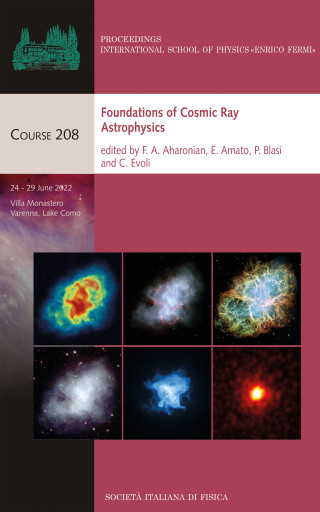
Foundations of Cosmic Ray Astrophysics |
| |
F. A. Aharonian/ 9781643685120/ Price:EUR 280.00
|
| |
|
|
The Enrico Fermi Schools, a cultural initiative promoted by the Italian Physical Society (SIF), were initiated in 1953 in a period that marked the beginnings of what is now called cosmic ray astrophysics. Indeed, the very first edition of the School focused on the contribution of cosmic ray physics to the laws of elementary particle physics.
Almost seventy years later, another School has been focusing on the foundations of cosmic ray astrophysics, and this book contains the lectures presented as Course 208 of the prestigious International School of Physics Enrico Fermi, Foundations of Cosmic Ray Astrophysics, held in Varenna, Italy from 23 to 29 June 2022. Topics covered in the book range from particle acceleration to cosmic ray transport, and from radiation processes to feedback of cosmic rays in galaxy formation. In particular, a thorough description of the physics of cosmic ray transport in turbulent magnetic fields, and of the production of magnetic perturbations in the presence of cosmic ray gradients is provided, both these phenomena being essential in describing particle acceleration at shocks and the transport of cosmic rays within the galaxy. The transport of cosmic rays in different environments is also discussed.
This area of research has received an extraordinary boost in recent times, thanks to the now unprecedented accuracy of observations, and to the possibility of testing new ideas and complex scenarios offered by recent developments in numerical simulation, and the book will be of interest to all those working in the field of high energy astrophysics. |
| |
|
| SD03-518 |
Fiber-Based Optical Resonators: Cavity QED, Resonator Design and Technological Applications |
| |
Deepak Pandey/ 9783110636239/ Price:EUR 109.95
|
| |
|
|
|
| |
|
| SD03-517 |
Multifragmentation in Heavy-Ion Reactions: Theory and Experiments |
| |
Rajeev K. Puri/ 9789814968690/ Price:GBP 154.00
|
| |
|

|
|
| |
|
| SD03-517 |
Introduction to Physics |
| |
Ekaterina Vsemirnova/ 9781774697764/ Price:US$ 110.00
|
| |
|
|
|
This text provides an overview of the fundamental concepts and principles of physics. It covers topics such as mechanics, electromagnetism, thermodynamics, and modern physics. The book is designed to help students develop a deep understanding of the physical world and to prepare them for more advanced studies in physics. It also includes numerous examples, illustrations, and practice problems to help students master the material. |
| |
|
| SD03-517 |
Basic Thermodynamics |
| |
Pio J Arias/ 9781774697818/ Price:US$ 110.00
|
| |
|
|
|
This book provides a comprehensive introduction to the principles of thermodynamics, including the laws of thermodynamics, thermodynamic processes, and thermodynamic cycles. The book covers topics such as thermodynamic systems, properties of pure substances, heat transfer, and power cycles. It is designed to help students and professionals in the fields of engineering and physics develop a strong understanding of the fundamental principles of thermodynamics. With clear explanations and numerous examples, this book is an essential resource for anyone studying or working in the field of thermodynamics. |
| |
|
| SD03-517 |
Fluid Mechanics |
| |
Artem Shlyakhov Marie-Magdeleine/ 9781774697832/ Price:US$ 110.00
|
| |
|
|
|
This text deals with the behavior of fluids, both liquids and gases, and their interaction with solid objects. The book covers topics such as fluid statics, fluid dynamics, Bernoulli's equation, flow measurement, and viscosity. The book is designed to provide students with a thorough understanding of the principles of fluid mechanics and their applications in engineering and science. This book is an essential resource for understanding the behavior of fluids and their impact on the world around us. |
| |
|
| SD03-517 |
Illustrated Dictionary of Physics |
| |
Aya Sugiyama/ 9781984688279/ Price:US$ 65.00
|
| |
|
|
Presents clear explanations with detailed illustrations to provide a user-friendly resource for understanding fundamental concepts and principles in physics.
This dictionary covers a wide range of topics in physics, including mechanics, thermodynamics, electromagnetism, quantum mechanics, and relativity.
Third edition of this dictionary incorporates many new definitions and a thorough revision of previous entries and an ideal resource for learners at all levels. |
| |
|
| SD03-517 |
Core Concepts in Physics: Electricity (with Access code) |
| |
Carlos Suarez/ 9781984688385/ Price:US$ 85.00
|
| |
|

|
This book presents complex concepts in a reader-friendly manner, utilizing illustrations, diagrams, and real-world examples to enhance understanding and engagement |
| |
|
| SD03-517 |
Applied Mechanics |
| |
Chang Qi/ 9781984688392/ Price:US$ 95.00
|
| |
|
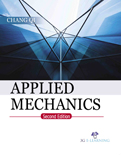
|
Applied Mechanics is a comprehensive textbook that provides a practical and in-depth understanding of the principles and applications of mechanics in engineering and related fields.
The book covers topics such as statics, dynamics, strength of materials, and fluid mechanics, offering clear explanations, numerous examples, and exercises to enhance the reader's comprehension and problem-solving skills. |
| |
|
| SD03-517 |
Core Concepts in Physics: Solid State Physics (with Access code) |
| |
Joachim Kruse/ 9781984689177/ Price:US$ 85.00
|
| |
|
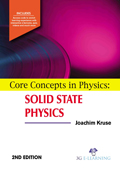
|
Provides a comprehensive exploration of the fundamental principles and phenomena governing the behavior of solids, unraveling the world of crystals, semiconductors, and magnetic materials with clarity and depth.
This indispensable book equips readers with the knowledge to understand and appreciate the remarkable properties and applications of materials that shape modern technology and our understanding of the physical world.
In its updated edition, this book has been extensively revised on a chapter by chapter basis. Some new chapters are also added. |
| |
|
| SD03-517 |
Core Concepts in Physics: Semiconductor Physics (with Access code) |
| |
John Long/ 9781984689184/ Price:US$ 85.00
|
| |
|
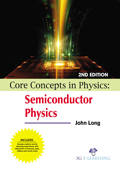
|
Provides a comprehensive exploration of the fundamental principles governing the behavior and applications of semiconductors, unraveling the world of electronic devices and their underlying physics. This book serves as an invaluable resource for students and professionals alike, demystifying the complexities of semiconductor physics with clarity and depth. |
| |
|
| SD03-517 |
Core Concepts in Physics: Optics (with Access code) |
| |
Jongkil Park/ 9781984689191/ Price:US$ 85.00
|
| |
|
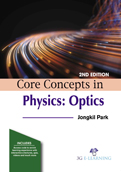
|
Covers the fundamental principles of light, lenses, and optical phenomena.
With clear explanations and examples, this book illuminates the intricate world of optics, making it an invaluable resource for both students and enthusiasts of physics.
In its updated edition, this book has been extensively revised on a chapter by chapter basis. Some new chapters are also added. |
| |
|
| SD03-517 |
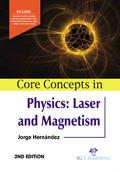
Core Concepts in Physics: Laser and Magnetism (with Access code) |
| |
Jorge Hernandez/ 9781984689207/ Price:US$ 85.00
|
| |
|
|
An illuminating exploration of the fundamental principles behind lasers and magnetism, offering readers a comprehensive understanding of these captivating phenomena.
In its updated edition, this book has been extensively revised on a chapter by chapter basis. Some new chapters are also added.
With clear explanations and insightful examples, this book serves as an invaluable resource for both students and enthusiasts seeking to delve deeper into the world of physics. |
| |
|
| SD03-517 |
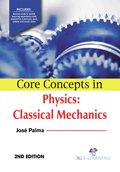
Core Concepts in Physics: Classical Mechanics (with Access code) |
| |
Jose Palma/ 9781984689214/ Price:US$ 85.00
|
| |
|
|
A comprehensive guide that explores the fundamental principles governing the motion of objects and systems, offering clear explanations and insightful examples.
From Newton's laws to conservation principles, this book equips readers with a solid foundation in classical mechanics, making it an invaluable resource for students and enthusiasts alike.
In its updated edition, this book has been extensively revised on a chapter by chapter basis. Some new chapters are also added. |
| |
|
| SD03-517 |
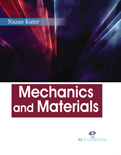
Mechanics and Materials |
| |
Nazan Kuter/ 9781984689801/ Price:US$ 95.00
|
| |
|
|
Presents an insightful and comprehensive guide that delves into the fundamental principles of engineering mechanics and materials science.
From analyzing the behavior of structures under different loads to understanding the properties of various materials, this book offers a well-structured approach to mastering these crucial topics.
Packed with real-world examples and practical applications, it serves as an indispensable resource for students and professionals in the field of engineering. |
| |
|
| SD03-517 |
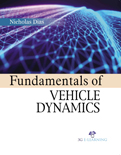
Fundamentals of Vehicle Dynamics |
| |
Nicholas Dias/ 9781984689818/ Price:US$ 95.00
|
| |
|
|
An essential guide for anyone interested in understanding the intricate science behind the movement and behavior of vehicles.
This book delves into the principles of vehicle dynamics, including acceleration, braking, steering, and stability, offering invaluable insights for engineers, researchers, and enthusiasts alike.
This book is a must-read for gaining a deep understanding of the fundamental concepts that shape the dynamic performance of vehicles. |
| |
|
| SD03-517 |
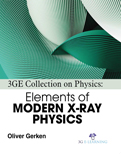
3GE Collection on Physics: Elements of Modern X-ray Physics |
| |
Oliver Gerken/ 9781984689900/ Price:US$ 160.00
|
| |
|
|
Covers the fundamental principles and advanced concepts of X-ray physics.
From the basics of X-ray generation and interaction with matter to the intricate details of imaging techniques and spectroscopy, this book offers a thorough exploration of the subject. |
| |
|
| SD03-517 |
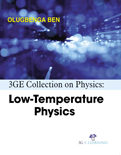
3GE Collection on Physics: Low-Temperature Physics |
| |
Olugbenga Ben/ 9781984689917/ Price:US$ 160.00
|
| |
|
|
Explores the fascinating world of extreme cold and its profound effects on matter.
From the bizarre behavior of superconductors to the emergence of quantum phenomena, this book takes readers on a captivating journey through the realms of temperature near absolute zero.
With clear explanations and compelling examples, it offers a comprehensive introduction to a field that continues to push the boundaries of our understanding of the universe. |
| |
|
| SD03-517 |
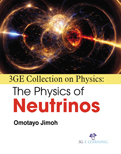
3GE Collection on Physics: The Physics of Neutrinos |
| |
Omotayo Jimoh/ 9781984689924/ Price:US$ 160.00
|
| |
|
|
A comprehensive exploration of one of the most intriguing particles in the universe.
From their elusive nature to their role in fundamental physics, this book delves into the captivating world of neutrinos.
It offers readers a fascinating journey into the depths of particle physics and our understanding of the cosmos. |
| |
|
| SD03-517 |
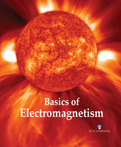
Basics of Electromagnetism |
| |
3G Editorial Board/ 9781984685636/ Price:US$ 70.00
|
| |
|
|
A comprehensive textbook that explores the fundamental principles of electricity and magnetism.
The book covers topics ranging from electric charge and field to magnetic flux and induction.
With clear explanations and numerous examples, it is a great resource for students and professionals alike. |
| |
|
| SD03-517 |
Basics of Magnetism |
| |
3G Editorial Board/ 9781984685643/ Price:US$ 70.00
|
| |
|
|
A comprehensive introduction to the fundamentals of magnetism.
The book covers topics such as magnetic fields, magnetic materials, and electromagnetic induction, among others.
With clear explanations and examples, it is an essential resource for anyone interested in understanding the principles of magnetism. |
| |
|
| SD03-517 |
Basics of Semiconductors |
| |
3G Editorial Board/ 9781984685650/ Price:US$ 70.00
|
| |
|
|
An introductory book that explores the fundamental principles of semiconductors.
It covers topics such as crystal structures, doping, carrier transport, and device physics.
The book is a valuable resource for students and professionals in the fields of electrical engineering and materials science. |
| |
|
| SD03-517 |
Basics of Atoms |
| |
3G Editorial Board/ 9781984685667/ Price:US$ 70.00
|
| |
|
|
A concise and accessible guide to the fundamental concepts of atomic physics.
Contains topics such as atomic structure, quantum mechanics, and spectroscopy in a clear and concise manner.
This book is a great introduction to the fascinating world of atoms. |
| |
|
| SD03-517 |
Basics of Electrostatistics |
| |
3G Editorial Board/ 9781984685674/ Price:US$ 70.00
|
| |
|
|
A comprehensive guide to the fundamental principles of electrostatics.
Includes a range of topics, from Coulomb's law and electric fields to conductors and dielectrics.
With clear explanations and numerous examples, this book is an essential resource for anyone interested in understanding the behavior of electric charges and fields. |
| |
|
| SD03-517 |
Basics of Fluids |
| |
3G Editorial Board/ 9781984685698/ Price:US$ 70.00
|
| |
|

|
A comprehensive introductory textbook on the fundamental principles of fluid mechanics.
Focuses on topics such as fluid statics, fluid kinematics, and fluid dynamics, with a focus on understanding the behavior of fluids in different situations.
This book is a valuable resource for students and professionals in engineering and related fields. |
| |
|
| SD03-517 |
Basics of Thermodynamics |
| |
3G Editorial Board/ 9781984685704/ Price:US$ 70.00
|
| |
|

|
A fundamental textbook that covers the principles and concepts of thermodynamics.
It is a comprehensive guide for students and professionals in the fields of physics, chemistry, and engineering.
Presents a clear and concise introduction to the laws of thermodynamics and their applications in various systems. |
| |
|
| SD03-517 |
Basics of Electricity |
| |
3G Editorial Board/ 9781984685711/ Price:US$ 70.00
|
| |
|

|
A comprehensive introduction to the principles and applications of electrical systems.
Covers essential topics such as circuits, voltage, current, resistance, and power, and provides practical examples and exercises to reinforce learning.
A valuable resource for understanding the fundamentals of electricity. |
| |
|
| SD03-517 |
Introduction to Waves: Sound, Light, and Beyond |
| |
SachchidaNand Shukla/ 9781774699362/ Price:US$ 180.00
|
| |
|
|
In the intriguing domain of physics, Waves: Sound, Light, and Beyond serves as an enlightening journey into the realms of diverse wave phenomena that constantly engage with our existence. It starts with familiar territory, exploring sound waves, responsible for converting vibrational patterns into discernible sounds, and light waves, the invisible oscillations that bring color and brightness to our world. Beyond these commonly experienced waves, the exploration expands to embrace the electromagnetic spectrum, featuring an array of invisible yet profoundly impactful waves like radio waves, microwaves, and X-rays. These underpin much of our modern technological landscape, from broadcasting and data transmission to medical imaging. This fascinating subject interweaves principles from physics, mathematics, and engineering to impart an understanding of how wave propagation enables energy and information transfer. By delving into wave properties like amplitude, frequency, and wavelength, or by understanding advanced concepts like wave interference, diffraction, and polarization, the study of waves allows us to comprehend and shape our technologically sophisticated world better. "Introduction to Waves: Sound, Light, and Beyond" is a comprehensive guide that delves into the captivating world of wave phenomena. Catering to students, researchers, and enthusiasts seeking to grasp the principles, applications, and impacts of diverse wave types, this book covers a broad spectrum of topics. These include an introduction to waves, wave phenomena in nature, sound and light waves, wave behavior and interference, other types of waves beyond sound and light, the role of waves in modern technology, and future trends in wave science. |
| |
|
| SD03-517 |
Fundamentals of Motion: Introduction to Classical Mechanics |
| |
Ravi Prakash/ 9781774699379/ Price:US$ 180.00
|
| |
|
|
Classical Mechanics, a branch of physics that addresses the motion of macroscopic objects, is founded upon fundamental principles that govern the behavior of physical bodies. Central to this are Newton's three laws of motion. The first law, or the law of inertia, posits that an object will remain in a state of rest or uniform motion unless acted upon by an external force. The second law provides a mathematical description of how the velocity of an object changes when it is subjected to an external force, and is often expressed as F=ma, where F is the total force, m is the object's mass, and a is its acceleration. The third law, the principle of action and reaction, asserts that for every action, there is an equal and opposite reaction. These laws have been instrumental in the development of various disciplines such as engineering and astronomy and remain applicable to most physical systems, except when dealing with phenomena at extremely small scales or relativistic speeds. The "Fundamentals of Motion: Introduction to Classical Mechanics" is an essential textbook that provides a thorough examination of the principles underlying the motion of macroscopic objects. Designed for students, educators, and professionals in physics and engineering, this book delves into the core concepts of Classical Mechanics, including Newton's laws of motion, conservation of momentum and energy, dynamics, kinematics, and rotational motion. It offers a systematic approach to understanding fundamental theories and mathematical formulations, coupled with illustrative examples and practical exercises. |
| |
|
| SD03-517 |
Recent advances in Magnetocaloric Materials |
| |
Isabel Fragoso/ 9781682510032/ Price:US$ 165.00
|
| |
|

|
Current trends in magnetocaloric materials have shown great potential for energy-efficient cooling and heating technologies. These materials exhibit temperature changes in response to magnetic fields and can be used in environmentally friendly refrigeration systems, reducing reliance on traditional refrigerants that contribute to global warming. This book explores the latest advancements in magnetocaloric materials, which have the potential for use in energy-efficient cooling and heating technologies. |
| |
|
| SD03-517 |
The Future of Fusion Energy: Progress and Challenges in Nuclear Fusion Research |
| |
Sergio Ramos/ 9781682519998/ Price:US$ 165.00
|
| |
|

|
Nuclear fusion research holds the promise of a clean, abundant, and sustainable energy source. The future of fusion energy depends on addressing scientific and engineering challenges, such as achieving sustained fusion reactions, plasma confinement, and designing efficient reactors, which will pave the way for commercial fusion power generation. This book provides an overview of the progress made and challenges faced in the field of nuclear fusion research, offering insights into the potential future of fusion energy. |
| |
|
| SD03-517 |
Emerging Trends in Materials Science: From Nanotechnology to Energy Storage |
| |
Antonio Paulo/ 9781682519981/ Price:US$ 165.00
|
| |
|

|
Emerging trends in materials science encompass cutting-edge research areas such as nanomaterials, biomaterials, and sustainable materials. Scientists are exploring novel synthesis methods, advanced characterization techniques, and unique material properties to develop innovative materials for energy storage, electronics, and healthcare applications. This book discusses the latest trends and developments in materials science, with a focus on nanotechnology and energy storage applications. |
| |
|
| SD03-517 |
Machine Learning and Data Analysis in Soft Matter Physics |
| |
George Ecker/ 9781682519974/ Price:US$ 165.00
|
| |
|

|
Machine learning and data analysis techniques have found their place in soft matter physics, aiding in the understanding of complex molecular systems, self-assembly, and materials design. These tools facilitate the analysis of large-scale molecular simulations and experimental data, providing insights into the behavior and properties of soft materials. This book examines the application of machine learning and data analysis techniques in studying soft matter physics and its complex behavior. |
| |
|
| SD03-514 |
Multifunctional Sensors: Design, Construction, Methodology and Uses |
| |
Bansari Deb Majumder/ 9781032390796/ Price:GBP 124.99
|
| |
|

|
|
| |
|
| SD03-521 |
Lagrangian Mechanics For The Non-Physicist |
| |
Ville Hirvonen/ 9798867329907/ Price:US$ 51.06
|
| |
|
|
|
| |
|
| SD03-516 |
Multimodal and Nanoscale Optical Microscopy |
| |
P. Bianchini/ 9781643684147/ Price:EUR 224.00
|
| |
|
|
Optical microscopy is developing into nanoscopy and multimodal microscopy the better to decipher the functioning mechanisms in living systems, and investigating biological specimens at molecular level using fluorescence as a mechanism of contrast. Results have demonstrated the potential to provide information at the Angstrom level. Other optical methods now offer more in terms of spatial and temporal resolution, making it possible to study the delicate and complex relationship between structure and function in cells. Modern optical microscopes also use the decisive advantage provided by artificial intelligence algorithms. All in all, a rapidly changing field with an increasing number of questions to be answered.
This book contains the lectures presented as Course 210 of the prestigious International School of Physics Enrico Fermi, Multimodal and Nanoscale Optical Microscopy, held in Varenna, Italy from 11 to 16 July 2021. Topics covered include fluorescence; linear and nonlinear microscopy; label-free with Mueller matrix and Brillouin microscopy; F-methods such as FRAP, FLIM, FRET and FCS; super-resolution, phototoxicity and photodamage; optical and magnetic trapping; image formation; and bioimage analysis, among others. The book also includes selected contributions of a number of young researchers.
Packed with novel ideas, new instruments, challenging theoretical approaches and amazing applications, the book will be of interest to all those working in the field of multimodal and nanoscale optical microscopy. |
| |
|
| SD03-515 |
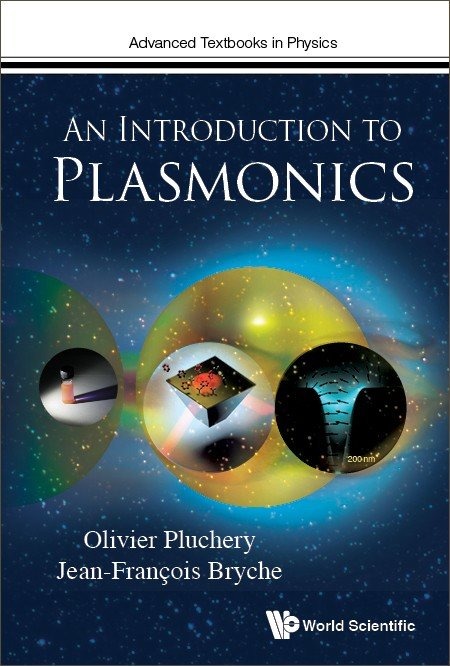
An Introduction to Plasmonics |
| |
Olivier Pluchery/ 9781800613393/ Price:US$ 128.00
|
| |
|
|
|
| |
|
| SD03-514 |
Handbook of Accelerator Physics and Engineering |
| |
Alexander Wu Chao/ 9789811270154/ Price:US$ 98.00
|
| |
|

|
|
| |
|
| SD03-511 |
General Physics 2 (with DVD) |
| |
3G Editorial Board/ 9781984680563/ Price:US$ 95.00
|
| |
|
|
Provides a coherent treatment of the basic principles and theories of general physics.
This edition helps in acquiring a better understanding of the basic principles of Kinematics and in revising a large amount of the subject matter quickly.
This edition is thoroughly updated with new chapters and the latest coverage of the topics.
Subject matter has been fully revised in such a way that makes the concepts clear and understandable to readers. |
| |
|
| SD03-511 |
3GE Collection on Physics: High Energy and Short Pulse Lasers |
| |
3G Editorial Board/ 9781984680907/ Price:US$ 160.00
|
| |
|
|
This book traces the progress of this field and highlights some of its key concepts and applications.
The book gives a comprehensive overview of the principles and applications of ultrashort pulse lasers, especially applied to medicine and production technology.
Recent advances in laser technology are discussed in detail. |
| |
|
| SD03-511 |
3GE Collection on Physics: Advanced Aspects of Spectroscopy |
| |
3G Editorial Board/ 9781984680914/ Price:US$ 160.00
|
| |
|
|
This proven book provides a systematic introduction to spectra and basic theoretical concepts in spectroscopic methods and includes up-to-date information.
Principle, experimental set ups, parameters and interpretation rules of several advanced IR-based techniques; application to biointerface characterisation through the presentation of recent examples, will be given in this book. |
| |
|
| SD03-511 |
3GE Collection on Physics: Molecules in Electromagnetic Fields |
| |
3G Editorial Board/ 9781984680921/ Price:US$ 160.00
|
| |
|
|
Describes the effects of electromagnetic fields on the structure of molecular energy levels.
This is a textbook on the theory and calculation of molecular electromagnetic and spectroscopic properties. |
| |
|
| SD03-511 |
3GE Collection on Physics: Molecular Kinetics in Condensed Phases |
| |
3G Editorial Board/ 9781984680938/ Price:US$ 160.00
|
| |
|
|
Offers an introduction to the topic that combines theory, simulation and analysis Includes a detailed study of a two-dimensional system and of a solvated peptide.
This book assembles both theory and application in this field, to interest experimentalists and theoreticians alike. |
| |
|
| SD03-510 |
The Study of Elementary Particles |
| |
S.N. Shukla/ 9781774694305/ Price:US$ 180.00
|
| |
|

|
From the inception of particle physics during the 1930s up to the recent 21st century drives, the inventive concepts and technologies of molecular physics have infiltrated the mainstream society to change how we live. There is a long and developing list of viable applications with regards to particle physics. Today, every significant medical center globally uses accelerators generating x-rays, neutrons, protons, and heavy ions for diagnosis and cure of illnesses. It is believed that there are more than 7,000 actives medical linacs across the planet that have treated around 30 million patients. Likewise, biomedical researchers use molecular physics advances to unravel the design of proteins, data that is critical to understanding biological cycles and treating illness. A better comprehension of protein design allows for the improvement of viable medications, for example, Kaletra, among the globe's most-prescribed medication to combat AIDS. The future for particle physics is bright and still more is yet to be discovered. |
| |
|
| SD03-510 |
Developments in Modern Physics |
| |
Nelson Bolivar/ 9781774695036/ Price:US$ 180.00
|
| |
|
|
In the 20th century - the age of "modern physics" - our view of the physical universe underwent a revolution. This book Developments in Modern Physics presents the fundamentals and frontiers of contemporary physics to the most gifted pupils. Typically, students must take multiple courses to cover the majority of these topics. The purpose is to give them a sense of where they're heading and how everything fits together as they go. Quantum mechanics. nuclear physics, particle physics, special relativity, condensed-matter physics, relativistic quantum mechanics, and general relativity are the main topics covered in this book. The objective is to address these topics in considerable depth such that students "get" them and have a basic understanding of them. The book presupposes a one-year calculus-based introductory physics course and a one-year calculus course. Several appendices educate the reader on any additional mathematics that may be required. Numerous problems are presented, the majority of which will lead dedicated readers as far as they wish in modern physics. |
| |
|
| SD03-510 |
Physical Science (Book with DVD) |
| |
/ 9781984680433/ Price:US$ 95.00
|
| |
|
|
Provides students complete coverage of the physical sciences with a level of explanation and detail appropriate for all students.
Fully updated throughout, some new chapters covering current topics are also added in this 4th edition.
This updated edition offers students real advice in navigating the ever-changing academic background. |
| |
|
| SD03-510 |
General Physics 1 |
| |
3G Editorial Board/ 9781984680556/ Price:US$ 95.00
|
| |
|
|
Intended to provide a complete and precise knowledge of basic physics.
Subject matter has been fully revised in such a way that makes the concepts clear and understandable to readers.
In its updated 4th edition, this book has been extensively revised on a chapter by chapter basis. |
| |
|
| SD03-510 |
Molecules in Electromagnetic Fields |
| |
Alberto K. Mello/ 9781682519349/ Price:US$ 165.00
|
| |
|
|
|
This book describes the behavior of molecules in an electric or magnetic field. Molecules can sense an external electromagnetic field by its electric and magnetic moments. While electric moments arise primarily from the nonuniform electron distribution within the molecules, molecular magnetic moments are mainly due to the electrons’ angular momenta. The goal of the present book is to review the major developments that have led to the current understanding of molecule-field interactions and experimental methods for manipulating molecules with electromagnetic fields. Molecule-field interactions are at the core of several, seemingly distinct, areas of molecular physics. |
| |
|
| SD03-510 |
Magnetic Materials and their Applications |
| |
Russell Ozawa/ 9781682519356/ Price:US$ 165.00
|
| |
|
|
|
Magnetic materials encompass a wide variety of materials, which are used in a diverse range of applications. Magnetic materials are utilized in the creation and distribution of electricity, and, in most cases, in the appliances that use that electricity. It is difficult to imagine a world without magnetic materials and they are becoming more important in the development of modern society. The need for efficient generation and use of electricity is dependent on improved magnetic materials and designs. The book discusses the principles and concepts behind magnetic materials and explains their applications in the fields of physics and engineering. |
| |
|
| SD03-510 |
Microwave Antennas |
| |
Marc K. Matthews/ 9781682519363/ Price:US$ 165.00
|
| |
|
|
|
An antenna is a conductor or group of conductors used for radiating electromagnetic energy into space or collecting electromagnetic energy from space. When a radio frequency signal has been generated in a transmitter, some means must be used to radiate this signal through space to a receiver. The device that does this job is the antenna. In this book, the research advances on substrate integrated waveguide (SIW) technology and its application in microwave antennas, components, and subsystems are reviewed, which includes the propagation characteristics and discontinuity analysis of SIW, and its application in the design and implementation of directional antennas. |
| |
|
| SD03-510 |
Solid Lubricants and Surfaces |
| |
Daniel Margain/ 9781682519370/ Price:US$ 165.00
|
| |
|
|
|
Solid lubricants are critically important for the safe and smooth operations of numerous tribologic systems. Lubricants provide effective lubrication when the surface area (metal to metal or metal to plastic or plastic to plastic etc.) comes in contact and the prevalent speed at that moment allows for effective formation of oil film and the temperature range falls within the limit. The book details the properties of solid surfaces, clean surfaces, and contaminated surfaces as well as discusses the structure. |
| |
|
| SD03-510 |
Theoretical Foundations and Application of Photonic Crystals |
| |
Haichan Yang/ 9781682519387/ Price:US$ 165.00
|
| |
|
|
|
Photonic crystals are periodic dielectric structures that are designed to form the energy band structure for photons, which either allows or forbids the propagation of electromagnetic waves of certain frequency ranges, making them ideal for light-harvesting applications. This book covers the latest developments in the field, providing the most up-to-date, concise, and comprehensive book available on these novel materials and their applications. |
| |
|
| VD03-66 |
Advances in the Modelling of Thermodynamic Systems |
| |
Elhoucine Essefi/ 9781799888024/ Price:US$ 205.00
|
| |
|
|
Thermodynamics is a common field of study involving many different specialties including physics, chemistry, geology, and cosmology. Thermodynamics is incredibly useful for manmade industrial processes related to material studies, renewable energy, and more. It is essential for professionals to stay current with the developments in thermodynamic systems, as thermodynamics proves vital for understanding natural macroprocesses related to geology, areology, and cosmology.
Advances in the Modelling of Thermodynamic Systems discusses the recent advances in modeling of thermodynamic systems as well as the state-of-the-art manmade industrial processes and natural processes taking place on Earth and beyond. It reveals an interdisciplinary vision of thermodynamics from the minuscule to the immense. Covering topics such as entropy generation, linear modeling, and statistical analysis, this premier reference source is an essential resource for engineers, chemists, physicists, mechanics, geologists, cosmologists, students and educators of higher education, libraries, researchers, and academicians.
Coverage:
The many academic areas covered in this publication include, but are not limited to:
•Desorption Isotherms
•Energy and Exergy
•Entropy Generation
•Heat Exchangers
•Heat Transfer
•Linear Modeling
•Magnetic Regenerative Refrigeration Systems
•Numerical Simulation
•Renewable Solar Energy
•Statistical Analysis
•Theoretical Analysis
•Vertical Porous Channel |
| |
|
| SD03-509 |
Principles of Solar Cells: Connecting Perspectives on Device, System, Reliability, and Data Science |
| |
Muhammad A Alam/ 9789811233029/ Price:US$ 88.00
|
| |
|
|
|
| |
|
| SD03-504 |
General Relativity |
| |
3G Editorial Board/ 9781984659767/ Price:US$ 95.00
|
| |
|
|
This edition has become more comprehensive with the inclusion of several new topics.
The book concludes with a brief discussion of classical field theory and the derivation of general relativity from a variational principle.
This book covers the principle of equivalence, paying particular attention to the question of the existence of inertial frames in Newtonian mechanics. |
| |
|
| SD03-504 |
Classical and General Mechanics |
| |
3G Editorial Board/ 9781984659699/ Price:US$ 95.00
|
| |
|
|
This second edition has been significantly expanded and updated, presenting new topics and updating coverage of other topics.
Develops general concepts, theorems and techniques.
A complete description of the motion of particles and rigid bodies. |
| |
|
| SD03-504 |
Problems in Thermodynamics |
| |
3G Editorial Board/ 9781984659705/ Price:US$ 95.00
|
| |
|
|
This second edition has been significantly expanded and updated, presenting new topics and updating coverage of other topics.
Provides an introduction to the study of thermodynamics.
Numerous solved examples and end of-chapter problems are provided. |
| |
|
| SD03-504 |
Problems in Electricity and Magnetism |
| |
3G Editorial Board/ 9781984659712/ Price:US$ 95.00
|
| |
|

|
This second edition has been significantly expanded and updated, presenting new topics and updating coverage of other topics.
Traces the history of theories about electricity and magnetism.
Describes what electricity is and how it is generated, stored, and used. |
| |
|
| SD03-504 |
Semiconductor Physics |
| |
3G Editorial Board/ 9781984659729/ Price:US$ 95.00
|
| |
|
|
This edition has become more comprehensive with the inclusion of several new topics.
Covers the basic physics of semiconductors and their applications to practical devices.
Detailed explanations of the electronic, vibrational, transport, and optical properties of semiconductors. |
| |
|
| SD03-504 |
3GE Collection on Physics: Wavelet Analysis |
| |
3G Editorial Board/ 9781984659873/ Price:US$ 160.00
|
| |
|

|
Wavelets are functions designed to be considerably localized in both time and frequency domains.
Presents an introduction to digital image basics, Fourier analysis, wavelets, computing in an "applications first" approach. |
| |
|
| SD03-504 |
3GE Collection on Physics: Physics of Magnetic Thin Films |
| |
3G Editorial Board/ 9781984659880/ Price:US$ 160.00
|
| |
|
|
Presents theoretical mechanisms lying behind macroscopic properties of magnetic thin films.
Deals with the main properties of magnetic materials in the bulk state and at the nanometric scale such as for thin films and multilayers. |
| |
|
| SD03-504 |
3GE Collection on Physics: The Physics of Liquid Water |
| |
3G Editorial Board/ 9781984659897/ Price:US$ 160.00
|
| |
|

|
Water is the name of the liquid state of H2O at standard conditions for temperature and pressure.
Describes the structure and properties of water.
It discusses the mysteries of isothermal compressibility, structural diversity, as well as liquefaction and boiling points of water in relation to the shape of the interaction between particles. |
| |
|
| SD03-503 |
Quantum Optics Applications |
| |
Nelson Bolivar/ 9781774690512/ Price:US$ 170.00
|
| |
|
|
Quantum Optics offers a very wide coverage of fundamental phenomena encompassing quantum mechanics and physical optics. Quantum optics allows the engineers and scientists to perform research in laser physics and quantum optics. This book covers various topics including electromagnetic field quantization, quantum coherence theory, models of atom-field interaction, resonance fluorescence, laser theory and input-output theory (application in non-linear optics). The purpose of this book is to offer various exciting advances in the field of quantum optics. Presently, quantum optics is being applied in many applications which involve electronics, climate control, space science, medical science and industrial sectors. This book put emphasis on basic concepts and applications of quantum optics and its associated fields, so as to facilitate the students and researchers to perform their research in this amazing field. The topics of this books are offered in a didactic and unified manner. The book exhibits a pedagogical and clear demonstration of topics. It successfully stabilizes the theoretical and quantum aspects of quantum optics with modern relevant experiments. The book is equally useful for students, scientist, teachers and industrialists from various backgrounds including quantum mechanics, optical physics, electromagnetism and many multidisciplinary fields. |
| |
|
| SD03-503 |
Fundamentals of Physics |
| |
3G Editorial Board/ 9781984659668/ Price:US$ 95.00
|
| |
|
|
Provides a thorough introduction to the principles and methods of physics.
The course will cover the fundamentals of Physics, including the following topics: the description of motion; forces and momentum; the dynamics of particles; kinetic and potential energy; the conservation of energy; temperature and thermal equilibrium; specific and latent heat; thermal energy; and more. |
| |
|
| SD03-503 |
Introduction to Elementary Particles |
| |
3G Editorial Board/ 9781984659675/ Price:US$ 95.00
|
| |
|

|
This book is an introduction to elementary particle physics, also referred to as high-energy physics.
The book provides an introduction to central facts and notions of particle physics, symmetries, invariances, and conservation laws. |
| |
|
| SD03-503 |
Key Concepts in Physics |
| |
Nelson Bolivar/ 9781774691496/ Price:US$ 170.00
|
| |
|

|
This book explains various key concepts and terms that are important in the context of physics. Physics is the branch of science that deals with the structure of matter and how the fundamental constituents of the universe interact. It studies objects ranging from the very small using quantum mechanics to the entire universe using general relativity. |
| |
|
| SD03-503 |
Solar and Space Physics |
| |
Olga Moreira/ 9781774691809/ Price:US$ 170.00
|
| |
|
|
Solar and Space Physics? is an edited book consisting of 16 contemporaneous open-access articles featuring the modeling of the solar magnetic activity and space weather. It aims to provide an overall overview and to review the recent advances in the modelling of the solar dynamo and its important features, including the sunspot butterfly diagram. It also focuses on the impact of the solar activity cycle on Earth's environment. It includes magnetohydrodynamics modeling and forecasting of the past, current, and future solar magnetic activity, from the strong magnetic eruptions during solar minima to low number of sunspots and weakening of magnetic structures during solar minima. It includes, in particular, the analysis of the most recent solar cycles (Solar Cycles 23 and 24) as well as a prediction for the current solar cycle (Solar Cycle 25). Reading this book requires some knowledge in electromagnetism, hydrodynamics, and time series. This book is intended to reach an academic audience ranging from advanced undergraduate students to experienced researchers. |
| |
|
| SD03-503 |
Concepts in Quantum Physics: Standard Interpretation and New Debates |
| |
Nelson Bolivar/ 9781774690475/ Price:US$ 170.00
|
| |
|
|
The book addresses fundamental conceptions in quantum mechanics. Its point of view goes from the classical to the quantum and back, taking the reader into a constant reviewing of the formulations, interpretations, and common misinterpretations in quantum physics. It has a good emphasis in the experimental grounds of the origins of quantum physics. The ontological and epistemological discussion related to quantum mechanics interpretations follow some of the recent approaches, giving a fresh review of the current state in the field. |
| |
|
| SD03-503 |
Principles of Optical Interferometry |
| |
Olga Moreira/ 9781774691816/ Price:US$ 170.00
|
| |
|
|
Principles of Optical Interferometry? is an edited book consisting of 19 contemporaneous open-access articles featuring different aspects of optical interferometry, from heterodyne to speckle interferometry. It includes methodologies of interferometric fringe analysis, as well the applications of Fabry-Perot, Fizeau, and Mach-Zehnder Interferometers. It introduces to a class of recent interferometer designs such as the Point Diffraction Interferometer, Radial Shearing Interferometer, Fiber-Optic Ring Resonator Interferometer and a Neural Network-Based Laser Interferometer. Reading this book requires some knowledge in calculus, differential equations, electromagnetism, and general topics in interferometry. This book is intended to reach an academic audience ranging from Science undergraduate students to experienced researchers. |
| |
|
| SD03-503 |
Fusion Technology |
| |
Ruprecht Jaenicke/ 9781682518588/ Price:US$ 160.00
|
| |
|
|
Today, we know that the sun, along with all other stars, is powered by a reaction called nuclear fusion. If nuclear fusion can be replicated on earth, it could provide virtually limitless clean, safe and affordable energy to meet the world’s energy demand. This book examines the current prospects for fusion reactor development based upon the present status in plasma physics research, fusion technology development and reactor conceptual design. |
| |
|
| SD03-503 |
Vibrations and Waves |
| |
Theodoros Varzakas/ 9781682518878/ Price:US$ 160.00
|
| |
|
|
Vibrations and waves are extremely important phenomena in physics. In nature, oscillations are found everywhere. From the jiggling of atoms to the large oscillations of sea waves, we find examples of vibrations in almost every physical system. For a vibration to occur an object must repeat a movement during a time interval. A wave is a disturbance that extends from one place to another through space. The current book deals with the physics of vibrations and waves. It provides state of the art information to students of physics and engineering with the mathematical tools required for full mastery of the concepts. |
| |
|
| SD03-503 |
String Theory |
| |
Graham Town/ 9781682518861/ Price:US$ 160.00
|
| |
|

|
String theory is an attempt at a deeper description of nature by thinking of an elementary particle not as a little point but as a little loop of vibrating string. String theory suggests that matter can be broken down beyond electrons and quarks into tiny loops of vibrating strings. Those strings move and vibrate at different frequencies, giving particles distinctive properties like mass and charge. The current book deals with the principles of string theory. |
| |
|
| SD03-503 |
Quantum Gravity |
| |
Adam Stamboulis/ 9781682518854/ Price:US$ 160.00
|
| |
|
|
Quantum physics and Einstein’s theory of general relativity are the two solid pillars that underlie much of modern physics. It is widely hoped that a theory of quantum gravity would allow us to understand problems of very high energy and very small dimensions of space, such as the behavior of black holes, and the origin of the universe. In recent years a set of new developments has begun to draw unexpected connections between a number of problems relating aspects of gravity, black holes, quantum information, and condensed matter systems. This book deals with the principles of quantum gravity. |
| |
|
| SD03-503 |
Quantum Field Theory |
| |
Gaetano Scholz/ 9781682518847/ Price:US$ 160.00
|
| |
|

|
Quantum mechanics is the science dealing with the behavior of matter and light on the atomic and subatomic scale. Quantum mechanics is an important tool to understand at the theoretical level the electronic structure of chemical compounds and the mechanism, thermodynamics, and kinetics of chemical reactions. This book deals with the concepts and principles of quantum field theory. |
| |
|
| SD03-503 |
Kinematics |
| |
Luca Salingaros/ 9781682518830/ Price:US$ 160.00
|
| |
|
|
Kinematics is a branch of mechanics. The goal of any study of kinematics is to develop sophisticated mental models that serve to describe the motion of real-world objects. To describe motion, kinematics studies the trajectories of points, lines and other geometric objects. Kinematic equations can be used to calculate various aspects of motion such as velocity, acceleration, displacement, and time. The current book deals with the principles of kinematics. |
| |
|
| SD03-503 |
Dynamics |
| |
Antonio Pola/ 9781682518823/ Price:US$ 160.00
|
| |
|
|
The study of dynamics goes beyond the relationships between the variables of motion as illuminated in kinematics to the cause of motion, which is force. As a field of study it is very important for analyzing systems consisting of single bodies or multiple bodies interacting with each other. A dynamics analysis is what allows one to predict the motion of an object or objects, under the influence of different forces, such as gravity or a spring. This book deals with the principles of dynamics. |
| |
|
| SD03-503 |
Circular Motion |
| |
Toshihiko Murdaca/ 9781682518816/ Price:US$ 160.00
|
| |
|
|
Circular motion is considered one of the most important movement in the universe such as Motion of the Earth around the Sun, Motion of the Moon around the Earth. This book deals with the study of the simplest form of curved motion: uniform circular motion, or motion in a circular path at constant speed. It will also introduce new concepts such as angular velocity and acceleration, and the force of gravity. It will also introduce the importance of circular motion and explain the need for a centripetal force to keep an object moving along a circular path. |
| |
|
| SD03-503 |
Atomic Models |
| |
Massimo Lucchi/ 9781682518809/ Price:US$ 160.00
|
| |
|

|
Atomic theory established that all matter is made of tiny particles, a discovery that led to amazing scientific breakthroughs in areas from modern chemistry to nuclear energy. Atomic models are important because, they help us visualize the interior of atoms and molecules, and thereby predicting properties of matter. This book is focused on determining the elements of mental models of atomic structure. |
| |
|
| VD03-64 |
Nanotechnologies and Clusters in the Spaces of Higher Dimension: Emerging Research and Opportunities |
| |
Gennadiy Vladimirovich Zhizhin/ 9781799837848/ Price:US$ 215.00
|
| |
|

|
Research on nanomaterials and their applications has become a trending area in various fields of study and practice. Its properties and abilities open a variety of scientific advancements that weren’t possible in past years. One specific area of research that is benefiting from the implementation of nanotechnology is the study of higher-dimensional compounds that include metallic atoms and other polytypes. There is vast potential in the study of how nanomaterials are currently being used for producing clusters in higher dimensions of space.
Nanotechnologies and Clusters in the Spaces of Higher Dimension: Emerging Research and Opportunities provides emerging research exploring the theoretical and practical aspects of the production of intermetallic clusters in high dimensional spaces using nanotechnology. Featuring coverage on a broad range of topics such as intermetallic compounds, incident conservation law, and applied mathematics, this book is ideally designed for practitioners, scientists, engineers, researchers, educators, physicists, mathematicians, students, and academicians seeking current research on the use of nanomaterials in interdimensional science.
Topics Covered
The many academic areas covered in this publication include, but are not limited to:
•Applied Mathematics
•Astrophysics
•Atomic Metals
•Chemical Engineering
•Dimensional Space
•Incident Conservation Law
•Intermetallic Compounds
•Ligands
•Metallic Clusters
•Nanomaterials |
| |
|
| SD03-521 |
An Introduction to Quantum Mechanics: From Facts to Formalism |
| |
Tilak Sinha/ 9780367547073/ Price:GBP 145.99
|
| |
|

|
|
| |
|
| SD03-498 |
Illustrated Dictionary of Physics |
| |
3G Editorial Board/ 9781984645791/ Price:US$ 55.00
|
| |
|
|
The 2nd edition of this dictionary is an updated compilation of the definitions and explanations of physics subject terms together with state-of-the-art scientific and practical terms, presented in an easy-to-use, A-Z order with pictures and figures as well as examples are given to clarify the terms.
Packed with special full-page features on this subject and developed in close consultation with team of experts, this is the ultimate reference tool for students. |
| |
|
| SD03-498 |
Illustrated Handbook of Electrostatics |
| |
3G Editorial Board/ 9781984647467/ Price:US$ 160.00
|
| |
|

|
Presents a discussion of electricity.
The concept of charge is introduced, and the properties of electrical forces are illustrated.
Provides a comprehensive study of the cause and effects of charge accumulation in solids and liquids.
Students will learn how charges interact with each other and create electric fields and electric potential landscapes in this introductory-level physics course. |
| |
|
| SD03-498 |
Illustrated Handbook of Optics, Waves and Sound |
| |
3G Editorial Board/ 9781984647474/ Price:US$ 160.00
|
| |
|
|
Light and sound are two of the most important ways to understand the world around us.
The book covers periodic motion, oscillations, mechanical waves, sound waves and light (properties, geometrical optics and interference).
Provides a balance of theory and instrumentation, while also including the necessary classical background. |
| |
|
| SD03-497 |
Electrodynamics: A Modern Approach |
| |
Rebecca Djomgoue/ 9781682518045/ Price:US$ 160.00
|
| |
|
|
|
Electrodynamics is a foundational theory that is well known to every student of physics and of electrical engineering. In the two hundred years from the mid nineteenth century to the mid twentieth century, physics underwent a remarkable revolution in its mathematics. This book compiles state of the art research and developments on the principles of electrostatics. This book gives a cursory overview of the basic ideas of stochastic electrodynamics, of the successes of the theory, and of its connections to quantum theory. In addition, the book focuses on the nature of the electromagnetic energy radiated over a single period of oscillation by an antenna working in frequency domain under ideal conditions and without losses when the oscillating charge in the antenna is reduced to the elementary charge. |
| |
|
| SD03-497 |
Wavelet Theory: Principles and Applications |
| |
David M Puchalski/ 9781682518038/ Price:US$ 160.00
|
| |
|
|
|
In the past decade, wavelet analysis has made rapid progress in both theory and method. Wavelets are mathematical functions which are used as a basis for writing down other complex functions in an easy way. Wavelets now serve as an alternative to classical Fourier methods, Fourier series and integrals. This book is intended to focus on current research on wavelets theory and its applications in different areas such as biomedical analysis, fringe-pattern analysis, image applications, and network data transfer applications, and optical measurement techniques. This book will serve as valuable reference for extending the research fields of differential and integral equations, harmonic analysis, signal and image processing, approximation theory and practical studies of Physics and Engineering. |
| |
|
| SD03-497 |
Ultraviolet Technology for Food Applications |
| |
Darkhan Turgaliev/ 9781682518021/ Price:US$ 160.00
|
| |
|

|
In recent years, use of non-thermal technologies is increasing as an alternative to the thermal processing in food industry. Ultraviolet (UV) light, which is a non-thermal technology, has recently attracted a lot attention to improvement of food safety. Ultraviolet light (UV) light holds considerable promise in food processing as an alternative to traditional thermal processing. Its applications include pasteurization of juices, post lethality treatment for meats, treatment of food contact surfaces and to extend the shelf-life of fresh produce. The book emphasizes the need to properly assess the physical and chemical properties in foods that influence the effectiveness of UV treatment and impact inactivation kinetics. It also addresses the effects of UV processing on food quality, before considering the engineering aspects of UV light treatment, such as transport phenomena, process calculations, and continuous flow reactor geometries. |
| |
|
| SD03-497 |
Ultraviolet Technology for Water Treatment |
| |
Saskia Alegri/ 9781682518014/ Price:US$ 160.00
|
| |
|

|
There is a rapidly growing interest in using UV light in water sanitation due to the increased knowledge of the potential health and environmental impacts of disinfection byproducts. Ultraviolet Light in Water and Wastewater Sanitation integrates the fundamental physics applicable to water and wastewater sanitation, the engineering aspects, and the practical experience in the field. This book brings together comprehensive information on the presently available UV technologies applicable to water and wastewater treatment. It is intended to investigate the effectiveness of Ultraviolet light for waste water disinfection. This book will serve as a reference guide for those who are dealing with water and wastewater treatment plants; water utility employees, governmental regulators. |
| |
|
| SD03-497 |
UV Radiation: Impact on Ecosystems and Human Health |
| |
K. S. Edelman/ 9781682518007/ Price:US$ 160.00
|
| |
|

|
UV is one of the non-ionizing radiations in the electromagnetic spectrum and lies within the range of wavelengths 100 nm to 400 nm. Ultraviolet light is closely associated with human health. The book deals with the broad range of topics including physical and meteorological fundamental studies, historical and anthropological considerations, the latest developments in UV research, as well as the interactions between UV radiation and global change, measurements, modeling and effects on ecosystems and living organisms, human health, behavioral aspects, and policy consequences. It is hoped that the information presented in this book will give great benefit and will stimulate both novice and expert researchers in the field. The book will appeal to Clinicians, medical general practitioners, technicians and staff working in UV related industries. |
| |
|
| SD03-497 |
Semiconductor Device Modelling |
| |
Fernando L. Mosler/ 9781682517031/ Price:US$ 160.00
|
| |
|
|
|
Semiconductors are especially important as varying conditions like temperature and impurity content can easily change their conductivity. This technology has completely changed the world we live in, semiconductors has been widely used in the electronics, integrated circuits and computer industry because it can produce better, faster, cheaper electronic devices. Researchers are devoting their time and efforts on the development of efficient and high-speed device models as the requirement for faster, smaller circuits and systems are becoming more and more stringent. The current book presents an overview of semiconductor device modelling is presented which describes the principal methods of representing and analyzing modern solid-state devices. This book covers different methods of semiconductor device modeling for electronic circuit simulation. The book deals with classical, semi-classical, particle and quantum transport methodologies and compares the relative merits of each approach |
| |
|
| SD03-497 |
General Physics |
| |
Nelson Bolivar/ 9781774076194/ Price:US$ 170.00
|
| |
|
|
|
This book on the topic of General Physics offers a thorough understanding of basic physical laws and concepts. The illustration of the physical concepts in a reader-friendly way helps the readers implement this conceptual knowledge to a broad variety of everyday problems. This book covers the most important fundamental aspects of classical as well as quantum physics. A vast variety of topics are discussed in this book which include Newton laws of motion, mechanics, statistical mechanics, waves, thermodynamics, etc. Most of the physical laws of laws of nature are demonstrated in the mathematical language. The readers are expected to have fundamental concepts of mathematics in order to completely understand the physical relations. |
| |
|
| SD03-497 |
Relativity and Quantum Relativistic Theories |
| |
Ivan Stanimirovic/ 9781774076873/ Price:US$ 170.00
|
| |
|
|
|
As one of the greatest advances of the twentieth century in science, quantum mechanics explains the behavior of matter and energy. It states that the elementary particles can behave as particles in a given time and waves in the next or the previous. |
| |
|
| SD03-497 |
Neutrino Physics: From Discovery to Cosmic Neutrinos |
| |
Stefano Spezia/ 9781774077672/ Price:US$ 170.00
|
| |
|
|
|
This book reviews the recent achievements in neutrino physics over the last two decades, ranging from the first experiments on nuclear beta-decay, that have brought to its discovery, up to the newest terrestrial experiments and cosmological measurements. In particular, it provides a summary of the properties of neutrinos in and beyond the Standard Model, it treats of the neutrinos masses, of the double beta-decay, and neutrino oscillations, and at last, it focuses on the study of extraterrestrial neutrinos of different origins: atmospheric, solar, and cosmogenic. |
| |
|
| VD03-63 |
Analyzing the Physics of Radio Telescopes and Radio Astronomy |
| |
Kim Ho Yeap/ 9781799823810/ Price:US$ 250.00
|
| |
|
|
In the field of astrophysics, modern developments of practice are emerging in order to further understand the spectral information derived from cosmic sources. Radio telescopes are a current mode of practice used to observe these occurrences. Despite the various accommodations that this technology offers, physicists around the globe need a better understanding of the underlying physics and operational components of radio telescopes as well as an explanation of the cosmic objects that are being detected.
Analyzing the Physics of Radio Telescopes and Radio Astronomy is an essential reference source that discusses the principles of the astronomical instruments involved in the construction of radio telescopes and the analysis of cosmic sources and celestial objects detected by this machinery. Featuring research on topics such as electromagnetic theory, antenna design, and geometrical optics, this book is ideally designed for astrophysicists, engineers, researchers, astronomers, students, and educators seeking coverage on the operational methods of radio telescopes and understanding the physical processes of radio astronomy.
Topics Covered
The many academic areas covered in this publication include, but are not limited to:
•Antenna Design
•Cosmic Sources
•Data Processing
•Electromagnetic Theory
•Gaussian Optics
•Geometrical Optics
•Low Noise Amplifiers
•Physical Optics
•Radio Interferometry
•Waveguides |
| |
|
| SD03-490 |
Analytical Methods in Conduction Heat Transfer |
| |
R.K. Bazer/ 9781682516331/ Price:US$ 160.00
|
| |
|

|
Heat is an important concept for researchers, scientists and engineers. Conduction heat transfer is the transfer of heat by means of molecular excitement within a material without bulk motion of the matter. Conduction heat transfer in gases and liquids is due to the collisions and diffusion of the molecules during their random motion. This book is designed to equip readers with the tools to solve a variety of engineering applications containing conduction heat transfer. |
| |
|
| SD03-490 |
3GE Collection on Physics & Chemistry: Physics of Acoustics |
| |
3G Editorial Board/ 9781984635716/ Price:US$ 160.00
|
| |
|
|
Acoustics is the study of waves, vibrations and sound and its most common applications lie in the sound and noise control industries.
Acoustic protection is the application of soft and porous material to protect individuals against undesirable sounds and noises.
Over the past years, the importance of acoustics in creating a healthy working environment has led to a rise in strict requirements to protect personnel against high levels of noise.
Presents the theory of waves and oscillations and various applications of acoustics in a logical and simple form.
Offers concise coverage of the science and engineering of acoustics and vibration. |
| |
|
| SD03-490 |
3GE Collection on Physics & Chemsitry: Medical Physics |
| |
3G Editorial Board/ 9781984635891/ Price:US$ 160.00
|
| |
|
|
Medical Physics is an applied branch of physics devoted to the application of concepts and methods from physics to the diagnosis, treatment of human disease, planning and development of treatment equipment.
This collection covers the basic concepts and advanced topics of medical physics.
Devoted to the application of concepts and methods from physics to the diagnosis, treatment of human disease, planning and development of treatment equipment. |
| |
|
| SD03-490 |
3GE Collection on Physics & Chemistry: Molecular Physics |
| |
3G Editorial Board/ 9781984636065/ Price:US$ 160.00
|
| |
|
|
Atomic and molecular physics is of fundamental importance in an education in physics.
This book aims to present a unified account of the physics of molecules from a modern perspective.
Prepares the students for further studies in applied atomic and molecular physics, basic material physics and research in atomic and molecular physics. |
| |
|
| SD03-490 |
3GE Collection on Physics & Chemistry: Nonlinear Optics |
| |
3G Editorial Board/ 9781984636072/ Price:US$ 160.00
|
| |
|
|
This collection offers an introduction to the concepts underlying nonlinear optical phenomena.
Presents an introduction to optical physics and specifically the field of nonlinear optics, covering fundamental issues and applied aspects of this exciting area.
Covers fundamentals and applications of optical systems based on the nonlinear interaction of light with matter. |
| |
|
| SD03-490 |
Core Concepts in Physics: Sound and Light (Book with DVD) |
| |
3G Editorial Board/ 9781984637611/ Price:US$ 75.00
|
| |
|
|
Sound and light are very different, even though they are both waves.
Light waves move at speeds that are nearly one million times faster than sound waves are capable of traveling.
This book gives the theory and science of sound and light, including noise, color, pitch, loudness, bouncing sound, music, vision, reflection, lenses, and diffraction. |
| |
|
| SD03-490 |
Core Concepts in Physics: Heat, Force and Motion (Book with DVD) |
| |
3G Editorial Board/ 9781984637628/ Price:US$ 75.00
|
| |
|
|
Explores the core concepts of both thermodynamics and mechanics.
This book provides readers with in-depth coverage of heat, force, and motion as well as examples and simple experiments that concretize the ideas covered. |
| |
|
| SD03-490 |
Core Concepts in Physics: Electricity (Book with DVD) |
| |
3G Editorial Board/ 9781984637635/ Price:US$ 75.00
|
| |
|
|
Electricity is all around us--powering technology like our cell phones, computers, lights, soldering irons, and air conditioners.
It's tough to escape it in our modern society.
Covers core concepts on basic, non-mathematical approach to understanding principles of electricity.
Introduces electron theory, static electricity, electrons in motion, and magnetism. |
| |
|
| SD03-490 |
Core Concepts in Physics: The Laws of Motion (Book with DVD) |
| |
3G Editorial Board/ 9781984637642/ Price:US$ 75.00
|
| |
|
|
Newton's laws of motion formalize the description of the motion of massive bodies and how they interact.
Covers the laws of motion and law of gravitation, and the Newton's discoveries have had on our understanding of the universe. |
| |
|
| SD03-487 |
Modern Physics |
| |
Olga Moreira/ 9781774071427/ Price:US$ 165.00
|
| |
|

|
Modern Physics takes into account the fundamentals of quantum mechanics and the current developments in the field of quantum communication. It further includes quantum cryptography for the purpose of security analysis and holographic software for quantum networks. This book also discusses about quantum teleportation through time-shifted ads wormholes, synchronization and stabilization of chaotic dynamics in a quasi-1d bose-einstein condensate, tunable bistability in hybrid bose-einstein condensate optomechanics, light higgs channel of the resonant decay of magnon condensate in superfluid 3he-, non-minimal coupling of the higgs boson to curvature in an inflationary universe, cosmological evolution of the higgs boson's vacuum expectation value, extended higgs sectors in radiative neutrino models, precision cosmology from future lensed gravitational wave and electromagnetic signals, the merger of two compact stars and constraint on reconstructed f(R) gravity models from gravitational waves |
| |
|
| SD03-487 |
Path Integral Approach in Theoretical Physics |
| |
Harinirina Randrianarisoa/ 9781774072042/ Price:US$ 165.00
|
| |
|

|
Path Integral Approach in Theoretical Physics talks about the path integral approaches involved in the field of theoretical physics. It includes pure functions, elliptic feynman integrals, multi-regge kinematics and the scattering equations. This book also discusses about l-functions for meromorphic modular forms and sum rules in conformal field theory, application of path integral for multi-field inflation, variational path-integral approach to back-reactions of composite mesons in the nambu-jona-lasinio model, dual representation for the generating functional of the feynman path-integral and boundary integral method for modelling vibroacoustic energy distributions in uncertain built up structures. |
| |
|
| SD03-487 |
Principles of Convective Heat Transfer |
| |
Lafond C./ 9781682516348/ Price:US$ 160.00
|
| |
|

|
Convection is a major mode of heat transfer when fluid is attached with the source. Convective heat transfer has its wide horizon spreading from flow over a flat plate under constant heat flux or constant temperature boundary conditions to thermally developing or developed flow inside a duct. The book presents the comprehensive treatment of forced and natural convection heat transfer processes emphasizing the underlying physical phenomena. |
| |
|
| SD03-487 |
Principles of Radiative Heat Transfer |
| |
K L Gandolfi/ 9781682516355/ Price:US$ 160.00
|
| |
|

|
Radiation heat transfer is studied by considering both the general characteristics of radiation as well as the properties of radiating surfaces and radiation heat transfer between surfaces. Unlike conduction and convection, heat transfer by thermal radiation does not necessarily need a material medium for the energy transfer. In the case of thermal radiation from a solid surface, the medium through which the radiation passes could be vacuum, gas, or liquid. This book investigates the principles of thermal radiation and their applications to engineering heat transfer problems. |
| |
|
| SD03-487 |
Modern Particle Physics: A Balanced Introduction |
| |
Nikitin L/ 9781682516270/ Price:US$ 160.00
|
| |
|

|
Particle physicists look for new particles and on finding them categorize them in order to try and find patterns of how fundamental building blocks of the universe interact. It is also called "high energy physics", because many elementary particles do not occur under normal circumstances in nature, but can be created and detected during energetic collisions of other particles, as is done in particle accelerators. A comprehensive, up-to-date reference covering current experimental results and reviews, valuable to students and practitioners. |
| |
|
| SD03-487 |
Kinetic Theory of Gases and Plasmas: Some Modern Aspects |
| |
N. P. Stojanovic/ 9781682516287/ Price:US$ 160.00
|
| |
|

|
Kinetic theory can be used to deduce some of the equilibrium properties of gases, but the methods of statistical thermodynamics are more powerful in that respect. The importance of kinetic theory lies in its ability to describe nonequilibrium phenomena such as the transport of heat or of momentum in a slightly nonuniform gas or the scattering of molecules by other molecules. The book deals with the propagation and absorption of high frequency waves in plasmas. |
| |
|
| SD03-487 |
Mathematics of Classical and Quantum Physics |
| |
C.B. Christenson/ 9781682516317/ Price:US$ 160.00
|
| |
|
|
Quantum mechanics is also critically important for understanding how individual atoms are joined by covalent bond to form molecules. In classical physics these ideas are mutually contradictory. Most of classical physics is now recognized to be composed of special cases of quantum physics theory and/or relativity theory. |
| |
|
| SD03-487 |
Thermal Physics: Kinetic Theory and Thermodynamics |
| |
P Kevorkova/ 9781682516324/ Price:US$ 160.00
|
| |
|
|
It is very important to know that the heat is very important in our daily life in warming the house, cooking, heating the water and drying the washed clothes. Heat energy, or thermal energy, is the energy of a substance or system in terms of the motion or vibration of its molecules. The faster the molecules in a substance move the more heat energy they have. Temperature is the average kinetic energy of the molecules in a substance. This book offers unified treatment of classical mechanics, electricity, magnetism, and quantum mechanics. |
| |
|
| SD03-484 |
Physico-Mathematical Theory of High Irreversible Strains in Metals |
| |
V.M. Greshnov/ 9780367201517/ Price:GBP 210.00
|
| |
|
|
|
|
| |
|
| SD03-483 |
Murray Gell-Mann and the Physics of Quarks |
| |
Harald Fritzsch/ 9783319921945/ Price:EUR 109.99
|
| |
|
|
|
|
| |
|
| SD03-480 |
Femtosecond Physics: Laser-Matter Interaction Theory |
| |
Stefano Spezia/ 9781773615219/ Price:US$ 170.00
|
| |
|
|
Femtosecond Physics: Laser-Matter Interaction Theory examines various theories related to femtosecond physics including an extensive overview of interaction theory and related concepts. It includes definitions of time-dependent schrodinger equation, field-matter interaction in quantum two-level systems and atoms and molecules. Provides the reader with insights into the development of its knowledge, so as to understand the different theories and applications of femtosecond physics. |
| |
|
| SD03-480 |
Essentials of Semiconductors: World Edition |
| |
/ 9781680949094/ Price:US$ 95.00
|
| |
|
|
Presents a comprehensive review of the theory and application of semiconductors.
Examines the fundamental physics underlying this rich complexity of photoelectronic properties of semiconductors, and will familiarize the reader with the relatively simple models that are useful in describing these fundamentals. |
| |
|
| SD03-480 |
Physics: World Edition |
| |
/ 9781680949131/ Price:US$ 95.00
|
| |
|
|
Presents a history of physics, examining the theories and experimental practices of the science.
This accessible and engaging edition provides an overview of many of the topics that currently engage philosophers of physics.
It surveys new issues and the problems that have become a focus of attention in recent years. |
| |
|
| SD03-479 |
3GE Collection on Physics & Chemistry: Laser & Magnetism |
| |
/ 9781984623775/ Price:US$ 160.00
|
| |
|

|
Features an emphasis on basic laser principles and theory, without requiring a quantum mechanical background, explores the current state of laser dynamics and provides reference data and basic experimental facts for old and new generation lasers.
Intended for students in the physical sciences, examines electromagnetism, the force that makes much of our modern technology possible. |
| |
|
| SD03-479 |
3GE Collection on Physics & Chemistry: Macromolecular Physics |
| |
/ 9781984623782/ Price:US$ 160.00
|
| |
|
|
Describes techniques of synthesis and self-assembly of macromolecules for developing new materials and improving functionality of existing ones.
Attempts to provide a background perspective to the field of polymeric and organic materials and it will be of great value to students dealing with this course. |
| |
|
| SD03-479 |
Core Concepts in Physics: Quantum Physics (Book with DVD) |
| |
/ 9781984620231/ Price:US$ 75.00
|
| |
|
|
Discusses the basic ideas of quantum physics and explains its power in predicting the behavior of matter on the atomic scale, including the emission of light by atoms (spectra) and the operation of lasers.
Gives a solid understanding of the basic concepts and results of quantum mechanics including the historical background and philosophical questions. |
| |
|
| SD03-479 |
Core Concepts in Physics: Atomic Physics (Book with DVD) |
| |
/ 9781984620248/ Price:US$ 75.00
|
| |
|
|
Presents a comprehensive overview of the spectacular advances seen in atomic physics.
Provides a hands-on experience with atomic structure calculations; intended to provide the reader with a coherent and updated comprehensive treatise that covers the central subjects of the field. |
| |
|
| SD03-479 |
Core Concepts in Physics: Biophysics (Book with DVD) |
| |
/ 9781984620255/ Price:US$ 75.00
|
| |
|
|
Specifically tailored to life science students, this book explains quantitative aspects of human biophysics with examples drawn from contemporary physiology, genetics and nanobiology.
Moving on to theoretical biophysics tools, the book presents computational and analytical mathematical methods for tackling challenging biological questions. |
| |
|
| SD03-479 |
Core Concepts in Physics: Chemical Physics (Book with DVD) |
| |
/ 9781984620262/ Price:US$ 75.00
|
| |
|
|
Taking an individual approach, this book focuses on the concepts underlying chemical physics.
Investigates physicochemical phenomena and their uses in the fields of electronics, photonics, and biomedical engineering techniques. |
| |
|
| SD03-479 |
Core Concepts in Physics: Classical Mechanics (Book with DVD) |
| |
/ 9781984620279/ Price:US$ 75.00
|
| |
|
|
This text provides a pedagogical tour through mechanics from Newton to Einstein with detailed explanations and a large number of worked examples.
Students who have had basic undergraduate classical mechanics or who have a good understanding of the mathematical methods of physics will benefit from this book. |
| |
|
| SD03-479 |
Core Concepts in Physics: Statistical Physics (Book with DVD) |
| |
/ 9781984620286/ Price:US$ 75.00
|
| |
|
|
A lucid presentation of statistical physics and thermodynamics which develops from the general principles to give a large number of applications of the theory.
This book provides a general introduction to the ideas and methods of statistical mechanics with the principal aim of meeting the needs of students in chemical, mechanical, and materials science engineering. |
| |
|
| SD03-479 |
Core Concepts in Physics: Relativity (Book with DVD) |
| |
/ 9781984620309/ Price:US$ 75.00
|
| |
|
|
Relativity is a tender and triumphant story about unbreakable bonds, irreversible acts, and testing the limits of love and forgiveness.
Provides the essential principles and results of special relativity as required by undergraduates. |
| |
|
| SD03-479 |
Core Concepts in Physics: Laser & Magnetism (Book with DVD) |
| |
/ 9781984620323/ Price:US$ 75.00
|
| |
|
|
Laser is used to completely melt the preplaced powder and partially melt the substrate such that a strong bond is formed at the interface.
Coverage of the most recent advancements and applications in laser materials processing.
Teaches about magnetism, exploring magnetic fields, electronic generators, and electromagnets. |
| |
|
| SD03-479 |
Core Concepts in Physics: Mathematical Physics (Book with DVD) |
| |
/ 9781984620330/ Price:US$ 75.00
|
| |
|
|
The goal of this book is to expose the reader to the indispensable role that mathematics plays in modern physics.
Provides coverage of the field of mathematical physics, from dominantly mathematical subjects to particle physics, condensed matter, and application of mathematical physics methods in various areas. |
| |
|
| SD03-479 |
Core Concepts in Physics: Optics (Book with DVD) |
| |
/ 9781984620347/ Price:US$ 75.00
|
| |
|
|
Thorough coverage of theory and applications of optics examines optical glass, light, elements of mirrors, prisms and lenses, construction of instruments, maintenance and more.
Provides an international to optics and is mainly intended for under graduate students of science and engineering. |
| |
|
| SD03-479 |
Core Concepts in Physics: Waves and Acoustics (Book with DVD) |
| |
/ 9781984620354/ Price:US$ 75.00
|
| |
|
|
Acoustics is the science concerned with the production, control, transmission, reception, and effects of sound.
This book presents the theory of waves and oscillations and various applications of acoustics in a logical and simple form. |
| |
|
| SD03-479 |
Core Concepts in Physics: Semiconductor Physics (Book with DVD) |
| |
/ 9781984620378/ Price:US$ 75.00
|
| |
|
|
Covers the physics of semiconductors on an introductory level, assuming that the reader already has some knowledge of condensed matter physics.
Help readers to consolidate their knowledge on semiconductor physics and physical electronics. |
| |
|
| SD03-479 |
Core Concepts in Physics: Plasma Physics (Book with DVD) |
| |
/ 9781984620385/ Price:US$ 75.00
|
| |
|
|
Designed to present a comprehensive, logical and unified treatment of the fundamentals of plasma physics based on statistical kinetic theory.
Aim of this book is to elucidate a number of basic topics in physics of dense plasmas that interface with condensed matter physics, atomic physics, nuclear physics, and astrophysics. |
| |
|
| SD03-479 |
Core Concepts in Physics: Polymer Physics (Book with DVD) |
| |
/ 9781984620392/ Price:US$ 75.00
|
| |
|
|
This book offers a much-needed overview of the science of polymer physics today.
Fundamentals of polymer physics are explained in this book without excessive use of calculations. |
| |
|
| SD03-479 |
Core Concepts in Physics: Solid State Physics (Book with DVD) |
| |
/ 9781984620408/ Price:US$ 75.00
|
| |
|
|
Focuses on the fundamental concepts while building a strong conceptual framework.
This book is intended to motivate the students to organize their thoughts and prepare them for solving problems in the vital areas of Solid State Physics. |
| |
|
| SD03-479 |
Core Concepts in Physics: Environmental Physics (Book with DVD) |
| |
/ 9781984620293/ Price:US$ 75.00
|
| |
|
|
Describes the principles by which radiative energy reaches the earth’s surface and reviews the latest knowledge concerning the surface radiation budget.
Provides the reader with essential tools needed to analyze complex societal issues and demonstrates the transition from physics to modern-day laws and treaties. |
| |
|
| SD03-479 |
Core Concepts in Physics: Geophysics (Book with DVD) |
| |
/ 9781984620316/ Price:US$ 75.00
|
| |
|

|
The ideal geophysics textbook for undergraduate students of geoscience with an introductory level of knowledge in physics and mathematics.
Comprehensively describes principal geophysical surveying techniques for environmental and engineering problems. |
| |
|
| SD03-479 |
Core Concepts in Physics: Particle Physics (Book with DVD) |
| |
/ 9781984620361/ Price:US$ 75.00
|
| |
|
|
Provides a compelling introduction to the fundamental constituents of the universe.
An introduction to modern particle physics includes all the recent developments in elementary particle physics, as well as its connections with cosmology and astrophysics. |
| |
|
| SD03-479 |
Advancements in Nanoplasmonics Research |
| |
Dharani Sabba/ 9781773615462/ Price:US$ 170.00
|
| |
|
|
Advancements in Nano plasmonics Research describes every aspect of Complex-Morphology and Metal-Based Nanostructures including the fabrication, characterization and applications. Plasmonic structures inspired by nature and their influence on sensing capabilities due to structural characteristics are examined in great detail. Further, Numerical Study of Plasmonic Efficiency of Gold Nano stripes for Molecule Detection along with Modified TiO2 films with the help of Au Nanoclusters as Self-Cleaning Surfaces is examined to deepen the study. At last, the future and origin of Plasmonic optics has been explained. |
| |
|
| SD03-479 |
Advances in Shape Memory Polymers |
| |
Ladislav Jordan/ 9781682515365/ Price:US$ 155.00
|
| |
|

|
Provide insights into the material design and shape memory mechanism, elucidate and evaluate their properties and performance, and point out opportunities and applications of SMPs, this book emphasizes on the raw materials required for the synthesis of shape memory polyurethane (SMPU), the principle of shape memory function, the design of protocol of SMPU, and their applications with future directions. |
| |
|
| SD03-479 |
Compound Semiconductor Devices: Structures & Processing |
| |
Leanne Brown/ 9781682505632/ Price:US$ 155.00
|
| |
|

|
Compound semiconductors have been a subject of semiconductor research for nearly as long as elemental semiconductors. Providing an overview of compound semiconductor materials and their technology, it describes the relevant material preparation technologies for bulk and thin-layer epitaxial growth. This book provides treatments to the science, technology, and applications of the most important of these semiconductors used by engineers and scientists. |
| |
|
| SD03-479 |
Physics of Semiconductor Devices |
| |
R Joseph/ 9781682505649/ Price:US$ 155.00
|
| |
|
|
Over the years, numerous methods have been developed for the synthesis of high-efficient semiconductors. This book presents state of the art information on new developments about semiconductors, from the fundamental issues to their synthesis and applications, surface and interface physics, electronic and optoelectronic devices, and their applications. It is intended to provide a snapshot of current insights, new achievements, breakthroughs and future trends in such diverse fields as microelectronics, energy conversion and storage. |
| |
|
| SD03-479 |
Topology and Geometry in Physics |
| |
Sebastian Brownson/ 9781682505656/ Price:US$ 150.00
|
| |
|

|
Covering state of the art studies of geometrical and topological methods in theoretical physics and applied mathematics, this book is meant to fill the gap between highly advanced books or research papers and the many excellent introductory books. General topology of the universe and its evolutionary aspects are discussed in this volume. This book will be of interest to postgraduate students and practitioners working in particle physics, condensed matter physics and general relativity. |
| |
|
| SD03-479 |
Spectral Analysis |
| |
C L Gavin/ 9781682505670/ Price:US$ 155.00
|
| |
|
|
There is a great interest in researching methods of spectral analysis of the composition of liquids, based on the detection of emission spectra, produced by the substances when heated by an electric discharge. This book provides a thorough explanation of the underlying principles of spectral analysis and the full range of estimation techniques used in engineering. Valuable for students, engineers working in industry, as well as researchers dealing with the field, this book provides a rare complete overview of the spectral analysis domain. |
| |
|
| SD03-479 |
Laser Pulses: Theory and Applications |
| |
Ketty Juan/ 9781682515808/ Price:US$ 155.00
|
| |
|
|
Laser pulses have been utilized in detecting photovoltaic properties and exploring functional characteristics in the field of solid-state physics. This book discusses aspects of laser pulses generation, characterization, and practical applications. Some new achievements in theory, experiments, and design are demonstrated. A valuable guide of scholarly papers targeting an audience of practicing researchers, academics, PhD students, and other scientists. |
| |
|
| SD03-479 |
Research Advances in Quantum Dynamics |
| |
N. S. Cook/ 9781682515815/ Price:US$ 155.00
|
| |
|
|
The field of quantum information received a lot of attention recently due to major development in quantum computing, quantum cryptography, and quantum communications. This book covers some of the applications of quantum mechanics in nuclear physics, medical science, information technology, atomic physics and material science, as well as selected topics of quantum mechanics through different bases and ideas about quantum mechanics. The topics covered in this book will be able to provide a much needed resource for researchers with regard to current fields of research in this dynamic area. |
| |
|
| SD03-479 |
Latest Developments in Optical Fiber Research |
| |
L N Simonovskiy/ 9781682515822/ Price:US$ 150.00
|
| |
|
|
These days, new applications have been developed over the scientific community and this book fits this paradigm. This book summarizes the current status of know-how in optical fiber applications, the development of fiber optics sensors, and the application of optical fiber for telecommunication systems. This is an essential point of reference for researchers working and teaching in optical fiber technologies, and for industrial users who need to be aware of current developments in optical fiber research areas. |
| |
|
| SD03-479 |
Solid State Lasers: Development and Applications |
| |
Danyon Togia/ 9781682515839/ Price:US$ 150.00
|
| |
|
|
Nowadays, solid-state lasers remain one of the most rapidly developing branches of laser science and become an increasingly important tool for modern technology. Dealing with theoretical and experimental aspects of solid-state lasers, including optimum waveguide design of end pumped and diode pumped lasers, this book represents a selection of chapters exhibiting various investigation directions in the field of solid-state lasers and the cutting edge of related applications. |
| |
|
| SD03-479 |
Data Reduction and Analysis |
| |
U. S. Raghavender/ 9781773613703/ Price:US$ 170.00
|
| |
|

|
Data Reduction and Analysis examines various aspects of data analysis including brief overview of data environment. It starts with establishing a clear picture of statistics to data science with Python and R. It comprise concepts of data analysis and error analysis. Provides the reader with insights into the reduction and analysis of data in order to develop a deep understanding of given data. Additionally, includes appendices on SciPy for Statistics, Statistical Testing, and Pandas. |
| |
|
| SD03-479 |
Advanced Research in Photonics |
| |
Nelson Bolivar/ 9781773613758/ Price:US$ 170.00
|
| |
|
|
Advanced Research in Photonics elaborates the extent of properties and transmission of photons and fibre optics in details including its applications in field of microwaves and its applications in medical and environmental interactions. The modern working and approaches in field of photonics has also been discussed to provide the readers with insights implementation and applications like space applications of photonic cells, uses of plasmonic for modern photovoltaic devices and future prospects like photonics and 3D stacking based memory systems. |
| |
|
| SD03-479 |
Theory and Problems of Fluid Dynamics |
| |
Olga Moreira/ 9781773613765/ Price:US$ 170.00
|
| |
|

|
Theory and Problems of Fluid Dynamics explains various dimensions of fluids, fluid statics, and dynamics of fluids. It includes the issues that are related to fluid dynamics and solutions to overcome those problems. Magnetohydrodynamics has been described in detail with different theorems and motions. The chapters in this book are arranged in a progressive and educational format, aimed at leading readers from the simplest basics to more complex matters like turbulence and magnetohydrodynamics. |
| |
|
| SD03-479 |
Physics of Condensed Matter: New Research |
| |
Jae Lord Dexter C. Filipinas/ 9781773612232/ Price:US$ 170.00
|
| |
|

|
Physics of Condensed Matter: New Research examines various dimensions of condensed matter physics and the quantum of these matters. It includes five sections, where first two sections are dedicated to condensed matters and its quantum, third and fourth section talks about approximate models of electrons and Boltzmann Transport. Section five highlights the Fermion System of physics. Provide the reader with the insights into the development of substances in their solid state, so as to understand both crystalline solids in which the atoms are positioned on a repeating three-dimensional lattice. |
| |
|
| SD03-479 |
Thermo and Fluid Dynamics: Recent Advances |
| |
Dritan Hoxha/ 9781773612249/ Price:US$ 170.00
|
| |
|

|
Thermo and fluid dynamics: recent advances examine various aspects of fluid dynamics and the recent developments that have taken place in the past few years. It includes a general description on thermodynamics, its laws and various theories related to it. Provide the reader with the insights into the development of thermo and fluid dynamics, so as to understand the macroscopic variables, such as internal energy, entropy, and pressure, that partly describe a body of matter or radiation. |
| |
|
| SD03-479 |
Modern Devices Thermodynamics: Batteries, Fuel Cells and Supercapacitors |
| |
Dritan Hoxha/ 9781773612904/ Price:US$ 170.00
|
| |
|
|
Modern devices Thermodynamics: Batteries, Fuel Cells and Supercapacitors considers various aspects of Modern devices Thermodynamics including an extensive overview Batteries, Fuel Cells and Supercapacitors and related issues. It includes types of batteries, electrochemical aspects of fuel cells, lithium battery structure, applications of batteries in modern world, types of fuel cells. Provides the reader with insights into the development of its history, so as to understand the properties of supercapacitors, taxonomy and characteristics of supercapacitors, supercapacitors as alternative energy source and its applications. |
| |
|
| SD03-479 |
Quantum Mechanics for Applied Nanotechnology |
| |
Syeda Ramsha Ali/ 9781773610634/ Price:US$ 170.00
|
| |
|
|
Quantum Mechanics for Applied Nanotechnology examines various aspects of quantum mechanics which are required for the development of applied Nano-technology. It includes the basic concepts of quantum mechanics, radiation, particles and waves. Provide the reader with the insights into the development of Nano-technology and its relationship with quantum mechanics, so as to understand various theories related to perturbation and 3-D analysis required for the mechanism. |
| |
|
| SD03-479 |
Physics of Energy Sources |
| |
Nelson Bolivar/ 9781773614212/ Price:US$ 170.00
|
| |
|

|
Physics-of-energy-sources takes into account various dimensions of physics and energy along with the importance and extraction methods of fossil fuels. It includes the meaning and types of energy sources and about solar and wind energy. Provide the reader with the insights into the development of physics as energy source, so as to understand and analyze conventional and renewable energy sources including nuclear, solar, wind and water power. |
| |
|
| SD03-479 |
Environmental Physics |
| |
Nelson Bolivar/ 9781773614229/ Price:US$ 170.00
|
| |
|

|
Environmental Physics examines various aspects of physics in context of environment including an extensive historical overview of environmental science and related concepts. It includes definitions of radiant energy, heat momentum and mass. Provides the reader with insights into the development of its history, so as to understand the scope of environmental science physics. |
| |
|
| SD03-479 |
Statistical Physics |
| |
Nelson Bolivar/ 9781773614236/ Price:US$ 170.00
|
| |
|
|
Statistical Physics is the book which would help the readers in extracting the fundamentals of statistical physics and its application to condensed matter. A New Approach to Probability Theory with reference to statistics and statistical physics is the main highlight of the book. Provides the reader with an insight into the development of various models, systems, functions and mechanics at an ease which are directly or indirectly a part of physics and statistics. |
| |
|
| SD03-479 |
Nonstandard Problems in General Physics with Solutions |
| |
Lazo M. Manojlovic/ 9781773614908/ Price:US$ 170.00
|
| |
|
|
This book emphasizes on problems covering the major areas of Physical science: mechanics, thermodynamics, molecular physics, electrodynamics, oscillations and waves, optics, atomic and nuclear physics. This book is intended as a valuable tool for college undergraduates majoring in Physics. An essential resource for learning about general relativity and much more, from four leading experts Important and useful to every student of relativity. |
| |
|
| SD03-482 |
Solid State Physics |
| |
S. O. Pillai/ 9781781831052/ Price:GBP 40.00
|
| |
|
|
The eighth edition of this book has been prepared with a few additional features. Two new topics, one on Theory of Relativity and the other on Black Body Radiation may be of immense use for the students and teachers. Corrections have been made in about a dozen problems. |
| |
|
| SD03-480 |
Continuum Mechanics and Theory of Materials |
| |
Mulmudi Hemant Kumar/ 9781773612355/ Price:US$ 170.00
|
| |
|
|
From the mathematical foundations to fluid mechanics and viscoelasticity, this book covers all the fundamentals—plus it also supplies a review of the necessary mathematical tools and results for a self-contained treatment. The book will be invaluable to graduate students of materials science in engineering as well as practitioners and researchers in materials science. |
| |
|
| SD03-476 |
Physics of Radiofrequency Capacitive Discharge |
| |
V. P. Savinov/ 9781138600805/ Price:GBP 260.00
|
| |
|
|
|
|
| |
|
| SD03-475 |
Quantum Simulators |
| |
T. Calarco/ 9781614998556/ Price:EUR 270.00
|
| |
|

|
The last century has been characterized by the development of information theory and the consequent transformative impact of new technologies on societies around the world. It seems likely that the tremendous progress in nanoscience – the ability to manipulate microscopic systems at the level of a single atom – and the emergence of quantum information science, will be the key components of the next revolution; that of the new quantum technologies. Indeed, the ability to manipulate and control quantum systems has already found a variety of potential applications, ranging from the development of molecular nanoscale machines which exploit quantum coherence for their functioning, to metrological schemes where quantum effects are used to enhance the accuracy of measurement and detection systems to achieve higher statistical precision than is possible using purely classical approaches.
This book presents the proceedings of the Enrico Fermi Summer School on Quantum Simulators (Course 198) held in Varenna, Italy, 22-27 July 2016. Topics covered included: cold atoms in optical lattices; trapped ions; solid state implementations; quantum many-body physics; quantum photonics; hybrid quantum systems; and transport phenomena. |
| |
|
| SD03-475 |
Relativity: The Special and General Theory |
| |
Albert Einstein/ 9781781831250/ Price:GBP 20.00
|
| |
|

|
The book presents the special and general theories of relativity as propounded by Einstein. The various intrinsic strands of these theories are discussed in the simplest and most intelligible form, and on the whole, in the sequence and connection in which they actually originated. As regards the special theory of relativity, the discussion starts with the description of physical meaning of geometrical propositions and the system of coordinates and then other ideas. The discerning readers will get insightful ideas about the significance of these influential theories. |
| |
|
| SD03-475 |
The Elements of Statics and Dynamics Part-II Dynamics |
| |
S.L. Loney/ 9781781831267/ Price:GBP 25.00
|
| |
|

|
The text covers elements of dynamic motions. It describes linear motions, projectile motions and simple harmonic motions, and the laws governing these motions. The extensive explanation is intended to help science and mathematics students to strengthen their conceptual understanding about the dynamics. So, it is a must-have for them. |
| |
|
| SD03-472 |
Illustrated Dictionary of Physical Science. |
| |
/ 9781984600776/ Price:US$ 95.00
|
| |
|
|
This illustrated dictionary provides concise definitions and explanations of physical science terms together with state-of-the-art scientific and practical terms, presented in an easy-to-use, A-Z order with pictures and figures as well as examples are given to clarify the terms.
Packed with special full-page features on this subject and developed in close consultation with team of experts, this is the ultimate reference tool for students. |
| |
|
| SD03-472 |
Illustrated Dictionary of Physics. |
| |
/ 9781984600783/ Price:US$ 95.00
|
| |
|
|
This illustrated dictionary provides concise definitions and explanations of physics subject terms together with state-of-the-art scientific and practical terms, presented in an easy-to-use, A-Z order with pictures and figures as well as examples are given to clarify the terms.
Packed with special full-page features on this subject and developed in close consultation with team of experts, this is the ultimate reference tool for students. |
| |
|
| SD03-470 |
Methods in Econophysics. |
| |
Nelson Bolivar/ 9781773610979/ Price:US$ 160.00
|
| |
|
|
This book is intended to guide the reader into Econophysics, a brief approach to their methods and how economics has seemed a major impulse to become a predictable phenomenon. The book begins with an introduction to Econophysics, historical and basis and go on to cover statistical approaches to economics, and the near relation with physics models, probability in economics, few models and its reach. Also, the relation of economics with present interest in our lives, and in physics, justifying the use of probabilistic methods to analyze the markets and other approaches with modern physics in economics are presented as well. |
| |
|
| SD03-470 |
Semiconductor Physics. |
| |
Olga Moreira/ 9781773612997/ Price:US$ 165.00
|
| |
|
|
The basis of this book was the program on the physics of semiconductors and the book is written for students providing a certain imprint on the method of presentation of the material. |
| |
|
| SD03-470 |
Wave Motion and Applied Science. |
| |
Jae Lord Dexter C. Filipinas/ 9781773610641/ Price:US$ 155.00
|
| |
|
|
The study of waves adheres various forms that the topic of central importance in all physical sciences and engineering. Modern applications such as telephone, mobile phone, telecommunications and wireless technologies arise through the effort of studies confined to wave motion and applied science. The unifying theme of this book is wave motion- its many forms and the changes it undergoes. The book discusses the significance of wave’s motion and the applications it brought to the society. |
| |
|
| SD03-470 |
Physics of Acoustics. |
| |
William K. Philips/ 9781682513965/ Price:US$ 155.00
|
| |
|
|
Acoustics is a branch of physics that studies sound, or more precisely, mechanical waves in gases, liquids, and solids. Its origins began with the study of mechanical vibrations and the radiation of these vibrations through mechanical waves, and still continues today. Research was done to look into the many aspects of the fundamental physical processes involved in waves and sound and into possible applications of these processes in modern life. This book covers theoretical and experimental aspects of basic and applied acoustics. |
| |
|
| SD03-470 |
Physics of Nonlinear Optics. |
| |
Michelle Machovsky/ 9781682513941/ Price:US$ 155.00
|
| |
|
|
Physics of Nonlinear Optics describes various major nonlinear optical effects, including physical principles, experimental techniques, up-to-date research achievements, and current or potential applications. This book features clear conceptual descriptions, concise formulations, and emphasizes both theoretical and experimental aspects of nonlinear optics.This book will be of valuable to graduate students and research scientists/ engineers who work in optics, electro-optics, laser technology, opto-electronics, quantum electronics, photonics, engineering, chemistry and other multi-disciplinary fields. |
| |
|
| SD03-470 |
Physics of Waves. |
| |
Alwin Garcin/ 9781682513958/ Price:US$ 155.00
|
| |
|
|
A wave is a method of transferring energy from one place to another without transferring matter. A wave can be transverse, where a disturbance creates oscillations that are perpendicular to the propagation of energy transfer, or longitudinal: the oscillations are parallel to the direction of energy propagation. While mechanical waves can be both transverse and longitudinal, all electromagnetic waves are transverse in free space.This collection aims to illustrate how wave phenomena arise in any system of coupled linear oscillators with translation invariance and local interactions. |
| |
|
| SD03-470 |
Physical Science. (With DVD) |
| |
3G Editorial Board/ 9781680947199/ Price:US$ 125.00
|
| |
|
|
Provides students complete coverage of the physical sciences with a level of explanation and detail appropriate for all students.
The edition is revised and updated with the latest information and new chapters are added. This updated edition offers students real advice in navigating the ever-changing academic landscape. |
| |
|
| SD03-470 |
Theory, Practice and Techniques in Solid State Physics. |
| |
3G Editorial Board/ 9781680949100/ Price:US$ 75.00
|
| |
|
|
Provides an introduction to the field of solid state physics for undergraduate students in physics, chemistry, engineering, and materials science.
A comprehensive guide to principal physical properties of condensed matter, as well as the underlying theory necessary for a proper understanding of solid state of matter.
Intended for university students in physics, engineering and electrical engineering. |
| |
|
| SD03-470 |
Theory, Practice and Techniques in Laser & Magnetism. |
| |
3G Editorial Board/ 9781680949117/ Price:US$ 75.00
|
| |
|
|
An introductory text on laser physics features an emphasis on basic laser principles and theory.
Offers an introduction to magnetism and the creation, forces, and applications of magnets.
This book attempts to bridge in one step the enormous gap between introductory quantum mechanics and modern optics and scientific fields that make use of light. |
| |
|
| SD03-470 |
Theory, Practice and Techniques in Optics & Physics. |
| |
3G Editorial Board/ 9781680949124/ Price:US$ 75.00
|
| |
|
|
Gives students from fundamental ideas to the most modern developments in optics.
Concerned with recent developments in the general area of optical physics.
Presents a systematic account of optical coherence theory within the framework of classical optics. |
| |
|
| SD03-470 |
Illustrated Handbook of Atomic & Molecular Physics. |
| |
3G Editorial Board/ 9781680945201/ Price:US$ 180.00
|
| |
|
|
The book treats the two-electron atom as the simplest example of the many-electron atom-as opposed to using techniques that are not applicable to many-electron atom.
Aimed at undergraduate and graduate students in departments of physics and astronomy, this textbook gives a systematic treatment of atomic and molecular structure and spectra. |
| |
|
| SD03-470 |
Illustrated Handbook of Solid State Physics. |
| |
3G Editorial Board/ 9781680944099/ Price:US$ 180.00
|
| |
|
|
Provides a comprehensive guide to principal physical properties of condensed matter, as well as the underlying theory necessary for a proper understanding of solid state matter.
This book provides an introduction to the field of solid state physics for students in physics, chemistry, engineering, and materials science. |
| |
|
| SD03-470 |
3GE Collection on Physics & Chemistry: Particle Physics. |
| |
3G Editorial Board/ 9781680959215/ Price:US$ 160.00
|
| |
|
|
The text provides a pedagogical description of the theory, and incorporates the recent Higgs boson and top quark discoveries.
The book provides a comprehensive account of particle physics linking various aspects of particle physics in a coherent manner. |
| |
|
| SD03-470 |
3GE Collection on Physics & Chemistry: Plasma Physics. |
| |
3G Editorial Board/ 9781680959222/ Price:US$ 160.00
|
| |
|
|
Provides an extensive overview on plasma kinetics and thermodynamics, many helpful numerical formulas for practical calculations, and an array of problems and concept questions.
This book provides an excellent working knowledge of the algorithms used by the plasma physics community, helping readers on their way to more advanced study. |
| |
|
| SD03-470 |
Experimental Mechanics of Solids and Structures. |
| |
Shabana Khurshid Aziz/ 9781773610658/ Price:US$ 160.00
|
| |
|
|
This comprehensive book presents classical tools in the experimental approach to mechanical engineering, as well as a survey of the methods that have revolutionized the field over the past two decades. It forms an invaluable resource for graduate students and engineers and can also serve as a reference for researchers and professionals in structural and materials engineering. |
| |
|
| SD03-470 |
Optics and Applications. |
| |
Lazo M. Manojlovic/ 9781773612225/ Price:US$ 165.00
|
| |
|
|
This is a necessary book taking a novel theoretical approach with the applicative aspects of optics and optical phenomena onto solving the real engineering problems aimed at undergraduate and graduate students who want to broaden their knowledge of optics to the real life engineering problems as well as to the engineers who want to acquire the basic principles of optics. The book is arranged in a way which leads the reader toward better understanding of optical phenomena and their applications. |
| |
|
| SD03-470 |
Advances in Chemical Physics. |
| |
Alvin Thomas/ 9781682504550/ Price:US$ 150.00
|
| |
|

|
Chemical physics span the gamut of applications at the frontiers of chemistry and biology. Researchers in chemical physics apply physical methods and theory to study molecular and collective properties of chemical systems. This comprehensive work presents the review and critical evaluation of the science that has propelled every area of the discipline. It is dedicated to helping the reader obtain general information about a wide variety of topics in chemical physics, a field that we interpret very broadly. |
| |
|
| SD03-470 |
Data Analysis Techniques for High-Energy Physics. |
| |
John Carter/ 9781682504512/ Price:US$ 155.00
|
| |
|

|
There has been rapid progress in this area in recent years and it continues to be a fertile source of research problems. This book aims to acquaint high energy physicists with a variety of techniques for presenting and making statistical inferences from counted data. The attempt will be to introduce new techniques that are not commonly used in high energy particle physics as well as to place those methods that are familiar into the general framework of statistical data analysis. This book describes techniques for handling and analyzing data obtained from high-energy and nuclear physics experiments. |
| |
|
| SD03-470 |
Handbook of Atomic, Molecular, and Optical Physics. |
| |
Latisha Cordova/ 9781682504543/ Price:US$ 155.00
|
| |
|
|
Atomic, molecular, and optical physics (AMO) is the study of matter-matter and light-matter relations; at the scale of one or a few atoms and energy scales around several electron volts. This guide covers comprehensive reference source that integrates the entire fields of atomic, molecular, and optical (AMO) physics, assembling the principal ideas, techniques and results of the field from atomic spectroscopy to applications in comets. It aims at providing something like the canonical knowledge of modern atomic and molecular physics and optical physics. All of these topics constitute a vital area of active and highly productive research in physics. |
| |
|
| SD03-470 |
Molecular Physics and Elements of Quantum Chemistry Handbook. |
| |
Katina Ayers/ 9781682504536/ Price:US$ 150.00
|
| |
|
|
Over the span of two decades, molecular modeling has emerged as a viable and powerful approach to chemistry. This guide attempts to help chemists find that proper balance. It focuses on the underpinnings of molecular mechanics and quantum chemical methods, their relationship with “chemical observables”, their performance in reproducing known quantities and on the application of practical models to the investigation of molecular structure and stability and chemical reactivity and selectivity. This handbook will be of valuable to students, researchers and scholars. |
| |
|
| SD03-470 |
Physics of Condensed Matter. |
| |
C.S. Potter/ 9781682504253/ Price:US$ 150.00
|
| |
|

|
The field of condensed matter physics explores the macroscopic and microscopic properties of matter. In order of increasing enthalpy, the states of matter are solid, liquid, gas, and plasma. This work delivers fundamental ideas and topic areas of condensed matter physics, it also includes many recent topics of interest on which students may choose to do further research. This book will be both a compilation for the experienced researcher as well as a high level introductory text for students. |
| |
|
| SD03-470 |
Statistical Methods in Particle Physics. |
| |
Liza Finley/ 9781682504529/ Price:US$ 155.00
|
| |
|

|
Statistics are involved not only in the mathematical framework for comparing experiment with theory but also in building the right computer tools to select interesting data from collisions. This concise collection provides the reader with the main concepts and tools to perform statistical analysis of experimental data, in particular in the field of high-energy physics. This book is intended for students and research workers in experimental high-energy and elementary particle physics. |
| |
|
| SD03-470 |
Theortical and Mathematical Physics. |
| |
D. Yaan/ 9781682504222/ Price:US$ 150.00
|
| |
|

|
This work covers quantum field theory and theory of elementary particles, fundamental problems of nuclear physics, many-body problems and statistical physics, nonrelativistic quantum mechanics, and basic problems of gravitation theory. The contained chapters cover on current developments in theoretical physics as well as related mathematical problems. This Book can serve as a basis for students, practitioners, and academicians, providing comprehensive information and discuss various new issues and developments in different areas of instrumentation. |
| |
|
| SD03-470 |
Quantum Optics Applications. |
| |
Nelson Bolivar/ 9781773610993/ Price:US$ 160.00
|
| |
|
|
Drawing on basic introduction to quantum optics further it focuses on the modern characteristics of quantum systems in optics. It is also devoted to some applications, physical properties and advantages. Ideal for students of quantum optics, as well as to researchers in this field, this book provides an up-to-date account of the basic principles and applications. |
| |
|
| SD03-470 |
Handbook of Quantum Computation. |
| |
Nelson Bolivar/ 9781773611013/ Price:US$ 160.00
|
| |
|
|
This handbook brings a thorough exposition of an emerging and increasingly important topic, the theory of quantum computing. Providing the big picture of the key elements of quantum computation and communication theories and their applications, this book is ideal for graduate students and researchers entering this field as it allows for the fruitful transfer of paradigms and ideas amongst different areas. |
| |
|
| SD03-470 |
Quantum Monte Carlo Methods in Physics and Chemistry. |
| |
Stefano Spezia/ 9781773611273/ Price:US$ 165.00
|
| |
|
|
This book brings together some of the most important scientific works in the Quantum Monte Carlo literature. In particular, Variational and Diffusion Monte Carlo, Auxiliary Fields or Shell Model Quantum Monte Carlo, Path Integral and Constrained Path Quantum Monte Carlo have been widely discussed interlacing together theory and applications. A new Quantum Monte Carlo scheme adept of a direct stochastic sampling of the density matrix is also addressed. For physical chemists and molecular physicists or any researcher interested in computer optimization or statistical sampling-this book is an invaluable source of cutting-edge techniques. |
| |
|
| VD03-61 |
Illustrated Encyclopedia of Applied and Engineering Physics, 3-Vols/Set. |
| |
Splinter, Robert/ 9781439860861/ Price:GBP 350.00
|
| |
|
|
This resource provides a single, concise reference containing terms and expressions used in the study, practice, and application of physical sciences. The reader will be able to identify quickly critical information about professional jargon, important people, and events. The encyclopedia gives self-contained definitions with essentials regarding the meaning of technical terms and their usage, as well as about important people within various fields of physics and engineering, with highlights of technical and practical aspects related to cross-functional integration. It will be indispensable for anyone working on applications in biomedicine, materials science, chemical engineering, electrical engineering, mechanical engineering, geology, astronomy, and energy. It also includes handy tables and chronological timelines organized by subject area and giving an overview on the historical development of ideas and discovery.
Features
• Provides a concise overview and handy reference for terms and expressions in fields of applied and engineering physics
• Contains over 20,000 full entries, extensively cross-referenced
• Includes many diagrams, photographs and other visual aids for understanding key terms
• Offers detailed explanation of nuanced meanings that are different for specific applications
• Covers the wide breadth of subject areas including biophysics, optics, electricity and magnetism, fluid dynamics, material sciences, radiation, thermodynamics and waves |
| |
|
| SD03-528 |
Quantum Cascade Lasers (QCLs): Types and Applications |
| |
Joseph D. Bennett/ 9781536103878/ Price:US$ 110.00
|
| |
|
|
|
| |
|
| SD03-492 |
An Introduction to X-Ray Physics, Optics, and Applications |
| |
Carolyn A. MacDonald/ 9780691139654/ Price:US$ 80.00
|
| |
|
|
|
|
| |
|
| SD03-473 |
Metrology: from Physics Fundamentals to Quality of Life |
| |
Tavella, P./ 9781614998174/ Price:EUR 240.00
|
| |
|

|
This book presents the proceedings of the Enrico Fermi Summer School on the topic of Metrology, held in Varenna, Italy, from 26 June to 6 July 2017. This was the 6th Enrico Fermi summer school devoted to metrology, the first having been held in 1976. The 2017 program addressed two major new directions for metrology: the work done in preparation for a possible re-definition of four of the base units of the SI in 2018, and the impact of the application of metrology to issues addressing quality of life – such as global climate change and clinical and food analysis – on science, citizens and society. The lectures were grouped into three modules: metrology for quality of life; fundamentals of metrology; and physical metrology and fundamental constants, and topics covered included food supply and safety; biomarkers; monitoring climate and air quality; new IS units; measurement uncertainty; fundamental constants; electrical metrology; optical frequency standards; and photometry and light metrology.
The book provides an overview of the topics and changes relevant to metrology today, and will be of interest to both academics and all those whose work involves any of the various aspects of this field. |
| |
|
| SD03-467 |
Introduction to Quantum Mechanics. |
| |
Sherwin, C. H./ 9781781831083/ Price:GBP 35.00
|
| |
|
|
This book defines Quantum Mechanics which has grown in applications that extend to many areas in engineering and applied science. Since the large part of the complexity of Quantum Theory is due simply to geometry, the concentration in the book is on one-dimensional systems, that present the clear description of some key ideas and revolutionary concepts.
The book is a first course where it is much more important to apply exact theory to simple cases than to apply approximate theory to complex cases. Most of the book is concerned with particles without intrinsic “spin”. |
| |
|
| SD03-463 |
Essentials of Biophysics. |
| |
Elmundo, Deah E./ 9781680958393/ Price:US$ 145.00
|
| |
|
|
The book provides the background needed for fundamental concepts in biophysics. Biophysics is a bridge between biology and physics, the study of biological systems and biological processes using physics-based methods or based on physical principles. Biology studies life in its variety and complexity. It describes how organisms go about getting food, communicating, sensing the environment, and reproducing. Biophysics is a molecular science that seeks to explain biological function in terms of the molecular structures and properties of specific molecules. An important area of biophysical study is the detailed analysis of the structure of molecules in living systems. The best-known achievement related to this area is the model of deoxyribonucleic acid (DNA), the hereditary material of life. |
| |
|
| SD03-463 |
Quantum Mechanics: A Modern Approach. |
| |
Elmundo, Deah E./ 9781680958065/ Price:US$ 145.00
|
| |
|
|
|
This book provides a comprehensive discussion of quantum mechanics and illustrates the common threads associating numerous different miracles and subfields of physics. Quantum mechanics is the science of the very small. It explains the behaviour of matter and its interactions with energy on the scale of atoms and subatomic particles. Quantum mechanics (QM) developed over many decades, beginning as a set of controversial mathematical explanations of experiments that the math of classical mechanics could not explain. It began at the turn of the 20th century, around the same time that Albert Einstein published his theory of relativity, a separate mathematical revolution in physics that describes the motion of things at high speeds. |
| |
|
| SD03-463 |
An Introduction to Particle Physics. |
| |
Elmundo, Deah E./ 9781680958072/ Price:US$ 145.00
|
| |
|
|
Particle physics is the study of the fundamental particles of the universe, or, in other words, particle physics is the study of really, really small stuff. Modern particle physics research is focused on subatomic particles, which have less structure than atoms. These include atomic constituents such as electrons, protons, and neutrons (protons and neutrons are actually composite particles, made up of quarks), particles produced by radiative and scattering processes, such as photons, neutrinos, and muons, as well as a wide range of exotic particles. The particles that are dealt with in this field are governed by quantum mechanics. This signifies that they may show both wave-like and particle qualities. The overarching goal of particle physics is to identify the simplest objects of which matter is composed of, and to understand the integral forces that drive their interactions and combinations. |
| |
|
| SD03-463 |
Illustrated Handbook of Quantum Mechanics. |
| |
/ 9781680946536/ Price:US$ 180.00
|
| |
|
|
Quantum mechanics is a theory of matter that is based on the concept of the possession of wave properties by elementary particles, that affords a mathematical interpretation of the structure and interactions of matter on the basis of these properties, and that incorporates within it quantum theory and the uncertainty principle. This illustrated handbook provides a carefully structured and complete exposition of quantum mechanics and illustrates the common threads linking many different phenomena and subfields of physics. |
| |
|
| SD03-462 |
Laws of Thermodynamics. (With DVD) |
| |
/ 9781680955026/ Price:US$ 79.95
|
| |
|

|
Energy exists in many forms, such as heat, light, chemical energy, and electrical energy. Energy is the ability to bring about change or to do work. Thermodynamics, the branch of physics, is the study of energy that deals with the relationships between heat and other forms of energy. In particular, it describes how thermal energy is converted to and from other forms of energy and how it a ects matter. Thermodynamics, then, is concerned with several properties of matter; foremost among these is heat. Heat is energy transferred between substances or systems due to a temperature di erence between them. The amount of heat transferred by a substance depends on the speed and number of atoms or molecules in motion. The faster the atoms or molecules move, the higher the temperature, and the more atoms or molecules that are in motion, the greater the quantity of heat they transfer. Temperature is "a measure of the average kinetic energy of the particles in a sample of matter, expressed in terms of units or degrees designated on a standard scale. The fundamental principles of thermodynamics were originally expressed in three laws. Later, it was determined that a more fundamental law had been neglected, apparently because it had seemed so obvious that it did not need to be stated explicitly. To form a complete set of rules, scientists decided this most fundamental law needed to be included. |
| |
|
| SD03-462 |
Noise and Vibration Control. (With DVD) |
| |
/ 9781680955071/ Price:US$ 79.95
|
| |
|

|
Vibration and noise are two interrelated terms in the eld of mechanical engineering. Vibration is caused by unbalanced inertial forces and moments whereas noise is the result of such vibrations. Noise control or noise mitigation is a set of strategies to reduce noise pollution or to reduce the impact of that noise, whether outdoors or indoors. Noise, vibration, and harshness (NVH), also known as noise and vibration (N&V), is the study and modi cation of the noise and vibration characteristics of vehicles, particularly cars and trucks. While noise and vibration can be readily measured, harshness is a subjective quality, and is measured either via "jury" evaluations, or with analytical tools that can provide results re ecting human subjective impressions. |
| |
|
| SD03-462 |
Geometrical Optics. |
| |
/ 9781680955729/ Price:US$ 64.95
|
| |
|
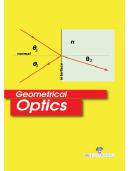
|
Geometrical optics refer to light propagation in terms of rays. The ray in geometric optics is an abstraction, orinstrument, useful in approximating the paths along which light propagates in certain classes of circumstances. Geometrical optics is often simpli ed by making the paraxial approximation, or "small angle approximation." The mathematical behavior then becomes linear, allowing optical components and systems to be described by simple matrices. Geometrical optics does not account for certain optical e ects such as di raction and interference.
This simpli cation is useful in practice; it is an excellent approximation when the wavelength is smallcompared to the size of structures with which the light interacts. The techniques are particularly useful indescribing geometrical aspects of imaging, including optical aberrations.
|
| |
|
| SD03-462 |
Atomic Spectra and Atomic Structure. |
| |
/ 9781680955828/ Price:US$ 64.95
|
| |
|
|
When atoms are excited they emit light of certain wavelengths which correspond to di erent colors. Theemitted light can be observed as a series of colored lines with dark spaces in between; this series of colored lines is called a line or atomic spectra. Each element produces a unique set of spectral lines. Since no two elements emit the same spectral lines, elements can be identi ed by their line spectrum. As the atomic electron energy levels are unique to each element, the lines in a spectrum (emission or absorption) can be used to identify the elements present in the source (a star, say) or gas between the source and us (e.g. the interstellar medium). The light electronic transitions in atoms produces may not be in the visual part of the electromagnetic spectrum, but for atoms that are neutral or have lost only one or two electrons, most lines are in the UV, visual, or near infrared. For highly ionized atoms, the lines are found in the extreme UV or x-ray region. |
| |
|
| SD03-462 |
Quantum Electrodynamics. |
| |
/ 9781680955835/ Price:US$ 64.95
|
| |
|
|
Quantum electrodynamics, commonly referred to as QED, is a quantum eld theory of the electromagneticforce. QED is a relativistic theory in that Albert Einstein’s theory of special relativity is built into each of its equations. Because the behavior of atoms and molecules is primarily electromagnetic in nature, all of atomic physics can be considered a test laboratory for the theory. QED applies to all electromagnetic phenomena associated with charged fundamental particles such as electrons and positrons, and the associated phenomena such as pair production, electron-positron annihilation, Compton scattering, etc. It was used to precisely model some quantum phenomena which had no classical analogs, such as the Lamb shift and the anomalous magneticmoment of the electron. QED was the rst successful quantum eld theory, incorporating such ideas as particle creation and annihilation into a self-consistent framework. The development of the theory was the basis of the 1965 Nobel Prize in physics, awarded to Richard Feynman, Julian Schwinger and Sin-itero Tomonaga. |
| |
|
| SD03-462 |
Mathematical Methods of Physics. |
| |
/ 9781680955842/ Price:US$ 64.95
|
| |
|
|
Mathematical physics refers to development of mathematical methods for application to problems in physics. The mathematical physics is concerned with problems in statistical mechanics, atomic and molecular physics, quantum eld theory, and, in general, with the mathematical foundations of theoretical physics. This includes such subjects as quantum mechanics (both nonrelativistic and relativistic), atomic and molecular physics, disorder e ects in condensed matter, the existence and properties of the phases of model ferromagnets, the stability of matter, the theory of symmetry and symmetry breaking in quantum eld theory, and mathematical developments in functional analysis, algebra and modern probability theory, to which such subjects lead. |
| |
|
| SD03-462 |
Theoretical Physics. |
| |
/ 9781680955873/ Price:US$ 64.95
|
| |
|
|
The advancement of science depends in general on the interplay between experimental studies and theory. Insome cases, theoretical physics adheres to standards of mathematical rigor while giving little weight to experiments and observations. Theoretical physicists use mathematics to describe certain aspects of Nature. Sir Isaac Newton was the rst theoretical physicist, although in his own time his profession was called "natural philosophy". The main purpose of theoretical physics is to understand physical phenomena. Accurate understanding is possible only using mathematical models. In the best case, experimental observations can be explained using only a small number of basic assumptions. Using the models it is possible to calculate the properties of the system under di erent conditions and predict new phenomena. Today's theoretical physicists are often working on the boundaries of known mathematics, sometimes inventing new mathematics as they need it, like Newton did with calculus. |
| |
|
| SD03-462 |
Semiconductor Physics. |
| |
/ 9781680955880/ Price:US$ 64.95
|
| |
|
|
Semiconductors are materials which have a conductivity between conductors (generally metals) and nonconductors or insulators. Semiconductors can be pure elements, such as silicon or germanium, or compounds such as gallium arsenide or cadmium selenide. Semiconductor devices are all around us. They can be found in just about every commercial product we touch, from the family car to the pocket calculator. Semiconductor devices are contained in television sets, portable radios, stereo equipment, and much more. Science and industry also rely heavily on semiconductor devices. Research laboratories use these devices in all sorts of electronic instruments to perform tests, measurements, and numerous other experimental tasks. Industrial control systems (such as those used to manufacture automobiles) and automatic telephone exchanges also use semiconductors. Even today heavy-duty versions of the solid-state recti er diode are being use to convert large amounts of power for electric railroads. Of the many di erent applications for solid-state devices, space systems, computers, and data processing equipment are some of the largest consumers. |
| |
|
| SD03-462 |
Polymer Physics. |
| |
/ 9781680955897/ Price:US$ 64.95
|
| |
|
|
Polymer physics is the eld of physics that studies polymers, their uctuations, mechanical properties, as well as the kinetics of reactions involving degradation and polymerization of polymers and monomers respectively. Polymers are substances containing a large number of structural units joined by the same type of linkage. These substances often form into a chain-like structure. Polymers in the natural world have been around since the beginning of time. Starch, cellulose, and rubber all possess polymeric properties. Man-made polymers have been studied since 1832. Today, the polymer industry has grown to be larger than the aluminum, copper and steel industries combined. Polymers already have a range of applications that far exceeds that of any other class of material available to man. Current applications extend from adhesives, coatings, foams, and packaging materials to textile and industrial bers, composites, electronic devices, biomedical devices, optical devices, andprecursors for many newly developed high-tech ceramics. |
| |
|
| SD03-462 |
Applied Mechanics. |
| |
/ 9781680955910/ Price:US$ 64.95
|
| |
|
|
|
Applied mechanics is a branch of the physical sciences and the practical application of mechanics. Appliedmechanics describes the response of bodies (solids and uids) or systems of bodies to external forces. Someexamples of mechanical systems include the ow of a liquid under pressure, the fracture of a solid from anapplied force, or the vibration of an ear in response to sound. A practitioner of the discipline is known as a mechanician. Applied mechanics bridges the gap between physical theory and its application to technology. As such, applied mechanics is used in many elds of engineering, especially mechanical engineering. In this context, it is commonly referred to as engineering mechanics. Much of modern engineering mechanics is based on Isaac Newton's laws of motion while the modern practice of their application can be traced back to Stephen Timoshenko, who is said to be the father of modern engineering mechanics. |
| |
|
| SD03-462 |
Wave Mechanics. |
| |
/ 9781680955927/ Price:US$ 64.95
|
| |
|
|
Wave mechanics refers to the mathematical description of atomic and subatomic particles in terms of their wave characteristics. What characteristics, properties, or behaviors are shared by the phenomena that we typically characterize as being a wave? How can waves be described in a manner that allows us to understand their basic nature and qualities? A wave can be described as a disturbance that travels through a medium from one location to another location. Wave motion transfers energy from one point to another, which displace particles of the transmission medium–that is, with little or no associated mass transport. Waves consist, instead, of oscillations or vibrations (of a physical quantity), around almost xed locations. Waves are described by a wave equation which sets out how the disturbance proceeds over time. The mathematical form of this equation varies depending on the type of wave. Further, the behavior of particles in quantum mechanics are described by waves. In addition, gravitational waves also travel through space, which are a result of a vibration or movement in gravitational elds. A wave can be transverse, where a disturbance creates oscillations that are perpendicular to the propagation of energy transfer, or longitudinal: the oscillations are parallel to the direction of energy propagation. While mechanical waves can be both transverse and longitudinal, all electromagnetic waves are transverse in free space. |
| |
|
| SD03-460 |
Geometrical Optics. |
| |
Seeger, L. M./ 9781682503966/ Price:US$ 155.00
|
| |
|
|
Geometrical optics describes light propagation in terms of rays. The ray in geometric optics is an abstraction, or instrument, useful in approximating the paths along which light propagates in certain classes of circumstances. This book emphasizes a vergence approach to geometrical and visual optics, reinforcing its fundamental utility in clinical practice. |
| |
|
| SD03-460 |
General Relativity. |
| |
Richard, S. F./ 9781682504000/ Price:US$ 155.00
|
| |
|

|
General relativity is a scientific theory describing how matter, energy, time, and space interact. General relativity generalizes special relativity and Newton’s law of universal gravitation, providing a unified description of gravity as a geometric property of space and time, or space time. This book includes full discussions of many problem related to general relativity. |
| |
|
| SD03-460 |
Hydrodynamics and Hydromagnetic Stability. |
| |
Coleman, Morgan/ 9781682504048/ Price:US$ 150.00
|
| |
|
|
|
|
| |
|
| SD03-460 |
Advanced Biophysics. |
| |
Bryant, Lucas/ 9781682504055/ Price:US$ 150.00
|
| |
|

|
Biophysics is an interdisciplinary science that applies the approaches and methods of physics to study biological systems. Biophysics covers all scales of biological organization, from molecular to organismic and populations. This book begins by explaining molecular and ionic interactions, movements, excitation and energy transfer, and the self-organization of supramolecular structures. |
| |
|
| SD03-460 |
Classical and General Mechanics. |
| |
Kemron, D. K./ 9781682504062/ Price:US$ 150.00
|
| |
|

|
Mechanics is an area of science concerned with the behavior of physical bodies when subjected to forces or displacements, and the subsequent effects of the bodies on their environment. Classical mechanics is one of the two major sub-fields of mechanics, along with quantum mechanics. Classical mechanics is concerned with the set of physical laws describing the motion of bodies under the influence of a system of forces. This book covers all the standard introductory topics in classical mechanics, including Newton’s laws, oscillations, energy, momentum, angular momentum, planetary motion, and special relativity. |
| |
|
| SD03-460 |
Atomic Spectra and Atomic Structure. |
| |
Tolstoy, Leo/ 9781682504079/ Price:US$ 150.00
|
| |
|
|
Atomic spectroscopy is the study of the electromagnetic radiation absorbed and emitted by atoms. Atoms are made up of particles called protons, neutrons, and electrons, which are responsible for the mass and charge of atoms. Atomic structure is the concept of an atom as a central positively charged nucleus consisting of protons and neutrons surrounded by a number of electrons. This book presents the fundamentals of atomic spectra and atomic structure. |
| |
|
| SD03-460 |
Quantum Electrodynamics. |
| |
Hamsun, Kurt/ 9781682504086/ Price:US$ 150.00
|
| |
|
|
|
| |
|
| SD03-460 |
Mathematical Methods of Physics. |
| |
Barnes, Karl/ 9781682504093/ Price:US$ 150.00
|
| |
|

|
Physics is the natural science that involves the study of matter and its motion through space and time, along with related concepts such as energy and force. It applies scientific methodologies to understand the most fundamental principles of nature: matter and energy, and how they interact. This book presents the common techniques of applied mathematics that are often used in theoretical physics. |
| |
|
| SD03-460 |
Problems in Thermodynamics. |
| |
Verne, Joseph/ 9781682504109/ Price:US$ 150.00
|
| |
|

|
Thermodynamics is the branch of science concerned with heat and temperature and their relation to energy and work. It states that the behavior of these quantities is governed by the four laws of thermodynamics, irrespective of the composition or specific properties of the material or system in question. The laws of thermodynamics are explained in terms of microscopic constituents by statistical mechanics. Thermodynamics applies to a wide variety of topics in science and engineering, especially physical chemistry, chemical engineering and mechanical engineering. This book deals with the problems in thermodynamics. |
| |
|
| SD03-460 |
Problems in Electricity and Magnetism. |
| |
Khan, S. P./ 9781682504116/ Price:US$ 150.00
|
| |
|

|
Electricity is the presence and flow of electric charge. Its best-known form is the flow of electrons through conductors such as copper wires. Magnetism is a class of physical phenomena that are mediated by magnetic fields. Electric currents and the magnetic moments of elementary particles give rise to a magnetic field, which acts on other currents and magnetic moments. This book provides a thorough understanding of the concept of all types of numerical problems in electricity and magnetism. It also covers all the standard introductory topics, such as electrostatics, magnetism, circuits, electromagnetic waves, and electric and magnetic fields in matter. |
| |
|
| SD03-460 |
Theoretical Physics. |
| |
Georg, Paul/ 9781682504123/ Price:US$ 150.00
|
| |
|
|
Theoretical physics is a branch of physics which employs mathematical models and abstractions of physical objects and systems to rationalize, explain and predict natural phenomena. This is in contrast to experimental physics, which uses experimental tools to probe these phenomena. Many disciplines within physics fall under the umbrella of theoretical physics because they involve the design of formulas which may not be able to be empirically tested. This book presents the fundamentals of theoretical physics. |
| |
|
| SD03-460 |
Polymer Physics. |
| |
Khan, Firoz/ 9781682504147/ Price:US$ 150.00
|
| |
|

|
Polymer physics is the field of physics that studies polymers, their fluctuations, mechanical properties, as well as the kinetics of reactions involving degradation and polymerization of polymers and monomers respectively. This book deals with modern theory of polymer physics. It describes basic concepts and methods to discuss the
statistical properties of the assembly of chain-like molecules. |
| |
|
| SD03-460 |
Mechanics and Waves. |
| |
Thompson, Alene/ 9781682504154/ Price:US$ 150.00
|
| |
|

|
Mechanics is an area of science concerned with the behavior of physical bodies when subjected to forces or displacements, and the subsequent effects of the bodies on their environment. A wave is an oscillation accompanied by a transfer of energy that travels through medium. Frequency refers to the addition of time. This book presents the introductory concepts of mechanics and waves. |
| |
|
| SD03-460 |
Applied Mechanics. |
| |
Thomas, John/ 9781682504161/ Price:US$ 150.00
|
| |
|

|
Applied mechanics is a branch of the physical sciences and the practical application of mechanics. It describes the response of bodies or systems of bodies to external forces. Applied mechanics is useful in formulating new ideas and theories, discovering and interpreting phenomena, and developing experimental and computational tools. This book presents the mathematical foundations of applied mechanics. |
| |
|
| SD03-460 |
Wave Mechanics. |
| |
Nin, M. A./ 9781682504185/ Price:US$ 150.00
|
| |
|

|
Mechanics is an area of science concerned with the behavior of physical bodies when subjected to forces or displacements, and the subsequent effects of the bodies on their environment. Wave mechanics is the branch of theoretical physics that mathematically represents subatomic particles as waves in fields, as in the theory of quantum electrodynamics. This book presents the basics of wave mechanics. |
| |
|
| SD03-460 |
Quantum Mechanics for Applied Nanotechnology. |
| |
Moreira, Olga/ 9781680943535/ Price:US$ 175.00
|
| |
|
|
Nanotechnology is the predominant basis which is presently responsible for numerous cutting edge and pioneering functional systems on a molecular scale where quantum mechanical effects are vital. An entirely new generation of biological sensors, molecular imaging, solar cells, photo detectors, transistors and other optoelectronic devices have been made possible due to the direct use of phenomena such as quantum correlation, quantum entanglement, and quantum tunneling. Indeed, quantum effects can enable higher sensitivity and resolution than conventional sensors. Humanity can expect substantial improvements in their quality of life as a direct result of the advances in quantum-based nanotechnology integrations into biomedical and microbiology applications, including superior nano-sized drug delivery systems; cancer detection and treatment; DNA detection; and dental digital imaging. A new generation quantum-based photo detectors, superconducting nanowire single-photon detectors, Nitrogen-vacancy centers, Graphene and Silicon carbide nanodevices are also opening the door for a new era of information technology with the realization of powerful quantum computing. |
| |
|
| SD03-460 |
Wave Motion and Applied Science. |
| |
Moreira, Olga/ 9781680943696/ Price:US$ 165.00
|
| |
|
|
Wave motion, propagation of disturbances?that is, deviations from a state of rest or equilibrium?from place to place in a regular and organized way. Most familiar are surface waves on water, but both sound and light travel as wavelike disturbances, and the motion of all subatomic particles exhibits wavelike properties. The study of waves therefore forms a topic of central importance in all physical science and engineering. Wave Motion is devoted to the cross fertilization of ideas, and to stimulating interaction between workers in various research areas in which wave propagation phenomena play a dominant role. The description and analysis of wave propagation phenomena provides a unifying thread connecting diverse areas of engineering and the physical sciences such as acoustics, optics, geophysics, seismology, electromagnetic theory, solid and fluid mechanics. |
| |
|
| SD03-460 |
Control of Quantum Systems. |
| |
Bolivar, Nelson/ 9781680943856/ Price:US$ 175.00
|
| |
|
|
A quantum system is a portion of the whole Universe which is taken under consideration to make analysis or to study for quantum mechanics pertaining to the wave-particle duality in that system and everything outside this system (i.e. environment) is studied only to observe its effects on the system. This book provides comprehensive treatment of modern quantum measurement and measurementbased quantum control, which are vital elements for realizing quantum technology. |
| |
|
| SD03-460 |
Classical & Fluid Mechanics. |
| |
Moreira, Olga/ 9781680944303/ Price:US$ 165.00
|
| |
|
|
Fluid mechanics is the branch of physics that studies the mechanics of fluids and the forces on them. Fluid mechanics has a wide range of applications, including for mechanical engineering, chemical engineering, geophysics, astrophysics, and biology. This book offers comprehensive topical coverage, with varied examples and problems, application of visual component of fluid mechanics. |
| |
|
| SD03-460 |
Laser & Magnetism. |
| |
Moreira, Olga/ 9781680944310/ Price:US$ 165.00
|
| |
|
|
A laser is a device that emits light through a process of optical amplification based on the stimulated emission of electromagnetic radiation. Magnetism is a class of physical phenomena that are mediated by magnetic fields. This book covers all the standard introductory topics, such as magnetism, electromagnetic waves, and magnetic fields in matter and also focuses on laser. |
| |
|
| SD03-460 |
Mathematical & Computational Physics. |
| |
Moreira, Olga/ 9781680944327/ Price:US$ 170.00
|
| |
|
|
|
Mathematical physics refers to development of mathematical methods for application to problems in physics. Computational physics is the study and implementation of numerical analysis to solve problems in physics for which a quantitative theory already exists. This book explains the fundamentals of mathematical and computational physics. |
| |
|
| SD03-460 |
Nonlinear & Complex Systems. |
| |
Moreira, Olga/ 9781680944334/ Price:US$ 170.00
|
| |
|
|
In physics, a nonlinear system, in contrast to a linear system, is a system which does not satisfy the superposition principle ? meaning that the output of a nonlinear system is not directly proportional to the input. Complex systems is a new field of science studying how parts of a system give rise to the collective behaviors of the system, and how the system interacts with its environment. This book describes the modern unified study of nonlinear and complex systems. |
| |
|
| SD03-460 |
Nuclear & High Energy Physics. |
| |
Moreira, Olga/ 9781680944341/ Price:US$ 175.00
|
| |
|
|
|
Nuclear physics is the field of physics that studies atomic nuclei and their constituents and interactions. High energy physics is the branch of physics that studies the nature of the particles that constitute matter and radiation. This book focuses on nuclear and high energy physics. |
| |
|
| SD03-460 |
Thermal Physics & Statistical Mechanics. |
| |
Moreira, Olga/ 9781680944365/ Price:US$ 170.00
|
| |
|
|
Thermal physics is the combined study of thermodynamics, statistical mechanics, and kinetic theory. Statistical mechanics is a branch of theoretical physics that studies, using probability theory, the average behavior of a mechanical system made up of a large number of equivalent components where the microscopic realization of the system is uncertain or undefined. This book introduces concepts of thermal physics and statistical mechanics from a unified view. |
| |
|
| SD03-460 |
Statistical Methods in Radiation Physics. |
| |
Moreira, Olga/ 9781680944372/ Price:US$ 170.00
|
| |
|
|
Radiation physics is the branch of physics that studies the effects of radiation on matter. This field has been instrumental in providing improved manufacturing processes, nuclear energy, and advanced medical diagnostic and treatment options. With particular emphasis on radiation protection and dosimetry, this book deals with statistical solutions to problems inherent in health physics measurements and decision making. |
| |
|
| SD03-460 |
Group Theory in Physics. |
| |
Velinova, Maria E./ 9781680944389/ Price:US$ 165.00
|
| |
|

|
In this book, we provide a collection of research articles about basic concepts of group theory and its applications in physics. The contents have been chosen with the aim to highlight general features and methods that prove the power of group theory in several fields of the physics, such that, classical mechanics, nonlinear and stochastic systems, quantum mechanics and thermo-fluid dynamics. In particular, it will be shown different applications of Lie?s group theory to the above said fields. |
| |
|
| SD03-460 |
Macromolecular Physics. |
| |
Velinova, Maria E./ 9781680944396/ Price:US$ 165.00
|
| |
|
|
This book provides a summary of important works in the field of the physics of macromolecular solids and liquids. The papers report the research results about transition mechanisms, structure-property relationships, the physics of polymer solutions and melts, glassy and amorphous solids, and individual polymer molecules. |
| |
|
| VD03-60 |
Encyclopedia of Plasma Technology, 2-Vols/Set. |
| |
Shohet, J. Leon/ 9781466500594/ Price:GBP 825.00
|
| |
|
|
Features
•Discusses large industrial applications
•Describes the market for plasma technology
•Contains the contributions of a leading editorial board
Summary
Technical plasmas have a wide range of industrial applications. This encyclopedia covers all aspects of plasma technology from the fundamentals to a range of applications across a large number of industries and disciplines. Topics covered include nanotechnology, solar cell technology, biomedical and clinical applications, electronic materials, sustainability, and clean technologies. The book bridges materials science, industrial chemistry, physics, and engineering, making it a must have for researchers in industry and academia, as well as those working on application-oriented plasma technologies.
|
| |
|
| VD03-59 |
CRC Concise Encyclopedia of Nanotechnology |
| |
Kharisov, Boris Ildusovich/ 9781466580343/ Price:GBP 300.00
|
| |
|
|
The CRC Concise Encyclopedia of Nanotechnology sets the standard against which all other references of this nature are measured. As such, it is a major resource for both skilled professionals and novices to nanotechnology.
The book examines the design, application, and utilization of devices, techniques, and technologies critical to research at the atomic, molecular, and macromolecular levels ranging from 1 to 100 nanometers.
More than three dozen specific topics are examined, including nanomaterials, nanocatalysts, nanoceramics, nanocrystals, carbon nanotubes, drug delivery, nanopolymers, nanoparticles, nanocoatings, and nanomedicine. The material is presented in a concise manner and has been updated to reflect the latest applications and research findings.
Entries are organized alphabetically, making information easy to find. While coverage is comprehensive, each topic is presented concisely with a wealth of illustrative material and an accompanying eBook providing full-color figures and images. |
| |
|
| VD03-58 |
Position-Sensitive Gaseous Photomultipliers: Research and Applications |
| |
Francke, Tom/ 9781522502425/ Price:US$ 240.00
|
| |
|
|
Gaseous photomultipliers are defined as gas-filled devices capable of recording single ultraviolet (UV) and visible photons with high position resolution. Used in a variety of research areas, these detectors can be paired with computers to treat and store imaging information of UV-light.
Position-Sensitive Gaseous Photomultipliers: Research and Applications explores the advancement of gaseous detectors as applied for single photon detection. Emphasizing emerging perspectives and new ways to apply gaseous detectors across research fields, this research-based publication is an essential reference source for engineers, physicists, graduate-level students, and researchers.
Topics Covered
•Applied Photo-Sensitive Detectors
•Cherenkov Detectors
•Electron Multiplication
•Gaseous Detectors
•Liquid Photocathodes
•Single Photon Detectors |
| |
|
| SD03-471 |
Encyclopedia of Color Science and Technology, 2-Vols/Set. |
| |
Ming Ronnier Luo/ 9781441980700/ Price:EUR 799.99
|
| |
|
|
|
|
| |
|
| SD03-456 |
The Physics of Modern Devices. |
| |
Mao, Ling-Feng/ 9781682502310/ Price:US$ 170.00
|
| |
|
|
In physics, it is often needed to understand the basic concepts and limitations behind various technologies, which can be obtained from understanding the physics of modern devices. Exploring the physical principles underlying a number of modern devices and future devices, this book boosts understanding and appreciation of modern device physics from all angles. |
| |
|
| SD03-456 |
Physics of Liquid Crystals. |
| |
Watanabe, Minoru/ 9781682510292/ Price:US$ 170.00
|
| |
|
|
Liquid crystals (LCs) are matter in a state that has properties between those of conventional liquid and those of solid crystal. There are many different types of liquid-crystal phases, which can be distinguished by their different optical properties. Liquid crystals can be divided into thermotropic, lyotropic and metallotropic phases. Examples of liquid crystals can be found both in the natural world and in technological applications. Most contemporary electronic displays use liquid crystals. Lyotropic liquid-crystalline phases are abundant in living systems. This book discusses the properties and solicitations of liquid crystals. |
| |
|
| SD03-456 |
Mechanics, Oscillations and Properties of Matter. |
| |
Bish, Robert L./ 9781682510186/ Price:US$ 170.00
|
| |
|

|
|
| |
|
| SD03-456 |
Electricity, Magnetism and Electromagnetic Theory. |
| |
Mortenson, Juliana H. J./ 9781682510193/ Price:US$ 170.00
|
| |
|

|
Electromagnetism is a branch of physics which involves the study of the electromagnetic force, a type of physical interaction that occurs between electrically charged particles. The electromagnetic force usually shows electromagnetic fields, such as electric fields, magnetic fields, and light. The electromagnetic force is one of the four fundamental interactions in nature. The electromagnetic force plays a major role in determining the internal properties of most objects encountered in daily life. This book discusses phenomena associated with electricity and magnetism. Although these are two apparently distinct topics, but there actually is a deep connection between them. |
| |
|
| SD03-456 |
Kinetic Theory, Thermodynamics and Statistical Physics. |
| |
Bianca, Carlo/ 9781682510209/ Price:US$ 170.00
|
| |
|
|
Statistical physics is a branch of physics that uses methods of probability theory and statistics, and particularly the mathematical tools for dealing with large populations and approximations, in solving physical problems. It can describe a wide variety of fields with an inherently stochastic nature. This book gives introduction to topics such as kinetic theory, equilibrium statistical mechanics and the theory of fluctuations from a modern perspective. The book provides a comprehensive approach of all the fundamental concepts of kinetic theory, thermodynamics and statistical physics. |
| |
|
| SD03-456 |
Waves, Acoustics and Optics. |
| |
Malik, Hitendra K./ 9781682510216/ Price:US$ 170.00
|
| |
|
|
Light and sound are both waves. Acoustic-optics is a branch of physics that studies the interactions between sound waves and light waves, especially the diffraction of laser light by ultrasound (or sound in general) through an ultrasonic grating. Optics has had a very long and full history, from ancient Greece, through the renaissance and modern times. As with optics, acoustics has a history of similar duration. In contrast, the acousto-optic effect has had a relatively short history, beginning with Brillouin predicting the diffraction of light by an acoustic wave, being propagated in a medium of interaction. This book details the fundamentals of waves, acoustic and optics. |
| |
|
| SD03-456 |
Relativity and Quantum Mechanics. |
| |
Sadykov, B. S./ 9781682510223/ Price:US$ 170.00
|
| |
|
|
Relativistic Quantum Mechanics (RQM) is any Poincare covariant formulation of Quantum Mechanics (QM). This theory is applicable to massive particles propagating at all velocities up to those comparable to the speed of light c, and can accommodate massless particles. The theory has application in high energy physics, particle physics and accelerator physics, as well as atomic physics, chemistry and condensed matter physics. Though, RQM is only an approximation to a fully self-consistent relativistic theory of known particle interactions because it does not describe cases where the number of particles changes. This book envisages the theory of relativity and quantum mechanics. |
| |
|
| SD03-456 |
Solid State Physics. |
| |
Mananga, Eugene S./ 9781682510247/ Price:US$ 170.00
|
| |
|
|
Solid-state physics is the study of rigid matter, or solids, through methods such as quantum mechanics, crystallography, electromagnetism, and metallurgy. It is the largest branch of condensed matter physics. Thus, solid-state physics forms the theoretical basis of materials science. It also has direct applications in the technology of transistors and semiconductors. Solid-state physics studies how the large-scale properties of solid materials result from their atomic-scale properties. This book emphasizes on the structure and properties of solid materials. |
| |
|
| SD03-456 |
Condensed Matter Physics. |
| |
Nenuwe, Nelson O./ 9781682510285/ Price:US$ 170.00
|
| |
|
|
Condensed matter physics attempts to understand and manipulate the properties of matter in its solid and liquid forms from fundamental physical principles of quantum and statistical mechanics. Because it deals with properties of matter at ordinary chemical and thermal energy scales, condensed matter physics is the subfield of physics that has the largest number of direct practical applications, and has a large overlap with chemistry, materials science, and electrical engineering. It is also an intellectually challenging field that is currently producing many advances in fundamental physics. This book describes the most important advances in condensed matter physics and related subjects. |
| |
|
| SD03-456 |
Quantum Electrodynamics. |
| |
Smilga, Walter/ 9781682510308/ Price:US$ 170.00
|
| |
|
|
Quantum electrodynamics, generally referred to as QED, is a quantum field theory of the electromagnetic force. The quantum field theory approach envisages the force between the electrons as an exchange force arising from the exchange of virtual photons. QED applies to all electromagnetic phenomena associated with charged fundamental particles such as electrons and positrons, and the associated phenomena such as pair production, electron-positron annihilation, Compton scattering, etc. This book describes the quantum properties and mechanics associated with the interaction of light with matter. |
| |
|
| SD03-456 |
Reactor Physics. |
| |
Palmiotti, Giuseppe/ 9781682510315/ Price:US$ 170.00
|
| |
|
|
The branch of science that deals with the study and application of chain reaction to induce a controlled rate of fission in a nuclear reactor for the production of energy is referred to reactor physics. A reactor consists of an assembly of nuclear fuel, usually surrounded by a neutron moderator such as regular water, heavy water, graphite, or zirconium hydride, and fitted with mechanisms such as control rods that control the rate of the reaction. The book emphasizes on how the nuclear reactor works, various design approaches of the reactors, and their safe and proficient process. |
| |
|
| SD03-456 |
Nonlinear Dynamics. |
| |
Sterian, Andreea R./ 9781682510346/ Price:US$ 170.00
|
| |
|
|
Nonlinear Dynamics is the study of systems governed by equations in which a small change in one variable can induce a large systematic change; the discipline is more popularly known as chaos. Unlike a linear system, in which a small change in one variable produces a small and easily quantifiable systematic change, a nonlinear system displays a sensitive dependence on initial conditions: small or virtually unmeasurable differences in initial conditions can lead to wildly differing outcomes. Nonlinear dynamics has shown that even systems governed by simple equations can display complex behavior. This book comprehends all nonlinear dynamic phenomena associated with mechanical, structural, civil, aeronautical, ocean, electrical, and control systems. |
| |
|
| SD03-456 |
Optics & Optical Science: Engineering & Fundamentals. |
| |
Apollonov, Victor V./ 9781682511008/ Price:US$ 170.00
|
| |
|
|
Optical science is the study of the generation of electromagnetic radiation, the properties of that radiation, and the interaction of that radiation with matter, especially its manipulation and control. This book aims to expose the science of optics and optical engineering without the complications of advanced physics and mathematical theory. |
| |
|
| SD03-456 |
Experiments in Mathematical Physics. |
| |
Alzaidy, Jameel F./ 9781682511084/ Price:US$ 170.00
|
| |
|

|
Mathematical Physics defines the field as the application of mathematics to problems in physics and the development of mathematical methods suitable for such applications and for the formulation of physical theories”. This book is a condensed exposition of the mathematics that is met in most parts of physics, and also focuses on the traditional mathematical methods of physics, Fourier series, calculus of variations, and including differential geometry. |
| |
|
| SD03-451 |
The Hope and Vision of J. Robert Oppenheimer. |
| |
Day, Michael A./ 9789814656733/ Price:US$ 58.00
|
| |
|
|
|
|
| |
|
| VD03-56 |
Handbook of Research on Diverse Applications of Nanotechnology in Biomedicine, Chemistry, and Engineering. |
| |
Soni, Shivani/ 9781466663633/ Price:US$ 395.00
|
| |
|

|
As a paradigm for the future, micro-scale technology seeks to fuse revolutionary concepts in science and engineering and then translate it into reality. Nanotechnology is an interdisciplinary field that aims to connect what is seen with the naked eye and what is unseen on the molecular level.
The Handbook of Research on Diverse Applications of Nanotechnology in Biomedicine, Chemistry, and Engineering examines the strengths and future potential of micro-scale technologies in a variety of industries. Highlighting the benefits, shortcomings, and emerging perspectives in the application of nano-scale technologies, this book is a comprehensive reference source for synthetic chemists, engineers, graduate students, and researchers with an interest in the multidisciplinary applications, as well as the ongoing research in the field.
Topics Covered
•Nanogenomics
•Nanomechanics
•Nanomedicine
•Nanotoxicology
•Regenerative Medicine
•System Biology
•Tissue Engineering
|
| |
|
| SD03-454 |
Introduction to the AdS/CFT Correspondence. |
| |
Nastase, Horatiu/ 9781107085855/ Price:GBP 53.99
|
| |
|
|
|
|
| |
|
| SD03-448 |
Water: Fundamentals as the Basis for Understanding the Environment and Promoting Technology. |
| |
Debenedetti, P. G./ 9781614995067/ Price:EUR 170.00
|
| |
|

|
This book presents lectures from the Enrico Fermi summer school ‘Water: fundamentals as the basis for understanding the environment and promoting technology’ held in Varenna, Italy, in July 2013. The aim of the school was to offer a glimpse of the many questions that remain unanswered about this molecule, and topics covered included: water in relation to other liquids, biological water, local environment of water protons, atmospheric water, amorphous solid phases of water, NMR studies of water, spectroscopic studies of water, the structure of liquid water, and supercooled water, among others.
While this list is by no means exhaustive or complete, it is wide enough to provide a solid basis to young researchers in the field, and the book will be a valuable source of reference for students and all those with an interest in the properties of this fascinating substance. |
| |
|
| |
Beyond Einstein and E = Mc2. |
| |
Fridman, A. M./ 9781907343315/ Price:GBP 60.00
|
| |
|

|
he origin of E = mc2 may be understood since days of Newton but qualitatively. If Einstein’s September 1905 paper is critically analyzed (with different values of variables) then the feasible result is ‘when light energy is emitted by a luminous body its mass must increase’, which is a contradiction. The perpetual energy machine is not possible. The reason is that Einstein derived light energy-mass interconversion equation (L = mc2) under special conditions of variables only. Then E = mc2 was speculated from L= mc2, without any logic (by replacing light energy L by every energy E). There are many observations in existing physics which can be explained with help of E =Ac2m. The Big Bang theory of origin universe postulates the universe started its life from explosion of ‘a singular atom’. Does E =Ac2m explain how ‘the singular atom’ was created and exploded? |
| |
|
| VD03-55 |
Handbook of Research on Nanoscience, Nanotechnology, and Advanced Materials. |
| |
Bououdina, Mohamed/ 9781466658240/ Price:US$ 365.00
|
| |
|
|
The burgeoning field of nanotechnology has led to many recent technological innovations and discoveries. Understanding the impact of these technologies on business, science, and industry is an important first step in developing applications for a variety of settings and contexts.
Handbook of Research on Nanoscience, Nanotechnology, and Advanced Materials presents a detailed analysis of current experimental and theoretical approaches surrounding nanomaterials science. With applications in fields such as biomedicine, renewable energy, and synthetic materials, the research in this book will provide experimentalists, professionals, students, and academics with an in-depth understanding of nanoscience and its impact on modern technology.
Topics Covered
•Composite Structures
•Computational Modeling
•Energy Storage
•Engineering Applications
•Industrial Science
•Manufacturing
•Materials Synthesis
•Nanomaterial Properties
•Pharmacokinetics |
| |
|
| VD03-54 |
Nanotechnology: Concepts, Methodologies, Tools, and Applications, 3-Vols/Set. |
| |
Information Resources Management Association/ 9781466651258/ Price:US$ 2195.00
|
| |
|
|
Over the past few decades, devices and technologies have been significantly miniaturized from one generation to the next, providing far more potential in a much smaller package. The smallest of these recently developed tools are miniscule enough to be invisible to the naked eye.
Nanotechnology: Concepts, Methodologies, Tools, and Applications describes some of the latest advances in microscopic technologies in fields as diverse as biochemistry, materials science, medicine, and electronics. Through its investigation of theories, applications, and new developments in the nanotechnology field, this impressive reference source will serve as a valuable tool for researchers, engineers, academics, and students alike.
Topics Covered
•Environmental Science
•Materials Science
•Medical Imaging
•Micro Engineering
•Nanotechnology
•Quantum Computing
•Robotics
•Sensor Networks |
| |
|
| SD03-475 |
University Physics with Modern Physics. (International Student Edition) |
| |
Wolfgang Bauer/ 9781259080753/ Price:NT$ 1500.00
|
| |
|
|
|
|
| |
|
| SD03-442 |
Atom Interferometry. |
| |
Tino, G. M./ 9781614994473/ Price:EUR 200.00
|
| |
|
|
Since atom interferometers were first realized about 20 years ago, atom interferometry has had many applications in basic and applied science, and has been used to measure gravity acceleration, rotations and fundamental physical quantities with unprecedented precision. Future applications range from tests of general relativity to the development of next-generation inertial navigation systems.
This book presents the lectures and notes from the Enrico Fermi school "Atom Interferometry", held in Varenna, Italy, in July 2013. The aim of the school was to cover basic experimental and theoretical aspects and to provide an updated review of current activities in the field as well as main achievements, open issues and future prospects. Topics covered include theoretical background and experimental schemes for atom interferometry; ultracold atoms and atom optics; comparison of atom, light, electron and neutron interferometers and their applications; high precision measurements with atom interferometry and their application to tests of fundamental physics, gravitation, inertial measurements and geophysics; measurement of fundamental constants; interferometry with quantum degenerate gases; matter wave interferometry beyond classical limits; large area interferometers; atom interferometry on chips; and interferometry with molecules.
The book will be a valuable source of reference for students, newcomers and experts in the field of atom interferometry. |
| |
|
| SD03-440 |
Quantum Machine Learning: What Quantum Computing Means to Data Mining. |
| |
Wittek, Peter/ 9780128009536/ Price:US$ 94.95
|
| |
|
|
|
|
| |
|
| SD03-438 |
Microscopy Applied to Biophotonics. |
| |
Pavone, F. S./ 9781614994121/ Price:EUR 165.00
|
| |
|

|
Biophotonics and microscopy are highly inter-related fields in terms of both technological development and biomedical applications. Recent advances in microscopy have been paralleled by new opportunities for biophotonics, including the investigation and manipulation of biological phenomena using light and its application to biomedicine.
This book contains papers from the Enrico Fermi International School of Physics on Microscopy Applied to Biophotonics, held in Varenna, Italy, in July 2011. The lectures spanned the basic science of imaging, through advanced microscopy techniques, to the state-of-the-art in biomedical imaging, and were complemented by seminars from world leaders in biophotonics. Subjects covered include: an overview of biophotonics; fundamentals of microscopy and an introduction to nonlinear microscopy; fluorescence; lasers for biophotonics; and an introduction to ultra-microscopy. |
| |
|
| |
Applied Solid State Physics: A Textbook on Material Science. |
| |
Srinivasan, M. R./ 9781781830161/ Price:GBP 50.00
|
| |
|

|
Applied Solid State Physics is a text/reference book for students studying a course in engineering and Masters in Solid State Physics. The text has been written with the aim of presenting the physical principles which explain different physical properties of materials. The exposition of the structure–property relationships in materials is the underlying theme of the book. Both the pure and applied aspects of physics of materials are presented. Solved examples, questions and problems are provided at the end of each chapter. |
| |
|
| |
Fundamentals of Cosmic Particle Physics. |
| |
Khlopov, Maxim/ 9781907343728/ Price:GBP 95.00
|
| |
|

|
The monograph describes the modern understanding of the evolution of structural and phase states of dislocation substructures and the fracture surface at high-cycle fatigue of stainless steels of different structural classes. Modern methods of physical materials and primarily scanning and transmission electron microscopy, the analysis of changes in fine defect substructure and the fracture surfaces of fatigue during normal processing conditions and low energy electron beams, significantly increases the fatigue life are discussed. The physical mechanisms of increasing fatigue life are discussed. |
| |
|
| |
Plasma Technologies and Equipment in Metallurgy and Casting. |
| |
Paton, B.E./ 9781907343964/ Price:GBP 105.00
|
| |
|

|
The book describes the scientific and applied aspects of using plasma heat sources (plasmatrons) in metallurgical and casting production. The main types of plasmatrons, used for melting of metals and treatment of metallic melts in laboratory and industrial conditions are described. The industrial application of plasma heat sources is discussed and the development of new metallurgical processes and technologies is outlined. |
| |
|
| |
Dialogues on Quantum Physics: From Paradoxes to Nonlinearity. |
| |
Croca, J. R./ 9781907343858/ Price:GBP 40.00
|
| |
|
|
The old paradigm of linear quantum mechanics is worn out. It is therefore urgent to replace it with a new approach, one which accepts a reality independent from the observer and which solves the paradoxes and enigmas that popular theories continue to stimulate.
his book, in a language accessible not only to scholars but to everyone, exposes the insufficiencies of the orthodox and dominant linear quantum physics, and also demonstrates that time has come to bet on a new quantum physics, a causal and nonlinear physics, which for the time being is heterodox. |
| |
|
| VD03-53 |
Quantum and Optical Dynamics of Matter for Nanotechnology. |
| |
Putz, Mihai V./ 9781466646872/ Price:US$ 180.00
|
| |
|

|
With the emergence of nanoscience and technology in the 21st century, research has shifted its focus on the quantum and optical dynamical properties of matter such as atoms, molecules, and solids which are properly characterized in their dynamic state.
Quantum and Optical Dynamics of Matter for Nanotechnology carefully addresses the general key concepts in this field and expands to more complex discussions on the most recent advancements and techniques related to quantum dynamics within the confines of physical chemistry. This book is an essential reference for academics, researchers, professionals, and advanced students interested in a modern discussion of the niche area of nanotechnology.
Topics Covered
•Atomic Interference
•Light Source Analysis
•Molecular Photo-Dissociation
•Nano-Diffraction
•Non-Linear Optics
•Optical Transitions
•Quantum Optics of Nano-Systems
|
| |
|
| SD03-451 |
Frustrated Spin Systems. |
| |
Diep, H. T./ 9789814440738/ Price:US$ 168.00
|
| |
|
|
|
|
| |
|
| SD03-431 |
Acoustics Waves and Oscillations. |
| |
Sen, S. N./ 9781781830024/ Price:GBP 30.00
|
| |
|
|
This book presents the theory of waves and oscillations and various applications of acoustics in a logical and simple form. The physical principles have been explained with necessary mathematical formulation and supported by experimental layout wherever possible. Incorporating the classical view point all aspects of acoustic waves and oscillations have been discussed together with detailed elaboration of modern technological applications of sound. A separate chapter on ultrasonics emphasizes the importance of this branch of science in fundamental and applied research. In this edition a new chapter "Hypersonic Velocity in Viscous Liquids as revealed from Brillouin Spectra" has been added. The book is expected to present to its readers a comprehensive presentation of the subject matter and at the same time to guide him for independent thinking on some new lines of investigation. |
| |
|
| SD03-431 |
Metrology and Physical Constants. |
| |
Bava, E./ 9781614993254/ Price:EUR 190.00
|
| |
|

|
This book presents selected papers from Course 185 of the Enrico Fermi International School of Physics, held in Varenna, Italy, in July 2012 and jointly organized with the Bureau International des Poids et Mesures (BIPM). The papers delivered at the school covered some of the most advanced topics in the discipline of metrology, including nano-technologies; quantum information and quantum devices; biology and medicine; food; surface quality; ionising radiation for health, environment, art and archaeology; and climate. The continuous and striking advances in basic research concerning atomic frequency standards operating both in the visible range and at microwave levels and the applications to satellite systems are also considered, in the framework of a historical review of the international organization of metrology, as are the problems inherent in uncertainty statements and definitions. |
| |
|
| SD03-428 |
Physics of Complex Colloids. |
| |
Bechinger, C./ 9781614992776/ Price:EUR 195.00
|
| |
|
|
This book presents the lectures delivered at the 2012 Enrico Fermi School ‘Physics of Complex Colloids’, held in Varenna, Italy, in July 2012. The school addressed experimental, theoretical and numerical results and methods, and the lectures covered a broad spectrum of topics from the starting point of the synthesis of colloids and their use in commercial products.
The lectures review the state-of-the-art of colloidal science in a pedagogical way, discussing both the basics and the latest results, and this book will serve as a reference for both students and experts in this rapidly growing field. |
| |
|
| SD03-424 |
Fundamentals of Geophysical Hydrodynamics. |
| |
Dolzhansky, Felix V./ 9783642310331/ Price:EUR 109.99
|
| |
|
|
|
|
| |
|
| |
Beyond Newton and Archimedes. |
| |
Sharma, Ajay/ 9781907343933/ Price:GBP 50.00
|
| |
|
|
|
Taking into account the current experimental and technological accomplishments and theoretical methods, this book stresses the basic laws of science, i.e. Archimedes principle, Newtons' laws, need to be generalized.. Generalization of the laws and principle are inevitable. Newton did not discover the Second Law of Motion F = ma. This is is clear from the critical study of the Principia. The 2265 years old Archimedes principle has limitations that it does not take into account the shape of the body and the viscosity of the medium under consideration. The Archimedes principle predicts that the volume of the medium filling a floating balloon/vessel becomes indeterminate, i.e. 0/0.These are serious limitations of the principle. Archimedes principle is generalized (up thrust is proportional weight of fluid displaced), the generalized form takes all elusive factors in account.
In the existing literature there is no quantitative theory which may explain the phenomena of rising, falling and floating bodies quantitatively. Such a theory is described in the book for first time.
Further background of Newton's laws of motion is discussed since days of Aristotle (384-322BC), Philiponnus (490-570), Buridan (1300-1358) and Galileo (1564-1642). The First Law of Motion is applicable under ideal conditions when resistive forces are not present in the system of the body and the medium. The Second Law of Motion is just the mathematical form of Newton's First Law of Motion. |
| |
|
| |
Physics of Galactic Disks. |
| |
Fridman, Alexey M./ 9781907343308/ Price:GBP 115.00
|
| |
|
|
The book includes a number of new data obtained in recent years, in particular material relating to the recently discovered new structures in spiral galaxies: giant anticyclones, cyclones and slow bars. New methods for the detection of these structures are described. Types of vertical motions of stars and gas in the galaxies, whether due to the presence of spiral arms, or hose instability are discussed. An important place is given to modern numerical methods for describing the dynamics of galaxies, stellar as well as gas components. Algorithms of numerical models and a number of important results are presented. |
| |
|
| VD03-52 |
Comprehensive Biophysics, 9-Vols/Set. |
| |
Egelman, Edward/ 9780123749208/ Price:GBP 1515.00
|
| |
|
|
•Biophysical research today encompasses many areas of biology. These studies do not necessarily share a unique identifying factor. This work unites the different areas of research and allows users, regardless of their background, to navigate through the most essential concepts with ease, saving them time and vastly improving their understanding.
•The field of biophysics counts several journals that are directly and indirectly concerned with the field. There is no reference work that encompasses the entire field and unites the different areas of research through deep foundational reviews. Comprehensive Biophysics fills this vacuum, being a definitive work on biophysics. It will help users apply context to the diverse journal literature offering, and aid them in identifying areas for further research.
•Chief Editor Edward Egelman (E-I-C, Biophysical Journal) has assembled an impressive, world-class team of Volume Editors and Contributing Authors. Each chapter has been painstakingly reviewed and checked for consistent high quality. The result is an authoritative overview which ties the literature together and provides the user with a reliable background information and citation resource.
|
| |
|
| SD03-505 |
Dynamic Programming and Optimal Control, 2-Vols/Set. |
| |
Dimitri Bertsekas/ 9781886529083/ Price:US$ 134.50
|
| |
|

|
|
| |
|
| SD03-485 |
ICRU Report 88: Measurement and Reporting of Radon Exposures |
| |
/ 14736691-201212/ Price:GBP 110.00
|
| |
|
|
|
|
| |
|
| SD03-433 |
Layered Superconductors: Volume 1. |
| |
Klemm, Richard A./ 9780199593316/ Price:GBP 98.00
|
| |
|
|
|
|
| |
|
| SD03-421 |
Laser-Plasma Acceleration. |
| |
Ferroni, F./ 9781614991281/ Price:EUR 170.00
|
| |
|
|
This book presents the lectures delivered at the Enrico Fermi International School of Physics and summer school: 'Laser-Plasma Acceleration' , held in Varenna, Italy, in June 2011. The school provided an opportunity for young scientists to experience the best from the worlds of laser-plasma and accelerator physics, with intensive training and hands-on opportunities related to key aspects of laser-plasma acceleration. Subjects covered include: the secrets of lasers; the power of numerical simulations; beam dynamics; and the elusive world of laboratory plasmas. The objective of the school was to establish a common knowledge base for the future laser-plasma accelerator community.
These published proceedings aim to provide a wider community with a reference covering a wide range of topics, knowledge of which will be necessary to future research on laser-plasma acceleration. The book also provides references to selected existing literature for further reading. |
| |
|
| SD03-416 |
Gas Tables: For Compressible Flow Calculations. |
| |
Yahya, S. M./ 9781906574949/ Price:GBP 20.00
|
| |
|

|
Gas Tables are essential tools for calculations in the subjects of Gas Dynamics, Fluid Mechanics and Aerodynamics. These gas tables have been presented for Isentropic flow, Isothermal flow with friction, heat transfer and shocks.
Estimated values of power required for fans, blowers and compressors have been tabulated in a wide range. They are useful in the class room, in examinations as well as in laboratories. |
| |
|
| |
Definitive Refutations of the Einsteinian General Relativity. |
| |
Evans, Myron W./ 9781907343087/ Price:GBP 22.00
|
| |
|
|
|
This book is Special Issue Six of Journal of Foundations of Physics and Chemistry and collects fourteen recent papers which refute the Einsteinian general relativity (EGR) definitively. The refutations are so simple that the theory is obsolete. To deny this conclusion would be to deny algebra at its simplest level. These refutations emerged during the development of Einstein Cartan Evans (ECE) unified field theory, and as that development gathered pace, the refutations became simpler and clearer so that they became irrefutable to any rational individual. |
| |
|
| VD03-51 |
Comprehensive Nanoscience and Technology, 5-Vols/Set. |
| |
Andrews, David/ 9780123743909/ Price:US$ 1985.00
|
| |
|
|
Nanotechnology and its underpinning sciences are progressing with unprecedented rapidity. Against this background, this comprehensive work is designed to address the need for a dynamic, authoritative and readily accessible source of information, capturing the full breadth of the subject. Its five volumes, covering a broad spectrum of disciplines including material sciences, chemistry, physics and life sciences, have been written and edited by an outstanding team of international experts. Addressing an extensive, cross-disciplinary audience, each chapter aims to cover key developments in a scholarly, readable and critical style, providing an indispensible first point of entry to the literature for scientists and technologists from interdisciplinary fields. The work focuses on the major classes of nanomaterials in terms of their synthesis, structure and applications, reviewing nanomaterials and their respective technologies in well-structured and comprehensive articles with extensive cross-references.
Key Features
•This comprehensive work is designed to address the need for a dynamic, authoritative and readily accessible source of information, capturing the full breadth of the subject.
•Its five volumes, covering a broad spectrum of disciplines including material sciences, chemistry, physics and life sciences, have been written and edited by an outstanding team of international experts, including Nobel Prize Winner, John Charles Polanyi.
•Addressing an extensive, cross-disciplinary audience, each chapter aims to cover key developments in a scholarly, readable and critical style, providing an indispensible first point of entry to the literature for scientists and technologists from interdisciplinary fields.
•The work focuses on the major classes of nanomaterials in terms of their synthesis, structure and applications, reviewing nanomaterials and their respective technologies in well-structured and comprehensive articles with extensive cross-references.
|
| |
|
| VD03-49 |
Nanocrystals and Quantum Dots of Group IV Semiconductors. |
| |
Torchynska, T. V./ 9781588831545/ Price:US$ 399.00
|
| |
|
|
|
Nanocrystals and quantum dots are nanometer-scale semiconductor structures that represent one of the most intensively developing areas of modern semiconductor physics. The optical, magnetic, electronic, mechanical, and biochemical properties of materials are beginning to be modified using nano-scale structures. Novel physical phenomena in nano-scale structures have been revealed and are applied in lasers and optical amplifiers, light emitting diodes, photodiodes, memory devices, biological luminescence markers, etc. The application of quasi zero-dimensional quantum dots in electronics has led to novel semiconductor technology and device concepts as well as to essential improvement in device performances. These achievements and technological applications of modern electronics deal mainly with direct band gap semiconductors such as the materials found in the groups III-V (InAs, GaAs,) and II-VI (CdSe, ZnS). In the case of indirect band gap materials (Si, Ge, SiC) many fundamental facts and phenomena related to the nanocrystals and quantum dots are now at least qualitatively understood, but no comprehensive survey exists to guide newcomers to the field. This book tries to fill this gap. It focuses on the optical and electrical phenomena in nanocrystal structures of indirect band gap group IV materials (Si, Ge, SiC). This book is an attempt to review the modern existing information in published materials. In addition, it includes the scientific results obtained by the authors' team, related to the physics, technology, optical and electrical properties, and different applications of Si, Ge, and SiC nanocrystal and quantum dot structures. It may be incomplete as such a work in a rapidly progressing field necessarily will be.
|
| |
|
| VD03-48 |
Nanoclusters and Nanostructured Surfaces. |
| |
Ray, Asok K./ 9781588831828/ Price:US$ 399.00
|
| |
|
|
|
This book deals with nanoclusters and nanostructured surfaces of various materials of significant importance in the broad areas of nanoscience and nanotechnology. Leading scientists from around the world have contributed to different research topics. The chapters cover both experimental and theoretical studies and range from silicon carbide nanoclusters to chemical vapor deposition of clusters on surfaces. The diverse topics such as nanotubes, nanowires, nanoclusters, nanoparticles, nanocrystals, hybrid nanostrucures, nanostructured magnetic materials and surfaces, device applications, density functional study, and ab initio calculations are simultaneously relevant and important to scientists in the pure sciences and engineering.
CONTENTS
•Nanocrystalline Structure in Amorphous Magnetic Wires, Glass Covered Microwires and Ribbons
•Silica Nanoclusters and Nanoparticles
•Formation of Nanostructured Surfaces And Nanotubes By Chemical Vapor Deposition
•Structure and Growth, Electronic and Mechanical Properties of Carbon Nanotube Y- Junctions
•Surface and Bulk Magnetism of Materials with Amorphous and Nanostructure Character
•III-V Nanowires: Synthesis and Characterization
•Silicon and Germanium Nanocrystals for Device Applications
•Organic/Inorganic Hybrid Nanostructures in Photovoltaics
•A Hybrid Density Functional Study of GeC and Pure Ge Nanotubes: Zigzag Configuration
•Numerical Methods for the Electrodynamic Analysis of Nanostructures
•Ab Initio Modelling of the Excited State Dynamics of Clusters and Nanostructures With Time-Dependent Density-Functional Theory: Linear and Nonlinear Regimes
•An Ab Initio Study of SiC Nanotubes: Current Status and Future Prospects
•An Ab Initio Study of Molecular Hydrogen Interactions with Silicon Carbide Nanotubes |
| |
|
| VD03-39 |
Handbook of High-Resolution Spectroscopy, 3-Vols/Set. |
| |
Quack, Martin/ 9780470066539/ Price:US$ 1369.95
|
| |
|
|
The field of High-Resolution Spectroscopy has been considerably extended and even redefined in some areas. Combining the knowledge of spectroscopy, laser technology, chemical computation, and experiments, Handbook of High-Resolution Spectroscopy provides a comprehensive survey of the whole field as it presents itself today, with emphasis on the recent developments.
This essential handbook for advanced research students, graduate students, and researchers takes a systematic approach through the range of wavelengths and includes the latest advances in experiment and theory that will help and guide future applications.
•The first comprehensive survey in high-resolution molecular spectroscopy for over 15 years
•Brings together the knowledge of spectroscopy, laser technology, chemical computation and experiments
•Brings the reader up-to-date with the many advances that have been made in recent times
•Takes the reader through the range of wavelengths, covering all possible techniques such as Microwave Spectroscopy, Infrared Spectroscopy, Raman Spectroscopy, VIS, UV and VUV
•Combines theoretical, computational and experimental aspects
•Has numerous applications in a wide range of scientific domains
•Edited by two leaders in this field
•Provides an overview of rotational, vibration, electronic and photoelectron spectroscopy
|
| |
|
| SD03-412 |
Criticisms of the Einstein Field Equation: The End of the 20th Century Physics. |
| |
Evans, Myron W./ 9781907343285/ Price:GBP 95.00
|
| |
|
|
|
In 2003 one of the four authors of this book began to construct a unified field theory of general relativity called "Einstein Cartan Evans" or ECE theory. This time, the geometry was correct, and physics was based on torsion. The ECE theory has developed into about 168 source papers to date and several books and articles by ECE scholars. It has made a phenomenal worldwide impact, indicating a great dissatisfaction with the obsolete physics. This book is the first to collect the severe criticisms of Einstein that are now commonplace. |
| |
|
| SD03-412 |
The Life of Myron Evans: A Journey Through Space and Time. |
| |
Pendergast, Kerry/ 9781907343407/ Price:GBP 50.00
|
| |
|
|
|
Prof. Evans (one of the authors of the Criticism of the Einstein Field Equation, also available from CISP), the only scientist on the HM Civil list and the author of the Einsten-Cartan Evans theory was educated at Pontardawe Grammar School and University of Wales Aberystwyth, and is the author of some seven hundred papers and monographs in chemistry and physics. He is the Director the Alpha Institute for Scientific Studies, Harrison Memorial Prizewinner and Meldola Medallist of the Royal Society of Chemistry, sometime Junior Research Fellow of Wolfson College Oxford, University of Wales Fellow and SERC Advanced Fellow, formerly an IBM Research Professor at IBM Kingston New York and a visiting scientist at Cornell Theory Center. He has made many contributions to both chemistry and physics, and has recently completed Einstein's work of 1925 to 1955 in the development of a unified field theory sought after by physicists for four hundred years. This achievement has been universally recognised worldwide in the past two years.
The biography describes in a very pleasant manner his life and scientific achievements. |
| |
|
| SD03-412 |
The Future of Post-Human Acoustics: A Preface to a New Theory of Sound and Silence. |
| |
Baofu, Peter/ 9781907343421/ Price:GBP 50.00
|
| |
|
|
|
this book provides an alternative (better) way to understand the future of acoustics, especially in the dialectic context of sound and silence-while learning from different approaches in the literature but without favoring any one of them (nor integrating them, since they are not necessarily compatible with each other). In other words, this book offers a new theory (that is, the multilateral theory of acoustics) to go beyond the existing approaches in the literature on acoustics in an original way.
If successful, this seminal project is to fundamentally change the way that we think about acoustics, from the combined perspectives of the mind, nature, society, and culture, with enormous implications for the human future and what the author originally called its "post-human" fate. |
| |
|
| SD03-411 |
Nano Optics and Atomics: Transport of Light and Matter Waves. |
| |
Wiersma, D. S./ 9781607507550/ Price:EUR 170.00
|
| |
|
|
|
Many fundamental processes in physics involve transport and the spectacular progress in the control and engineering of matter at the nano-scale has meant that new regimes of wave transport have been the subject of great interest in recent decades. This book presents a collection of contributions from speakers and lecturers at the CLXXIII International School of Physics “Enrico Fermi”, held in Varenna, Italy, in June 2009. Different aspects of wave transport were covered during the school, from electrons to light propagation and from sound to ultra-cold atoms. The school was characterized by a strong interdisciplinary approach, with speakers, lecturers and students from different communities sharing their knowledge and their often complimentary points of view and approaches. Subjects covered in the book include: Anderson localization; photonic properties of non-crystalline solids; diffuse optics; ultrasonic wave transport in strongly scattering media; multi-wave imaging; time reversal focusing and the diffractional limit, as well as strongly correlated quantum phases of ultra-cold atoms in optical lattices. |
| |
|
| SD03-411 |
Quantum Engagements: Social Reflections of Nanoscience and Emerging Technologies. |
| |
Zulsdorf, Torben B./ 9781607509530/ Price:EUR 60.00
|
| |
|
|
|
This volume addresses the question of engagement by working from the bottom up: grappling with the particular, discrete operations of nanoscience and related fields in order to assess how these operations shape, and are shaped by, practices of participatory culture and civil society. It opens outward from minimal and local interactions with the molecular sciences – attending to the necessity of quantum engagements – and expands across the dimensions of history, public discourse, ecology, and political economy. Refracting the social complexities of our high-tech world, the essays in this collections participate in the project of articulating new modes of technoscientific governance.
Bringing together contributions and perspectives from experts in the social sciences, the humanities, and the natural sciences, Quantum Engagements showcases ongoing research activities of the vibrant, multidisciplinary community of S.NET, the Society for the Study of Nanoscience and Emerging Technologies. |
| |
|
| SD03-411 |
Astrophysics of Galaxy Clusters. |
| |
Cavaliere, A./ 9781607508199/ Price:EUR 185.00
|
| |
|
|
|
This book presents a collection of contributions from the 'International School of Physics “Enrico Fermi”, held in Varenna, Italy in July 2008. This is the second school devoted to the astrophysics of galaxy clusters, and comes four years after the first; 'Background Microwave Radiation and Intra-cluster Cosmology'. The motivation for this second school was provided by the significant expansion in research into these, the largest gravitationally bound systems, and by the great interest in multifaceted observational, theoretical and numerical simulations of clusters. Topics were dealt with in a series of ten pedagogical reviews, and the program also included eight seminar talks. Written versions of most of these reviews and talks are published in this volume. The papers included here provide a useful updated account of key aspects of a wide range of topics in cluster research. This volume is dedicated to the memory of Professor Francesco Melchiorri, a leader in experimental Cosmic Microwave Background research and a mentor to many. |
| |
|
| SD03-408 |
Nuclear Physics: An Introduction. |
| |
Patel, S. B./ 9781848290440/ Price:GBP 30.00
|
| |
|
|
|
The book bridges the gap between a course on modern physics and an advanced formal treatise on nuclear physics. The treatment of topics is simple and direct. Physical ideas are given prominence and this has been done by informal discussions and many analogies. It starts with the tools of nuclear physics, both experimental and mathematical. The author has taken special care in treating the nuclear shell model throughout the analogy with atomic and molecular physics. |
| |
|
| SD03-408 |
Physics for Engineers. |
| |
Srinivasan, M. R./ 9781848290501/ Price:GBP 50.00
|
| |
|
|
|
This is the second edition of a comprehensive text that covers all the major topics of physics taught in courses worldwide, with the emphasis on practical application. The purpose of the book is to present the principles and concepts as relevant to engineering. It deals with the various disciplines of physics – acoustics, optics, modern physics, quantum physics and nanotechnology - explaining the basic theory of the subject as well as the practical day to day usage and application in engineering. The author writes in a clear lucid style which adds to the easy presentation and understanding of the concepts under discussion. There are numerous problems and solved examples in each chapter, and over 700 figures within the body of the book help to illustrate the text. This is an outstanding physics textbook that will be valued by graduates and professionally qualified engineers across all disciplines. |
| |
|
| SD03-406 |
Thermal and Statistical Physics. |
| |
Singh, R. B./ 9781906574758/ Price:GBP 35.00
|
| |
|
|
|
Many students at undergraduate level struggle with the basic concepts of thermodynamics and statistical physics such as entropy, phase space, γ-space, micro-canonical, canonical, and grand canonical ensembles, statistical weight (thermodynamic probability), accessible states, density of states, partition function. In this book, the author has made every effort to explain these basic concepts and notions in the simplest possible way, keeping in mind the limitations and difficulties of an average student.
The book begins with the kinetic theory of gases and transport phenomena and gives the students a thorough grounding in the fundamental aspects of the topics such as Maxwell's law of distribution of molecular speeds, mean free path, viscosity, thermal conduction and diffusion. Next, the topics on equation of state and critical constant are discussed. |
| |
|
| SD03-406 |
Computed Radiation Imaging: Physics and Mathematics of Forward and Inverse Problems. |
| |
Hussein, Esam M. A./ 9780123877772/ Price:US$ 160.00
|
| |
|
|
|
|
| |
|
| SD03-397 |
Stochastic Transport in Complex Systems: From Molecules to Vehicles. |
| |
Schadschneider, Andreas/ 9780444528537/ Price:US$ 185.00
|
| |
|
|
|
|
| |
|
| SD03-395 |
Intermolecular and Surface Forces. |
| |
Israelachvili, Jacob N./ 9780123751829/ Price:US$ 109.95
|
| |
|
|
|
|
| |
|
| SD03-394 |
Lectures on Dynamics of Stochastic Systems. |
| |
Klyatskin, Valery I./ 9780123849663/ Price:US$ 83.95
|
| |
|
|
|
|
| |
|
| |
Fundamentals of Cosmoparticle Physics. |
| |
Khlopov, M.Y./ 9781907343483/ Price:GBP 95.00
|
| |
|
|
|
The book is concerned with the problems of cosmoparticle physics - science dealing with the fundamental interactions of micro- and macroworld. The problems of reasons for cosmological expansion, the origin of baryon matter and existence in the universe of other non-baryon forms of matter, are discussed. The foundation of this science as an unavoidable stage of internal development and cosmology and also the physics of elementary particles, together with the main principles are only some of the topics discussed in the book. |
| |
|
| VD03-47 |
Handbook of Nanoindentation: with Biological Applications. |
| |
Oyen, Michelle L./ 9789814241892/ Price:US$ 149.95
|
| |
|
|
|
Nanoindentation is ideal for the characterization of inhomogeneous biological materials. However, the use of nanoindentation techniques in biological systems is associated with some distinctively different techniques and challenges. For example, engineering materials used in the microelectronics industry (e.g. ceramics and metals) for which the technique was developed, are relatively stiff and exhibit time-independent mechanical responses. Biological materials, on the other hand, exhibit time-dependent behavior, and can span a range of stiffness regimes from moduli of Pa to GPa 〞 eight to nine orders of magnitude. As such, there are differences in the selection of instrumentation, tip geometry, and data analysis in comparison with the ※black box§ nanoindentation techniques as sold by commercial manufacturers. The use of scanning probe equipment (atomic force miscroscopy) is also common for small-scale indentation of soft materials in biology.
The book is broadly divided into two parts. The first part presents the ※basic science§ of nanoindentation including the background of contact mechanics underlying indentation technique, and the instrumentation used to gather mechanical data. Both the mechanics background and the instrumentation overview provide perspectives that are optimized for biological applications, including discussions on hydrated materials and adaptations for low-stiffness materials. The second part of the book covers the applications of nanoindentation technique in biological materials. Included in the coverage are mineralized and nonmineralized tissues, wood and plant tissues, tissue-engineering substitute materials, cells and membranes, and cutting-edge applications at molecular level including the use of functionalized tips to probe specific molecular interactions (e.g. the ligand-receptor binding). The book concludes with a concise summary and an insightful forecast of the future highlighting the current challenges. |
| |
|
| VD03-45 |
Magnetic Properties of Antiferromagnetic Oxide Materials: Surfaces, Interfaces, and Thin Films. |
| |
Duo, Lamberto/ 9783527408818/ Price:US$ 215.00
|
| |
|
|
|
This first focused treatment on a hot topic highlights fundamental aspects as well as technological applications arising from a fascinating area of condensed matter physics. The editors have excellent track records and, in light of the broadness of the topic, retain the focus on antiferromagnetic oxides.
They thus cover such topics as dichroism in x-ray absorption, non-magnetic substrates, exchange bias, ferromagnetic-antiferromagnetic interface coupling and oxide multilayers, as well as imaging using soft x-ray microscopy.
The result is a very timely monograph for solid state physicists and chemists, materials scientists, electrical engineers, physicists in industry, physical laboratory technicians, and suppliers of sensors.
Table of Contents
1) Introduction
2) Growth of antiferromagnetic oxide thin films
3) Dichroism in x-ray absorption for the study of antiferromagnetic materials
4) Antiferromagnetic oxide films on non-magnetic substrates
5) Exchange bias by antiferromagnetic oxides
6) Theory of ferromagnetic-antiferromagnetic interface coupling
7) Antiferromagnetic-ferromagnetic oxide multilayers: Fe3O4-based systems as a model
8) Micromagnetic structure: Imaging antiferromagnetic domains using soft x-ray microscopy
|
| |
|
| VD03-44 |
Introductory Quantum Mechanics for Semiconductor Nanotechnology. |
| |
Kim, Dae Mann/ 9783527409754/ Price:US$ 215.00
|
| |
|
|
|
The result of the nano education project run by the Korean Nano Technology Initiative, this has been recommended for use as official textbook by the Korean Nanotechnology Research Society. The author is highly experienced in teaching both physics and engineering in academia and industry, and naturally adopts an interdisciplinary approach here. He is short on formulations but long on applications, allowing students to understand the essential workings of quantum mechanics without spending too much time covering the wide realms of physics.
He takes care to provide sufficient technical background and motivation for students to pursue further studies of advanced quantum mechanics and stresses the importance of translating quantum insights into useful and tangible innovations and inventions.
As such, this is the only work to cover semiconductor nanotechnology from the perspective of introductory quantum mechanics, with applications including mainstream semiconductor technologies as well as (nano)devices, ranging from photodetectors, laser diodes, and solar cells to transistors and Schottky contacts.
Problems are also provided to test the reader's understanding and supplementary material available includes working presentation files, solutions and instructors manuals. |
| |
|
| VD03-43 |
Field Computation for Accelerator Magnets: Analytical and Numerical Methods for Electromagnetic Design and Optimization. |
| |
Russenschuck, Stephan/ 9783527407699/ Price:US$ 315.00
|
| |
|
|
|
Written by a leading expert on the electromagnetic design and engineering of superconducting accelerator magnets, this book offers the most comprehensive treatment of the subject to date. In concise and easy-to-read style, the author lays out both the mathematical basis for analytical and numerical field computation and their application to magnet design and manufacture. Of special interest is the presentation of a software-based design process that has been applied to the entire production cycle of accelerator magnets from the concept phase to field optimization, production follow-up, and hardware commissioning.
Included topics:
Technological challenges for the Large Hadron Collider at CERN
Algebraic structures and vector fields
Classical vector analysis
Foundations of analytical field computation
Fields and Potentials of line currents
Harmonic fields
The conceptual design of iron- and coil-dominated magnets
Solenoids
Complex analysis methods for magnet design
Elementary beam optics and magnet polarities
Numerical field calculation using finite- and boundary-elements
Mesh generation
Time transient effects in superconducting magnets, including superconductor magnetization and cable eddy-currents
Quench simulation and magnet protection
Mathematical optimization techniques using genetic and deterministic algorithms
Practical experience from the electromagnetic design of the LHC magnets illustrates the analytical and numerical concepts, emphasizing the relevance of the presented methods to a great many applications in electrical engineering. The result is an indispensable guide for high-energy physicists, electrical engineers, materials scientists, applied mathematicians, and systems engineers.
|
| |
|
| VD03-36-8 |
Nanotechnology, Volume 8: Nanostructured Surfaces. |
| |
Chi, Lifeng/ 9783527317394/ Price:US$ 235.00
|
| |
|
|
|
This front line reference investigates nanostructured surfaces, invisible to the naked eye. Machinery and processes explained in a logical fashion. Students and professionals will benefit from the knowledge imparted by the prominent authors.
Table of Contents
Part One Top-Down Strategy
1 Top-Down Fabrication of Nanostructures
2 Scanning Probe Microscopy as a Tool for the Fabrication of Structured Surfaces
3 Physical, Chemical, and Biological Surface Patterning by Microcontact Printing
4 Advances in Nanoimprint Lithography: 2-D and 3-D Nanopatterning of Surfaces by Nanoimoprint Lithography, Morphological Characterization, and Photonic Applications
Part Two Bottom-Up Strategy
5 Anodized Aluminum Oxide
6 Colloidal Lithography
7 Diblock Copolymer Micelle Nanolithography Characteristics and Applications
8 The Evolution of Langmuir?Blodgett Patterning
9 Surface-Supported Nanostructures Directed by Atomicand Molecular-Level Templates
10 Surface Microstructures and Nanostructures in Natural Systems
|
| |
|
| SD03-517 |
Uncovering Student Ideas in Physical Science, Vol.1 - 45 NEW Force and Motion Assessment Probes |
| |
age Keeley/ 9781935155188/ Price:US$ 32.95
|
| |
|
|
|
| |
|
| SD03-418 |
Atomic Force Microscopy. |
| |
Eaton, Peter/ 9780199570454/ Price:GBP 83.00
|
| |
|
|
|
|
| |
|
| SD03-406 |
Nuclear Physics: Experimental and Theoretical. |
| |
Hans, H. S./ 9781906574703/ Price:GBP 50.00
|
| |
|
|
|
This comprehensive text presents not only a detailed exposition of the basic principles of nuclear physics but also provides a contemporary flavour by covering the recent developments in the field.
Starting with a synoptic view of the subject, the book explains various physical phenomena in nuclear physics along with experimental methods of measurement.
Nuclear forces as encountered in two body problems are detailed next followed by the problems of radioactive decay. Nuclear reactions are then comprehensively explained along with the various models of reaction mechanism. This is followed by recent developments like the pre-equilibrium model and heavy ions induced reaction. |
| |
|
| SD03-395 |
Radiation and Particle Detectors. |
| |
Bertolucci, S./ 9781607506300/ Price:EUR 105.00
|
| |
|
|
|
High energy physics (HEP) has a crucial role in the context of fundamental physics. HEP experiments make use of a massive array of sophisticated detectors to analyze the particles produced in high-energy scattering events. This book contains the papers from the workshop 'Radiation and Particle Detectors', organized by the International School of Physics, and held in Varenna in July 2009. Its subject is the use of detectors for research in fundamental physics, astro-particle physics and applied physics. Subjects covered include the measurement of: the position and length of ionization trails, time of flight velocity, radius of curvature after bending the paths of charged particles with magnetic fields, coherent transition radiation, synchrotron radiation, electro-magnetic showers produced by calorimetric methods and nuclear cascades produced by hadrons in massive steel detectors using calorimetry. Detecting muons and the detection of Cherenkov radiation are also covered, as is the detection of neutrinos by steps in the decay schemes which are 'not there'. All these methods of detection are used in the Large Hadron Collider (LHC). The international community of physicists hopes that the LHC will help to answer many of the most fundamental questions in physics. This book will be of interest to all those concerned in this quest. |
| |
|
| SD03-388 |
High-Temperature Levitated Materials. |
| |
Price, David L./ 9780521880527/ Price:GBP 80.99
|
| |
|
|
|
|
| |
|
| SD03-388 |
Stochastic Processes for Physicists: Understanding Noisy Systems. |
| |
Jacobs, Kurt/ 9780521765428/ Price:GBP 42.99
|
| |
|
|
|
|
| |
|
| SD03-388 |
Causality, Measurement Theory and the Differentiable Structure of Space-Time. |
| |
Sen, R. N./ 9780521880541/ Price:GBP 104.00
|
| |
|
|
|
|
| |
|
| |
Microcavity Quantum Electrodynamics: A dissertation on light-matter interaction with semiconductor quantum dots in microcavities. |
| |
del Valle Reboul, Elena/ 9783639194609/ Price:EUR 79.00
|
| |
|
|
|
|
| |
|
| |
X Meeting on Recent Advances in the Physics of Fluids and their Applications 2008 |
| |
/ 9781617383175/ Price:US$ 130.00
|
| |
|
|
|
|
| |
|
| |
13th Conference on Recent Developments in Gravity 2008 (NEB XIII) |
| |
/ 9781617382871/ Price:US$ 145.00
|
| |
|
|
|
|
| |
|
| |
Spanish Relativity Meeting 2009 (ERE 2009) |
| |
Lazkoz, R./ 9781617386237/ Price:US$ 145.00
|
| |
|
|
|
|
| |
|
| |
NANOSAFE 2008: International Conference on Safe Production and Use of Nanomaterials |
| |
/ 9781617383137/ Price:US$ 130.00
|
| |
|
|
|
|
| |
|
| |
SciDAC 2009 |
| |
/ 9781617383045/ Price:US$ 145.00
|
| |
|
|
|
|
| |
|
| |
Scientific Discovery Through Advanced Computing Conference (SciDAC 2008) |
| |
/ 9781605606088/ Price:US$ 125.00
|
| |
|
|
|
|
| |
|
| |
XIX Latin American Symposium on Solid State Physics 2008 (SLAFES XIX) |
| |
Serquis, A./ 9781617383168/ Price:US$ 145.00
|
| |
|
|
|
|
| |
|
| |
International Workshop on Statistical-Mechanical Informatics 2009 (IW-SMI 2009) |
| |
Inoue, M./ 9781617382802/ Price:US$ 130.00
|
| |
|
|
|
|
| |
|
| |
International Workshop on Statistical-Mechanical Informatics 2010 (IW-SMI 2010) |
| |
Inoue, J-I./ 9781617387753/ Price:US$ 130.00
|
| |
|
|
|
|
| |
|
| |
Sudarshan: Seven Science Quests 2006 |
| |
/ 9781617382819/ Price:US$ 130.00
|
| |
|
|
|
|
| |
|
| |
International Conference on Superconductivity and Magnetism 2008 (ICSM 2008) |
| |
Gencer, A./ 9781617383809/ Price:US$ 145.00
|
| |
|
|
|
|
| |
|
| |
Symmetries in Science XIV |
| |
/ 9781617387470/ Price:US$ 145.00
|
| |
|
|
|
|
| |
|
| |
Technology Development for a Cosmic Microwave Background Probe of Inflation |
| |
/ 9781617383786/ Price:US$ 130.00
|
| |
|
|
|
|
| |
|
| |
12th Conference on Theoretical Nuclear Physics in Italy 2008 |
| |
/ 9781617383151/ Price:US$ 130.00
|
| |
|
|
|
|
| |
|
| |
10th Summer School on Theoretical Physics 2009 |
| |
/ 9781617382642/ Price:US$ 145.00
|
| |
|
|
|
|
| |
|
| |
Topics in Astroparticle and Underground Physics 2009 (TAUP 2009) |
| |
/ 9781617382741/ Price:US$ 145.00
|
| |
|
|
|
|
| |
|
| |
10th International Conference on Topics in Astroparticle and Underground Physics 2007 (TAUP 2007) |
| |
/ 9781617384240/ Price:US$ 155.00
|
| |
|
|
|
|
| |
|
| |
16th International Summer School on Vacuum, Electron, and Ion Technologies 2009 (VEIT 2009) |
| |
/ 9781617384813/ Price:US$ 130.00
|
| |
|
|
|
|
| |
|
| |
Water Interfaces in Physics, Chemistry and Biology: A Multi-Disciplinary Approach 2007 |
| |
/ 9781617383069/ Price:US$ 130.00
|
| |
|
|
|
|
| |
|
| |
16th European White Dwarfs Workshop 2008 |
| |
Garcia-Berro, E./ 9781617383113/ Price:US$ 145.00
|
| |
|
|
|
|
| |
|
| |
14th International Conference on X-Ray Absorption Fine Structure 2009 (XAFS 14) |
| |
DiCicco, A./ 9781617382864/ Price:US$ 170.00
|
| |
|
|
|
|
| |
|
| |
9th International Conference on X-Ray Microscopy 2008 |
| |
/ 9781617382901/ Price:US$ 145.00
|
| |
|
|
|
|
| |
|
| |
5th Workshop of Young Researchers in Astronomy and Astrophysics 2009 |
| |
/ 9781617386213/ Price:US$ 130.00
|
| |
|
|
|
|
| |
|
| |
International Symposium on (e,2e), Double Photoionization and Related Topics and 15th International Symposium on Polarization and Correlation in Electronic and Atomic Collisions 2009 |
| |
/ 9781617382659/ Price:US$ 145.00
|
| |
|
|
|
|
| |
|
| |
60 Years of the Casimir Effect |
| |
Barton, G./ 9781617383731/ Price:US$ 145.00
|
| |
|
|
|
|
| |
|
| |
APCTP-ASEAN Workshop on Advanced Materials Science and Nanotechnology 2008 (AMSN 08) |
| |
/ 9781617382895/ Price:US$ 145.00
|
| |
|
|
|
|
| |
|
| |
Joint IPPP/CI/ICFA Workshop on Advanced QED Methods for Future Accelerators 2009 |
| |
/ 9781617382796/ Price:US$ 110.00
|
| |
|
|
|
|
| |
|
| |
Advanced Science Research International Symposium 2009 (ASR 2009) |
| |
/ 9781617386565/ Price:US$ 145.00
|
| |
|
|
|
|
| |
|
| |
International Conference on Advanced Structural and Functional Materials Design 2008 |
| |
Kakeshita, T./ 9781617383694/ Price:US$ 145.00
|
| |
|
|
|
|
| |
|
| |
International Conference on High Pressure Science and Technology, Joint AIRAPT-22 and HPCJ-50 |
| |
Takemura, K./ 9781617383878/ Price:US$ 160.00
|
| |
|
|
|
|
| |
|
| |
6th International Conference on Aperiodic Crystals 2009 (APERIODIC 09) |
| |
/ 9781617384837/ Price:US$ 130.00
|
| |
|
|
|
|
| |
|
| |
7th International Conference on Applications of Physics in Financial Analysis 2009 (APFA7) |
| |
M. Takayasu/ 9781617386558/ Price:US$ 130.00
|
| |
|
|
|
|
| |
|
| |
International Conference on Applications of the Mossbauer Effect 2009 (ICAME 2009) |
| |
/ 9781617384806/ Price:US$ 145.00
|
| |
|
|
|
|
| |
|
| |
9th European Conference on Applied Superconductivity (EUCAS 09) |
| |
/ 9781617387760/ Price:US$ 160.00
|
| |
|
|
|
|
| |
|
| |
8th Asian International Seminar on Atomic and Molecular Physics 2008 |
| |
/ 9781617382918/ Price:US$ 130.00
|
| |
|
|
|
|
| |
|
| |
3rd International Symposium on Atomic Technology 2009 |
| |
/ 9781617382857/ Price:US$ 130.00
|
| |
|
|
|
|
| |
|
| |
4th International Symposium on Atomic Technology 2009 (ISAT-4) |
| |
/ 9781617386572/ Price:US$ 130.00
|
| |
|
|
|
|
| |
|
| |
3rd International Symposium on Bifurcations and Instabilities in Fluid Dynamics 2009 |
| |
Bar-Yoseph, P.Z./ 9781617384318/ Price:US$ 130.00
|
| |
|
|
|
|
| |
|
| |
16th International Symposium on Boron, Borides and Related Materials 2008 |
| |
Tanaka, T./ 9781617383076/ Price:US$ 145.00
|
| |
|
|
|
|
| |
|
| |
XIII International Conference on Calorimetry in High Energy Physics 2008 (CALOR 2008) |
| |
/ 9781617383748/ Price:US$ 145.00
|
| |
|
|
|
|
| |
|
| |
First Mediterranean Conference on Classical and Quantum Gravity (MCCQG 2009) |
| |
/ 9781617385810/ Price:US$ 145.00
|
| |
|
|
|
|
| |
|
| |
17th International Conference on Computing in High Energy and Nuclear Physics 2009 (CHEP 09) |
| |
/ 9781617384325/ Price:US$ 195.00
|
| |
|
|
|
|
| |
|
| |
4th International Workshop DICE 2008: From Quantum Mechanics through Complexity to Spacetime: The Role of Emergent Dynamical Structures 2008 |
| |
/ 9781617383090/ Price:US$ 145.00
|
| |
|
|
|
|
| |
|
| |
Dielectrics 2009: Measurement Analysis and Applications, 40th Anniversary Meeting |
| |
/ 9781617383014/ Price:US$ 110.00
|
| |
|
|
|
|
| |
|
| |
Seventh International Conference on Dissociative Recombination: Theory, Experiments and Applications 2007 (DR 2007) |
| |
/ 9781617382840/ Price:US$ 130.00
|
| |
|
|
|
|
| |
|
| |
XIV International Conference on Electrical Bioimpedance and 11th Conference on Biomedical Applications of Electrical Impedance Tomography 2010 (ICEBI & EIT 2010) |
| |
/ 9781617384820/ Price:US$ 145.00
|
| |
|
|
|
|
| |
|
| |
16th International Conference on Electron Dynamics in Semiconductors, Optoelectronics and Nanostructures 2009 (EDISON 16) |
| |
Varani, L./ 9781617382833/ Price:US$ 145.00
|
| |
|
|
|
|
| |
|
| |
XVI International Symposium on Electron Molecule Collisions and Swarms 2009 |
| |
/ 9781617382734/ Price:US$ 95.00
|
| |
|
|
|
|
| |
|
| |
International Workshop on Electronic Spectroscopy for Gas-Phase Molecules and Solid Surfaces 2009 (IWES 2009) |
| |
/ 9781617386589/ Price:US$ 130.00
|
| |
|
|
|
|
| |
|
| |
Corfu Summer Institute on Elementary Particle Physics (CORFU 2005) |
| |
Anagnostopoulos, K./ 9781617382611/ Price:US$ 195.00
|
| |
|
|
|
|
| |
|
| |
Nuclear Physics in Astrophysics IV 2009 |
| |
/ 9781617382758/ Price:US$ 130.00
|
| |
|
|
|
|
| |
|
| |
Fullerene Nano Materials (Symposium of IUMRS-ICA 2008) |
| |
/ 9781617383755/ Price:US$ 130.00
|
| |
|
|
|
|
| |
|
| |
Galactic Center Workshop 2006 - From the Center of the Milky Way to Nearby Low-Luminosity Galactic Nuclei |
| |
Schodel, R./ 9781617382604/ Price:US$ 155.00
|
| |
|
|
|
|
| |
|
| |
2007 Europhysics Conference On High Energy Physics |
| |
/ 9781617384134/ Price:US$ 160.00
|
| |
|
|
|
|
| |
|
| |
Workshop on High Symmetries in Physics 2008 |
| |
Campoamor-Stursberg, M./ 9781617383083/ Price:US$ 130.00
|
| |
|
|
|
|
| |
|
| |
11th IAEA Technical Meeting on H-Mode Physics and Transport Barriers 2007 |
| |
/ 9781605604671/ Price:US$ 110.00
|
| |
|
|
|
|
| |
|
| |
8th International Workshop on Information Optics 2009 (WIO 09) |
| |
/ 9781617382710/ Price:US$ 110.00
|
| |
|
|
|
|
| |
|
| |
3rd International Workshop on Infrared Plasma Spectroscopy 2008 (IPS 2008) |
| |
/ 9781617383762/ Price:US$ 110.00
|
| |
|
|
|
|
| |
|
| |
IUMRS-ICA 2008 Symposium, Sessions X and Y |
| |
/ 9781617383007/ Price:US$ 130.00
|
| |
|
|
|
|
| |
|
| |
Kelvin and Ireland |
| |
/ 9781617383854/ Price:US$ 110.00
|
| |
|
|
|
|
| |
|
| |
4th Symposium on Large TPCS for Low Energy Rare Event Detection 2008 |
| |
/ 9781617383052/ Price:US$ 110.00
|
| |
|
|
|
|
| |
|
| |
14th International Symposium on Laser-Aided Plasma Diagnostics 2009 (LAPD14) |
| |
Giudicotti, L./ 9781617386220/ Price:US$ 130.00
|
| |
|
|
|
|
| |
|
| |
7th International LISA Symposium 2008 |
| |
Lobo, A./ 9781617383793/ Price:US$ 145.00
|
| |
|
|
|
|
| |
|
| |
XV International Workshop on Low Energy Positron and Positronium Physics 2009 |
| |
Campeanu, R.T./ 9781617382789/ Price:US$ 130.00
|
| |
|
|
|
|
| |
|
| |
International Conference on Magnetism 2009 (ICM 2009) |
| |
/ 9781617382772/ Price:US$ 345.00
|
| |
|
|
|
|
| |
|
| |
3rd International Workshop on Materials Analysis and Processing in Magnetic Fields 2008 (MAP3) |
| |
sAKKA, y./ 9781617383779/ Price:US$ 130.00
|
| |
|
|
|
|
| |
|
| |
Symposia D, E and F from MRS International Materials Research Conference 2008 |
| |
Wang, Z./ 9781617383861/ Price:US$ 145.00
|
| |
|
|
|
|
| |
|
| |
Mathematical Aspects of Generalized Entropies and their Applications 2009 |
| |
Suyari, H./ 9781617382765/ Price:US$ 130.00
|
| |
|
|
|
|
| |
|
| |
Mathematics for Industry in Denmark: The ESGI47 and Mathematics for Industry Workshop |
| |
/ 9781617382628/ Price:US$ 145.00
|
| |
|
|
|
|
| |
|
| |
16th International Conference on Microscopy of Semiconducting Materials 2009 |
| |
/ 9781617382680/ Price:US$ 155.00
|
| |
|
|
|
|
| |
|
| |
7th International Conference on Modern Practice in Stress and Vibration Analysis 2009 |
| |
/ 9781617383038/ Price:US$ 145.00
|
| |
|
|
|
|
| |
|
| |
International Workshop on Multi-Rate Processes and Hysteresis 2006 |
| |
Mortell, M./ 9781617382598/ Price:US$ 145.00
|
| |
|
|
|
|
| |
|
| |
8th China International Nanoscience and Technology Symposium 2009 (CINSTS 09) |
| |
/ 9781617382888/ Price:US$ 145.00
|
| |
|
|
|
|
| |
|
| |
Carolina International Symposium on Neutrino Physics 2008 |
| |
/ 9781617383106/ Price:US$ 130.00
|
| |
|
|
|
|
| |
|
| |
2nd International Workshop on Non-Equilibrium Processes in Plasmas and Environmental Science 2008 |
| |
Petrovic, Z./ 9781617383724/ Price:US$ 130.00
|
| |
|
|
|
|
| |
|
| |
26th Winter Workshop on Nuclear Dynamics 2010 |
| |
Bellwied, R./ 9781617387371/ Price:US$ 145.00
|
| |
|
|
|
|
| |
|
| |
XVIII International School on Nuclear Physics, Neutron Physics and Applications 2009 |
| |
/ 9781617382727/ Price:US$ 145.00
|
| |
|
|
|
|
| |
|
| |
11th International Conference on Optics of Excitons in Confined Systems 2009 (OECS 11) |
| |
Vina, L./ 9781617382673/ Price:US$ 175.00
|
| |
|
|
|
|
| |
|
| |
15th International Conference on Photoacoustic and Photothermal Phenomena 2009 (ICPPP 15) |
| |
Glorieux, C./ 9781617382635/ Price:US$ 175.00
|
| |
|
|
|
|
| |
|
| |
XXVI International Conference on Photonic, Electronic and Atomic Collisions 2009 |
| |
Orel, A./ 9781617382826/ Price:US$ 160.00
|
| |
|
|
|
|
| |
|
| |
Anglo-French Physical Acoustics Conference 2008 |
| |
/ 9781617382994/ Price:US$ 110.00
|
| |
|
|
|
|
| |
|
| |
5th International Conference on Physics and Astrophysics of Quark Gluon Plasma 2005 (ICPAQGP 2005) |
| |
/ 9781617382963/ Price:US$ 145.00
|
| |
|
|
|
|
| |
|
| |
14th International Conference on the Physics of Highly Charged Ions 2008 (HCI 2008) |
| |
Azuma, T./ 9781617383717/ Price:US$ 145.00
|
| |
|
|
|
|
| |
|
| |
24th Summer School and International Symposium on the Physics of Ionized Gases 2008 |
| |
/ 9781615671625/ Price:US$ 145.00
|
| |
|
|
|
|
| |
|
| |
3rd International Workshop & Summer School on Plasma Physics 2008 |
| |
/ 9781617382703/ Price:US$ 145.00
|
| |
|
|
|
|
| |
|
| |
23rd National Symposium on Plasma Science & Technology 2008 (PLASMA 2008) |
| |
Mago, V.K./ 9781617382697/ Price:US$ 160.00
|
| |
|
|
|
|
| |
|
| |
Plasma Theory, Wave Kinetics, Nonlinear Dynamics: KaufmanFest 2007 |
| |
/ 9781617383144/ Price:US$ 130.00
|
| |
|
|
|
|
| |
|
| |
Polarized Neutrons and Synchrotron X-Rays for Magnetism Conference 2009 (PNSXM 2009) |
| |
/ 9781617382666/ Price:US$ 145.00
|
| |
|
|
|
|
| |
|
| |
4th International Conference on Preservation and Conservation Issues in Digital Printing and Digital Photography 2010 |
| |
Fricker, A./ 9781617386244/ Price:US$ 130.00
|
| |
|
|
|
|
| |
|
| |
Processes in Isotopes and Molecules 2009 |
| |
/ 9781617383021/ Price:US$ 145.00
|
| |
|
|
|
|
| |
|
| |
Progress in Nonequilibrium Greens Functions IV 2009 |
| |
/ 9781617385803/ Price:US$ 145.00
|
| |
|
|
|
|
| |
|
| |
DISCRETE 08: Symposium on Prospects in the Physics of Discrete Symmetries 2008 |
| |
Bernabeu, J./ 9781617383120/ Price:US$ 160.00
|
| |
|
|
|
|
| |
|
| |
8th International Symposium on Radiation from Relativistic Electrons in Periodic Structures 2009 (RREPS 09) |
| |
M. Strikhanov/ 9781617386596/ Price:US$ 130.00
|
| |
|
|
|
|
| |
|
| |
5th International Conference on Radiotherapy Gel Dosimetry 2008 |
| |
Maris, T.G./ 9781617383700/ Price:US$ 145.00
|
| |
|
|
|
|
| |
|
| VD03-42 |
Magnetic Nanostructures. |
| |
Nalwa, Hari Singh/ 9781588831453/ Price:US$ 399.00
|
| |
|
|
|
Magnetic Nanostructures is the first reference source that compiles up-to-date coverage of the latest and emerging research activities in the field of magnetic nanostructures for a wide range of readers. The first edition of this book containing twelve chapters was very useful for scientists working in the field of magnetic nanomaterials. In the second edition of this book, seven new review chapters on emerging new research topics related to magnetic nanostructures were added. Now, second edition of this book contains nineteen state-of-the-art review chapters written by leading authorities from top-notch academic and industrial institutions worldwide. The objective of this book is to provide a highly coherent coverage of magnetic nanostructures ranging from materials to device applications. This book cover a highly useful overview of topics related to nanostructured magnetic materials, their preparative methods, processing into nanoscale multilayers, thin films, particles, wires and dots, spectroscopic characterization, micro/nanostructures, physical properties and potential industrial-oriented applications such as magnetic data storage, magnetic sensors, magnetic tunnel junctions, random access memories, spintronic devices, etc. This book contains approximately 5,000 bibliographic citations and hundreds of illustrations, figures, tables, and equations. Each chapter is fully cross-referenced, introducing some of the most important nanotechnologies under development today. The scientific community working in the field of magnetic nanomaterials and magnetism will benefit from the latest information provided in second edition of this book. |
| |
|
| VD03-41 |
Applied Mathematical Methods in Theoretical Physics. |
| |
Masujima, Michio/ 9783527409365/ Price:US$ 235.00
|
| |
|
|
|
All there is to know about functional analysis, integral equations and calculus of variations in one handy volume, written for the specific needs of physicists and applied mathematicians.
The new edition of this handbook starts with a short introduction to functional analysis, including a review of complex analysis, before continuing a systematic discussion of different types of integral equations. After a few remarks on the historical development, the second part provides an introduction to the calculus of variations and the relationship between integral equations and applications of the calculus of variations. It further covers applications of the calculus of variations developed in the second half of the 20th century in the fields of quantum mechanics, quantum statistical mechanics and quantum field theory.
Throughout the book, the author presents a wealth of problems and examples often with a physical background. He provides outlines of the solutions for each problem, while detailed solutions are also given, supplementing the materials discussed in the main text. The problems can be solved by directly applying the method illustrated in the main text, and difficult problems are accompanied by a citation of the original references.
Highly recommended as a textbook for senior undergraduates and first-year graduates in science and engineering, this is equally useful as a reference or self-study guide.
|
| |
|
| VD03-40 |
Nanotechnology 2009: Technical Proceedings of the 2009 NSTI Nanotechnology Conference and Expo, 3-Vols/Set. |
| |
NSTI/ 9781439817858/ Price:GBP 415.00
|
| |
|
|
|
These proceedings from the 2009 NSTI Nanotech conference provide the most prestigious forum in the world for leading nano scientists. The papers from the conference have been compiled into three volumes to create the most authoritative and comprehensive compendium available across all of nanotechnology. Including the latest information on industrial development, investments, and ventures, each volume explores cutting-edge research and applications.
Vol. 1: Fabrication, Particles, Characterization, MEMS, Electronics and Photonics
Vol. 2: Life Sciences, Medicine, Diagnostics, Bio Materials and Composites
Vol. 3: Biofuels, Renewable Energy, Coatings, Fluidics and Compact Modeling
|
| |
|
| VD03-38 |
Magnetic Nanoparticles. |
| |
Gubin, Sergey P./ 9783527407903/ Price:US$ 225.00
|
| |
|
|
|
This interdisciplinary approach to the topic brings together reviews of the physics, chemistry, fabrication and application of magnetic nanoparticles and nanostructures within a single cover. With its discussion of the basics as well as the most recent developments, and featuring many examples of practical applications, the result is both a clear and concise introduction to the topic for beginners and a guide to relevant comprehensive physical phenomena and essential technological applications for experienced researchers. |
| |
|
| VD03-37 |
Interdisciplinary Transport Phenomena: Fluid, Thermal, Biological, Materials, and Space Sciences. |
| |
Sadhal, S. S./ 9781573317122/ Price:US$ 183.00
|
| |
|
|
|
This volume brings together a collection of articles that crosses traditional boundaries of scientific expertise under the common theme of transport phenomena.
Transport phenomena in relation to fluid, thermal, biological, materials, and space sciences are investigated. Chapters include contributions in the following areas: (1) biotransport phenomena and medical applications, including bio-transport phenomena in physiology and medicine, targeted drug delivery, protein crystal growth, and transport in bioporous media; (2) transport processes in materials technology, with chapters on containerless processing, levitation studies, electrostatic and electromagnetic phenomena, diffusion processes, and inorganic crystal growth; (3) space exploration technologies, for example, bio-response in the space environment, combustion and space power systems, boiling phenomena in space, thermal management in space, and water reclamation technologies; (4) interfacial phenomena and phase transitions, including drops, bubbles, particles, phase-change phenomena, surfactants, and complex fluids; and (5) transport phenomena and properties of nanoparticles and aerosols.
|
| |
|
| VD03-36-6 |
Nanotechnology, Volume 6: Nanoprobes. |
| |
Fuchs, Harald/ 9783527317332/ Price:US$ 235.00
|
| |
|
|
|
This sixth volume within the series discusses the usage of nanoprobes for structure determination, in an industry where miniaturisation is the main focus. It brings together the knowledge all scientists working in
the interdisciplinary field need to know and is designed for newcomers as well as professionals already in the industry. |
| |
|
| VD03-36-5 |
Nanotechnology, Volume 5: Nanomedicine and Nanobiotechnology. |
| |
Vogel, Viola/ 9783527317363/ Price:US$ 235.00
|
| |
|
|
|
1 The next waves of medical innovations
IMAGING, DIAGNOSTICS AND DISEASE TREATMENT BY USING ENGINEERED NANOPARTICLES -
THE FIRST MEDICAL APPLICATIONS ARE COMING TO THE PATIENTS' BEDSIDE...
2 Nanoengineered ultrasound and MRI imaging contrast agents
3 Nanoparticles for cancer detection and therapy
IMAGING AND PROBING THE INNER WORLD OF CELLS -
MAJOR ADVANCES IN MEDICINE HAVE ALWAYS BEEN DRIVEN BY NEW TECHNOLOGIES
4 From molecular machines to cells: imaging with cryoelectron microscopy
5 Optical imaging at the nanoscale
6 Nanostructured probes for in vivo gene expression
7 Analysis of Dynamic Cytoskeleton Functions by Fluorescent Speckle Microscopy
8 Transport, assembly and proof-reading: harnessing the engineering principles of biological nanomotors
INNOVATIVE DISEASE TREATMENTS AND REGENERATIVE MEDICINE - UNDERSTANDING THE CELLULAR MACHINERY PROVIDES INSIGHTS INTO TOTALLY NEW WAYS OF DETECTING AND TREATING DISEASE, AS WELL AS PROMOTING TISSUE REGENERATION
9 Mechanical forces matter in health and disease: from cancer to tissue engineering
10 Stem Cells and Nanomedicine -
Nanomechanics of the Microenvironment
11 Degenerative diseases: manipulating the micro- and nanoscale architecture regulates immunological synapse function
12 Bone nanostructure and its relevance to mechanical performance, disease and treatment
13 Nanoengineered systems for tissue engineering and regeneration
14 Self-assembling synthetic scaffolds for regenerative medicine |
| |
|
| VD03-31 |
Bottom-up Nanofabrication: Supramolecules, Self-Assemblies, and Organized Films, 6-Vols/Set. |
| |
Ariga, Katsuhiko/ 9781588830791/ Price:US$ 2999.00
|
| |
|
|
|
Bottom-up Nanofabrication is the first and only reference work ever published to cover all aspects of the bottom-up nanofabrication. The bottom-up nanofabrication approaches are biology inspired which include building up functional nanostructures starting from basic atoms or molecules. The key point is the identification and manipulation of potential atoms and molecules and forming their based well-defined nanostructures in order to tailor and improve desired properties of used components through fabrication strategies. Process also involves control of molecular structures on the surface. This 6-Volume book brings together under a single cover all aspects of the bottom-up nanofabrication including all types of processing and fabrication methodologies, chemical and electrochemical synthesis, physical methods, nucleation and growth phenomena, functional supramolecular nanostructures, molecular self-assemblies and nanostructured films, spectroscopic characterization, electronic, optical, nonlinear optical, and magnetic properties, dynamic processes, molecular interactions, molecular design and computational modeling, and commercial applications of self-assembled nanostructures. This book covers interdisciplinary topics associated with the chemistry, physics, engineering and biology of supramolecular nanostruuctures, self-assemblies, and organized films. The six-volume set contains over 110 state-of-the-art review chapters written by internationally renowned experts from around the world. |
| |
|
| SD03-383 |
Essentials of Biophysics. |
| |
Narayanan, P./ 9781848290341/ Price:GBP 40.00
|
| |
|
|
|
Biophysics is the bridge between the physical and natural sciences. There is a direct correlation and equivalence between physical and medical/biological science. The aim of this book is to present all the topics that can be classified as essential to biophysics:- chemical bonding (quantum physics), cellular, molecular and membrane biophysics, biophysical chemistry of biomolecules, physiochemical techniques (spectroscopies, microscopies, NMR, X-Ray diffraction), bioenergetics, biomechanics, photo-chemo- and radiation biophysics, and bioinformatics. The contents are organised into 4 sections containing 18 sub-sections. An overview is given for each section that comprises several chapters with a common theme. Each chapter is summarised in advance with a handy synopsis to assist the reader's understanding. Further reading is suggested at the end of every chapter. And the appendices and glossary at the end of the book provide an easy access to the more technical concepts, phrases and terminology. "Essentials of Biophysics" can therefore by definition be used on a wide range of cross disciplinary science courses, and will also serve as a valuable reference work in physical and natural science libraries. |
| |
|
| SD03-383 |
Measurements of Neutrino Mass. |
| |
Ferroni, F./ 9781607500384/ Price:EUR 180.00
|
| |
|
|
|
This volume offers a valuable insight into various aspects of the ongoing work directed at measuring neutrino mass. It took twenty years to refute the assertions of Bethe and Peierls that neutrinos were not observable, but it has since been realised that much can be learnt from these particles. The moral is, as Fiorini argues here, that the study of neutrinos was and remains demanding but rewarding. Subjects addressed in this volume include: clarifying the meaning of the Klapdor-Kleingrothaus results, probing the Majorana nature of neutrinos, observing lepton number violating effects for the first time, studying the end point of the spectrum in the search for neutrino masses and speculating whether it is possible to measure neutrino masses in cosmology. Lectures are enriched with rich historical overviews and valuable introductory material. Attention is also given to theoretical topics such as the evolution of the concept of mass in particle physics, a status report on neutrino oscillations and current discussion on neutrino masses. The reader is further reminded that neutrino masses may also have some bearing on the very origin of the matter among us, and have many deep links with other important lines of current physics research. |
| |
|
| SD03-383 |
Modelling Monolithic Scintillator Detectors for Positron Emission Tomography. |
| |
Dingeman Jan van der Laan/ 9781607500599/ Price:EUR 55.00
|
| |
|
|
|
|
| |
|
| SD03-381 |
Quantum Mechanics. |
| |
Pradhan, Trilochan/ 9781848290389/ Price:GBP 16.99
|
| |
|
|
|
This book presents a novel treatment of some unusual topics of non-relativistic theory of quantum mechanics, not often covered in classic texts. Notable among these are the first quantized theory of photons and neutrons (most books give the second quantized theory); Bohr-Sommerfeld 'action' as differential operators with their eigenvalues n and l and their corresonding eigenfunctions; parabose and parafermi symmetries of identical particles; Dirac's initiation of Lagrangian formulation of quantum mechanics (also know as transformation theory) and its elaboration and completion by Feynman; topological phase of the wavefunction in Bohm-Aharonov, Aharonov-Casher and neutron interferometer experiments (examples of the Berry phase); and quantum beats such as Stark and exchange oscillations simlar to K0K0and neutrino oscillations in particle physics. The book is intended to broaden one's understanding of quantum mechanics. Graduate students of physics, as well as teachers, will find this fresh exposition of topics interesting. |
| |
|
| SD03-381 |
Special Theory of Relativity. |
| |
Ghatak, Ajoy/ 9781848290372/ Price:GBP 14.99
|
| |
|
|
|
The Special Theory of Relativity (STR) is the physical theory of measurement in inertial frames of reference proposed by Albert Einstein. It is deemed special because the theory or principle of relativity is applied only to inertial frames. In this books, Prof Ghatak sets out and explains the basic physics behind Einstein's theory, and at the same time he gives the reader a concise, enthusiastic overview of Einstein's massive contribution to science and the knowledge of mankind. In 1999, Time Magazine names Albert Einstein as "The Person of the Century". This book tells us why. The introduction deals with a summary of Einstein's work, Chapter One discusses Tiem Dilation and Length Contraction, Chapter Two deals with Mass-energy Relationship and Lorentz Tansformations, and Chapters Three and Four reproduce two of his original ground breaking papers from 1905.
"Special Theory of Relativity" can be read by physics and engineering undergraduates as a support text on their courses, but it is of equal interest to readers of general science and fans of Albert Einstein. |
| |
|
| SD03-379 |
Stochastic Simulations of Clusters: Quantum Methods in Flat and Curved Spaces. |
| |
Curotto, Emanuele/ 9781420082258/ Price:GBP 235.00
|
| |
|
|
|
|
| |
|
| SD03-378 |
Solid State Physics. |
| |
Pillai, S. O./ 9781906574109/ Price:GBP 45.00
|
| |
|
|
|
This sixth edition has been improved qualitatively and quantitatively to include many new features. The book is intended for the beginners, the postgraduate students and preparation for higher studies.
The subjects covered in the book include review of atomic structure, interatomic forces and bonding in solids, crystal physics, wave nature of matter and X-ray diffraction, electrical properties of metals, thermal properties of solids, superconductivity, magnetic properties of materials, physics of semiconductors, dielectrics and related properties, optical properties of solids, insulating materials and their properties, and composite materials. |
| |
|
| SD03-378 |
Elements of Quantum Mechanics. |
| |
Dutta-Roy, Binayak/ 9781906574284/ Price:GBP 50.00
|
| |
|
|
|
Elements of Quantum Mechanics targets as a text for studying and teaching Non-Relativistic Quantum Mechanics for advanced undergraduate and postgraduate students, teachers and faculty at colleges, universities and research institutions, and also for research scholars who need a clear understanding of basics and methods.
The chapters are segregated according to the need and demand of courses to be taught for the semesters and for advanced studies. The historical evolution of quantum theory and the need for a radical change in outlook is explained in brief. In order to make the presentation as self-contained as possible, necessary mathematical methods are introduced, building on simple intuitive notions with which the students are familiar. Quantization of the Electro-magnetic field as needed for radiative transitions in atomic, molecular and nuclear physics is simply explained. Field theoretic methods for many-body problems often not treated adequately in introductory textbooks is introduced in the last chapter. |
| |
|
| SD03-375 |
Nuclear and Particle Physics. |
| |
Kakani, S. L./ 9781848290075/ Price:GBP 49.99
|
| |
|
|
|
This book examines the major developments in nuclear and particle physics that have taken place in the past few years and provides an up-to-date view of the field in a compact form. The study of nuclei is placed in its proper relation with the subject of subatomic particles. Relationships with the underlying quark substructure of nucleons and the fundamental interactions between the elementary building blocks of nuclei are emphasized providing an outstanding introduction to the field. The text offers a concise coverage of nuclear and particle physics in a lucid yet uncomplicated manner. Each chapter contains a wide range of worked-out problems. At the end of each chapter a number of review questions and exercises are provided so that the book may also be useful for upper level courses. Nuclear properties, decay, structure and reactions are covered initially, followed by discussions of nuclear forces, B-decay, and elementary particles and their interactions. |
| |
|
| SD03-372 |
Mathematical Physics for Engineers. |
| |
Beera, R. K./ 9781906574024/ Price:GBP 30.00
|
| |
|
|
|
The book provides a general background in matrix, determinant and vector calculus, followed by some very important aspects in mathematics such as Dirac Delta Function, Analyticity, Orthogonality, Singularity, etc., along with `complex functions and series analysis` are considered very useful in mathematical physics.
Important 'special functions' such as Hermite, Legendre, Laguerre, Chebyshev are also discussed in terms of their applications in quantum mechanics.
Important 'integral transforms', such as Fourier, Laplace and Hilbert are also described with an inclination towards 'applications' for both undergraduate and postgraduate students in various branches of engineering as well as for readers in postgraduate studies in general and applied sciences. |
| |
|
| |
Quantum Energetics, Volume 1. |
| |
Leonov, Vladimir S./ 9781904602750/ Price:GBP 125.00
|
| |
|
|
|
|
| |
|
| VD03-36-4 |
Nanotechnology: Volume 4: Information Technology II. |
| |
Waser/ 9783527317370/ Price:US$ 235.00
|
| |
|
|
|
Adaptation of nanoscience to electronics is the hot topic discussed in this cross-disciplinary reference. Transistors, logic devices and quantum mechanics are just a couple of the subjects explained in this final volume by leading professionals in the field. |
| |
|
| VD03-36-3 |
Nanotechnology: Volume 3: Information Technology I. |
| |
Waser/ 9783527317387/ Price:US$ 235.00
|
| |
|
|
|
This topic could not be hotter, the new technology drive of the 21st century paired with existing, multibillion dollar markets and fundings. With Nanotechnology everywhere of great importance e.g. biology, medicine, pharmaceuticals, chemistry, materials science and engineering, this authoritative reference addresses IT applications of nanotechnology, specifically computer memory and how the technology can be miniaturised. |
| |
|
| VD03-36-2 |
Nanotechnology: Volume 2: Environmental Aspects. |
| |
Krug/ 9783527317356/ Price:US$ 235.00
|
| |
|
|
|
This cutting-edge reference addresses the impact nanotechnology has on the environment. From risks to benefits covered by leading professionals in the field and aimed at a multitude of skill levels and disciplines. |
| |
|
| VD03-36-1 |
Nanotechnology: Volume 1: Principles and Fundamentals. |
| |
Schmid/ 9783527317325/ Price:US$ 235.00
|
| |
|
|
|
The ultimate reference book, providing an in-depth introduction to nanotechnology, discussing topics from ethics and philosophy to challenges faced by this up-and-coming industry, all in one comprehensive volume. The topic could not be hotter, Nanotechnology is the new technology drive of the 21st century paired with existing, multibillion dollar markets and fundings. |
| |
|
| VD03-35 |
Relativity, Astrophysics and Cosmology, 2-Vols/Set. |
| |
Belusevic, Radoje/ 9783527407644/ Price:US$ 545.00
|
| |
|
|
|
The subjects of elementary particles, astrophysics and cosmology have become inextricably interconnected, which has led to great advances in our understanding of the universe.
Written by an author with unique research experience at prestigious institutions, this self-contained text provides a comprehensive introduction to modern astrophysics and cosmology. The physical and mathematical concepts essential for a thorough understanding of the classical theory of fields are carefully developed. Some relevant aspects of thermodynamics, statistical physics and elementary particle physics are reviewed. Considerable emphasis is placed on the description of experimental techniques and results.
From the contents:
* An Introduction to Cosmology
* Special and General Relativity
* The Friedmann-Lemaitre Universe
* Stellar Structure and Evolution
* Astrophysical Implications of General Relativity
|
| |
|
| VD03-33 |
New Directions in Holography and Speckle. |
| |
Caulfield, H. John/ 9781588831019/ Price:US$ 399.00
|
| |
|
|
|
Holography and Speckle is intended to mark a new era in holography and speckle. A new generation of holographers and speckle users now appears ready to take these fields in new directions unanticipated even 5 years ago. The old familiar applications have now reached a level of maturity that makes them better suited for advanced development than for basic research. So what comes next? We have offered here a sampling of new directions with just enough tie-in to our past to put the new in perspective. This is not a book in which you will find reviews of past work by "the usual suspects", whose contributions, however important, those in the field already know well. Here you will find chapters from many whose work has never appeared in such a book and who are looking at these fields with new perspectives. Holography and speckle are being reborn or at least rethought, and you are invited to join us in seeing some of those new directions for the first time. This book contains 26 state-of-the-art review chapters written by leading experts from around the world. |
| |
|
| VD03-32 |
Nanoscale Science and Engineering Education. |
| |
Sweeney, Aldrin E./ 9781588830852/ Price:US$ 399.00
|
| |
|
|
|
Rapid advances in nanoscience and nanotechnology research indicate a need for corresponding science, engineering and medical education efforts. Issues relating to K-12 scientific and technological literacy become even more pressing concerns, given the extent to which advances in nanoscience and nanotechnology are expected to impact all aspects of human experience, e.g. healthcare and medicine, transportation, electronics, and environmental sustainability, to name but a few. This book contains 36 state-of-the-art chapters and addresses the following topics: (i) current efforts in the field of nanoscale science and engineering education; (ii) noteworthy examples showing the integration of nanotechnology in undergraduate education (chemistry, physics, biological sciences, engineering, environmental science, technology, etc.); (iii) efforts relating to general scientific and technological literacy/public awareness in nanoscale science and engineering; (iv) projects demonstrating the importance of nanoscale science and technology education at the K-12 level, and examples of how specific concepts have been integrated into science instruction at the primary and secondary school levels (pre-college/university); (v) curriculum development and assessment; (vi) social and ethical issues associated with nanoscale science and engineering research (vii) workforce preparation (professional and vocational), and (viii) national and state science standards and their relationships to the goals of nanotechnology initiatives worldwide. The book is written by leading experts who are interested and experienced in nanoscience and nanotechnology education. |
| |
|
| SD03-503 |
Introduction to Elementary Particles |
| |
David Griffiths/ 9783527406012/ Price:US$ 95.95
|
| |
|
|
|
| |
|
| SD03-428 |
Mechanical Sound: Technology, Culture, and Public Problems of Noise in the Twentieth Century. |
| |
Bijsterveld, Karin/ 9780262026390/ Price:US$ 45.00
|
| |
|
|
|
|
| |
|
| SD03-362 |
Thermodynamics of Surface Phenomena. |
| |
Dadashev, R. K./ 9781904602774/ Price:GBP 80.00
|
| |
|
|
|
|
| |
|
| SD03-362 |
Fundamentals of X-ray Physics. |
| |
Pavlinsky, G. V./ 9781904602644/ Price:GBP 80.00
|
| |
|
|
|
|
| |
|
| |
Laser Cooling of Solids. |
| |
Petrushkin, Sergei V./ 9781904602606/ Price:GBP 80.00
|
| |
|
|
|
|
| |
|
| |
Vedic Physics: Towards Unification of Quantum Mechanics and General Relativity. |
| |
Verma, Keshav Dev/ 9788120832701/ Price:US$ 43.00
|
| |
|
|
|
|
| |
|
| SD03-410 |
Continuum Modeling in the Physical Sciences. |
| |
E. van Groesen/ 9780898716252/ Price:US$ 77.00
|
| |
|
|
|
|
| |
|
| SD03-394 |
Novel Gamma-Ray and Thermal-Neutron Scintillators: Search for High-Light-Yield and Fast-Response Materials. |
| |
Birowosuto, Muhammad D./ 9781586038168/ Price:EUR 55.00
|
| |
|
|
|
|
| |
|
| SD03-374 |
A Passion for Discovery. |
| |
Freund, Peter/ 9789812772145/ Price:US$ 33.00
|
| |
|
|
|
|
| |
|
| SD03-371 |
Granular Physics. |
| |
Mehta, Anita/ 9780521660785/ Price:GBP 98.99
|
| |
|
|
|
|
| |
|
| SD03-351 |
Metrology and Fundamental Constants. |
| |
Haensch, T. W./ 9781586037840/ Price:EUR 195.00
|
| |
|
|
|
This volume can be justified by the following three facts, the need to provide, from time to time, a co-ordinated set of lectures which present the relevant progress in Metrology, the increasing intertwining between Fundamental Physics and the practice of Metrological Measurements, and, third, the flurry of new and unexpected discoveries in this field, with a correlated series of Nobel Prizes bestowed to individuals working in Fundamental Constants research and novel experimental methods. One of the most fascinating and exciting characteristics of metrology is its intimate relationship between fundamental physics and the leading edge of technology which is needed to perform advanced and challenging experiments and measurements, as well as the determination of the values and interrelations between the Fundamental Constants. In some cases, such as the caesium fountains clocks or the optical frequency standards, the definition of the value of a quantity is, in the laboratory, in the region of 10-16 and experiments are under way to reach 10-18. Many of these results and the avenues leading to further advances are discussed in this volume, along a major step in metrology, expected in the near future, which could change the “old” definition of the kilogram, still based on a mechanical artefact, toward a new definition resting on a fixed value of a fundamental constant. |
| |
|
| SD03-340 |
Advanced Engineering Physics: Theory and Practice. |
| |
Parathasarathy, Harish/ 9781905740031/ Price:GBP 50.00
|
| |
|
|
|
This book is intended to serve as a textbook for courses in engineering physics, and as a reference for researchers in theoretical physics with engineering applications introduced via study projects, which will be useful to researchers in analog and digital signal processing.
The material has been drawn together from the author’s extensive teaching experience, interpreting the classical theory of Landau and Lifschitz. The methodology employed is to describe the physical models via ordinary or partial differential equations, and then illustrate how digital signal processing techniques based on discretization of derivatives and partial derivatives can be applied to such models. |
| |
|
| SD03-340 |
Modern Physics. |
| |
Kakani, S. L. K./ 9781905740505/ Price:GBP 40.00
|
| |
|
|
|
This title can be used as a textbook for university level courses around the world. It gives a detailed and systematic presentation of wide ranging topics of interest in modern physics – molecular spectroscopy, quantum mechanics, statistical physics, solid state physics, lasers, holography, optical fibers, semi-conductors, super conductivity, etc.
Each chapter contains important mathematical steps required to grasp a thorough understanding of each topic, and case studies of recent advances in each field are included to give the reader new world applications to the theory. Pedagogical features to enhance easy learning include work-through problems, objective questions and short question and answer exercises. |
| |
|
| SD03-338 |
Solid State Physics, Principles and Applications. |
| |
Asokamani, R./ 9781904798835/ Price:GBP 25.00
|
| |
|
|
|
This is a high level textbook designed for advanced students and professionals in physics and engineering. It has been written in a structured manner, in order to provide a continuous, logical thread to the reader. Each chapter explains concepts by giving worked out examples which are clearly presented throughout the book, dealing with the latest findings in solid state physics and materials science. In particular, the book deals with mesoscopic systems such as hetero junctions, quantum wires and quantum dots, nanomaterials, and superconductivity. There is also a detailed explanation of the applications of band theory of solids, and a separate chapter on low dimensional semi conductors.
“Solid State Physics” is suitable for both university courses and research use. It will be an invaluable resource for students and professionals in physics and engineering. |
| |
|
| SD03-337 |
Thermal Plasma Torches: Design, Characteristics, Application. |
| |
Zhukov, M. F./ 9781904602026/ Price:GBP 100.00
|
| |
|
|
|
|
| |
|
| |
Wavelength Converters In Optical Networks. |
| |
Venugopal, K. R./ 9781905740758/ Price:GBP 35.00
|
| |
|
|
|
Proceeding from the first and second-generation networks, which are no longer adequate, Wavelength Division Multiplexing (WDM) has been able to meet the emerging integrated demands of the communication applications such as super-computer interconnect and video conferencing.
Wavelength Division Multiplexing is important in supporting the needs of thousands of end-users of communications systems.
“Wavelength Converters in Optical Networks” deals comprehensively with the third-generation networks that use WDM and includes current reviews of the relevant literature. The main themes are enhanced throughout with the use of diagrams, tables and graphs, for the clear understanding of students.
This book will ably assist those studying this area. The in-depth analysis and clear presentation style illuminate the subject and will be of use for researchers and practitioners alike.
|
| |
|
| VD04-244 |
Semiconducting Polymers: Chemistry, Physics and Engineering, 2-Vols/Set. |
| |
Hadziioannou, Georges/ 9783527312719/ Price:US$ 445.00
|
| |
|
|
|
This book describes the various approaches to doped and undoped semiconducting polymers taken with the aim to provide vital understanding of how to control the properties of these fascinating organic materials. Prominent researchers from the fields of synthetic chemistry, physical chemistry, engineering, computational chemistry, theoretical physics, and applied physics cover all aspects from compounds to devices.
Since the first edition was published in 2000, significant findings and successes have been achieved in the field, and especially handheld electronic gadgets have become billion-dollar markets that promise a fertile application ground for flexible, lighter and disposable alternatives to classic silicon circuitry. This second edition brings readers up-to-date on cutting edge research in this field. |
| |
|
| VD04-238-1 |
Encyclopedia of Surface and Colloid Science, 8-Vols/Set. |
| |
Somasundaran, Ponisseril/ 9780849396151/ Price:GBP 3314.00
|
| |
|
|
|
Welcome to the fully updated and expanded Second Edition of the Encyclopedia of Surface and Colloid Science!
What's Different? This edition contains:
123 entries that were not included in the first edition
44 entries that cover original, never-before published information
79 entries that have been completely updated from the first edition
Reflecting the rapid advances across many fields, this Encyclopedia transcends the broad, multidisciplinary scope of interface science and draws together the interface-related aspects of chemistry, materials sciences and engineering, biology, physics, computer sciences, and applied mathematics. This new edition offers more than 25% new material, a third of which has never been published elsewhere! |
| |
|
| SD03-337 |
Domain Structure in Ferroelectrics and Related Materials. |
| |
Sidorkin, A. S./ 9781904602149/ Price:GBP 80.00
|
| |
|
|
|
|
| |
|
| SD03-337 |
Methods for Solving Mathematical Physics Problems. |
| |
Agoshkov, V. I./ 9781904602057/ Price:GBP 80.00
|
| |
|
|
|
The aim of the book is to present to a wide range of readers (students, postgraduates, scientists, engineers, etc.) basic information on one of the directions of mathematics, methods for solving mathematical physics problems. The authors have tried to select for the book methods that have become classical and generally accepted. However, some of the current versions of these methods may be missing from the book because they require special knowledge. The book is of the handbook-teaching type. On the one hand, the book describes the main definitions, the concepts of the examined methods and approaches used in them, and also the results and claims obtained in every specific case. On the other hand, proofs of the majority of these results are not presented and they are given only in the simplest (methodological) cases. Another special feature of the book is the inclusion of many examples of application of the methods for solving specific mathematical physics problems of applied nature used in various areas of science and social activity, such as power engineering, environmental protection, hydrodynamics, elasticity theory, etc. This should provide additional information on possible applications of these methods. To provide complete information, the book includes a chapter dealing with the main problems of mathematical physics, together with the results obtained in functional analysis and boundary-value theory for equations with partial derivatives. |
| |
|
| SD03-337 |
Mossbauer Analysis of the Atom and Magnetic Structure of Alloys. |
| |
Ovchinnikov, V. V./ 9781904602132/ Price:GBP 80.00
|
| |
|
|
|
|
| |
|
| SD03-330 |
Guided Wave Optics. |
| |
Anurag, Sharma/ 9781904798453/ Price:GBP 35.00
|
| |
|
|
|
Guided Wave Optics forms the basic science underlying the field of optical fiber communication and integrated topics. These areas have seen tremendous growth over the past three decades and continue to be in the forefront of the research under the broad area of photonics. This volume contains articles by authors who have been active in these areas for over two decades.
It covers three broad areas – physics of guidance in optical waveguides, guided wave optical components, and tools of analysis of such waveguides and components. The topics covered are:- evolution of single mode fiber designs including photonic crystal fibers, polarization effects in optical fibers, physics underlying fiber amplifiers like EDFA and Raman amplifiers, spacial and temporal solitons in optical fibers, non linear optical effects in optical wave guides, all-fiber components and sensors. The volume also includes analytical and numerical tools to analyse fiber and integrated optical waveguides.
|
| |
|
| VD03-27 |
Electronic Excitations in Liquefied Rare Gases. |
| |
Schmidt, Werner F./ 9781588830364/ Price:US$ 299.00
|
| |
|
|
|
Electronic Excitations in Liquefied Rare Gases is a unique and only reference source that reviews the research and development of liquefied rare gases, which took place over a period of last 50 years. Liquefied rare gases are the simplest dielectric liquids, which are insulators from a physical point of view. While the gaseous and solid state of matter have received intensive attention from the beginning of modern science, the knowledge about liquids remained undocumented so far. Liquids exhibit local order as solids and long-range disorder as gases. Fundamental problems related to the generation, transport and recombination of charge carriers in liquefied rare gases could be studied under controlled conditions since liquid samples of extremely high purity can be prepared. Liquefied rare gases have found applications in physics, chemistry, electrical engineering, and materials science. In this volume, world-leading scientists have summarized the knowledge gained about electronic processes in these liquids. The topics are interesting for scientists working in fundamental research as well for those applying liquefied rare gases in experimental or technical devices. The book contains 15 review chapters on different aspects of liquefied rare gases. Such an in depth compilations of knowledge in this field has not been published as of today. The topics of this book concentrate on the processes of electronic excitation, which are of general fundamental interest and have found applications in detectors for high energy physics, light sources for the extreme ultraviolet, etc. just to name a few. |
| |
|
| VD03-25 |
Nanoscale Calibration Standards and Methods. |
| |
Wilkening, Gunter/ 9783527405022/ Price:US$ 345.00
|
| |
|
|
|
The quantitative determination of the properties of micro- and nanostructures is essential in research and development. It is also a prerequisite in process control and quality assurance in industry. The knowledge of the geometrical dimensions of structures in most cases is the base, to which other physical and chemical properties are linked. Quantitative measurements require reliable and stable instruments, suitable measurement procedures as well as appropriate calibration artefacts and methods. The seminar "NanoScale 2004" (6th Seminar on Quantitative Microscopy and 2nd Seminar on Nanoscale Calibration Standards and Methods) at the National Metrology Institute (Physikalisch-Technische Bundesanstalt PTB), Braunschweig, Germany, continues the series of seminars on Quantitative Microscopy. The series stimulates the exchange of information between manufacturers of relevant hard- and software and the users in science and industry.
Topics addressed in these proceedings are
a) the application of quantitative measurements and measurement problems in: microelectronics, microsystems technology, nano/quantum/molecular electronics, chemistry, biology, medicine, environmental technology, materials science, surface processing
b) calibration & correction methods: calibration methods, calibration standards, calibration procedures, traceable measurements, standardization, uncertainty of measurements
c) instrumentation and methods: novel/improved instruments and methods, reproducible probe/sample positioning, position-measuring systems, novel/improved probe/detector systems, linearization methods, image processing |
| |
|
| SD03-325 |
Turbulence: New Approaches: New Approaches. |
| |
Belotserkovskii, O. M./ 9781904602224/ Price:GBP 85.00
|
| |
|
|
|
The authors present the results of numerical experiments carried out to examine the problem of development of turbulence and convection. On the basis of the results, they propose a physical model of the development of turbulence. Numerical algorithms and difference schema for carrying out numerical experiments in hydrodynamics, are proposed. Original algorithms, suitable for calculation of the development of the processes of turbulence and convection in different conditions, even on astrophysical objects, are presented. The results of numerical modelling of several important phenomena having both fundamental and applied importance are described. |
| |
|
| SD03-322 |
Mechanics. |
| |
Kakani, S.L./ 9781904798460/ Price:GBP 29.99
|
| |
|
|
|
The study of mechanics is an integral part of all physics and engineering courses. But emphasis on the knowledge of mechanics differs widely from one university to the next.
The contents of this book have been selected and developed to provide a bridge between undergraduate and postgraduate courses. With numerous solved examples, reviewed problems and more elaborate objective questions, and with key chapters on fluid mechanics, analytical mechanics and non linear oscillations and chaos, “Mechanics” will prove to be an excellent textbook for upper level students of physics and engineering |
| |
|
| SD03-322 |
Heat and Mass Transfer. |
| |
Agrawal, Shyam K./ 9781904798477/ Price:GBP 27.99
|
| |
|
|
|
Heat and Mass Transfer is a compulsory subject for mechanical, chemical, production, aeronautical and metallurgical engineering students. Therefore the contents have been designed to meet the requirements of all these disciplines and the book will prove to be an excellent university level textbook. The salient features are:-
The physical concepts have been presented as answers to frequently asked review questions in a simple, systematic and lucid manner
292 worked out examples illustrate the physical concepts and their applications
220 multiple choice questions with answers
More than 150 questions with answers for practice
Aerodynamic heating, frost bites, heat pipes and mass transfer problems discussed in detail. |
| |
|
| SD03-322 |
Applied Physics. |
| |
Sankaam, T. B./ 9781904798101/ Price:GBP 45.00
|
| |
|
|
|
An introductory book on electronic materials intended for students of Electronics, Computer Science,
Electrical Engineering and Material Science. The importance of semiconductors, ferro & ferri magnetic, dielectric & ferroelectric materials inmodern electronic engineering is reflected by the large number of rapidly growing research and development establishments in these fields. All electrical and electronic devices employ the abovemateria ls in one form or other. Therefore, the basic understanding of the natural behaviour of the material is a prerequisite for students in Engineering and Technology. With the developments in electronic and electrical industry, there is a greater responsibility on the shoulders of the engineers and physicists to work on basics more elaborately and intuitively. The fabrication of devices requires a thorough understanding of physical concepts involved in the fundamental properties of the materials. Contents: Free electron theory; Band theory of solids; Dielectrics; non-linear dielectrics; Magnetic materials; Semiconductors; Drift and diffusion current in semiconductors; Special applications of semiconductors; Light emitting diodes and semiconductors lasers; Photo conductivity and photodetectors; Solar cells; Super conductivity; Integrated circuit fabrication. |
| |
|
| SD03-321 |
Wood Pole Overhead Lines. |
| |
Wareing, B./ 9780863413568/ Price:GBP 84.00
|
| |
|
|
|
|
| |
|
| |
Laser Thermometry of Solids. |
| |
Magunov, A.N./ 9781904602125/ Price:GBP 60.00
|
| |
|
|
|
|
| |
|
| VD03-30-1 |
SQUID Handbook, The: Volume 1: Fundamentals and Technology of SQUIDs and SQUID Systems. |
| |
Clarke, John/ 9783527402298/ Price:US$ 265.00
|
| |
|
|
|
The first volume presents the theory of SQUIDs, their fabrication from low- and high-temperature superconductors, the necessary readout electronics, and the design and performance of practical direct current and radio-frequency SQUIDs. It concludes with an overview of the most important SQUID system issues. In addition, an appendix summarizes the foundations of superconductivity that are necessary to understand SQUIDs, while a glossary and tables of units and constants are also included.
The second volume is devoted to applications. |
| |
|
| VD03-23 |
Dictionary of Physics, 4-Vols/Set. |
| |
Nature Pub./ 9780333912362/ Price:GBP 1070.00
|
| |
|
|
|
The Dictionary of Physics is the only major reference source in the vast, dynamic field of physics that caters specifically to the undergraduate and graduate student. Bridging the gap between the primary literature and educational texts, the Dictionary encompasses 16,000 entries and 1.8 million words in 4 volumes. It provides exhaustive coverage of all the core areas of physics and comprehensively examines many applied and cross-disciplinary areas.
Entries in the Dictionary of Physics vary with respect to length and complexity:
Definitions (50-100 words) offer a concise explanation of the term plus cross-references to related entries.
Description Entries (400-500 words) include a definition or abstract plus a detailed discussion.
Topical Articles (3,000+ words) provide extended coverage of key, overarching topics such as chaos and symmetry in physics. Each entry includes external references and suggestions for further reading.
Coverage of subjects in the Dictionary is based on the internationally recognized Physics and Astronomy Classification Scheme (PACS) prepared by the American Institute of Physics. |
| |
|
| VD03-10 |
Encyclopedia of Nanoscience and Nanotechnology. 10-Vols/Set. (Print + 1 Year Online) |
| |
Nalwa, Hari Singh/ 9781588830012/ Price:US$ 8500.00
|
| |
|
|
|
Encyclopedia of Nanoscience and Nanotechnology? is the World's first encyclopedia ever published in the field of nanotechnology. The 10-volume Encyclopedia is an unprecedented single reference source that provides ideal introduction and overview of most recent advances and emerging new aspects of nanotechnology spanning from science to engineering to medicine. Although there are many books/handbook and journals focused on nanotechnology, no encyclopedic reference work has been published covering all aspects of nanoscale science and technology dealing with materials synthesis, processing, fabrication, probes, spectroscopy, physical properties, electronics, optics, mechanics, biotechnology, devices, etc. The Encyclopedia fills this gap to provide basic information on all fundamental and applied aspects of nanotechnology by drawing on two decades of pioneering research. It is the only scientific work of its kind since the beginning of the field of nanotechnology bringing together core knowledge and the very latest advances. It is written for all levels audience that allows non-scientists to understand the nanotechnology while providing up-to-date latest information to active scientists to experts in the field. This outstanding encyclopedia is an indispensable source for research professionals, technology investors and developers seeking the most up-to-date information on the nanotechnology among a wide range of disciplines from science to engineering to medicine. |
| |
|
| SD03-371 |
Dynamics of Charged Particles and their Radiation Field. |
| |
Spohn, Herbert/ 9780521836975/ Price:GBP 109.00
|
| |
|
|
|
|
| |
|
| SD03-326 |
Radiation Physics of Metals and Its Applications. |
| |
Ivanov, L. I./ 9781898326830/ Price:GBP 80.00
|
| |
|
|
|
An important section of the book is concerned with the calculations and experimental evaluation of the activation parameters of individual chemical elements and alloys, and a number of methods of reducing the activation of materials is examined. General directions and problems of development of reduced-activation radiation-resistant alloys are analysed. The final chapter deals with the main experimental relationships and mechanisms of radiation damage in a number of pure metals and constructional materials for atomic and thermonuclear engineering, determined by the processes of radiation hardening, embrittlement, creep and swelling. |
| |
|
| VM01-47 |
Handbook of Free Radical Initiators. |
| |
Denisov, E. T./ 9780471207535/ Price:US$ 645.95
|
| |
|
|
|
Free radical initiators–chemical molecules which easily decompose into free radicals–serve as reactive intermediates in synthetic methodologies such as organic and polymer synthesis as well as in technological processes, oligomerization, network formation, and kinetic research. The Handbook of Free Radical Initiators presents an up-to-date account of the physicochemical data on radical initiators and reactions of radical generation. Individual chapters include:
* Dialkyl Peroxides and Hydroperoxides
* Diacyl Peroxides, Peresters, and Organic Polyoxides
* Azo-Compounds
* Bimolecular Reactions of Free Radical Generation by Ozone, Dioxygen, Hydroperoxides, and Haloid Molecules
* Free Radical Abstraction Reactions
* Free Radical Addition Reactions
* Free Radical Recombination and Disproportoination Reactions |
| |
|
| VD03-9-1 |
Encyclopedia of Space Science and Technology. 2-Vols/Set. (Print+1 yr Online) |
| |
Mark, Hans/ 9780471324089/ Price:US$ 1150.95
|
| |
|
|
|
A comprehensive resource on the past, present, and future of space technology
Researchers in optics, materials processing, and telecommunications require a reference that can provide a quick study of a number of basic topics in space science. The two-volume Encyclopedia of Space Science and Technology represents an ambitious collection of the underlying physical principles of rockets, satellites, and space stations; what is known by astronomers about the sun, planets, galaxy, and universe; and the effect of the space environment on human and other biological systems. The Encyclopedia covers a variety of fundamental topics, including:
* A state-of-the-art summary of the engineering involved in launching a rocket or satellite
* The control systems involved on the ground, in orbit, or in deep space
* Manufacturing in space from planetary and other resources
Physicists, astronomers, engineers, and materials and computer scientists, as well as professionals in the aircraft, telecommunication, satellite, optical, and computer industries and the government agencies, will find the Encyclopedia to be an indispensable resource.
|
| |
|
| VF02-10 |
Encyclopedia of Smart Materials, 2-Vols/Set. |
| |
Schwartz, Mel/ 9780471177807/ Price:US$ 1273.95
|
| |
|
|
|
Smart materials--materials and structures that can impart information about their environment to an observer or monitoring device--are revolutionizing fields as diverse as engineering, optics, and medical technology. Advances in smart materials are impacting disciplines across the scientific and technological landscape.
Now, practictioners and researchers have an authoritative source to go to for answers about this emerging new area. Encyclopedia of Smart Materials provides A-to-Z coverage of the entire field of intelligent materials. Discussions of theory, fabrication, processing, applications, and uses of these unique materials are presented here in a collection of concise entries from the world's foremost experts in the field--including scientists, educators and engineers.
This encyclopedia is as broad in scope as the technology itself, addressing daily, commercial applications as well as sophisticated units designed to operate in space, underwater, underground, and within the human body. Extensively cross-referenced and generously supplemented with bibliographies and indexes, this book's treatment also broaches the specialized properties and coatings that are required for the use of materials in extreme conditions.
Illustrated with photographs, tables, line drawings, and equations, Encyclopedia of Smart Materials is the premier reference for material scientists, chemists, chemical engineers, process engineers, consultants, patent attorneys and students in these areas. An essential resource on the shelves of laboratories, government facilities, and academic libraries. |
| |
|
| SD03-506 |
Physique des solides |
| |
Neil William Ashcroft/ 9782868835772/ Price:US$ 22.50
|
| |
|
|
|
|
| |
|
| SC01-316 |
Computational Methods for Electric Power Systems. |
| |
Crow, Mariesa/ 9780849313523/ Price:GBP 66.99
|
| |
|
|
|
|
| |
|
| SD03-393 |
Non-Locality and Modality. |
| |
Placek, Tomasz/ 9781402006623/ Price:EUR 104.99
|
| |
|
|
|
|
| |
|
| |
Thermal Plasma Torches and Technologies, vol. 2. |
| |
Solonenko, O. P./ 9781898326601/ Price:GBP 78.00
|
| |
|
|
|
|
| |
|
| |
Plasma Diagnostics. |
| |
Ovsyannikov, A. A./ 9781898326236/ Price:GBP 85.00
|
| |
|
|
|
|
| |
|
| |
Thermal Plasma Torches and Technologies, Volume 1. |
| |
Solonenko, O. P./ 9781898326595/ Price:GBP 75.00
|
| |
|
|
|
|
| |
|
| |
Cold Nonequilibrium Plasma. |
| |
Protasevich, E. T./ 9781898326441/ Price:GBP 60.00
|
| |
|
|
|
|
| |
|
| SD03-485 |
ICRU Report 59: Clinical Proton Dosimetry Part I: Beam Production, Beam Delivery and Measurement of Absorbed Dose |
| |
/ 14736691-199812b/ Price:GBP 32.00
|
| |
|
|
|
|
| |
|
| |
Plasma Chemistry. |
| |
Polak, L. S./ 9781898326229/ Price:GBP 70.00
|
| |
|
|
|
|
| |
|
| |
Thermal Plasma and New Materials Technology, Volume 2. |
| |
Solonenko, O. P./ 9781898326076/ Price:GBP 79.00
|
| |
|
|
|
|
| |
|
| |
Thermal Plasma and New Materials Technology, Volume 1. |
| |
Solonenko, O. P./ 9781898326069/ Price:GBP 75.00
|
| |
|
|
|
|
| |
|
| VD03-6-15 |
Encyclopedia of Applied Physics Vol. 15- Power Electronics to Raman Scattering. |
| |
Trigg, George L./ 9783527281374/ Price:US$ 445.00
|
| |
|
|
|
The 23-volume Encyclopedia of Applied Physics - EAP - is a monumental first in scope, depth, and usability. It demonstrates the synergy between physics and technological applications.
Information is presented according to the following subject areas:
* General Aspects; Mathematical and Information Techniques * Measurement Sciences, General Devices and/or Methods * Nuclear and Elementary Particle Physics * Atomic and Molecular Physics * Electricity and Magnetism * Optics (classical and quantum) * Acoustics * Thermodynamics and Properties of Gases * Fluids and Plasma Physics * Condensed Matter: Structure and Mechanical Properties; Thermal, Acoustic, and Quantum Properties ; Electronic Properties ; Magnetic Properties ; Dielectrical and Optical Properties; Surfaces and Interfaces * Materials Science * Physical Chemistry * Energy Research and Environmental Physics * Biophysics and Medical Physics * Geophysics, Meteorology, Space Physics and Aeronautics
EAP consists of 20 hardcover volumes arranged alphabetically. A cumulative subject index will be published after every three volumes, with a full index accompanying the complete work. |
| |
|
| VD03-6-14 |
Encyclopedia of Applied Physics Vol. 14- Physics & Technology of Ion & Electron Sources to Positron-Annihilation Spectroscoy. |
| |
Trigg, George L./ 9783527281367/ Price:US$ 445.00
|
| |
|
|
|
The 23-volume Encyclopedia of Applied Physics - EAP - is a monumental first in scope, depth, and usability. It demonstrates the synergy between physics and technological applications.
Information is presented according to the following subject areas:
* General Aspects; Mathematical and Information Techniques * Measurement Sciences, General Devices and/or Methods * Nuclear and Elementary Particle Physics * Atomic and Molecular Physics * Electricity and Magnetism * Optics (classical and quantum) * Acoustics * Thermodynamics and Properties of Gases * Fluids and Plasma Physics * Condensed Matter: Structure and Mechanical Properties; Thermal, Acoustic, and Quantum Properties ; Electronic Properties ; Magnetic Properties ; Dielectrical and Optical Properties; Surfaces and Interfaces * Materials Science * Physical Chemistry * Energy Research and Environmental Physics * Biophysics and Medical Physics * Geophysics, Meteorology, Space Physics and Aeronautics
EAP consists of 20 hardcover volumes arranged alphabetically. A cumulative subject index will be published after every three volumes, with a full index accompanying the complete work. |
| |
|
| VD03-6-12 |
Encyclopedia of Applied Physics Vol. 12- Neclear Waste Management to Optics Underwater. |
| |
Trigg, George L./ 9783527281343/ Price:US$ 445.00
|
| |
|
|
|
EAP's Seal of Approval
EAP is sponsored by the
* American Institute of Physics
* German Physical Society
* Japan Society of Applied Physics
* Physical Society of Japan
First work of its kind to approach physics from the standpoint of technical and industrial applications - Comprehensive and detailed coverage of the entire field of applied physics in an easily accessible form - Unique and highly useful classification system - Supplements guarantee that all articles remain up-to-date.
Each article contains: - a detailed table of contents - a glossary of unfamiliar terms - a detailed reference list - a guide to further reading - Numerous cross-references - Uniform terms, abbreviations, symbols, and units |
| |
|
| VD03-6-13 |
Encyclopedia of Applied Physics Vol. 13- Order-Disorder Transitions to Physics and Engineering Organizations. |
| |
Trigg, George L./ 9783527281350/ Price:US$ 445.00
|
| |
|
|
|
EAP's Seal of Approval
EAP is sponsored by the
* American Institute of Physics * German Physical Society * Japan Society of Applied Physics * Physical Society of Japan
First work of its kind to approach physics from the standpoint of technical and industrial applications - Comprehensive and detailed coverage of the entire field of applied physics in an easily accessible form - Unique and highly useful classification system - Supplements guarantee that all articles remain up-to-date.
Each article contains: - a detailed table of contents - a glossary of unfamiliar terms - a detailed reference list - a guide to further reading - Numerous cross-references - Uniform terms, abbreviations, symbols, and units |
| |
|
| VD03-6-9 |
Encyclopedia of Applied Physics Vol. 9- Magnetic Materials to Mechanical Vibration and Damping. |
| |
Trigg, George/ 9783527281312/ Price:US$ 445.00
|
| |
|
|
|
EAP's Seal of Approval
EAP is sponsored by the
* American Institute of Physics
* German Physical Society
* Japan Society of Applied Physics
* Physical Society of Japan
First work of its kind to approach physics from the standpoint of technical and industrial applications - Comprehensive and detailed coverage of the entire field of applied physics in an easily accessible form - Unique and highly useful classification system - Supplements guarantee that all articles remain up-to-date.
Each article contains:
- a detailed table of contents
- a glossary of unfamiliar terms
- a detailed reference list
- a guide to further reading
- Numerous cross-references
- Uniform terms, abbreviations, symbols, and units |
| |
|
| VD03-6-11 |
Encyclopedia of Applied Physics Vol. 11- Mossbauer Effect to Nuclear. |
| |
Trigg, George L./ 9783527281336/ Price:US$ 415.00
|
| |
|
|
|
EAP's Seal of Approval
EAP is sponsored by the
* American Institute of Physics
* German Physical Society
* Japan Society of Applied Physics
* Physical Society of Japan
First work of its kind to approach physics from the standpoint of technical and industrial applications - Comprehensive and detailed coverage of the entire field of applied physics in an easily accessible form - Unique and highly useful classification system - Supplements guarantee that all articles remain up-to-date.
Each article contains:
- a detailed table of contents
- a glossary of unfamiliar terms
- a detailed reference list
- a guide to further reading
- Numerous cross-references
- Uniform terms, abbreviations, symbols, and units |
| |
|
| VD03-6-10 |
Encyclopedia of Applied Physics Vol. 10- Mechanics, Classical to Monte-Carlo Methods. |
| |
Trigg, George/ 9783527281329/ Price:US$ 445.00
|
| |
|
|
|
EAP's Seal of Approval
EAP is sponsored by the
* American Institute of Physics
* German Physical Society
* Japan Society of Applied Physics
* Physical Society of Japan
First work of its kind to approach physics from the standpoint of technical and industrial applications - Comprehensive and detailed coverage of the entire field of applied physics in an easily accessible form - Unique and highly useful classification system - Supplements guarantee that all articles remain up-to-date.
Each article contains:
- a detailed table of contents
- a glossary of unfamiliar terms
- a detailed reference list
- a guide to further reading
- Numerous cross-references
- Uniform terms, abbreviations, symbols, and units |
| |
|
| SD03-485 |
ICRU Report 46: Photon, Electron, Proton and Neutron Interaction Data for Body Tissues (with CD) |
| |
/ 14736691-199202/ Price:GBP 32.00
|
| |
|
|
|
|
| |
|
| SD03-100 |
Hydrodynamic Instabilities and the Transition to Turbulence. |
| |
Swinney, H. L./ 9783540133193/ Price:DM 75.00
|
| |
|
|
|
|
| |
|
| SD03-3 |
Signals and Systems |
| |
Alexander D. Poularikas/ 9780534034023/ Price:US$ 67.11
|
| |
|
|
|
|
| |
|
| SD03-485 |
ICRU Report 28: Basic Aspects of High Energy Particle Interactions and Radiation Dosimetry |
| |
/ 14736691-197812/ Price:GBP 26.00
|
| |
|
|
|
|
| |
|