SA13-528 SA13-528 |
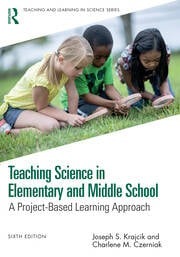
Teaching Science in Elementary and Middle School: A Project-Based Learning Approach |
| |
Joseph S. Krajcik/ 9781032754000/ Price:GBP 54.99
|
| |
|
|
|
| |
|
| SA13-528 |
Teaching Undergraduate Science: A Guide to Overcoming Obstacles to Student Learning |
| |
Linda C. Hodges/ 9781032818962/ Price:GBP 35.99
|
| |
|

|
|
| |
|
| SA13-524 |
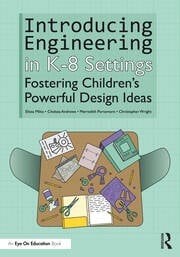
Introducing Engineering in K-8 Settings: Fostering Children's Powerful Design Ideas |
| |
Elissa Milto/ 9781032429878/ Price:GBP 17.99
|
| |
|
|
|
| |
|
| SA13-521 |
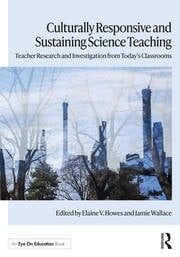
Culturally Responsive and Sustaining Science Teaching: Teacher Research and Investigation from Today's Classrooms |
| |
Elaine V. Howes/ 9781032503264/ Price:GBP 33.99
|
| |
|
|
|
| |
|
| SA13-517 |
Enhancing Science Learning Through Art: Highlighting New Commonalities for STEAM |
| |
Jerry Concepsion Reyes/ 9781774699119/ Price:US$ 165.00
|
| |
|
|
Focused on themes such as STEAM education (Science, Technology, Engineering, Arts, and Mathematics), interdisciplinary learning, and the fusion of science and art, this book is relevant to undergraduate students exploring creative and interdisciplinary approaches to science education. It equips them with the knowledge and insights needed to engage in innovative educational practices that bridge the gap between science and the arts. Practitioners in education gain practical strategies for incorporating art into science instruction, making it a valuable resource for educators seeking to enhance science learning through creative and artistic approaches. Policymakers can draw from this knowledge to develop policies that promote STEAM education, and the general public gains insights into the exciting fusion of science and art in educational settings. |
| |
|
| SA13-514 |
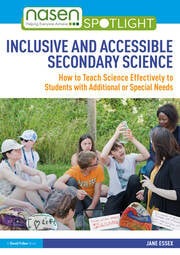
Inclusive and Accessible Secondary Science: How to Teach Science Effectively to Students with Additional or Special Needs |
| |
Jane Essex/ 9780367766276/ Price:GBP 28.99
|
| |
|
|
|
| |
|
| VA08-1527 |
Fostering Science Teaching and Learning for the Fourth Industrial Revolution and Beyond |
| |
Garima Bansal/ 9781668469361/ Price:US$ 200.00
|
| |
|
|
The fourth industrial revolution, or Industry 4.0, is characterized by the exponential pace of technology developments covering wide-ranging fields such as artificial intelligence, robotics, autonomous vehicles, 3D printing, nanotechnology, biotechnology, materials science, energy storage, and quantum computing. It is anticipated that it will result in a future that is volatile, uncertain, complex, and ambiguous; this has led to a widespread call for the development of 21st-century skills and competencies among the young, particularly in the science field.
Fostering Science Teaching and Learning for the Fourth Industrial Revolution and Beyond considers how we prepare prospective science teachers for the fourth industrial revolution; how we create teacher education curricula that will help pre-service science teachers to be sufficiently versatile in the rapidly changing world; and which key perspectives, processes, methods, and tools have especially promising payoffs in the lives of pre-service science teachers. Covering key topics such as virtual reality, teacher preparation, and science classrooms, this premier reference source is ideal for policymakers, administrators, scholars, researchers, academicians, instructors, and students.
Coverage:
The many academic areas covered in this publication include, but are not limited to:
•Diversity
•Education
•Information and Communication Technology
•Mobile Learning
•Open Educational Resources
•Science Classrooms
•Science Teaching
•Teacher Education
•Teacher Preparation
•Virtual Reality |
| |
|
| VA08-1482 |
Theoretical and Practical Teaching Strategies for K-12 Science Education in the Digital Age |
| |
Jason Trumble/ 9781668455890/ Price:US$ 200.00
|
| |
|
|
Digital age learners come to the science classroom equipped with a wide range of skills and a wealth of information at their fingertips. Although science and technology have enjoyed a symbiotic relationship, the ubiquity of information technologies requires teachers to modify instruction and experiences for K-12 science learners. Environmental and societal changes have impacted how and when students acquire and synthesize knowledge. These changes compel us to modify and adjust to improve the practice of teaching science to meet the unique needs of students who are growing up in a society dominated by connected digital devices, constant communication, and the ubiquity of information.
Theoretical and Practical Teaching Strategies for K-12 Science Education in the Digital Age disseminates theory-informed practices for science teachers that increase their instructional effectiveness in teaching digital age learners. It communicates how to increase science educators’ understandings of the needs of digital age learners, develops theoretical and practical teaching strategies that align with science content, and integrates technologies for learning with fidelity. Covering topics such as design-based inclusive science, project-based learning, and science instruction, this premier reference source is an excellent resource for administrators and science educators within K-12 education, pre-service teachers, teacher educators, librarians, researchers, and academicians.
Coverage:
The many academic areas covered in this publication include, but are not limited to:
•Computational Thinking
•Design-Based Inclusive Science (DISc)
•Digital Curation
•Digital Science Education
•Educational Technology
•K-2 Engineering
•Motivational Engagement
•Project-Based Learning
•Science Instruction
•Self-Regulated Learning
•Skill Development
•Student Empowerment |
| |
|
| SA13-515 |
The Place of Ethics in Science Education: Implications for Practice |
| |
Amanda McCrory/ 9781350255142/ Price:GBP 25.99
|
| |
|
|
|
| |
|
| SA13-514 |
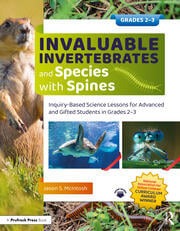
Invaluable Invertebrates and Species with Spines: Inquiry-Based Science Lessons for Advanced and Gifted Students in Grades 2-3 |
| |
Jason S. McIntosh/ 9781032369747/ Price:GBP 34.99
|
| |
|
|
|
| |
|
| SA13-511 |
Computer Science Education: Perspectives on Teaching and Learning in School |
| |
Sue Sentance/ 9781350296909/ Price:GBP 27.99
|
| |
|
|
|
| |
|
| SA13-504 |
A Practical Guide to the Art of Teaching Science |
| |
3G Editorial Board/ 9781984659149/ Price:US$ 90.00
|
| |
|
|
This book emphasizes a humanistic, experiential, and constructivist approach to teaching and learning, and integrates a wide variety of pedagogical tools.
Bringing in new faces can provide a new viewpoint for the students to learn from. Inspires students to construct ideas about science teaching through their interactions with peers, mentors, and instructors. |
| |
|
| VA08-1299 |
Enhancing Learning Opportunities Through Student, Scientist, and Teacher Partnerships |
| |
Donna Farland-Smith/ 9781799849667/ Price:US$ 215.00
|
| |
|

|
Enhancing Learning Opportunities Through Student, Scientist, and Teacher Partnerships organizes a collection of research on student-scientist-teacher partnerships and presents the models, benefits, implementation, and learning outcomes of these interactions. This book presents a variety of different scientist-student-teacher partnerships with research data to support different learning outcomes in settings like schools, after-school programs, museums, science centers, zoos, aquariums, children's museums, space centers, nature centers, and more. This book is ideal for in-service and preservice teachers, administrators, teacher educators, practitioners, stakeholders, researchers, academicians, and students interested in research on beneficial student-scientist-teacher partnerships/models in formal and informal settings.
Topics Covered
The many academic areas covered in this publication include, but are not limited to:
•Authenticity in Education
•Conservation Science
•Formal Education Settings
•Informal Education Settings
•Museums
•Pre-Service and In-Service Teachers
•Real-World Connections
•Science Cafes
•Science Education
•Self-Efficacy
•STEM Participation
•Student Perception
•Teacher Perception
•Workforce Development
•Zoos and Aquariums |
| |
|
| SA13-512 |
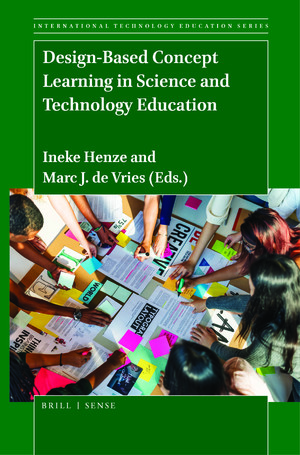
Design-Based Concept Learning in Science and Technology Education |
| |
Ineke Henze/ 9789004449985/ Price:EUR 56.00
|
| |
|
|
|
| |
|
| SA13-507 |
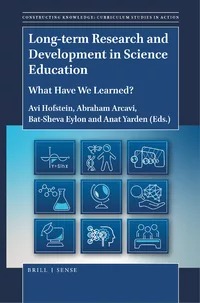
Long-term Research and Development in Science Education: What Have We Learned? |
| |
Avi Hofstein/ 9789004503601/ Price:EUR 66.00
|
| |
|
|
Over the past 50 years the Department of Science Teaching at the Weizmann Institute of Science in Israel was actively involved in all the components related to curriculum development, implementation, and research in science, mathematics, and computer science education: both learning and teaching. These initiatives are well designed and effective examples of long-term developmental and comprehensive models of reforms in the way science and mathematics are learned and taught. The 16 chapters of the book are divided into two key parts. The first part is on curriculum development in the sciences and mathematics. The second describes the implementation of these areas and its related professional development. Following these chapters, two commentaries are written by two imminent researchers in science and mathematics teaching and learning: Professor Alan Schonfeld from UC Berkeley, USA, and Professor Ilka Parchman from IPN at the University of Kiel, Germany. The book as a whole, as well as its individual chapters, are intended for a wide audience of curriculum developers, teacher educators, researchers on learning and teaching of science and mathematics and policy makers at the university level interested in advancing models of academic departments working under a common philosophy, yet under full academic freedom. |
| |
|
| SA13-500 |
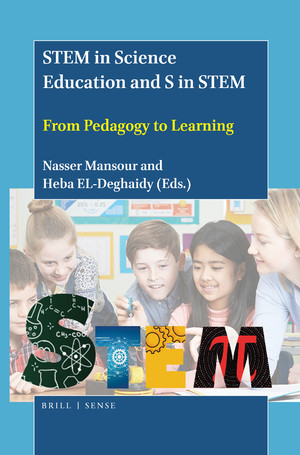
STEM in Science Education and S in STEM: From Pedagogy to Learning |
| |
Nasser Mansour/ 9789004446052/ Price:EUR 44.00
|
| |
|
|
|
| |
|
| VA08-1062 |
Comparative Perspectives on Inquiry-Based Science Education |
| |
Stuart Bevins, Louise Lehane/ 9781522554394/ Price:US$ 185.00
|
| |
|
|
The core practice of professional scientists is inquiry, often referred to as research. If educators are to prepare students for a role in the professional scientific and technological community, exposing them to inquiry-based learning is essential. Despite this, inquiry-based teaching and learning (IBTL) remains relatively rare, possibly due to barriers that teachers face in deploying it or to a lack of belief in the teaching community that inquiry-based learning is effective.
Comparative Perspectives on Inquiry-Based Science Education examines stories and experiences from members of an international science education project that delivered learning resources based around guided inquiry for students to a wide range of schools in 12 different countries in order to identify key themes that can provide useful insights for student learning, teacher support, and policy formulation at the continental level. The book provides case studies across these 12 different settings that enable readers to compare and contrast both practice and policy issues with their own contexts while accessing a cutting-edge model of professional development. It is designed for educators, instructional designers, administrators, principals, researchers, policymakers, practitioners, and students seeking current and relevant research on international education and education strategies for science courses.
Topics Covered
The many academic areas covered in this publication include, but are not limited to:
•Assessment
•Education Policy
•Educational Philosophies
•Global Networks
•Implementation
•In-School Delivery
•Inquiry Process
•Learning Environments
•Professional Development
•Science Education |
| |
|
| SA13-495 |
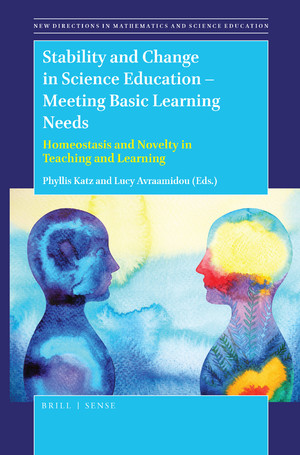
Stability and Change in Science Education -- Meeting Basic Learning Needs: Homeostasis and Novelty in Teaching and Learning |
| |
Phyllis Katz/ 9789004391611/ Price:EUR 41.00
|
| |
|
|
In this book the editors consider the resistance to change among teachers and learners despite all the evidence that science participation brings benefits for both individuals and nations. Beginning with biology, Stability and Change in Science Education: Meeting Basic Learning Needs explores this balance in teaching and learning science. The authors reflect upon this equilibrium as they each present their work and its contribution.
The book provides a wide range of examples using the change/stability lens. Authors from the Netherlands, Israel, Spain, Canada and the USA discuss how they observe and consider both homeostasis and novelty in theory, projects and other work. The book contains examples from science educators in schools and in other science rich settings. |
| |
|
| SA13-472 |
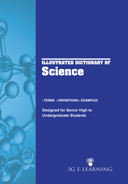
Illustrated Dictionary of Science. |
| |
/ 9781984615930/ Price:US$ 95.00
|
| |
|
|
This illustrated dictionary provides concise definitions and explanations of science related terms together with state-of-the-art scientific and practical terms, presented in an easy-to-use, A-Z order with pictures and figures as well as examples are given to clarify the terms.
Packed with special full-page features on this subject and developed in close consultation with team of experts, this is the ultimate reference tool for Higher Secondary to Undergraduate students. |
| |
|
| SA13-463 |
Explaining Primary Science. |
| |
Chambers, Paul/ 9781473912809/ Price:GBP 30.99
|
| |
|
|
|
|
| |
|
| SA13-463 |
Learning Science by Doing Science: 10 Classic Investigations Reimagined to Teach Kids How Science Really Works, Grades 3-8. |
| |
Colburn, Alan/ 9781506344614/ Price:GBP 30.99
|
| |
|
|
|
|
| |
|
| VA08-768 |
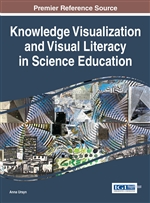
Knowledge Visualization and Visual Literacy in Science Education |
| |
Ursyn, Anna/ 9781522504801/ Price:US$ 205.00
|
| |
|
|
Effective communication within learning environments is a pivotal aspect to students’ success. By enhancing abstract concepts with visual media, students can achieve a higher level of retention and better understand the presented information.
Knowledge Visualization and Visual Literacy in Science Education is an authoritative reference source for the latest scholarly research on the implementation of visual images, aids, and graphics in classroom settings and focuses on how these methods stimulate critical thinking in students. Highlighting concepts relating to cognition, communication, and computing, this book is ideally designed for researchers, instructors, academicians, and students.
Topics Covered
•Computational Thinking
•Learning Project Design
•Multimodal Learning
•Split Brain Human Computer Interface
•Stereo Vision
•Use of Collages
•Video Tutorials |
| |
|
| SA13-449 |
Responsive Teaching in Science and Mathematics. |
| |
Robertson, Amy D./ 9781138916999/ Price:GBP 49.99
|
| |
|
|
|
|
| |
|
| SA13-480 |
Reimagining the Science Department |
| |
Wayne Melville/ 9781938946325/ Price:US$ 29.95
|
| |
|
|
|
|
| |
|
| SA13-456 |
Encyclopedia of Science Education, 2-Vols/Set. |
| |
Gunstone, Richard/ 9789400721494/ Price:EUR 549.99
|
| |
|
|
|
|
| |
|
| SA13-442 |
The Go-To Guide for Engineering Curricula, Grades 6-8: Choosing and Using the Best Instructional Materials for Your Students. |
| |
Sneider, Cary I./ 9781483307374/ Price:GBP 30.99
|
| |
|
|
|
|
| |
|
| SA13-438 |
Proven Programs in Education: Science, Technology, and Mathematics (STEM). |
| |
Slavin, Robert E./ 9781483351216/ Price:GBP 22.99
|
| |
|
|
|
|
| |
|
| SA13-438 |
Primary Science for Trainee Teachers. |
| |
Roden, Judith/ 9781446296561/ Price:GBP 31.99
|
| |
|
|
|
|
| |
|
| SA13-399 |
Epistemology and Science Education: Understanding the Evolution vs. Intelligent Design Controversy. |
| |
Taylor, Roger S./ 9780415963800/ Price:GBP 54.99
|
| |
|
|
|
|
| |
|
| |
Online Science Learning: Best Practices and Technologies. |
| |
Downing, Kevin/ 9781599049861/ Price:US$ 99.95
|
| |
|
|
|
|
| |
|
| VA08-233 |
Science Education, 4-Vols/Set. |
| |
Gilbert, John K./ 9780415342254/ Price:GBP 950.00
|
| |
|
|
|
Education in, about, and through the sciences - physics, chemistry, biology, earth science--has grown rapidly in the last 150 years. Starting from the twin bases of an elective provision for those likely to become scientists and engineers of informal provision for the general populace, it has evolved into a core component of compulsory education across the globe. Above this rises an edifice of provision at university level and beyond, both formal and informal. This expansion has been justified by the number of decisions in democratic societies, and that it increasingly impinges on the personal lives of individuals.
This collection of papers drawn from a world-wide literature and reflecting diverse cultural traditions provides a resource for scholars seeking to unravel the historical trajectories of the complexities of science education. The papers reprinted in this set enable researchers to understand the nature of current provisions in the field, and to identify the likely future directions of development. |
| |
|
| VD08-21 |
Student's Guide to Earth Science, A. 4-Vols/Set. |
| |
/ 9780313329012/ Price:GBP 122.95
|
| |
|
|
|
This four-volume set presents an overview of earth science from the earliest observations of ancient peoples to discoveries of today's scientists. Earth science includes astronomy, geology, meteorology, and oceanography. The first volume, "Words and Terms," defines important words in these sciences. The contributions made by such scientists as Galileo, Sir Edmund Hailey, and Florence Bascom are described in the second volume, "Important People," which highlights contributions made by women and minority groups to a traditionally male profession. "Developments and Discoveries," the third volume, traces the history and development of this science, and the fourth volume, "Debatable Issues," presents the most hotly debated topics today, such as space exploration and global warming.
Volume 1: Words and Terms Volume 2: Important People Volume 3: Developments and Discoveries Volume 4: Debatable Issues Set Features: BL 720 pages in 5 volumes BL 6 1/8 x 9 1/4 BL 2-color interior BL 300 Photographs, Maps, Charts, and Graphs BL Sidebars and Fact boxes BL Primary Documents BL Glossary BL Cumulative Index (in each volume). Curriculum Themes: BL Geology (types of rock, layers of the earth, earthquakes) BL Astronomy (structure of the universe, planets and stars within it) BL Meteorology (clouds, weather) BL Oceanography BL History of earth science BL Famous people in earth science BL Global warming BL Natural resources. |
| |
|
| SA13-398 |
Primary Science: Knowledge and Understanding. |
| |
Kennedy, Jenny/ 9780415129121/ Price:GBP 55.99
|
| |
|
|
|
|
| |
|
| SA13-361 |
National Science Education Standards. |
| |
/ 9780309053266/ Price:US$ 35.00
|
| |
|
|
|
|
| |
|